DIN EN 50173 Fiber optics: Practical guide for standard-compliant installations
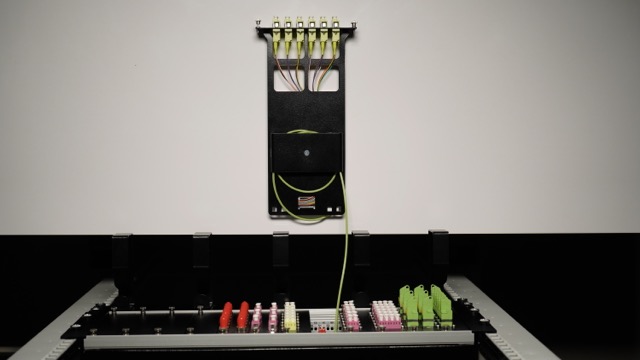
The standard-compliant installation of fiber optic systems in accordance with DIN EN 50173 fiber optics is crucial for the functionality and future-proofing of structured cabling systems. Particularly with modular systems such as VarioConnect and SlimConnect, planners and installers are faced with specific questions regarding the correct implementation of the European standard.
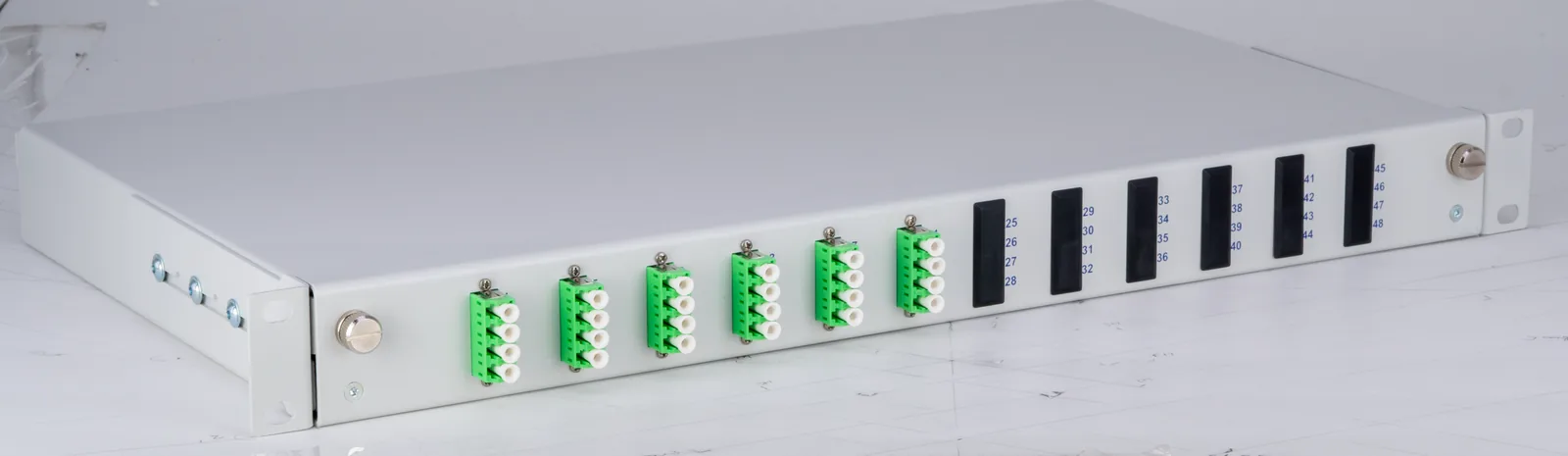
This practical guide shows how to meet the requirements of DIN EN 50173 fiber optics for modular fiber optic solutions and what special features need to be taken into account during the acceptance test. DIN EN 50173 Fiber Optics not only defines technical parameters, but also planning guidelines and documentation requirements that determine the success of a project.
By using high-quality connectors, users benefit from European quality and German engineering skills when implementing their fiber optic infrastructure in compliance with standards. Fiber optic solutions for data centers require particularly careful DIN EN 50173 fiber optic compliance.
Basics of DIN EN 50173 for fiber optic installations
DIN EN 50173 fiber optics forms the basis for structured cabling systems in Europe and defines specific requirements for fiber optic installations. The standard distinguishes between different application classes and defines performance categories for different transmission rates.
Performance categories and application classes
The regulations on attenuation budgets, connection losses and return loss are particularly relevant for modular fiber optic systems. The VarioConnect 3U systems meet the requirements of class FA (Fiber Application) for multimode and singlemode applications in accordance with DIN EN 50173 fiber optics.
The precise processing of high-quality connectors ensures connection losses of typically less than 0.15 dB, which is well below the standard limits of DIN EN 50173 fiber optics. These low attenuation values are particularly important for fiber optic solutions for industries with high quality requirements.
Minimum bending radii and mechanical requirements
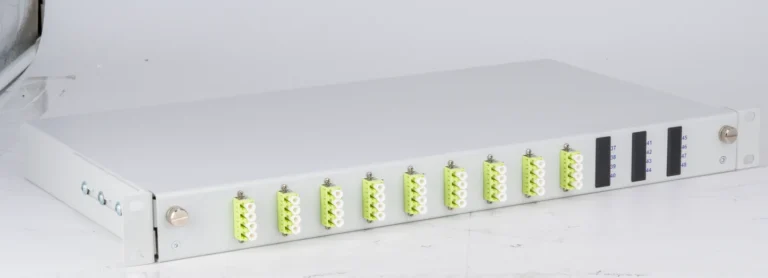
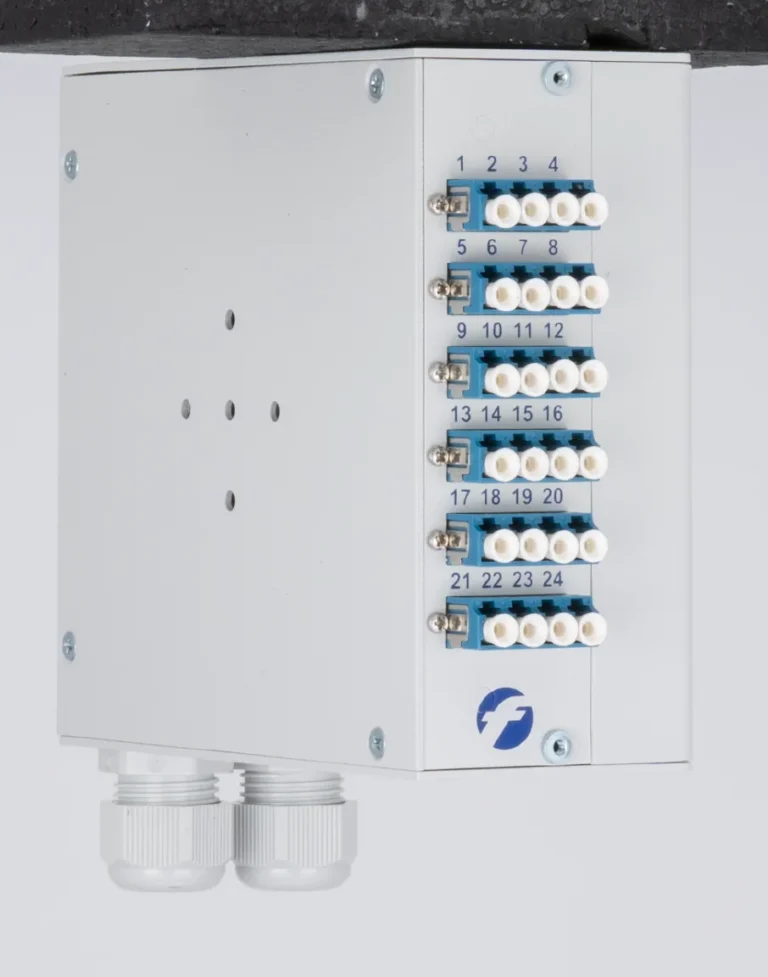
One critical aspect is compliance with the minimum bending radii in accordance with DIN EN 50173 fiber optics. The 7TE modules in the VarioConnect series integrate fiber guide rings that automatically ensure the standard-compliant bending radii of at least 15 mm (singlemode) or 30 mm (multimode).
This systematic fiber guidance prevents micro-bending and ensures long-term stable transmission parameters in accordance with DIN EN 50173 glass fiber. Modular splicing systems are specially designed for these standard requirements.
Environmental requirements
DIN EN 50173 Glass fiber defines specific environmental requirements for various installation areas:
Office environments (Office):
- Temperature range: +15°C to +35°C
- Relative humidity: 45% to 65%
- Dust protection: Normal office environment
Technical rooms (equipment room):
- Temperature range: +18°C to +24°C
- Relative humidity: 40% to 60%
- Increased requirements for dust protection
Our systems are optimized for these controlled indoor conditions and meet all DIN EN 50173 fibre optic environmental requirements.
Planning guidelines according to DIN EN 50173
Standard-compliant planning in accordance with DIN EN 50173 fiber optics begins in the project planning phase with the definition of the application class and the resulting performance requirements. The standard distinguishes between different distance classes, which have a direct influence on the selection of fiber optic types and connectors.
Structured cabling approaches
The following aspects of DIN EN 50173 fiber optics are decisive for the planning of modular systems: The standard requires a structured approach with a clear separation between primary, secondary and tertiary cabling.
Primary cabling:
- Building distribution between locations
- Typical distances: 500m – 2000m
- Use of outdoor cables (not our focus)
Secondary cabling:
- Distribution within buildings
- Typical distances: 100m – 500m
- VarioConnect systems ideally suited
Tertiary cabling:
- Terminal device connections
- Typical distances: 5m – 100m
- SlimConnect 1U systems particularly suitable
Fiber optic solutions for municipal utilities usually use secondary and tertiary cabling in accordance with DIN EN 50173 fiber optics.
Damping budgets and link budgets
DIN EN 50173 Glass fiber defines maximum attenuation budgets for different application classes:
Multimode connections (OM3/OM4):
- Maximum path attenuation: 1.5 dB (850 nm)
- Maximum connection loss: 0.75 dB
- Number of connections: Maximum 3
Singlemode connections (OS2):
- Maximum path attenuation: 1.0 dB (1310 nm)
- Maximum connection loss: 0.75 dB
- Number of connections: Maximum 3
Our modular systems fall well below these limits and therefore offer reserves for future applications.
Documentation requirements
The documentation requirements of DIN EN 50173 fiber optics include
- Detailed planning documents
- Installation documentation
- Acceptance reports with measurement results
- As-built documentation
The modular structure of the 7TE systems simplifies this documentation considerably, as standardized modules with clear specifications are used.
Installation according to standard: step-by-step instructions
The practical implementation of DIN EN 50173 fiber optics for modular fiber optic systems follows a structured installation process. Starting with the proper assembly of the subracks, specific assembly tolerances and alignment parameters must be observed.
Step 1: Standardized rack mounting
The first step involves the standard-compliant installation of the 19″ frame with correct earthing and mechanical fastening in accordance with DIN EN 50173 glass fiber. The VarioConnect subracks are then fastened with defined tightening torques to avoid mechanical stresses.
Important parameters:
- Rack depth: At least 600mm
- Ventilation: 3U free space top/bottom
- Earthing: Equipotential bonding according to VDE 0100
- Tightening torques: 2-3 Nm for M6 fastening
Precise alignment is crucial for the subsequent performance of the optical connections in accordance with DIN EN 50173 fiber optics.
Step 2: Modular assembly
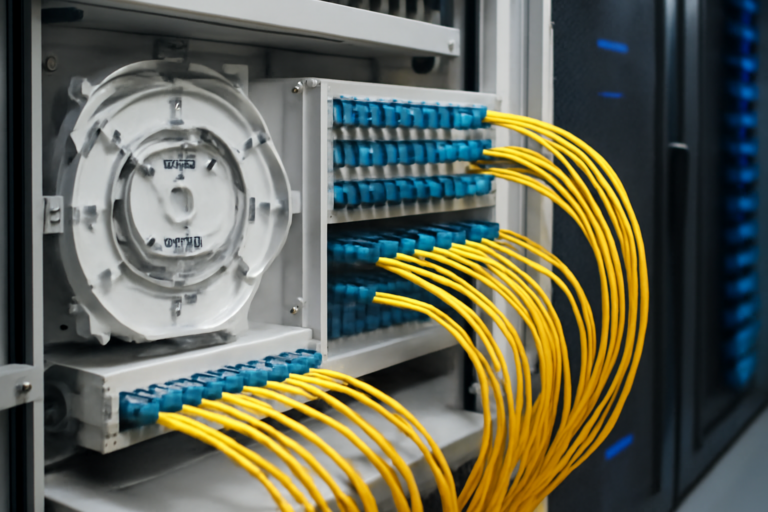
When installing the 7TE modules, particular care must be taken to position the fiber guide rings correctly. These not only ensure compliance with the minimum bending radii in accordance with DIN EN 50173 glass fiber, but also uniform strain relief for all fibers.
Installation sequence:
- Installing and aligning the base support
- Insert 7TE modules in a defined sequence
- Position fiber guide rings correctly
- Check mechanical fixation
The modular design enables step-by-step installation and simple reconfiguration of fiber optic solutions for system houses.
Step 3: Splicing work according to standard
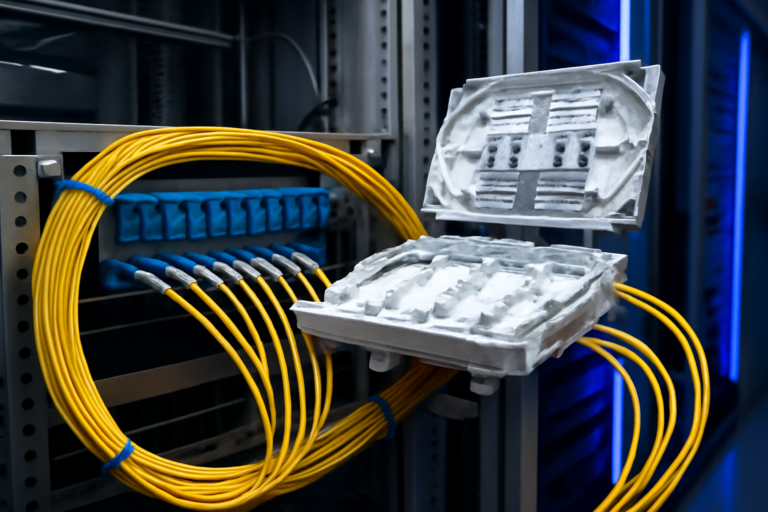
The splicing work is carried out in accordance with the guidelines of DIN EN 50173 fiber optics with documented splice losses and systematic quality control.
Quality parameters:
- Splice losses: < 0.1 dB (fusion)
- Return loss: > 60 dB (APC)
- Tensile strength: > 1N (according to IEC 61300-2-6)
The integration of high-quality connectors offers additional protection against contamination during installation in accordance with DIN EN 50173 fiber optics.
Step 4: Systematic labeling
Each connection must be clearly and permanently labeled:
Labeling scheme:
- Building labeling
- Floor specification
- Room designation
- Module position
- Port assignment
This systematic marking meets the DIN EN 50173 fiber optic documentation requirements.
Acceptance tests and compliance documentation
Standard-compliant acceptance in accordance with DIN EN 50173 fiber optics for modular fiber optic systems requires comprehensive measurements and documentation. The standard defines specific test procedures for various parameters that must be systematically processed.
Attenuation measurements
Attenuation measurements form the core of the acceptance test in accordance with DIN EN 50173 fiber optics and must be carried out for each individual connection. The modular structure of the VarioConnect systems enables systematic measurement at module level, which considerably simplifies fault diagnosis.
Measuring method:
- Reference measurement with calibrated equipment
- Bidirectional measurements with multimode
- Documentation at 850nm and 1300nm
- Typical measured values: 0.1-0.15 dB
The low connection losses are well below the DIN EN 50173 fiber optic limit values and offer reserves for future applications.
Return loss measurements
Return loss measurements are particularly critical for APC-ground connectors and must be carried out with calibrated OTDR devices. The precise processing ensures reproducible values above 60 dB, which also remain stable in the long term.
OTDR measurements according to DIN EN 50173 fiber optics:
- Pulse width according to cable length
- Set the refractive index correctly
- Consider Dead Zone
- Document event table
Fiber optic solutions for network operators require particularly precise OTDR measurements.
Documentation and proof of compliance
The documentation must include all measurement results, installation parameters and components used in accordance with DIN EN 50173 fiber optics:
Required documents:
- Installation plan with as-built status
- Measurement tables for all connections
- Component list with serial numbers
- Declaration of conformity
- Maintenance recommendations
Modern asset management systems can use the modular structure of the 7TE systems to create automated documentation and provide proof of compliance in accordance with DIN EN 50173 fiber optics.
Typical measured values and limit values
Singlemode connections (OS2):
| Parameters | DIN EN 50173 Limit value | Typical measured values | Reserve |
|---|---|---|---|
| Attenuation (1310nm) | 1.0 dB | 0.3-0.5 dB | > 50% |
| Attenuation (1550nm) | 1.0 dB | 0.3-0.5 dB | > 50% |
| Return loss | > 45 dB | > 60 dB | 33% |
Multimode connections (OM4):
| Parameters | DIN EN 50173 Limit value | Typical measured values | Reserve |
|---|---|---|---|
| Attenuation (850nm) | 1.5 dB | 0.4-0.7 dB | > 50% |
| Attenuation (1300nm) | 1.0 dB | 0.3-0.5 dB | > 50% |
| Return loss | > 20 dB | > 35 dB | 75% |
Special features of modular systems
Advantages in meeting standards
Modular 7TE systems offer specific advantages for DIN EN 50173 fiber optic compliance:
Systematic fiber management:
- Automatic bending radius compliance
- Defined service loops
- Controlled strain relief
- Optimized space utilization
Scalable documentation:
- Modular measurement possible
- Unique component identification
- Simplified fault diagnosis
- Systematic expansion
Ease of maintenance:
- Single module access without system malfunction
- Module-specific measurements
- Plannable maintenance windows
- Reduced downtime
Fiber optic solutions for educational institutions benefit in particular from modular maintenance advantages.
Integration into existing systems
DIN EN 50173 fiber optics requires compatibility and expandability. Modular systems meet these requirements perfectly:
Backwards compatibility:
- Standard interfaces
- Compatible connectors
- Standardized assembly procedures
- Joint documentation
Future security:
- Modular technology refresh
- Scalable capacities
- Standard-compliant extension
- Long-term availability
Quality assurance and long-term compliance
Continuous compliance with standards
DIN EN 50173 fiber optics not only requires a standard-compliant initial installation, but also the maintenance of performance parameters over the entire service life. Modular systems offer decisive advantages here for long-term compliance.
Regular checks:
- Annual visual inspections
- Periodic attenuation measurements
- Documentation update
- Preventive maintenance
The 5-year guarantee on VarioConnect and SlimConnect systems underlines the quality and long-term stability of the components in accordance with DIN EN 50173 fiber optics.
Change management
Changes and extensions to the cabling must also comply with the standard requirements of DIN EN 50173 fiber optics. The modular design enables standard-compliant extensions without impairing existing connections.
change management process:
- Amendment request with reference to standard
- Technical evaluation of DIN EN 50173 Glass fiber compliance
- Documentation of the planned changes
- Installation with quality control
- Acceptance measurements and documentation update
This is particularly important for growing network infrastructures in fiber optic solutions for system integrators.
Common compliance challenges and solutions
Typical problem areas
Exceeding the attenuation limits:
- Cause: Contaminated plug connectors
- Solution: Systematic cleaning in accordance with IEC 61300-3-35
- Prevention: Use dust caps
Falling below the return loss:
- Cause: Incorrect plug alignment
- Solution: Ensure correct APC connection
- Prevention: Observe color coding (green = APC)
Bending radius injuries:
- Cause: Unsuitable cable routing
- Solution: Position fiber guide rings correctly
- Prevention: 7TE modules with integrated bending radius control
Preventive measures
Training of the installation personnel:
- DIN EN 50173 Fiber optics basic training
- Practical exercises on test systems
- Regular refresher courses
- Certification by recognized bodies
quality assurance system:
- Standardized work instructions
- Checklists for critical points
- Four-eyes principle for measurements
- Continuous improvement
International compatibility and standards
Harmonization with other standards
DIN EN 50173 fibre optics is harmonized with international standards:
ISO/IEC 11801 (International):
- Global application
- Identical technical parameters
- Common test procedures
TIA-568 (North America):
- Similar application classes
- Comparable performance parameters
- Different connector preferences
JIS C 6802 (Japan):
- National adjustments
- Special climatic features
- Compatible basic principles
This international harmonization ensures that systems installed in accordance with DIN EN 50173 fibre optics are also compatible in international projects.
Future-proof through conformity to standards
Technology evolution:
- Upgrade paths for higher data rates
- Backwards compatibility guaranteed
- Modular technology refresh possible
Regulatory developments:
- Adaptation to EU directives
- Consideration of environmental standards
- Integration of new security requirements
Smart City fiber optic projects benefit from this future security.
Economic aspects of conformity to standards
Total cost of ownership
Investing in DIN EN 50173 fiber optic compliant systems pays off in the long term:
Direct cost savings:
- Reduced rework through quality assurance
- Lower maintenance costs thanks to modular design
- Avoidance of compliance penalties
- Higher system availability
Indirect benefits:
- Improved system performance
- Future-proofing the investment
- Simpler extensions
- Higher resale values
ROI analysis
Short to medium term (1-3 years):
- Reduced installation times thanks to modular systems
- Fewer complaints and rework
- Optimized maintenance processes
Long-term (5-15 years):
- Technology upgrades without complete replacement
- Scalable extensions
- Plannable maintenance costs
- Compliance security
Practical examples of successful implementations
Data center migration
A large hosting provider migrated its fiber optic infrastructure to modular VarioConnect systems in accordance with DIN EN 50173 fiber optics:
Challenges:
- 24/7 operation without interruption
- High port density required
- Strict compliance requirements
- Limited maintenance windows
Solution:
- Step-by-step migration with 7TE modules
- Parallel operation of old and new systems
- Systematic compliance tests
- Complete documentation
Results:
- 99.99% availability during migration
- Time saving during maintenance work
- DIN EN 50173 glass fiber compliance
- ROI amortization after 18 months
University campus network
A technical university modernized its campus network:
Requirements:
- Various buildings and types of use
- Different connection densities
- Flexible expandability
- Training compatibility
Implementation:
- VarioConnect for main distribution boards
- SlimConnect for final distributions
- Modular documentation systems
- Student project integration
Advantages:
- Simplified maintenance thanks to modular design
- Hands-on learning on real systems
- Scalable expansion as required
- Full DIN EN 50173 fiber optic conformity
Conclusion and outlook
The DIN EN 50173 fiber optic compliant installation of modular fiber optic systems requires a systematic approach and detailed documentation. VarioConnect and SlimConnect systems support compliance with all standard requirements thanks to their sophisticated design and offer additional benefits for installation, maintenance and long-term compliance.
Key success factors
Systematic planning:
- Early consideration of standards
- Modular system architecture
- Qualified installers
- Comprehensive documentation
Quality assurance:
- Preventive measures
- Regular checks
- Continuous improvement
- Long-term monitoring
Technical excellence:
- High-quality components
- Precise installation
- Systematic measurements
- Professional documentation
Future prospects
DIN EN 50173 fiber optics is continuously being developed to meet new technologies and requirements:
Expected developments:
- Integration of 400G/800G Ethernet
- Extended environmental requirements
- Digitization of documentation
- Automated compliance monitoring
Preparation for changes:
- Modular systems enable simple upgrades
- Standardized interfaces ensure compatibility
- Systematic documentation facilitates migration
- Quality reserves create future security
At Fiber Products, we develop modular fiber optic systems for maximum DIN EN 50173 fiber optic compliance. Our VarioConnect solutions and SlimConnect systems meet all standard requirements and also offer practical advantages for installation and maintenance.
With a 5-year guarantee and European production to German quality standards, we offer optimum value for money for standard-compliant fiber optic installations. Discover our complete product range or visit our online store.
Contact us – together we will develop the optimal DIN EN 50173 fiber optic compliant solution for your project and ensure long-term compliance and future-proofing. Contact us for an individual consultation or find out about other norms and standards in our fiber optic knowledge blog.