Campus fiber optic networks: Modular splice systems for university infrastructures
Modern universities have become digital ecosystems in which campus fiber optic networks form the technical backbone for research, teaching and administration. The increasing demands on bandwidth, reliability and flexibility make high-performance fiber optic infrastructures a critical success factor for educational institutions. Modular splicing systems enable future-proof network architectures that can grow with the dynamic requirements of university operations.
The digitalization of the university landscape requires campus fibre optic networks that not only support today’s applications, but are also prepared for future technologies. From gigabit connections for individual workstations to terabit connections between research facilities – modern universities need scalable infrastructures with maximum performance.
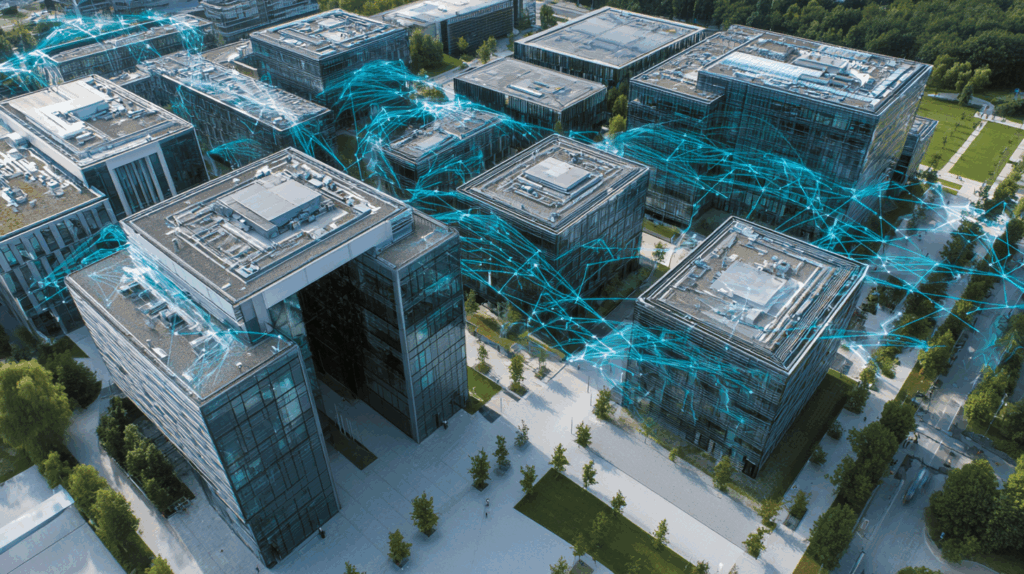
Special requirements of campus fiber optic networks
University infrastructures differ fundamentally from commercial networks. Campus fiber optic networks must offer a unique combination of high performance, flexibility and cost efficiency.
Research data networks and high-performance computing
Scientific research today generates data volumes in the petabyte range. Climate models, genome sequencing and particle physics experiments require campus fiber optic networks with extreme bandwidth. Individual research projects can require transmission rates of 100 gigabits per second and more.
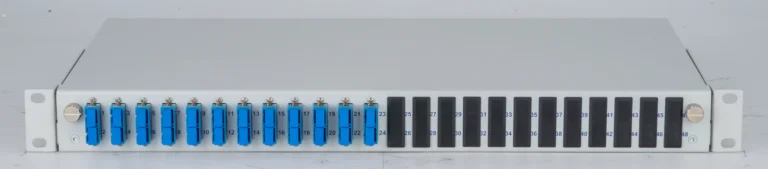
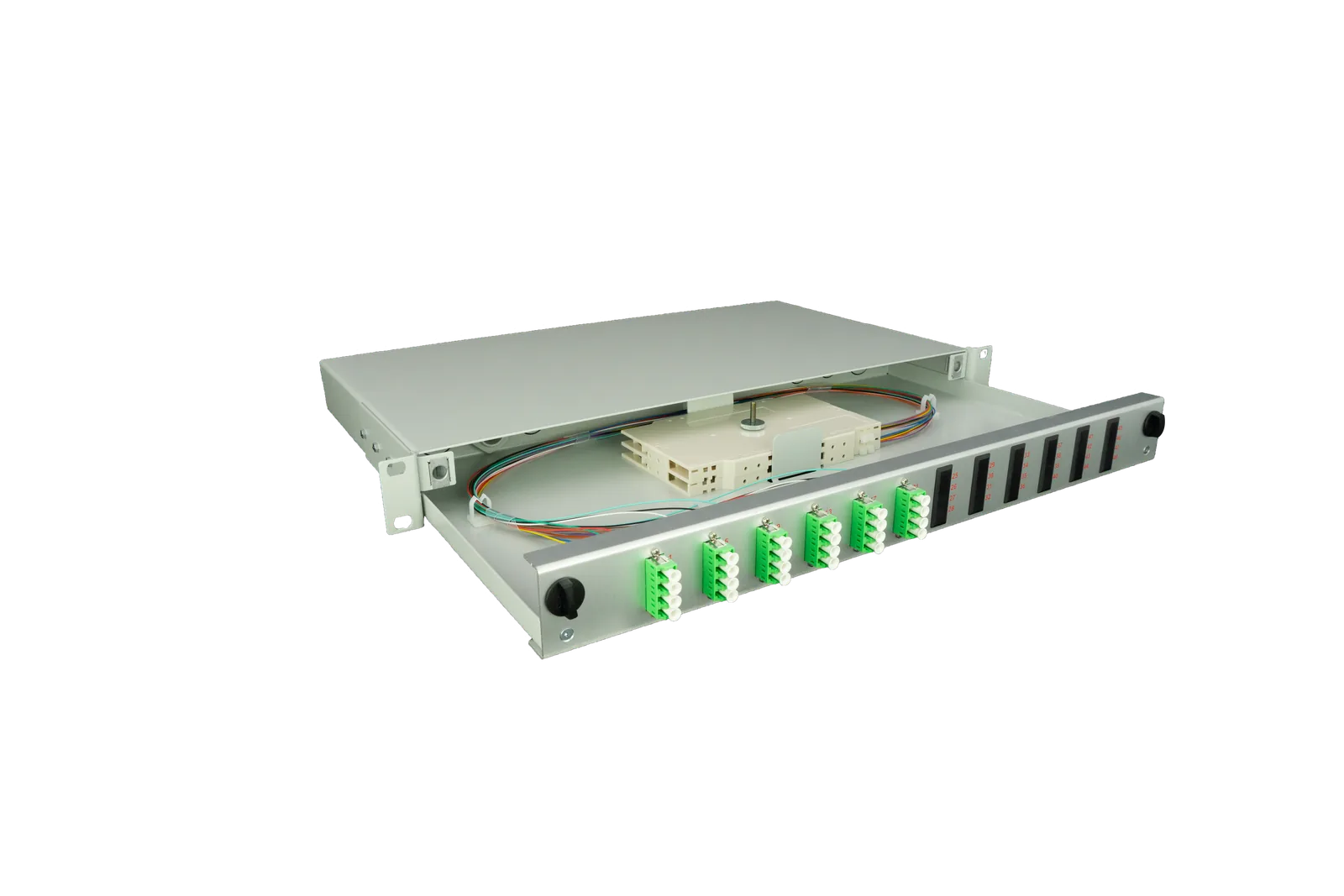
The VarioConnect modular system offers the necessary scalability for such requirements. Research buildings can be equipped with dedicated high-performance connections that can be expanded or reconfigured as required.
Modern research is increasingly collaborative and networked. Campus fiber optic networks must not only provide internal connections, but also links to national and international research networks such as the German Research Network (DFN) or European grid computing infrastructures.
Teaching and learning infrastructures
The digitalization of teaching has received a huge boost from the coronavirus pandemic. modern teaching formats and virtual reality applications are placing new demands on campus fiber optic networks.
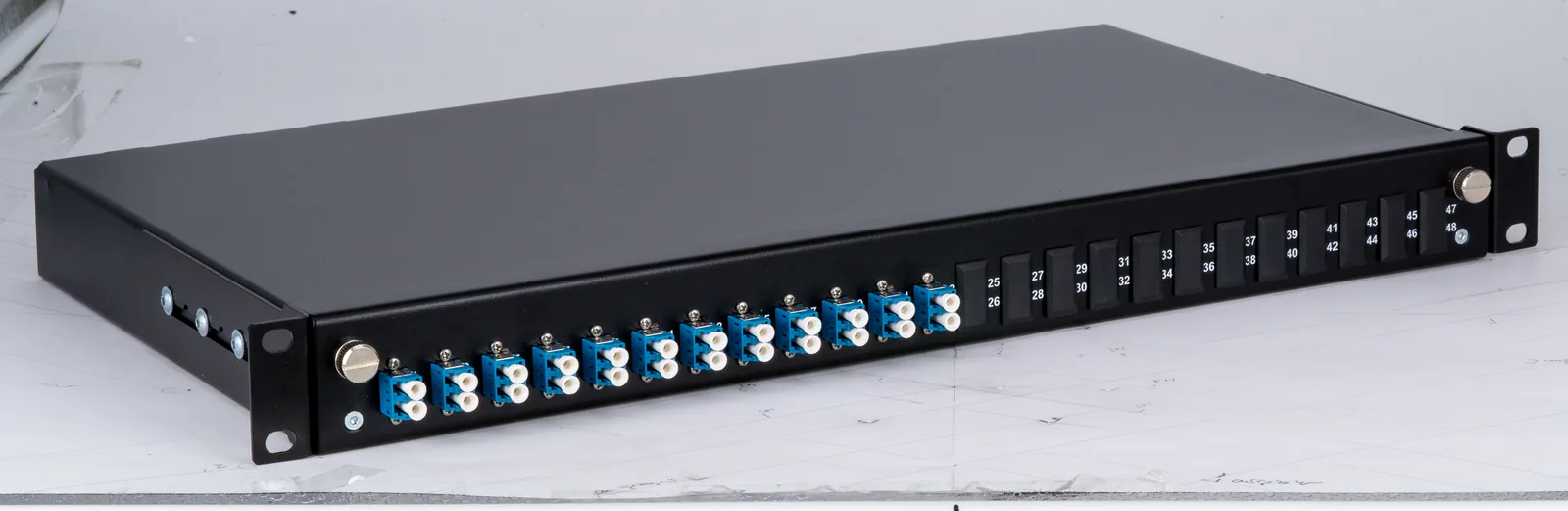
Lecture halls and seminar rooms today require gigabit connections for 4K video streaming, cloud-based applications and simultaneous use by hundreds of students. The SlimConnect 1U system enables cost-effective high-performance connections even for smaller classrooms.
E-learning platforms and digital libraries continuously generate high data loads. Campus fiber optic networks must be able to cope with this base load and at the same time absorb peak loads during examination periods or large online events.
Student IT services and WLAN backbone
Modern students expect fast internet connections everywhere on campus. fiber optic backhaul infrastructure to support hundreds of simultaneous users.
Campus fiber optic networks must not only provide bandwidth, but also guarantee quality of service. Academic applications have priority over entertainment traffic, but student needs must also be adequately taken into account.
The RailConnect top-hat rail boxes are particularly suitable for decentralized WLAN installations in student residences or common areas. The compact 7TE format enables cost-effective fiber optic connections even in subsequently extended buildings.
Network architectures for campus infrastructures
Campus fiber optic networks require sophisticated architectures that optimally support different usage scenarios. Modular splice systems enable flexible topologies that can be adapted to specific university requirements.
Hierarchical campus backbone structures
Large universities often comprise dozens of buildings on extensive campuses. Campus fiber optic networks have to cope with this geographical distribution through hierarchical backbone structures.
The core layer connects central data centers and important administration buildings with maximum redundancy and bandwidth. The VarioConnect 3U system can implement complex distribution architectures with different levels of redundancy.
Distribution layer switches in important buildings aggregate the traffic of several access layer switches. This hierarchy enables efficient bandwidth utilization and simplifies network management.
Ring topologies for reliability
Academic institutions cannot afford prolonged network outages. Campus fiber optic networks therefore often use ring topologies that maintain connectivity even in the event of cable breaks or device failures.
Modular splice systems simplify the implementation of such redundant architectures. Different fibers can be used for primary and backup paths without having to set up separate cable infrastructures.
The 5-year guarantee on high-quality European production reduces the risk of unplanned downtime and supports the required high availability.
Dedicated research networks
Especially performance-hungry research projects often require dedicated network connections that are isolated from other campus traffic. Campus fiber optic networks can provide such “dark fiber” connections that are reserved exclusively for specific applications.
This isolation ensures predictable performance and enables special protocols or transmission methods that would not be possible in the normal campus network.
Technical requirements and standards
Campus fiber optic networks must meet various technical standards and support future-proof technologies. The choice of suitable components is critical for long-term performance and investment security.
Support for various transmission standards
Universities use a variety of transmission standards – from Gigabit Ethernet for workstations to 400 Gigabit Ethernet for high-performance connections. Campus fiber optic networks must be able to support all of these standards in parallel.
Singlemode fibers offer the greatest future security. They support all current and foreseeable future standards and enable maximum transmission distances between campus buildings.
The modular architecture makes it possible to use different transmission standards in the same infrastructure. Research buildings can be equipped with 100 gigabit connections, while administrative buildings can make do with more cost-efficient 10 gigabit links.
Support for IPv6 and modern protocols
Campus fibre optic networks must be optimized for modern Internet protocols. IPv6 support is already essential today, as universities are often early adopters of new technologies.
Software-Defined Networking (SDN) and Network Function Virtualization (NFV) enable flexible network management concepts. Campus fiber optic networks should support these technologies and offer corresponding performance.
Integration of international research networks
German universities are often involved in international research collaborations. Campus fiber optic networks must be able to provide connections to various research networks and reserve corresponding bandwidths.
The German Research Network (DFN) is the most important national partner here. International connections to GÉANT in Europe or Internet2 in the USA require corresponding connection capacities.
System integrators can support the planning of such complex connections and develop optimal architectures.
Scalability and future-proofing
Campus fiber optic networks must be able to grow over decades and adapt to changing requirements. Modular systems offer decisive advantages over rigid infrastructures.
Phased implementation
Universities often have limited budgets and have to spread infrastructure investments over several years. Campus fiber optic networks should therefore be able to be implemented in phases without jeopardizing the overall architecture.
Modular splicing systems enable precisely this flexibility. Initial installations can start with basic equipment and be expanded if additional budget is available.
The standardized architecture ensures compatibility between different expansion stages. New modules integrate seamlessly into existing installations.
Technology upgrades without rewiring
Transmission technologies are constantly evolving. Campus fiber optic networks should be able to support new standards without requiring complete rewiring.
High-quality single-mode fiber optics already support 400 gigabit transmission and more. The investment in future-proof cable infrastructure pays for itself over its entire service life.
Active components can be replaced if necessary without affecting the passive fiber optic infrastructure. This significantly reduces upgrade costs and minimizes disruption to ongoing operations.
Extension for new buildings
Universities are constantly growing and constructing new buildings for research and teaching. Campus fiber optic networks must anticipate such expansions and provide corresponding reserve capacities.
Modular distribution systems can accommodate additional connections without affecting existing installations. New buildings can therefore be seamlessly integrated into the campus infrastructure.
Cost optimization and economic efficiency
Campus fiber optic networks must be operated economically. Universities are under cost pressure and need solutions that optimally combine performance and cost-effectiveness.
Total cost of ownership considerations
The total costs of campus fiber optic networks include not only acquisition, but also installation, maintenance and operation over the entire service life. High-quality components can be more economical despite higher acquisition costs.
The 5-year guarantee reduces maintenance costs and offers planning security for tight university budgets. Failures can result in expensive emergency repairs and loss of productivity.
Modular systems also enable selective modernization. Only critical or obsolete components need to be replaced, while functioning parts can continue to be used.
Energy efficiency and sustainability
Universities are increasingly focusing on sustainable technologies and energy efficiency. Campus fiber optic networks can contribute to these goals, as fiber optics are inherently energy efficient.
Passive optical components do not require a power supply and reduce energy consumption compared to active copper-based systems. The high transmission efficiency also reduces the number of active components required.
Long service life reduces resource consumption due to infrequent replacement purchases. Universities can thus support their sustainability goals and save costs at the same time.
Funding opportunities and financing models
Various programmes promote the digitalization of educational institutions. Campus fiber optic networks can often benefit from such funding if they meet the relevant requirements.
EU structural funds, national digitalization programmes and state funding offer financial support for infrastructure projects. Modular systems often meet the required sustainability and future-proofing criteria.
Integration with existing campus services
Campus fiber optic networks must integrate seamlessly into existing IT landscapes and support various services. Standardized interfaces make this integration much easier.
Campus management systems
Modern universities use comprehensive campus management systems for administration, teaching and research. These systems must be able to communicate reliably via campus fiber optic networks.
Student information systems, learning management systems and research databases continuously generate high data loads. The infrastructure has to cope with both base load and peak times.
Identity and access management
Universities have complex user structures with different roles and authorizations. Campus fiber optic networks must support appropriate security and access concepts.
RADIUS servers, LDAP directories and modern single sign-on systems require reliable network connections. Failures would affect the entire campus operation.
Cloud integration and external services
Universities are increasingly using cloud services for various applications. Campus fiber optic networks must provide appropriate bandwidths for cloud connections.
Microsoft 365, Google Workspace and specialized scientific cloud platforms require stable, high-performance internet connections. The local infrastructure must not become a bottleneck.
Security aspects and compliance
Campus fiber optic networks process sensitive research data and personal information. Appropriate security measures are therefore essential.
Data protection and GDPR compliance
Universities are subject to strict data protection regulations. Campus fiber optic networks must meet appropriate security standards and support compliance requirements.
Network segmentation makes it possible to isolate particularly sensitive areas. Research data can be separated from administrative systems without having to set up separate infrastructures.
The physical security of fiber optics offers additional protection. Eavesdropping without physical access is practically impossible, which is particularly important for sensitive research data.
IT security and cyber threats
Universities are increasingly the target of cyber attacks. Campus fiber optic networks must support appropriate security measures and be resilient against attacks.
Distributed Denial of Service (DDoS) attacks can generate massive bandwidth requirements. The high capacity of fiber optics helps to intercept such attacks without affecting normal operations.
Intrusion detection systems and security information and event management (SIEM) platforms require reliable data connections for effective threat detection.
Redundancy for critical systems
Certain campus services are particularly critical and require maximum availability. Examination systems, emergency communication and security systems must not be impaired by network failures.
Campus fiber optic networks can provide different levels of redundancy for different classes of service. Critical systems receive dedicated backup connections, while less critical services use standard availability.
Maintenance and support of campus infrastructures
Campus fiber optic networks must function reliably for decades. Appropriate maintenance concepts are therefore essential for long-term performance.
Preventive maintenance and monitoring
Regular maintenance prevents unplanned outages and extends the life of the infrastructure. Campus fiber optic networks should be continuously monitored to detect creeping deterioration.
Attenuation measurements and performance monitoring identify potential problems before they lead to failures. The modular architecture enables the targeted replacement of problematic components.
Service-friendly design
Maintenance work in campus environments often has to be carried out outside regular working hours in order to minimize disruption. Service-friendly components reduce maintenance times and personnel costs.
The EasyConnect splice modules enable tool-free maintenance and significantly reduce service times. This is particularly important for night-time maintenance windows or emergency repairs.
Documentation and asset management
Comprehensive documentation is essential for efficient maintenance and troubleshooting. Each fiber optic connection must be clearly identifiable and its function documented.
Modern asset management systems can digitally map campus fiber optic networks and automatically plan maintenance cycles. Integration with campus management systems enables holistic infrastructure management.
Conclusion: Modular fiber optic networks as the foundation of digital campus infrastructures
Campus fiber optic networks are the invisible foundation of modern university infrastructures. They enable innovative research, modern teaching and efficient administration. Modular splice systems offer the necessary flexibility for the dynamic requirements of the university landscape.
Investing in future-proof campus fiber optic networks pays off for decades. They create the technical basis for scientific excellence and support the digital transformation of the educational landscape.
Universities that invest in modular, scalable fiber optic infrastructures today will create optimal conditions for their research and teaching mission in the coming decades.
At Fiber Products, we develop modular fiber optic systems for the highest quality requirements. Our modular systems combine proven technology with innovative features.
With a 5-year guarantee and European production according to German quality standards, we offer competitive conditions with professional quality for successful fiber optic networks.
Discover our complete product range or visit our online store. Talk to us – together we will develop the optimum solution for your project. Contact us for an individual consultation or find out about other specialist topics in our fiber optic knowledge blog.