Splice Box 1HE vs 2HE: Which Form Factor Fits Your Application?
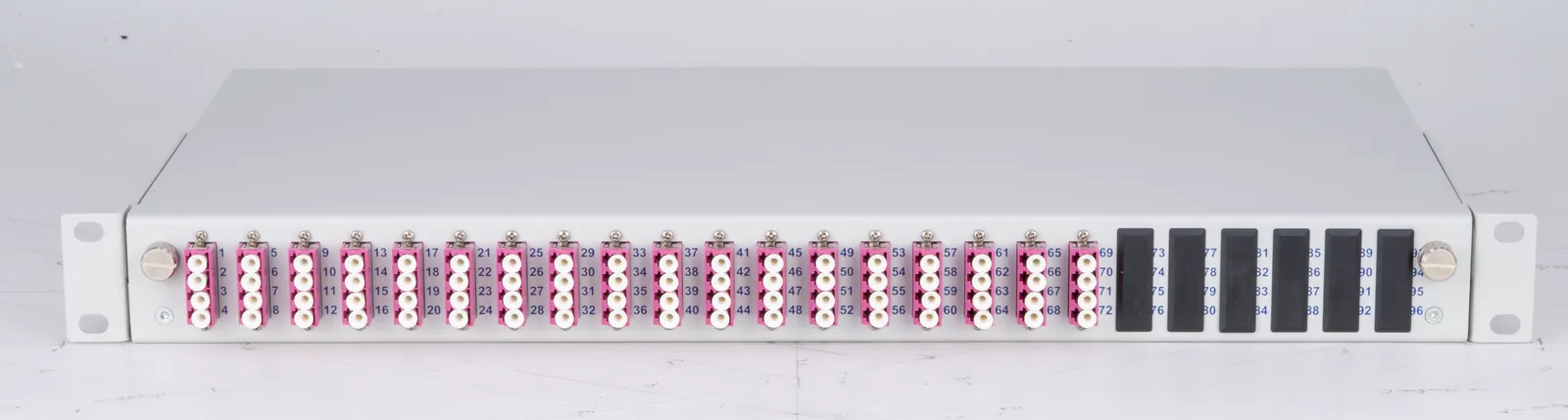
The choice between a 1HE and 2HE splice box fundamentally determines the efficiency and cost-effectiveness of your fibre optic infrastructure – while 1HE solutions achieve space savings in distribution frames with high port density, 2HE systems offer enhanced accessibility for complex splicing work. The decision for the correct splice box form factor depends on three key factors: required fibre density per rack unit, available space in your distribution frame, and frequency of maintenance operations. Modern 1HE splice box systems now achieve up to 96 fibres in just 44.45mm height and are reshaping planning standards for telecommunications operators.
The German fibre optic market is experiencing historic growth with over 12 million FTTH connections and annual growth of 35%. This dynamic expansion demands maximum space efficiency from network operators while ensuring future-proof distribution systems. The new EU Gigabit Infrastructure Regulation also tightens requirements for in-building fibre cabling from February 2026.
Technical Fundamentals: 1HE vs 2HE Direct Comparison
One rack unit (HE) corresponds exactly to 44.45 millimetres per DIN IEC 60297-3-100 in the 19-inch standard. The classic 2HE form factor at 88.9mm height dominated the market for decades because it provided optimal conditions for splicing work: sufficient space for multi-layer splice cassettes, generous bend radii to protect fibres, and comfortable accessibility for installation technicians.
| Feature | 1HE Splice Box | 2HE Splice Box |
|---|---|---|
| Height | 44.45mm | 88.9mm |
| Maximum fibre capacity | Up to 96 fibres | Up to 144 fibres |
| Port density per HE | 96 ports/HE | 72 ports/HE |
| Splice cassettes | 1–2 layers | 2–4 layers |
| Accessibility | Compact | Extended |
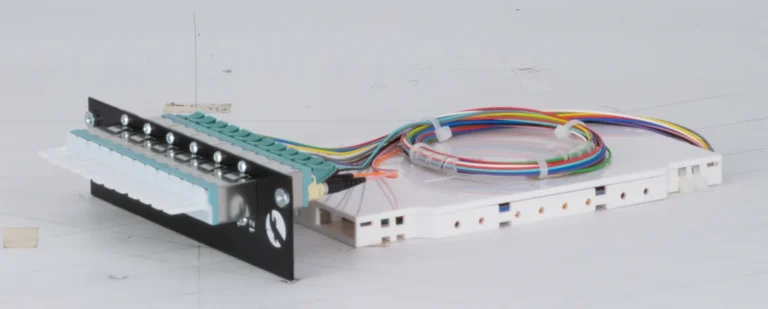
The 1HE splice box technology revolution now enables packing densities that were unimaginable just years ago. Through optimised cassette geometry and intelligent cable management, modern systems such as the SlimConnect series achieve double port density compared to standard solutions.
Deployment Scenarios: Where Each Form Factor Excels
Choosing the optimal splice box form factor depends critically on your deployment scenario. Telecommunications operators face different challenges in main distribution frames, field distribution frames, and building connections.
- Main distribution frames and data centres: 1HE dominates here through maximum space efficiency when per-unit rack fees are high
- Field distribution frames in FTTH rollouts: 2HE systems offer advantages during frequent expansions and maintenance operations
- Building distribution frames: Compact 1HE solutions optimal for space-constrained equipment rooms
- Industrial environments: Robust 2HE boxes with extended environmental protection
Cost Analysis: Space Savings as a Cost Factor
At average rack unit lease costs of €25–40 per HE in German data centres, investment in high-density 1HE systems pays back quickly. A telecommunications operator with 5,000 fibre connections requires approximately 104 rack units with conventional 48-port solutions.
With modern 96-port 1HE splice boxes, space demand drops to just 52 rack units – a saving of 52 HE or more than one complete 42HE rack. At annual rack unit costs of €15,000 per frame, this delivers direct annual savings of at least €15,000.
Fiber Products Quality Promise: As an official Diamond Partner and manufacturer, we produce modular splicing systems in Europe. Benefit from Swiss precision engineering and 5 years warranty on all systems.
Connector Variety and Compatibility Across Form Factors
Connector selection significantly influences the achievable port density in a 1HE and 2HE splice box configuration. Modern telecommunications networks require flexible connector combinations for different transmission standards.
| Connector type | Ports in 1HE | Ports in 2HE | Typical application |
|---|---|---|---|
| LC duplex | 48 duplex | 72 duplex | Data centres, FTTH |
| SC simplex | 48 ports | 96 ports | Core network |
| E2000-APC | 24 ports | 48 ports | Long-haul networks |
| MPO/MTP | 8 modules | 12 modules | High-speed networks |
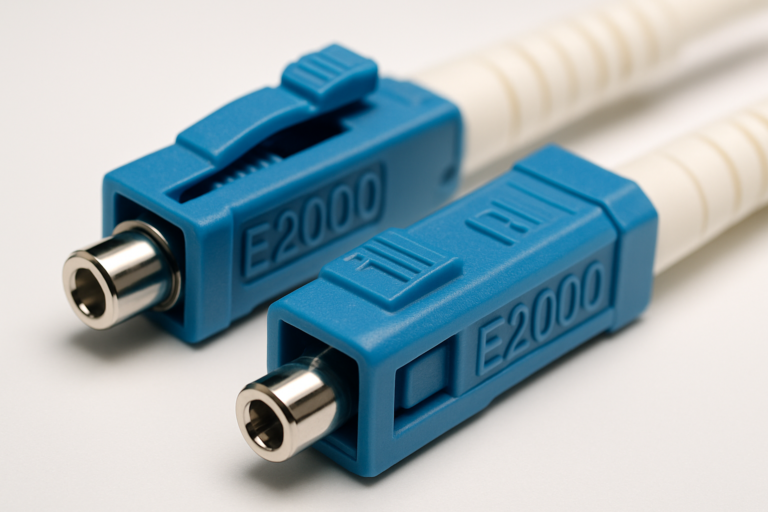
The trend towards E2000-APC connectors with self-closing protective caps and return loss > 60dB requires more space per port, often making 2HE solutions the better choice for critical long-haul applications.
Modular Systems: Flexibility Meets Standardisation
Modern splice box form factor designs prioritise modularity. The VarioConnect system from Fiber Products as Diamond Partner enables flexible configurations in 1HE, 3HE and 4HE form factors with interchangeable front modules.
- Reduced inventory: Single base housing, multiple connector modules
- Future-proof: New connector types retrofittable through module replacement
- Field configuration: On-site customisation of equipment configuration
- Scalability: Expansion through cascaded installation
- Maintenance-friendly: Individual modules replaceable without full disassembly
Installation and Assembly Time: The Hidden Cost Factor
Assembly time for a 1HE splice box with pre-terminated systems is moderate for 48 fibres. A comparable 2HE installation is noticeably shorter thanks to improved accessibility. At hourly rates of €85 for qualified fibre technicians, these differences accumulate quickly.
Maintenance frequency is critical: in dynamic network areas with frequent switching operations, the improved accessibility of 2HE form factors pays back through reduced service times. Static backbone connections benefit instead from the space savings of 1HE solutions.
Standards Compliance and Certifications for Both Form Factors
Regardless of which 1HE or 2HE splice box variant you choose, strict standards apply. DIN EN 50173-1 defines minimum requirements for structured cabling systems, whilst the IEC 61300 series specifies mechanical and optical test procedures.
- Insertion loss: Maximum 0.5 dB per splice per IEC 61300-3-4
- Bend radius: Minimum 30mm for single-mode fibre in service
- Strain relief: Minimum 100N per EN 50173-1
- Temperature range: −25°C to +70°C for outdoor applications
- IP rating: Minimum IP54 for field distribution frames
Future Trends: 400G Networks and Emerging Requirements
Migration to 400-Gigabit Ethernet and beyond creates new demands on splice box form factors. Higher transmission rates require more precise splice connections with insertion loss below 0.25 dB and return loss above 65 dB.
Coherent transmission and wavelength-division multiplexing systems also demand improved polarisation maintenance. Here 2HE systems show advantages through larger bend radii and reduced mechanical stress on fibres. Simultaneously, rising energy costs drive demand for space-saving 1HE solutions in climate-controlled data centres.
Case Study: FTTH Rollout by Regional Network Operator
A southern German telecommunications operator faced the challenge of connecting 15,000 households in a new development area. The decision was to combine solutions: 1HE splice boxes in main distribution frames for maximum port density and 2HE systems in field distribution frames for improved maintainability.
The result: space savings in climate-controlled equipment rooms combined with reduced service time in field distribution frames. The modular splice boxes from Fiber Products enabled standardised inventory with just three base types instead of the previous 18 different variants.
FAQ: Common Questions About Form Factor Selection
Can I retrofit a 1HE splice box to 2HE later?
No, the form factor is fixed by the housing. However, modular systems enable cascading multiple 1HE units for gradual expansion. The VarioConnect series offers flexible migration paths.
Which form factor works better for MPO/MTP connectors?
MPO/MTP modules require more mounting depth. 2HE systems provide advantages through additional space for managing 12-fibre connector cabling. 1HE housings can accommodate a maximum of 8 MPO modules.
How does form factor affect heat generation?
1HE systems have poorer thermal dissipation due to higher packing density. With active components or ambient temperatures above 40°C, 2HE solutions offer better thermal characteristics.
Are there differences in grounding and EMI shielding?
2HE housings offer more area for grounding connections and continuous shield plates. Per EN 50174-2, both form factors are standards-compliant, but 2HE systems more easily achieve higher shielding effectiveness values.
What role does form factor play in documentation?
1HE systems require more precise documentation due to higher port density. Modern 2HE boxes often include integrated labelling fields and QR-code holders for digital documentation systems.
Can I mix different form factors in one rack?
Yes, combining 1HE and 2HE splice boxes in the same rack is completely feasible and often sensible. Critical connections in 2HE, high-density distribution in 1HE – optimise space and accessibility simultaneously.
Decision Guide: Making the Right Choice
Choosing between 1HE and 2HE splice boxes is not an either-or decision but strategic planning based on concrete network requirements. Modern fibre optic networks often benefit from a hybrid approach: high-density 1HE systems where space is critical, extended 2HE solutions where flexibility matters.
As a manufacturer of modular fibre optic solutions, Fiber Products offers both form factors in the highest quality. With 5 years warranty on all splicing systems and expertise as an official Diamond Partner, we support telecommunications operators in optimal system selection. Contact our fibre optic specialists for individual advice on your project.
Find all modular fibre optic components directly in the Fiber Products Shop – with 5 years manufacturer warranty.
Request expert consultation
Our specialists will advise you on modular fibre optic solutions tailored to your specific deployment – fast, personal and obligation-free.