Wind energy communication: Modular fiber optic distribution for onshore wind farms and renewable energy systems

The nervous system of modern wind farms
Wind energy communication forms the technical backbone of successful onshore wind farms and enables optimal energy yield through intelligent control and continuous monitoring. Onshore wind farm fiber optic systems must ensure reliable data transmission between hundreds of wind turbines, central control systems and energy markets, while being designed to be easy to maintain and future-proof.
The complexity of modern wind energy installations requires sophisticated wind energy communication concepts that go far beyond simple data transmission. Onshore wind farm fiber optic infrastructures must combine SCADA systems, condition monitoring, energy management and grid integration.
Successful wind farms today are highly integrated technical systems whose economic viability depends largely on the quality of their wind energy communication. Onshore wind farm fiber optic solutions determine the availability, maintenance efficiency and long-term profitability of the entire wind energy investment.
Communication requirements in onshore wind farms
SCADA infrastructure and process control
Wind energy communications must provide robust fiber optic infrastructures for SCADA (Supervisory Control and Data Acquisition) systems that monitor and control all critical wind farm processes in real time. Onshore wind farm fiber optic systems form the reliable data highway between individual wind turbines and central control systems.
Modern industrial fiber optic solutions demonstrate proven approaches for reliable communication in demanding environments. Wind energy communication benefits from modular architectures that ensure deterministic data transmission and fast response times.
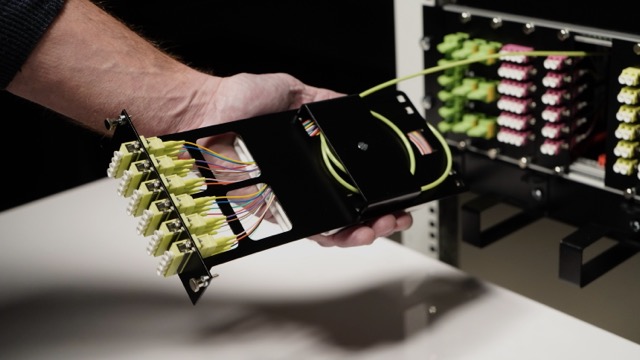
The extendable modules in modular splice systems enable service-friendly maintenance even in critical SCADA environments, where downtimes have a direct impact on energy production and profitability.
Condition monitoring and predictive maintenance
Onshore wind farm fiber optic systems need to transmit extensive condition monitoring data: vibration measurements, temperature profiles, performance analyses and wear indicators generate continuous data streams for predictive maintenance.
Wind energy communication for condition monitoring requires reliable fiber optic infrastructures that guarantee both high bandwidths for raw data and low latencies for real-time alerting. Modular fiber optic architectures create the communication basis for these different transmission requirements in uniform system concepts.
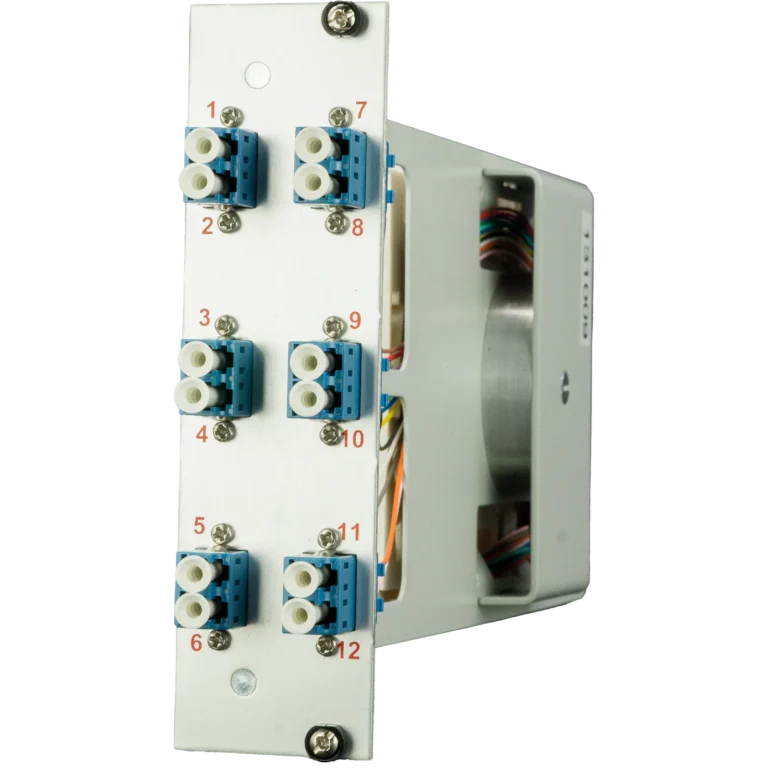
The systematic fibre management in VarioConnect systems facilitates the organization of complex monitoring installations and maintains clarity even with hundreds of data connections.
Communication basis for energy management and grid integration
Modern wind energy communication must provide reliable fiber optic infrastructures for energy management systems and grid integration. grid stabilization require bidirectional communication bases between wind farms and energy networks.
Onshore wind farm fiber optic installations create the communication infrastructure for grid code requirements and provide the technical basis for rapid responses to grid requirements. This requires both high availability and deterministic transmission characteristics of the underlying fiber optic systems.
The flexibility of modular systems enables adaptations to different grid codes and market mechanisms without fundamental infrastructure changes – important for developing energy markets.
System architectures for onshore wind energy
Central substations and collection points
Wind energy communication in onshore wind farms is typically based on central substations that act as collection points for groups of wind turbines. These locations require high-density fiber optic systems in air-conditioned technical rooms.
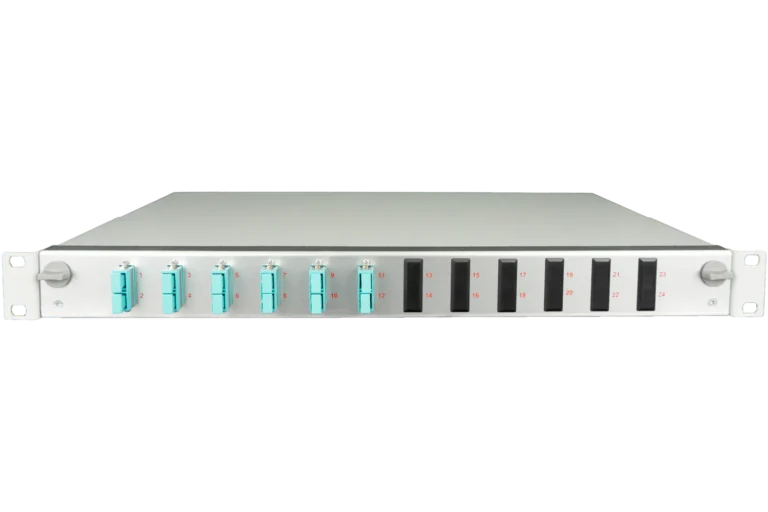
Onshore wind farm fibre optic solutions for central substations use VarioConnect 4U systems for maximum connection capacity with systematic organization. The modular architecture enables step-by-step expansion in line with wind farm development.
The service-friendly design with pull-out modules is particularly important for substation environments, where maintenance work often has to be carried out under time pressure and during operation.
Distributed connection of individual wind turbines
Every wind turbine requires reliable fiber optic connectivity for control, monitoring and data acquisition. Wind energy communication must efficiently organize hundreds of such connections, taking into account different data types and priorities.
Onshore wind farm fiber optic systems use hierarchical architectures with local collection points for groups of wind turbines. SlimConnect 1U systems are ideal for such decentralized distribution points in turbine equipment rooms.
The compact design and service-friendly construction facilitate installation in the often cramped technical rooms of wind turbines and enable maintenance-friendly accessibility.
Network connection and long-distance connections
Onshore wind farm fiber optic systems must also ensure reliable connections to regional energy grids and higher-level control systems. These critical connections require special attention to redundancy and reliability.
Wind energy communication for grid connection can use different transmission media and routes: from dedicated fiber optics to radio relay to public telecommunications networks. Modular architectures facilitate the integration of different transmission technologies.
The flexibility of modular systems also enables backup connections and redundancy concepts that guarantee critical wind farm communication even if individual transmission paths fail.
Special requirements of the wind energy sector
Ambient conditions and climate resistance
Wind energy communication must function reliably in demanding environments: From extreme temperatures and high humidity to mechanical vibrations caused by wind turbines. Onshore wind farm fiber optic systems are installed in air-conditioned technical rooms that offer optimum protection.
Modular fiber optic systems for controlled indoor environments are designed for standard temperature ranges from 0°C to +60°C and offer reliable performance under normal indoor climate conditions in wind farm technical centers.
The robust construction of European quality standards guarantees long-term reliability even in the dynamic environments of wind turbines with continuous mechanical loads.
Lightning protection and surge protection
Wind turbines are naturally exposed to lightning strikes and electromagnetic interference. Wind energy communication must be protected against overvoltages and induced interference by appropriate protection concepts.
Onshore wind farm fiber optic systems benefit from the natural galvanic isolation of fiber optic technology, which provides inherent immunity to electromagnetic interference. This is a key advantage over copper-based communication systems.
The modular architecture also enables systematic integration of surge protection elements and facilitates maintenance and replacement of protection components after lightning events.
Ease of maintenance under operating conditions
Wind energy communication must also be maintainable during ongoing energy production, as wind farms are optimized for continuous availability. Onshore wind farm fiber optic systems must allow hot service work and minimal service interruptions.
The pull-out modules in modular splice systems allow direct access to relevant components without extensive system disassembly. This reduces maintenance times and minimizes the impact on energy production.
Systematic fiber guidance and clear labeling also make it easier to work in poor lighting conditions or under time pressure – typical conditions for wind farm maintenance.
Integration into wind farm management systems
Asset management and lifecycle optimization
Wind energy communication creates the technical basis for comprehensive asset management systems that optimize wind farm performance over the entire turbine lifetime. Onshore wind farm fiber optic infrastructures enable long-term data collection and analysis through reliable transmission paths.
Modular fiber optic architectures support evolving asset management requirements through expandable system concepts. New sensors, analysis systems and optimization tools can be integrated step by step.
The 5-year guarantee on fiber optic components supports long-term asset management strategies through predictable infrastructure costs and reduced uncertainties.
Performance optimization and yield increase
Onshore wind farm fibre optic systems create the communication infrastructure for data-driven performance optimization through comprehensive recording of operating data, environmental conditions and turbine parameters. Wind energy communication becomes the technical basis for maximum energy yield.
Modern wind farm optimization uses machine learning and AI to increase performance. This requires both high data volumes and low latencies for real-time optimization – requirements that modular fibre optic systems optimally meet.
The flexibility of modular architectures also enables experimental approaches: New optimization algorithms can be tested in sub-areas before they are implemented park-wide.
Remote monitoring and remote operation
Wind energy communication creates the infrastructure foundation for comprehensive remote monitoring and remote operation, which reduces operating costs and minimizes response times in the event of problems. Onshore wind farm fiber optic systems form the technical foundation for modern remote management concepts.
Reliable fiber optic connections enable remote diagnostics, remote maintenance and partially autonomous problem solving. This reduces the need for costly on-site visits and improves wind farm efficiency.
The modular granularity also supports precise remote diagnostics: problems can be narrowed down to individual modules or system components, enabling targeted repair measures.
Economic aspects of wind farm communication
Return on investment through optimized communication
Wind energy communication creates the technical basis for reliable data transmission that enables optimized turbine control, predictive maintenance and maximum availability. Onshore wind farm fiber optic investments in high-quality communication infrastructures pay off through improved performance.
High-quality communication systems enable early problem detection and proactive maintenance, which reduces unplanned downtime and extends turbine life. This leads to direct improvements in wind farm profitability.
The service-friendly design of modular systems also reduces maintenance costs and times, which translates into improved operating margins and higher ROI for wind farm investments.
Total cost of ownership for wind farm infrastructure
Onshore wind farm fiber optic projects must consider long-term total cost of ownership, as wind farms typically operate for 20-25 years. Quality and ease of maintenance are more critical than low purchase prices.
Wind energy communication with modular, service-friendly components reduces long-term operating costs through fewer maintenance visits, longer component service life and simpler modernization cycles.
The modular expandability also avoids expensive complete replacements in the event of growing requirements or technology updates, which optimizes TCO over the lifetime of the wind farm.
Scaling effects and standardization
Wind energy communication through standardized, modular components enables scaling effects in procurement, installation and maintenance. Onshore wind farm fiber optic projects benefit from standardized system architectures.
By standardizing their wind energy communication infrastructure, wind farm operators can reduce procurement costs, deploy maintenance teams more efficiently and optimize spare parts logistics.
The compatibility of modular systems between different wind farm projects also enables the transfer of experience and continuous optimization of communication concepts.
Technology trends in wind energy communication
Digitalization and Industry 4.0
Wind energy communication is increasingly developing into fully digitized, autonomous systems in the sense of Industry 4.0. Onshore wind farm fiber optic infrastructures must support this digital transformation with powerful, flexible communication architectures.
Digital twins, AI-supported optimization and autonomous maintenance require extensive data acquisition and processing. Modular fiber optic systems create the basis for these data-intensive applications.
Edge computing concepts can be integrated into modular wind farm infrastructures and enable local data processing for reduced latencies and optimized bandwidth usage.
Integration of renewable energy systems
Future wind energy communication must also support integration with other renewable energy systems: Hybrid wind-solar parks, battery storage and power-to-X systems require extended communication concepts.
Onshore wind farm fiber optic systems with modular architectures can integrate different energy technologies in uniform communication infrastructures and enable synergies between different forms of generation.
The flexibility of modular systems also makes it possible to gradually integrate new energy technologies without affecting existing wind farm communication.
Artificial intelligence and machine learning
Wind energy communication will increasingly use AI-supported optimization: Predictive analytics for maintenance, automatic anomaly detection and intelligent control algorithms improve wind farm performance.
Onshore wind farm fiber optic infrastructures must support the high data rates and low latencies that modern AI applications require. Modular systems provide the necessary scalability for data-intensive applications.
Machine learning algorithms can also be used to optimize wind energy communication itself: Intelligent routing algorithms, adaptive bandwidth allocation and self-healing networks.
Standards and certifications
Wind energy-specific standards
Wind energy communications must meet various wind energy-specific standards and certification requirements. Onshore wind farm fiber optic systems must ensure compliance with IEC 61400 standards and other relevant standards.
Modular fiberglass systems with European production according to German quality standards support compliance with strict wind energy requirements through systematic quality documentation and traceable manufacturing processes.
The service-friendly design also facilitates maintenance according to manufacturer specifications and supports compliance with maintenance requirements for wind energy certifications.
EMC and interference immunity
Wind turbines generate electromagnetic interference that can affect wind energy communication. Onshore wind farm fiber optic systems must meet corresponding EMC requirements.
The natural immunity of fiber optic technology to electromagnetic interference is a decisive advantage for wind energy communication. Modular systems can systematically integrate additional EMC protection measures.
Systematic EMC tests and certifications ensure reliable onshore wind farm fiber optic performance even in electromagnetically demanding environments.
Maintenance and service in wind farm environments
Service-friendly concepts for wind farm teams
Wind energy communications must be able to be maintained by wind farm personnel, who often have no specialist knowledge of fiber optics. Onshore wind farm fiber optic systems must therefore be designed to be particularly user-friendly and low-maintenance.
The pull-out modules in modular splice systems allow direct access without extensive disassembly and reduce the need for specialist knowledge. Clear labeling and systematic organization make it easier for even inexperienced technicians to find their way around.
Structured training programs for wind farm teams, supplemented by external specialist support for complex work, create sustainable maintenance capability.
Spare parts logistics and emergency repairs
Wind energy communication must be quickly repairable even in the event of component failures, as communication disruptions can affect the entire wind farm operation. Onshore wind farm fibre optic systems must therefore be maintenance-friendly and repair-optimized.
Modular architectures simplify spare parts logistics considerably: standardized modules can be stocked instead of having to store separate spare parts for each specific configuration.
The modular repairability also enables quick emergency configurations: Defective modules can be replaced with spare modules while repairs are carried out in the workshop.
Predictive maintenance for communication systems
Onshore wind farm fiber optic systems can integrate intelligent monitoring that enables predictive maintenance even for the communication infrastructure itself. This reduces unplanned outages and optimizes maintenance cycles.
Modular systems support granular monitoring: individual modules can be continuously monitored and deviations can be detected early on before they lead to failures.
The integration of monitoring systems into modular wind energy communication architectures also enables data-based optimization of communication performance.
Conclusion: Modular communication as the basis for successful wind energy
Wind energy communication is the technical backbone of modern, efficient wind farms. Onshore wind farm fiber optic systems with modular, service-friendly architectures enable optimum energy yield, reduced operating costs and long-term profitability of wind energy investments.
Investing in high-quality, modular fibre optic infrastructures pays off for wind farms through improved availability, more efficient maintenance and extended optimization options. Wind energy communication is evolving from a simple data transmission medium to an intelligent enabler for maximum wind farm performance.
Onshore wind farm fiber optic solutions through modular concepts provide the flexibility needed for the rapidly evolving wind energy industry. From traditional single turbines to intelligent, AI-optimized wind farms, modular systems can adapt to new technologies and requirements.
The future of wind energy is based on intelligent, networked systems with reliable, high-performance communication. Wind energy communication with modular, easy-to-maintain fiber optic architectures creates the technical basis for this evolution of sustainable energy production.
At Fiber Products, we develop modular fiber optic systems for the highest quality requirements. Our modular systems combine proven technology with innovative features. With a 5-year guarantee and European production to German quality standards, we offer competitive prices and premium quality for professional fiber optic networks.
Discover our complete product range or visit our online store. Talk to us – together we will develop the optimal solution for your wind energy project. Contact us for an individual consultation or find out more about other specialist topics in our fiber optic knowledge blog.