Special fiber optic projects: Development process for customized system solutions
Special fiber optic projects are created where standard solutions reach their limits and special requirements demand individual approaches. Our development process for tailor-made fiber optic projects is based on 30 years of practical experience and the principle of intelligently expanding proven components. Instead of starting from scratch, we use our modular standard portfolio as a solid basis and develop the targeted adaptations required for your specific application.
The development of special fiber optic projects follows a proven process that combines technical feasibility with economic implementation. The focus is always on practical application – we do not develop theoretical solutions, but functioning systems that reliably do their job in practice. Our modular system at fiber-products.de forms the proven foundation on which even the most complex special requirements can be implemented.
Project start and clarification of requirements
Successful special fiber optic projects start with a clear understanding of the actual requirements. It often turns out that seemingly complex problems can be solved elegantly by cleverly combining or adapting existing components.
Needs analysis and problem understanding
The first step in any special fiber optic project is a thorough understanding of the actual challenge. Many inquiries start with “This is not available on the market”, but our experience shows that often 80% of the solution already exists and only 20% really needs to be developed from scratch.
Together with the customer, we analyze the installation situation, the technical boundary conditions and the actual functional requirements. In doing so, we differentiate between absolutely necessary features and desirable features that could unnecessarily complicate the project.
The VarioConnect modular system has proven to be the ideal basis for many special fiber optic projects, as its open architecture enables a wide range of adaptations without compromising the proven basic functionality.
Feasibility study and solution approaches
After clarifying the requirements, we examine various solutions for their technical and economic feasibility. We draw on our 30 years of experience with similar challenges to provide realistic estimates of effort, costs and implementation time.
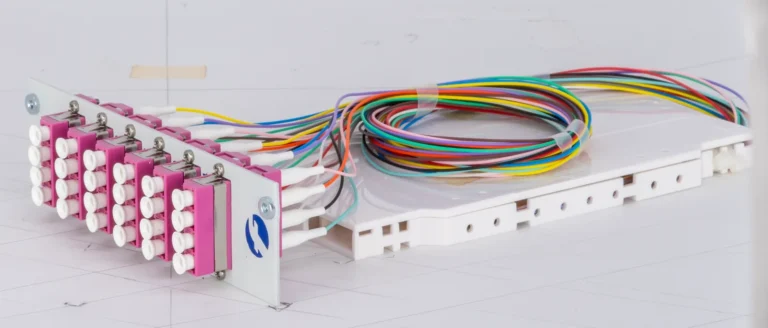
Many special fiber optic projects can be solved by combining existing modules. The BasicConnect front modules, for example, enable almost any conceivable connector combination without the need to develop new tools or manufacturing processes.
For truly new requirements, we check whether the desired function can be achieved by modifying existing components. New front panels, adapted housings or special cable guides can often be implemented more quickly and cost-effectively than completely new developments.
Cost estimate and project framework
Transparent cost estimates are particularly important for special fiber optic projects, as customers need to develop realistic budget expectations. We differentiate between one-off development costs and the variable costs per unit.
The number of units has a considerable influence on cost-effectiveness. While complex special developments only pay off from larger quantities, simple adaptations can often make sense with just a few units.
Our modular approach helps to minimize costs. If 90% of the solution is based on proven standard components, development costs are only incurred for the actual adaptations.
Development phase and prototyping
The actual development of special fiber optic projects is iterative and customer-oriented. Early prototypes enable rapid feedback and prevent costly mistakes.
Concept development and first drafts
Based on the requirements analysis, we develop specific solution concepts that take all technical and practical aspects into account. In doing so, we use proven design principles and manufacturing processes to minimize risks.
The concept phase also takes into account subsequent production and maintenance. Special fiber optic projects should not only work, but also be producible and easy to service. The EasyConnect splice modules are an example of how innovative technology can be combined with simple handling.
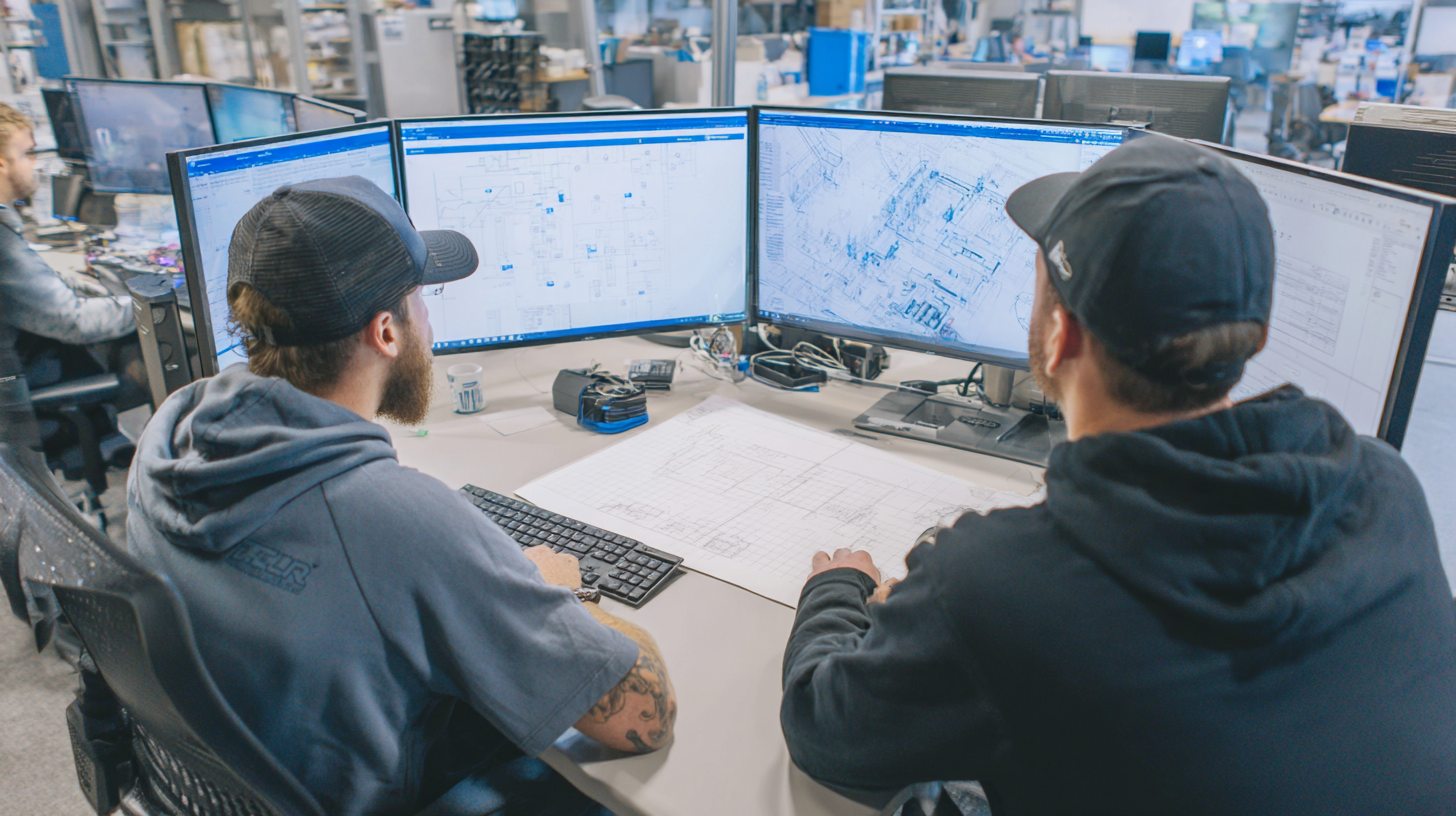
3D models and technical drawings visualize the planned solution and enable early feedback from the customer. Changes can still be made cost-effectively at this stage.
Prototyping and functional testing
Working prototypes are the best way to validate special fiber optic projects. We quickly create functional samples that demonstrate all critical functions and can be tested under realistic conditions.
Prototypes don’t have to look perfect, but they do have to work. We often use combinations of existing components and quickly manufactured custom parts to prove the basic function.
Testing is carried out under real operating conditions wherever possible. Customers can test the prototypes in their actual application and provide feedback on function, handling and possible improvements.
Optimization and fine-tuning
Based on the prototype tests, the special fibreglass projects are optimized and finalized. This involves both technical improvements and simplifications in production and assembly.
In practice, there are often opportunities for simplification that were not apparent in theory. Superfluous features are removed, tolerances are adjusted and the design is optimized for series production.
The final design also takes into account aspects such as material availability, production capacities and quality assurance. Special fiberglass projects should also remain reproducible in the long term.
Modular adaptations as the key to success
The success of special fiber optic projects often lies in the clever use and adaptation of proven modules. Instead of reinventing everything, we systematically expand our standard range to include the required special functions.
Customization of existing components
Many special fiber optic projects require only minor adjustments to existing components. New drill holes, modified dimensions or additional fixing points can often be realized with little effort.
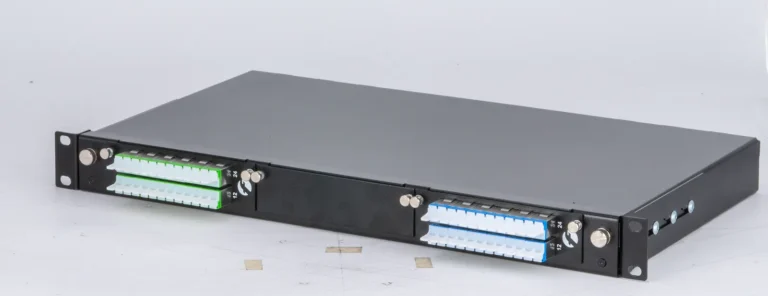
The SlimConnect 1U system, for example, offers a solid basis for customization. The tried-and-tested mechanics and fiber routing modular systems are retained, while the housing shape, connections or mounting options can be modified to suit customer requirements.
Surface treatments or material changes are also often possible with limited effort. Special colors, coatings or alternative materials can adapt existing designs to new requirements.
Combination of different modules
More complex special fiber optic projects are often created by intelligently combining various standard modules. The modular architecture of our system enables flexible configurations that meet special requirements.
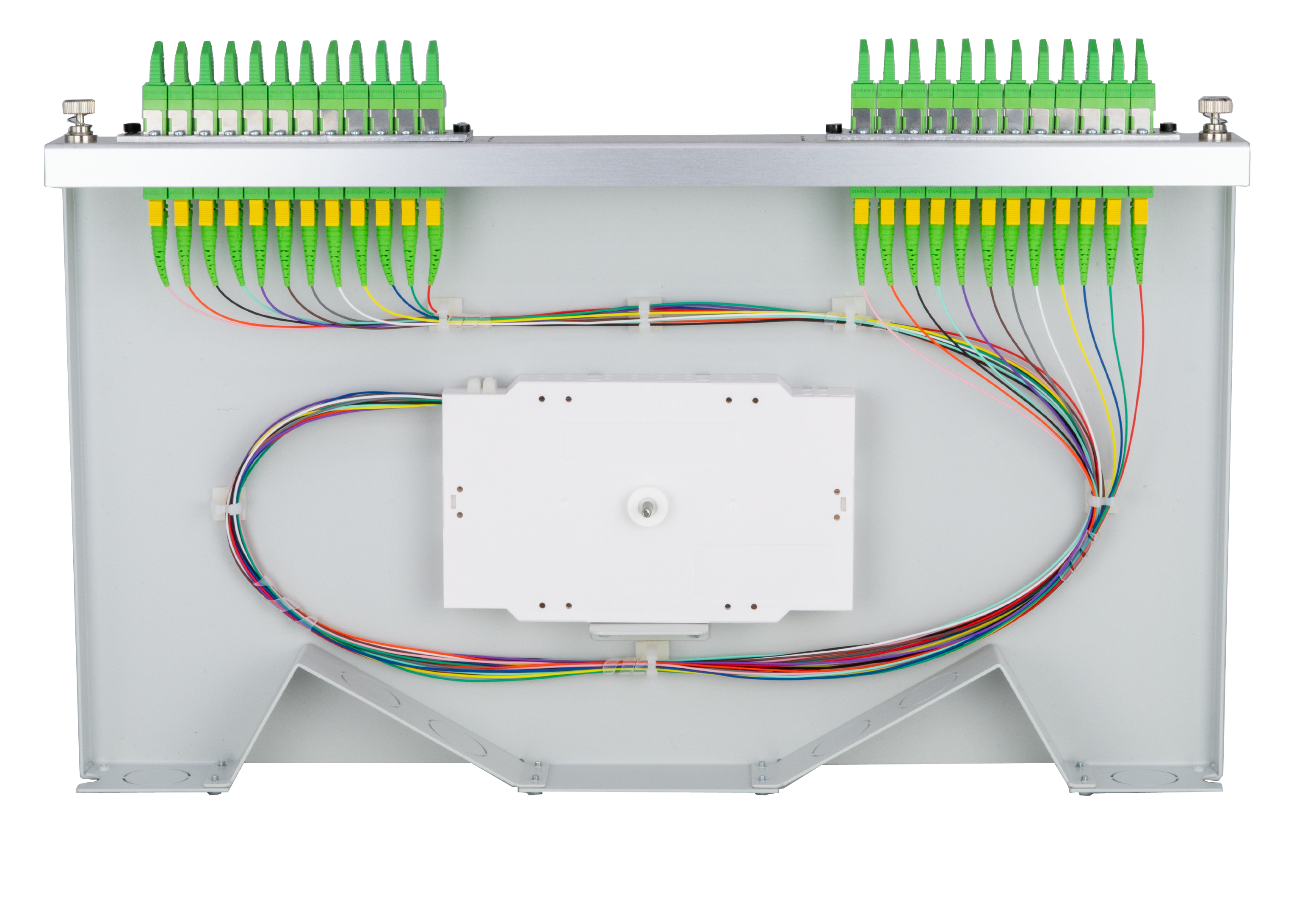
The VarioConnect 3U and 4U subracks can combine various functions in one system. Splice panels, patch panels and distribution structures can be combined as required and adapted to specific workflows.
The integration of different connector types is also possible by combining BasicConnect front modules. Legacy systems can thus be connected to modern components without the need for complex adapter solutions.
Development of new modules
Only when existing components really cannot be adapted do we develop completely new modules. However, we use proven design principles and manufacturing processes to minimize risks.
New modules follow the same modular philosophy as our standard range. They are compatible with existing components and can also be used for future projects.
The development of new modules is more complex, but at the same time it expands our range of solutions for similar future requirements. Innovative special fiber optic projects can thus become new standard products.
Practical implementation and production
Special fiberglass projects are manufactured to the same quality standards as standard products. Proven manufacturing processes and established supply chains guarantee on-time delivery, even for custom-made products.
Production planning and material selection
Production planning takes into account available materials and production capacities. Special fibreglass projects should be based on proven materials and production processes wherever possible in order to minimize costs and risks.
Special materials are possible, but they can extend delivery times and increase costs. Similar properties can often be achieved with standard materials, which are more readily available and less expensive.
Production planning also takes future repeat orders into account. Materials and components should remain available in the long term to ensure the supply of spare parts.
Quality assurance and test procedures
Special fiber optic projects undergo the same quality tests as standard products. Mechanical tests, optical measurements and functional tests validate the performance under realistic conditions.
Special test procedures can be developed for special requirements. Vibration tests, temperature cycles or special loads are carried out according to the operating conditions.
The 5-year guarantee also applies to special fiber optic projects and underlines our confidence in the quality of custom-made products. Comprehensive documentation enables traceability and support.
Delivery and installation
Special fiber optic projects are carefully packaged and supplied with comprehensive documentation. Installation instructions, maintenance instructions and technical data are specially tailored to the custom-made product.
For more complex projects, we offer installation support or training. Practical instruction on site ensures optimum function and avoids problems caused by improper handling.
We are also available for technical support after delivery. Questions about installation, configuration or maintenance are answered quickly and competently.
Industry-specific development approaches
Different industries have different development approaches and requirements. Our 30 years of experience with customers from all sectors enables us to take an industry-specific approach to special fiber optic projects.
Research and development
Research institutions and educational establishments often have experimental requirements that demand a high degree of flexibility. Special fiber optic projects for this area often need to be reconfigurable and expandable.
Modular solutions are particularly advantageous here, as they allow for later changes and extensions. Research projects often evolve over time and the infrastructure must be able to keep pace.
Short development times are often more important than optimized costs. Fast prototypes and pragmatic solutions allow researchers to continue their work without having to wait for perfect final solutions.
Industrial automation
Industrial companies need robust, easy-to-maintain solutions that work reliably in harsh environments. Special fiber optic projects for industry often have to withstand particular mechanical and climatic stresses.
Service-friendliness is particularly important in industry, as failures can cause expensive production downtime. EasyConnect modules with tool-free maintenance are therefore often the first choice for industrial applications.
Long-term availability and spare parts supply are important criteria. Industrial plants often run for decades, and the fiber optic infrastructure must be correspondingly durable and maintainable.
Medical technology and healthcare
Hospitals and medical facilities have special requirements in terms of hygiene, reliability and resilience. Special fiber optic projects for the healthcare sector must take these special requirements into account.
Easy-to-clean surfaces and materials that can withstand disinfectants are often required. At the same time, the systems must function absolutely reliably, as failures can jeopardize patient safety.
Redundant design and service-friendly construction are particularly important in medical applications. Maintenance work often has to be carried out during operation.
Cost control and efficiency
Special fiber optic projects must be economically viable. Through clever development strategies and the use of existing components, custom-made products can also be realized cost-effectively.
Minimize development costs
The greatest cost savings in special fiber optic projects are achieved by using proven components as a basis. If 80% of the solution is based on standard parts, development costs are only incurred for 20%.
Simple solutions are often better than complex ones. Excessive specifications or unnecessary features drive up costs without bringing corresponding benefits.
We avoid parallel development of different variants by identifying the optimum solution at an early stage and pursuing it consistently. Too many options dilute the development effort.
Unit-dependent cost structures
For small quantities, the development costs dominate the total costs. Simple adaptations of existing components are often the only economical option here.
Larger quantities justify more complex developments and special manufacturing processes. From around 100 pieces, more complex custom-made products can also become economical.
Long-term partnerships make it possible to amortize development costs over several projects. Framework agreements and continuous cooperation reduce individual project costs.
Lifecycle cost analysis
Special fiber optic projects should be considered over their entire life cycle. Inexpensive initial solutions can become expensive due to high maintenance costs or early obsolescence.
Maintenance-friendly design and use of durable materials reduce operating costs. EasyConnect technology shows how service-friendly design can save costs in the long term.
Spare parts supply and upgrade options should be planned from the outset. Modular systems enable selective modernization without complete replacement.
Support and long-term care
Special fiber optic projects often require special support that goes beyond standard services. Long-term partnership and continuous support are part of our offer.
Technical support and application consulting
Custom-made products often require special installation or configuration. Comprehensive technical support and practical advice are an integral part of special fiber optic projects.
Telephone support and remote diagnostics can provide rapid assistance in the event of problems. Our developers know every detail of the custom-made products and can provide targeted advice.
Documentation and maintenance instructions are specially tailored to the custom-made product. Practical tips and troubleshooting guides make day-to-day operation easier.
Spare parts supply and obsolescence management
We guarantee the supply of spare parts for the entire product life of special fiber optic projects. Identical components can also be supplied years later.
Design data and production documents are archived for the long term. Functionally identical spare parts can be produced even if the manufacturing process or materials are changed.
Timely information about possible material or technology changes enables proactive planning. Customers can rely on long-term availability.
Further development and modernization
Special fibre optic projects can be further developed and modernized over many years. New requirements or changed operating conditions can be taken into account through adaptations.
Upgrade paths are already considered during initial development. Modular architectures enable selective modernization without complete replacement.
Innovative further developments from special projects are often incorporated into our standard range. Customers thus benefit from continuous innovation and cost reduction.
Future prospects and innovation
Special fiber optic projects are often harbingers of future standard requirements. The special solutions developed today may become mainstream tomorrow.
Technology trends and new requirements
New technologies such as 5G, the Internet of Things and artificial intelligence are creating new requirements for fiber optic infrastructures. Special fiber optic projects help to understand these new requirements at an early stage and develop solutions.
Edge computing and local data processing require new network architectures. Flexible, quickly reconfigurable fiber optic systems are becoming increasingly important.
Sustainability and environmental protection also influence the development of special fiberglass projects. Recyclable materials, energy-efficient production and a long service life are increasingly in demand.
Innovation through customer feedback
The best innovations are often the result of close collaboration with demanding customers. Special fiber optic projects are an important driver of innovation for our entire portfolio.
Customer feedback from real applications is more valuable than theoretical considerations. Practical experience shows which features are really important and which are superfluous.
Successful special solutions are often incorporated into the development of new standard products. This means that all customers benefit from innovations that were originally developed for special applications.
Conclusion: Partnership for customized excellence
Special fiber optic projects are more than just custom-made products – they are the key to optimal solutions for unique challenges. Our proven development process combines 30 years of experience with modern development methodology and modular flexibility.
Investing in special fiber optic projects pays off through perfect adaptation to specific requirements and long-term future security. Customers receive not just a product, but a lasting partnership for innovative fiber optic solutions.
At Fiber Products, we develop modular fiber optic systems for the highest quality requirements. Our modular systems combine proven technology with innovative features.
With a 5-year guarantee and European production according to German quality standards, we offer competitive conditions with professional quality for successful fiber optic networks.
Discover our complete product range or visit our online store. Talk to us – together we will develop the optimum solution for your project. Contact us for an individual consultation or find out about other specialist topics in our fiber optic knowledge blog.