FTTH planning errors: 7 costly mistakes and how to avoid them

FTTH projects are complex infrastructure projects with a high potential for error – even small FTTH planning errors can lead to significant cost increases, schedule delays or technical problems. Industry experience shows that 60-70% of all FTTH projects exceed their original budget or schedule, often due to avoidable FTTH planning errors in early project phases.
The analysis of failed or problematic fiber optic projects reveals recurring error patterns that can be avoided through systematic planning and proven project management methods. Municipal utilities as FTTH newcomers are particularly at risk as they lack experience with fiber-specific challenges. At the same time, the municipal administration is under particular pressure to justify cost increases or project problems.
The lessons learned from problematic projects are valuable: they not only reveal typical FTTH planning errors, but also proven solutions and preventive measures. Professional risk management and structured project management can prevent most costly mistakes. Investing in qualified project management and external consulting is usually significantly cheaper than rectifying FTTH planning errors during implementation.
The 7 most common FTTH planning errors at a glance
The following seven error types are based on real project experience and represent the most common causes of FTTH project problems:
Mistake 1: Insufficient market analysis and demand forecast
Overestimated connection rates are one of the most critical FTTH planning errors: many municipal utilities calculate with 70-80% take rates after three years, but only achieve 40-50% in reality. This discrepancy FTTH profitability analysis and can make projects unprofitable. Optimistic market estimates without a sound data basis lead to unrealistic business cases.
Lack of target group analysis leads to unsuitable service offerings: Rural areas have different requirements than urban areas. An ageing population reduces the affinity for digitalization, while commercial areas require higher bandwidths. These differences must be taken into account in product strategy and pricing.
Superficial competitive analysis is one of the most common FTTH planning errors: Existing providers react to FTTH expansion with predatory pricing or technology upgrades. Established network operators can retrofit VDSL vectoring or DOCSIS 3.1 and reduce FTTH advantages. These reactions must be anticipated and taken into account in calculations.
Proven solutions:
- Representative market research with at least 300 households per 10,000 inhabitants
- Demand aggregation before the start of expansion with binding preliminary contracts
- Scenario planning with conservative (40%), realistic (60%) and optimistic (80%) take rates
- Continuous monitoring of the competitive situation during the project term
- Segment-specific offers for different target groups
Error 2: Incomplete route planning and approval procedure
Insufficient as-built surveys lead to costly FTTH planning errors during the construction phase: unmapped supply lines, contamination or archaeological finds can make routing impossible and require expensive rescheduling. These problems often only come to light at the start of construction and cause considerable delays.
Underestimated approval procedures are among the typical FTTH planning errors: FTTH routes cross different areas of responsibility – municipal roads, county roads, federal highways, railroad lines and bodies of water require separate approvals. These procedures can take 6-18 months and block each other. Nature conservation requirements limit construction times to a few months per year.
A lack of coordination with other construction measures wastes synergies: Road renovations, sewer construction or other infrastructure projects offer cost-effective co-laying opportunities. These opportunities are often not recognized or are planned too late.
Proven solutions:
- Systematic inventory with georadar and line information from all suppliers
- Professional surveying and CAD-based route planning
- Early coordination with all approval authorities and infrastructure operators
- Establishing long-term cooperation with civil engineering offices and other utilities
- Using digital approval procedures and one-stop store approaches
- Contingency planning for critical route sections
Mistake 3: Insufficient cost calculation and budget planning
Cost estimates without detailed quantity surveys lead to the most expensive FTTH planning errors: Flat-rate estimates of EUR 2,000 per household ignore local peculiarities. Bedrock, high groundwater levels or dense development can double costs. These factors must be taken into account in detailed cost estimates.
The lack of risk buffers in budget planning is one of the critical FTTH planning errors: FTTH projects naturally have high uncertainties with regard to building ground, approvals and market development. Budgets without 15-25% risk allowances are usually inadequate. These buffers must be communicated transparently.
Underestimation of ancillary costs: Project management, planning, approvals and marketing account for 15-25% of total costs. These “soft” factors are often underestimated or completely overlooked.
Proven solutions:
- Bottom-up cost estimate based on detailed quantity survey
- Benchmarking with comparable projects, taking regional factors into account
- Transparent risk buffer of 15-25% depending on project risk
- Phased budget release with gate reviews at milestones
- Continuous cost control with monthly target/actual comparisons
- Fixed-price contracts with clearly defined scopes of services
Mistake 4: Technology selection without future-proofing
Undersized backbone capacities limit subsequent expansions and are one of the strategic FTTH planning errors: 100G ring systems can quickly reach their limits with customer growth or increasing bandwidth requirements. Subsequent upgrades are more expensive than forward-looking planning. Modern networks should be prepared for 400G/800G migration.
Outdated PON technologies reduce competitiveness: GPON with 2.5 Gbit/s downstream is sufficient for today’s requirements, but will be overtaken by XGS-PON or NG-PON2. These technologies offer 10+ Gbit/s and better support business-critical applications.
Incompatible system components make maintenance and expansion more difficult: vendor lock-in for critical components can lead to dependencies and excessive prices. modular system selection create flexibility here and avoid FTTH planning errors when selecting systems.
Proven solutions:
- Technology roadmap over 15-20 years with regular updates
- Oversizing the passive infrastructure for future requirements
- Modular system architectures with standardized interfaces
- Multi-vendor strategies to avoid dependencies
- Continuous technology scouting and evaluation of new standards
- Investment in future-proof technologies even with higher initial costs
Mistake 5: Unqualified project organization and governance
A lack of fiber-specific expertise in the project team is one of the fundamental FTTH planning errors: FTTH projects differ fundamentally from other IT or construction projects. Specialist knowledge of PON technologies, fiber optic splicing and network topologies is indispensable. Municipal utilities without these skills have to buy in external expertise or recruit qualified employees.
Unclear responsibilities between different stakeholders lead to serious FTTH planning errors: FTTH projects involve IT, technology, sales, civil engineering and external service providers. Without clear governance structures, interface problems and coordination losses arise. RACI matrices (Responsible, Accountable, Consulted, Informed) create clarity.
Insufficient change management for organizational adjustments: FTTH business requires different processes and systems than traditional municipal utility activities. Customer service, network management and sales need to be adapted.
Proven solutions:
- Recruitment or training of employees qualified in fiber optics
- Building strategic partnerships with experienced FTTH service providers
- Establishment of professional project management methods (PMI, PRINCE2)
- Clear governance structures with defined decision-making powers
- Regular project reviews and milestone gates
- Investment in change management and organizational development
Mistake 6: Neglecting customer management
Inadequate communication with affected citizens leads to avoidable FTTH planning errors: civil engineering works cause traffic obstructions, noise and dust. Without proactive information, complaints and political pressure arise. Transparent communication about benefits, timetables and disruptions creates acceptance.
Complicated ordering processes reduce connection rates and increase FTTH planning errors in market development: bureaucratic application procedures, long waiting times or unclear responsibilities frustrate potential customers. Online booking, clear processes and fast processing increase take rates.
A lack of service quality in the initial phase damages the reputation: technical problems, outages or unqualified support quickly become known in small communities and affect further willingness to connect.
Proven solutions:
- Professional communication strategy with local media and multipliers
- Online portals for information, booking and service requests
- Qualified customer support with fiber optic-specific know-how
- Proactive information about construction progress and disruptions
- Community building through events and demonstrations
- Complaint management and continuous improvement
Error 7: Insufficient quality assurance during installation
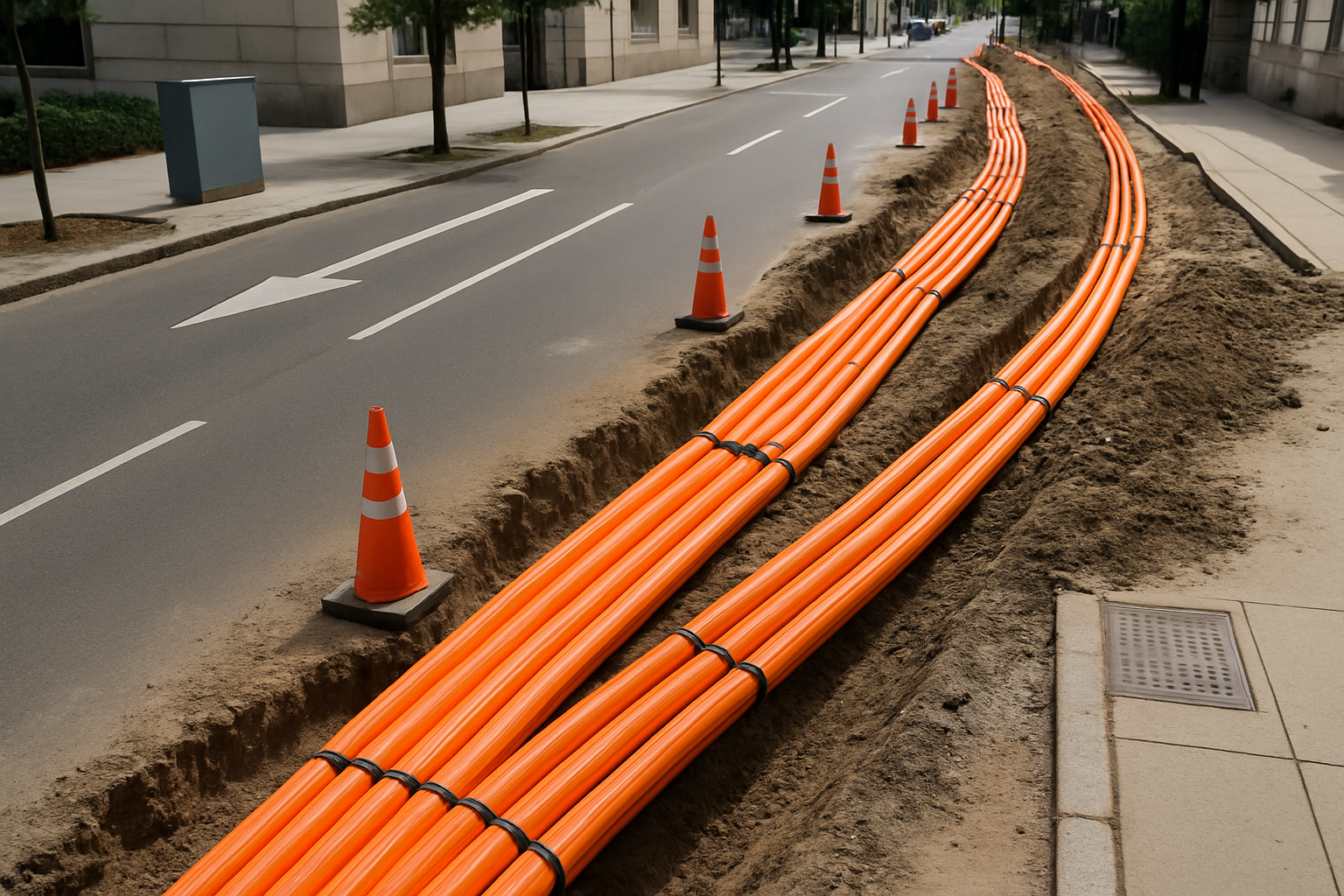
A lack of control of the civil engineering quality leads to problems later on and is one of the costly FTTH planning errors: Insufficient compaction, incorrect laying depths or damaged protective pipes can make expensive reworking necessary. These defects are often only discovered years later during repairs or extensions.
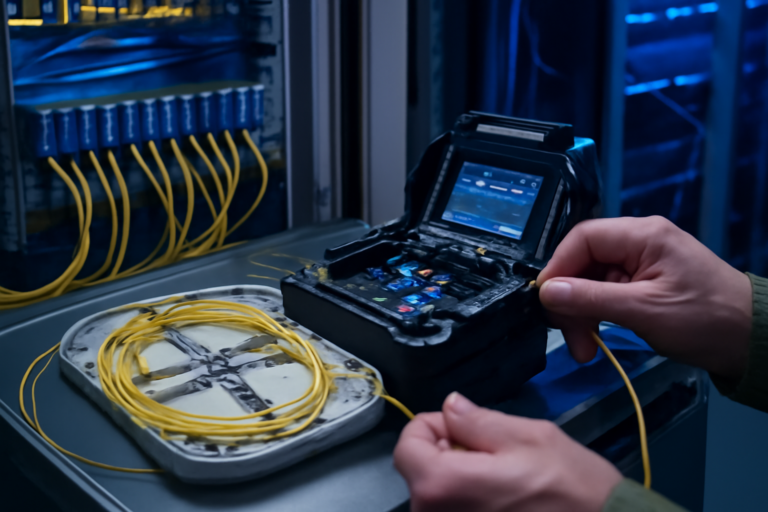
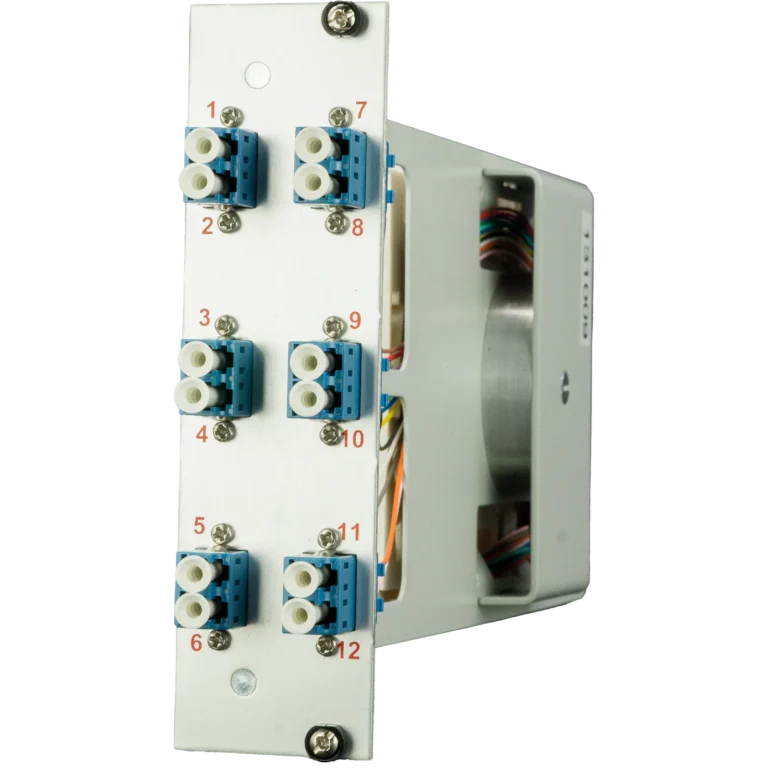
Unqualified splicing work causes performance problems: Poor splice quality leads to increased attenuation values and failures. Non-certified technicians or time pressure can lead to poor work. High-quality splice modules and 7TE top-hat rail boxes support precise installation.
Lack of documentation makes maintenance and troubleshooting difficult: Incomplete as-built documentation makes fibre localization time-consuming in the event of faults. CAD plans must be continuously updated during the construction phase.
Proven solutions:
- Detailed quality specifications and acceptance criteria in contracts
- Spot checks during civil engineering and installation by qualified site managers
- Complete optical measurements of all fiber optic connections according to IEC standards
- Certification of all splicing technicians and regular follow-up training
- Digital as-built documentation with GPS coordinates and photo documentation
- Establishment of quality management systems in accordance with ISO 9001
Preventive measures against FTTH planning errors
Professional risk analysis and feasibility studies
Professional feasibility studies identify FTTH planning errors at an early stage: Detailed preliminary studies cost 2-5% of the total investment, but can avoid cost increases of 20-50%. These studies should cover technical, economic and regulatory aspects. External consulting brings an objective perspective and experience.
Step-by-step project development reduces FTTH planning errors and risks: Pilot projects in manageable areas gather experience with limited risk. Lessons learned are incorporated into larger expansion stages. This iterative approach is safer than big-bang approaches.
Continuous project controlling enables timely corrections: monthly status reports, milestone reviews and earned value management reveal deviations at an early stage. Dashboard-based project control increases transparency and enables proactive management.
Systematic risk analysis and contingency planning:
- SWOT analyses for all project phases
- Quantitative risk assessment with Monte Carlo simulations
- Emergency plans for critical risk scenarios
- Regular risk reviews and updating of assessments
- Building up strategic reserves for unforeseen events
Lessons learned from successful projects
Successful FTTH projects are characterized by realistic planning and a systematic approach: Conservative assumptions, sufficient buffers and professional project organization are common success factors. These projects invest 10-15% more in planning and project management, but save 20-30% on overall costs by avoiding FTTH planning errors.
Inter-municipal cooperation reduces FTTH planning errors and costs: Joint projects involving several municipal utilities reach a critical size for professional implementation. Shared expertise and risks improve the probability of success. However, these cooperations require careful governance and contract design.
Long-term partnerships with qualified service providers create win-win situations: Reliable partners have an interest in the success of the project and contribute suggestions for improvement. These relationships develop over several projects and create trust.
Success patterns of identified best-practice projects:
- Early involvement of all stakeholders in the planning phase
- Systematic documentation of all decisions and changes
- Regular communication with citizens and political representatives
- Investment in employee qualifications and training
- Building up expertise and know-how as a strategic resource
Organizational success factors
Dedicated FTTH project organization
Successful municipal utilities establish separate organizational units for fiber optic projects in order to avoid FTTH planning errors: These teams develop specific expertise and can concentrate fully on FTTH. Matrix organizations with experts from different areas optimally combine specialist knowledge.
Systematic skills development in the organization prevents FTTH planning errors: FTTH requires new skills in technology, sales and service. Training programs for existing employees and the recruitment of specialists build up the necessary expertise. This investment in human resources pays off in the long term.
Establishment of quality management systems: Standardized processes, checklists and quality controls reduce the risk of errors. ISO 9001 certification can objectify quality standards. These systems create trust with customers and financial partners.
Change management for FTTH transformation:
- Clear vision and communication of strategic goals
- Gradual adaptation of processes and systems
- Resistance management and motivation building among employees
- Cultural change from traditional utility to telecommunications provider
- Building new skills and career paths
Technical quality assurance and modular systems
Standard-compliant installation and documentation
Standard-compliant installation in accordance with recognized standards prevents technical FTTH planning errors: DIN EN 50173, IEC 61280 and ITU-T recommendations define minimum requirements for fibre optic network installation. Compliance with these standards guarantees quality and future security. Certified installers and regular audits ensure compliance.
Systematic measurements and documentation prevent subsequent FTTH planning errors: Every fiber optic connection should be measured and documented after installation. OTDR measurements show attenuation budgets and identify potential problem areas. This documentation is essential for efficient network operations and maintenance.
Modular system architectures for flexibility
Modular fibre optic solutions enable flexible expansions and reduce FTTH planning errors in system design: Standardized modules support different expansion stages and technologies. This flexibility reduces lock-in risks and enables adaptation to changing requirements.
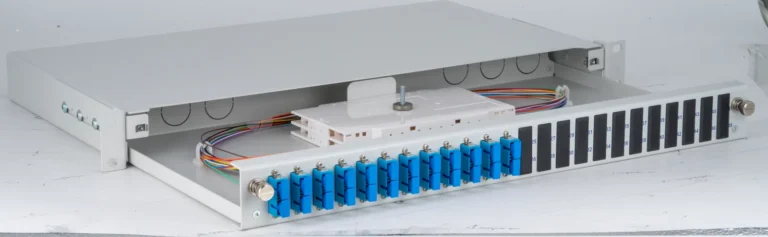
1U systems such as SlimConnect offer compact solutions for smaller installations, while 3U systems offer maximum flexibility for larger projects. The combination of different splice modules enables configurations tailored to requirements.
Quality assurance in all project phases:
- Supplier qualification and auditing before contract conclusion
- Incoming inspections of all critical components
- Regular construction site inspections by qualified specialists
- Acceptance tests according to defined criteria and standards
- Continuous monitoring of network performance after commissioning
Industry-specific solutions
Requirements of different target groups
Data centers have specific requirements for high-density cabling and minimal latency. FTTH planning errors in capacity planning are particularly critical here, as subsequent expansions are very cost-intensive. High-density splice systems and compact 1U solutions enable optimum use of space.
Industrial companies need robust and low-maintenance solutions for harsh environments. FTTH planning errors in the environmental analysis can lead to costly failures. 7TE DIN rail boxes offer optimum integration into existing industrial infrastructures.
Telecommunications providers focus on scalability and standardized solutions. FTTH planning errors in technology selection can mean long-term competitive disadvantages. Modular system architectures enable gradual expansion and technology upgrades.
Tried and tested product solutions
Our modular fiber optic systems are based on years of project experience and help to avoid typical FTTH planning errors. The product family includes:
- SlimConnect 1U systemsCompact solutions for small to medium-sized installations
- 3U systemsMaximum flexibility for large projects
- Professional splice modules: Highest quality for critical connections
- 7TE DIN rail boxesOptimum integration into existing infrastructures
All systems follow uniform design principles and avoid typical FTTH planning errors thanks to standardized interfaces and modular expandability.
Conclusion: Successfully avoiding FTTH planning errors
Avoiding costly FTTH planning errors requires a systematic approach, realistic planning and professional project management. The seven most common types of error – from inadequate market analysis to a lack of quality assurance – can be avoided with proven preventative measures. Investments in qualified project management, external consulting and quality assurance pay off several times over by avoiding errors.
As FTTH newcomers, municipal utilities should learn from the experience of the pioneers and not repeat all FTTH planning mistakes themselves. Inter-municipal cooperation, strategic partnerships and step-by-step competence development considerably reduce project risks. Modular fiber optic systems support flexible and quality-oriented project implementation.
The key to FTTH success lies in the balance between speed and care: market pressure requires rapid implementation, but a rushed approach leads to costly FTTH planning errors. Systematic planning, realistic schedules and continuous quality control create the basis for sustainably successful fiber optic projects.
Your next step: Professional FTTH consulting
Avoid costly FTTH planning errors right from the start. Our experts work with you to analyze the specific risks of your project and develop tailor-made preventive measures. From the initial feasibility study to the selection of the optimal modular fiber optic solutions – benefit from our many years of project experience.
Discover our complete product portfolio and let our fiber optic specialists advise you. Together we will develop a solution that will make your FTTH project a success – without the typical FTTH planning errors that jeopardize other projects.
Contact us to jointly analyze your FTTH planning risks and develop proven preventive measures for your project.
Request a Consultation
Our experts will advise you on modular fiber optic solutions for your specific application — fast, personal and non-binding.