Fiber optic expansion for municipal network operators: technical requirements and solutions
At a time when digital infrastructure is considered a basic service, municipal network operators are faced with the challenge of building high-performance and future-proof fiber optic networks. Broadband expansion in cities and municipalities is not just a technical project, but a strategic investment in the future viability of the region. This article highlights the specific technical requirements and presents tried-and-tested solutions.
The initial situation: Municipal network operators in transition
Municipal network operators, often organized as municipal utilities or regional telecommunications providers, have a decisive advantage: they often already have infrastructure such as empty conduits, electricity grids or existing telecommunications networks. At the same time, they face particular challenges:
- Limited financial resources compared to large telecommunications groups
- Complex regulatory requirements
- High quality standards of the local population and companies
- Long-term planning horizons with rapidly advancing technology
- Need for cooperation with other infrastructure players
Technical requirements for modern municipal fiber optic networks
1. network architecture and topology
Choosing the right network architecture is fundamental to the success of a municipal fiber optic project. Various approaches have become established:
FTTH (Fiber to the Home): The fiber optic cable is laid to every residential unit. This solution offers the highest performance and future security, but is also associated with the highest investment costs.
FTTB (Fiber to the Building): The optical fiber ends in the building, distribution within the building takes place via existing copper lines. A good compromise for apartment buildings and commercial properties.
GPON vs. P2P: While GPON (Gigabit Passive Optical Network) supplies several users via a shared connection and thus saves costs, P2P (Point-to-Point) offers dedicated connections for each user with maximum bandwidth and flexibility.
2. passive infrastructure components
For municipal network operators, the choice of high-quality passive components is crucial, as these have a significant influence on the service life and maintenance costs of the network:
Fiber optic cable:
- Fiber types: Singlemode fibers (G.652.D, G.657.A2) for different application scenarios
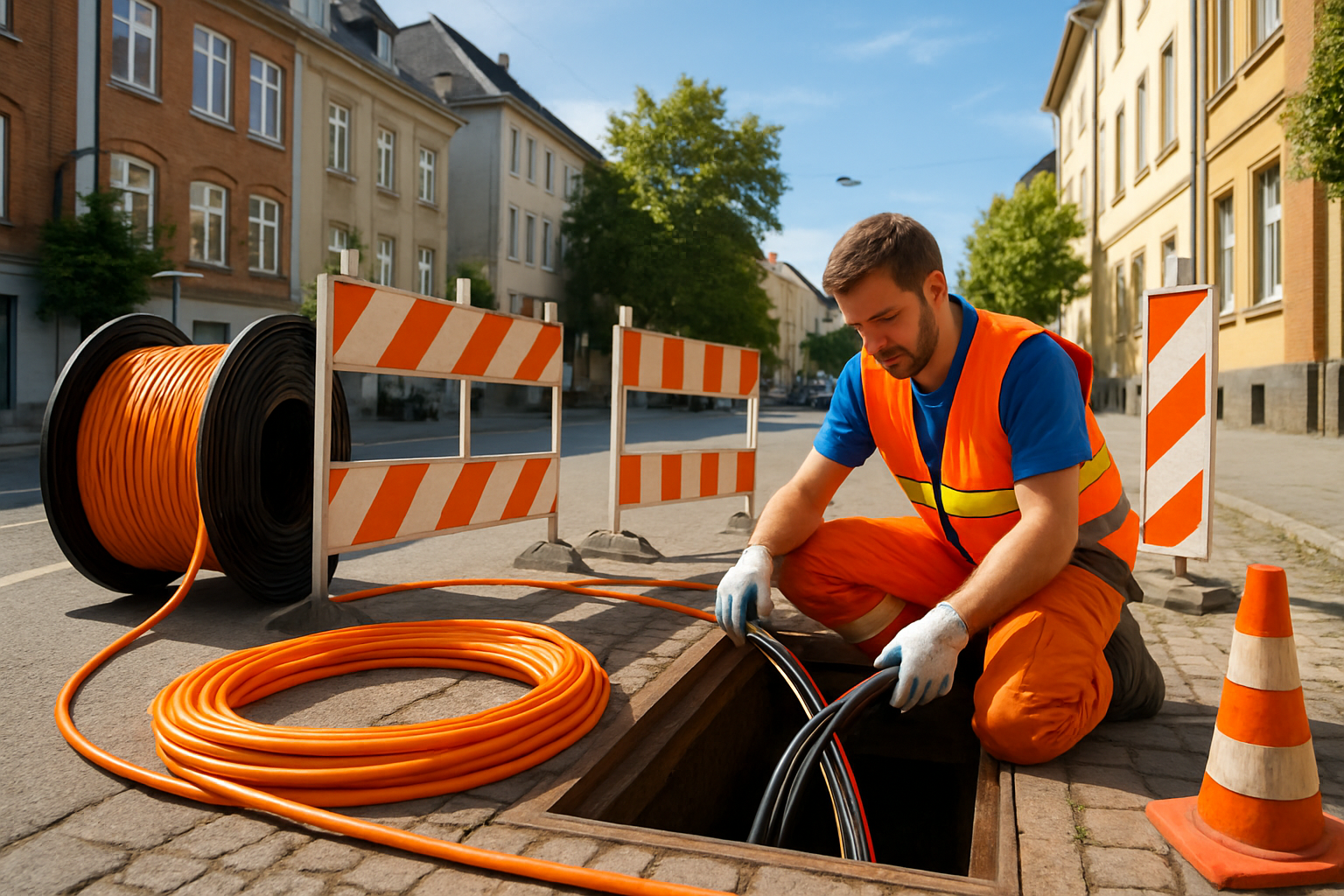
- Cable constructions: Micro cables for blowing into microducts, armored cables for direct laying
- Fiber counts: From 12 to 288 fibers depending on the expansion area and growth potential
Distribution systems:
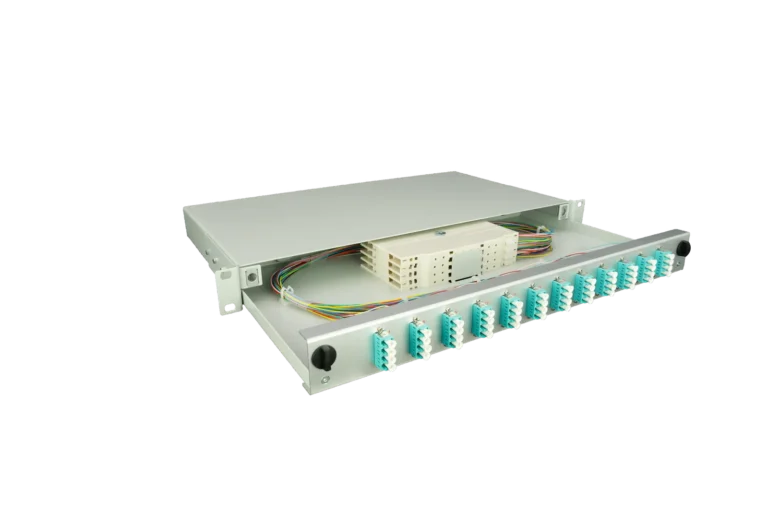
- Primary distributors in central network nodes (PoP – Point of Presence)
- Secondary distributors in street distribution boxes
- House transfer points (HÜP) with accessible splice and patch options
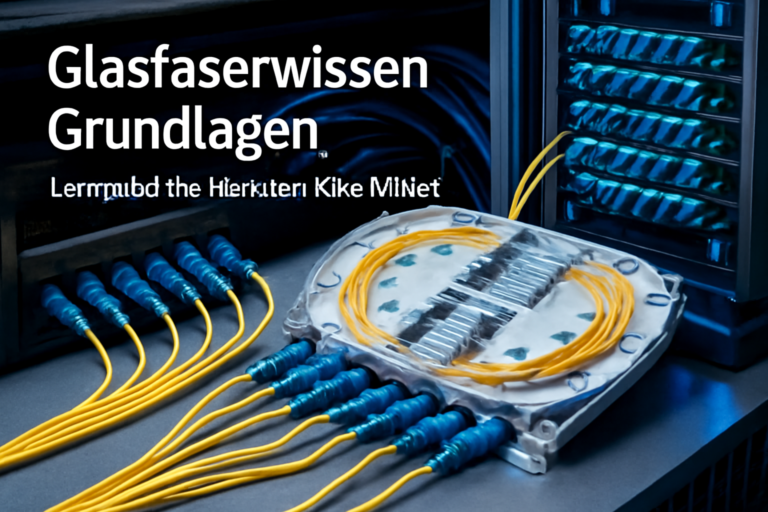
Splicing technology:
- Splice cassettes with high packing density for optimum space utilization
- High-quality splice protection components for a long service life
- Splice closures for outdoor use with IP68 protection class
3. active components and management
Modern municipal networks require not only passive infrastructure, but also sophisticated active components:
OLT (Optical Line Terminal):
- Scalable systems for growing user numbers
- Redundant power supply and grid connection
- Support for modern protocols and speeds
Network management systems:
- Real-time monitoring of network quality
- Automated error detection and correction
- Simple configuration of new connections
Solutions for common challenges
Cost-efficient expansion strategy
The biggest challenge for municipal network operators is the high initial investment. The following approaches can help:
- Cluster strategy: expansion in clearly defined areas with a high connection rate
- Demand aggregation: securing follow-up contracts in the run-up to expansion
- Exploiting synergy potential: Coordinating civil engineering work with other infrastructure projects
- Modular expansion: reduce initial investment through gradual expansion
By consistently applying the cluster strategy, a municipal grid operator in southern Germany was able to reduce the break-even time of its grid expansion investments from the originally calculated 8 years to 5.5 years.
Technical flexibility thanks to modular solutions
Modular network components offer decisive advantages for municipal projects:
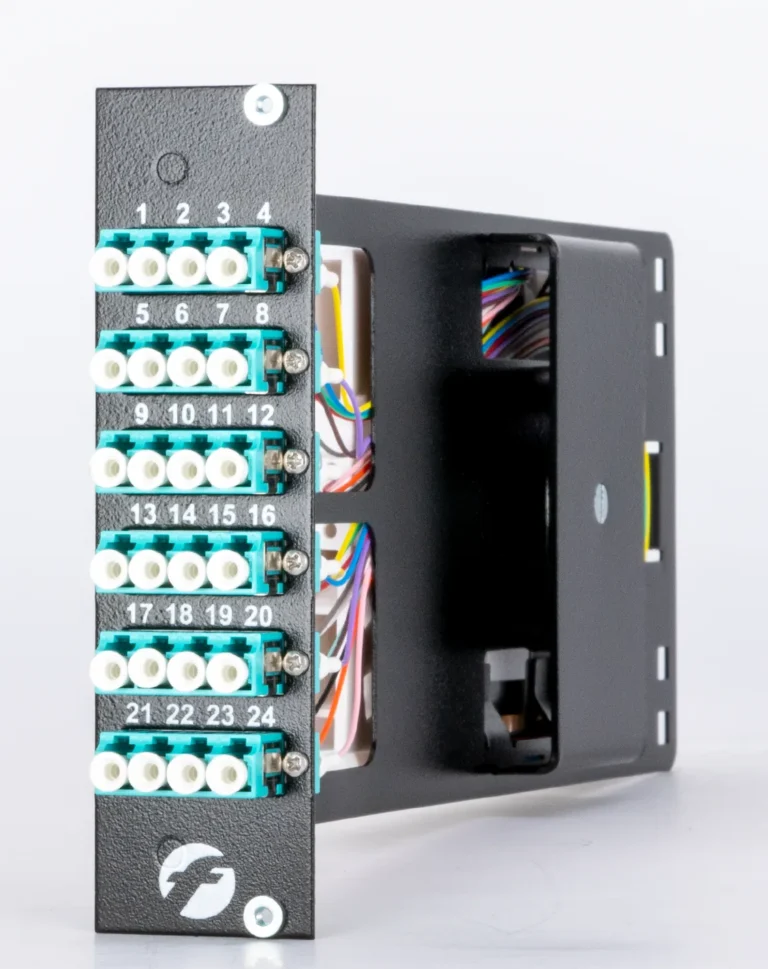
high-density splicing systems:
- Easy to expand as demand increases
- Adaptability to different installation situations
- Standardized components for efficient warehousing
- High reliability thanks to automatic dust protection flap
- Outstanding optical properties for long-term quality
- Secure locking even in environments with vibrations
DIN rail boxes for industrial environments:
- Simple integration into existing control cabinets
- Robust design for demanding operating conditions
- Flexible configuration options for different fiber requirements
Quality assurance in network expansion
The longevity and reliability of a municipal fiber optic network depends largely on the quality of the installation:
- Documentation: Complete digital documentation of all network components
- Measurement technology: Use of high-quality OTDR measuring devices to check all fiber links
- Certified fitters: training and qualification of installation personnel
- Quality standards: development and implementation of binding quality standards
Success stories from the field
Stadtwerke Musterhausen: From pilot project to nationwide expansion
Stadtwerke Musterhausen began its fiber optic expansion with a pilot project in a commercial area. By using modular distribution and splicing systems, they were able to gain experience and gradually expand the network. Today, five years later, they supply over 70% of households and 90% of businesses with FTTH connections.
The decisive factor for success was:
- Modular infrastructure components with E2000 connectors
- Consistent quality strategy in the selection of components
- Strategic partnerships with local construction companies
- Transparent communication with the population
District network Example region: Inter-municipal cooperation
Cooperation models have proven their worth in rural areas. The district of Beispielregion founded a network company together with 12 municipalities for the nationwide expansion. Bundled procurement and uniform technical standards made it possible to realize considerable cost benefits.
The technical basis was formed by:
- Standardized network architecture with central PoPs and local distributors
- Standardized top-hat rail boxes for flexible installation in different environments
- High-quality splice boxes for minimum attenuation values and maximum network quality
- Future-proof backbone with sufficient reserves
Conclusion: Success factors for municipal grid operators
The successful expansion of fiber optics by municipal network operators is based on three pillars:
- Strategic planning: long-term expansion strategy with clear prioritization
- Technical excellence: high-quality, modular components for future-proofing
- Efficient implementation: partnerships and standardized processes
With the right combination of technical expertise, high-quality components and strategic planning, municipal network operators can implement high-performance fiber optic networks that are capable of meeting the digital requirements of the coming decades.
Do you need support with your municipal fiber optic project? Fiber Products GmbH offers specialist advice and high-quality components for successful fiber optic expansion. Contact us for a non-binding consultation.
Request a Consultation
Our experts will advise you on modular fiber optic solutions for your specific application — fast, personal and non-binding.