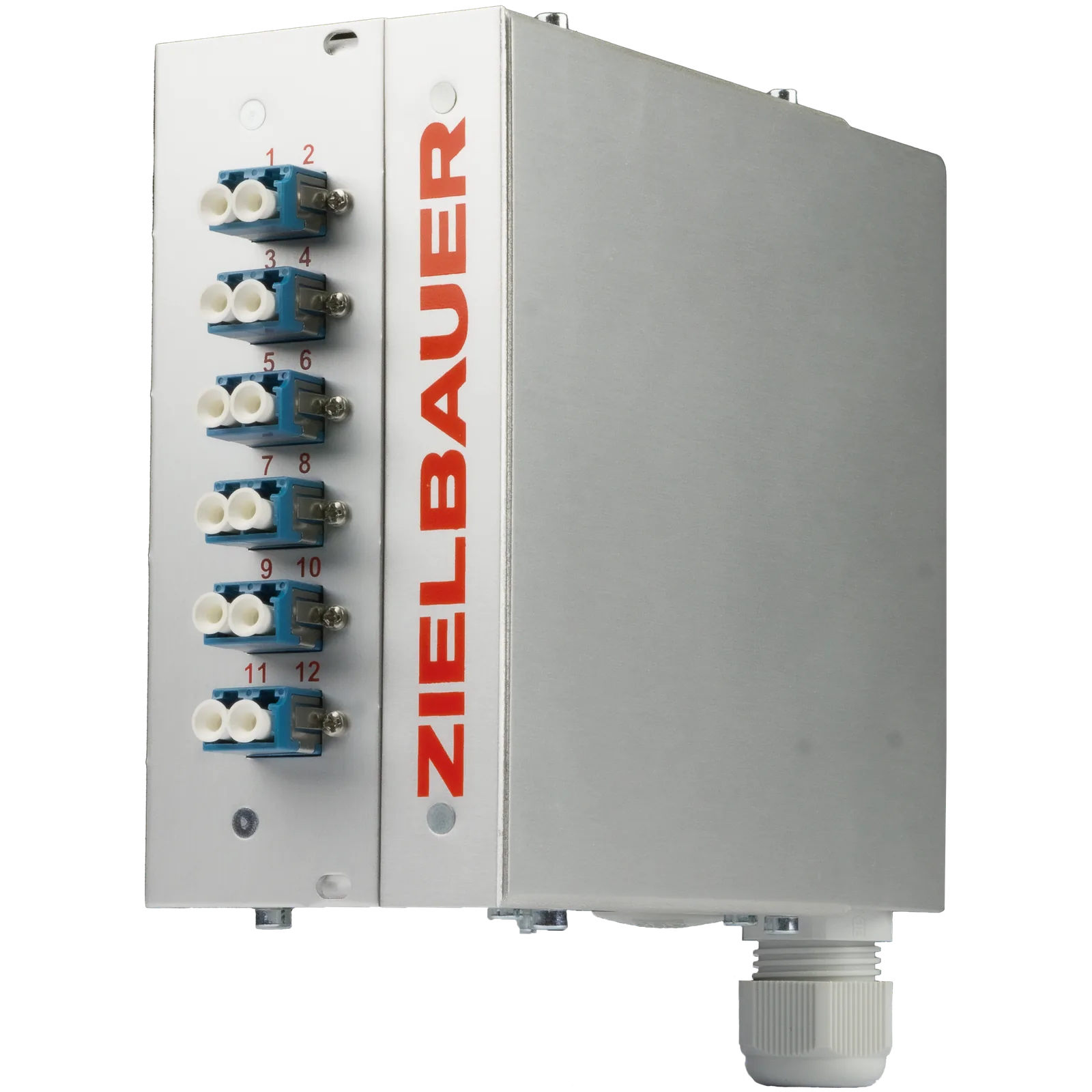
Fiber optic DIN rail box: Industrial-grade solutions for professional automation with 7TE/8TE
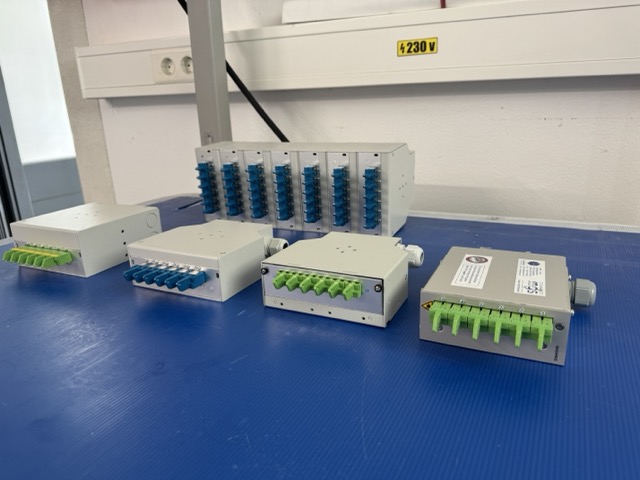
The digital transformation of industry requires robust, reliable network infrastructures that can withstand the harsh conditions of production environments. DIN rail box systems have established themselves as the ideal solution for industrial networking – compact, standard-compliant and specially developed for the requirements of automation and Industry 4.0. These inconspicuous modules make it possible to bring the benefits of fiber optic technology directly into control cabinets and production facilities.
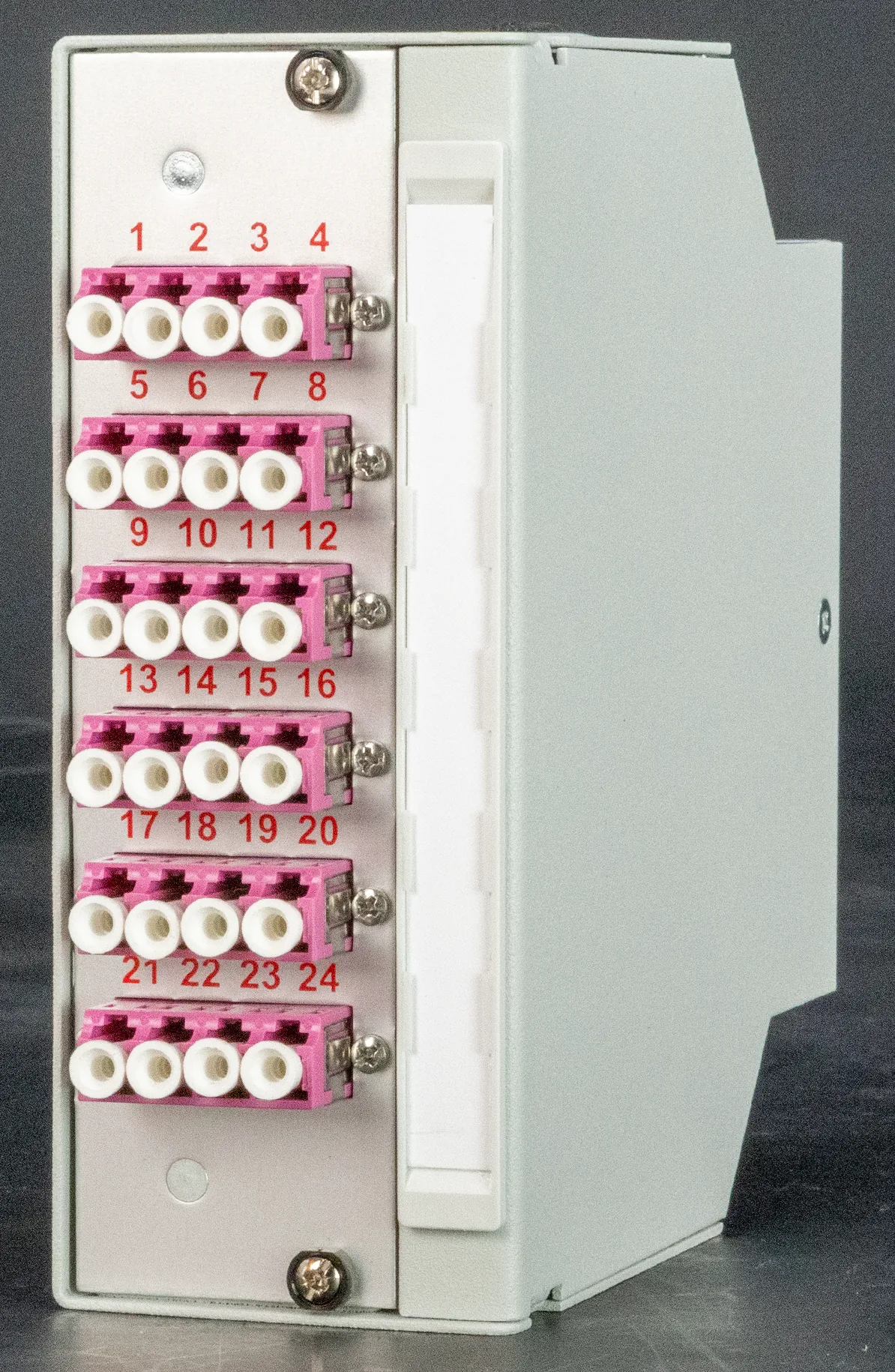
While optical fiber has long been standard in telecommunications and data centers, the technology is now also conquering factory halls, power plants and industrial facilities. A professional fiber optic top-hat rail box makes fiber optics “suitable for industry” – it combines proven DIN rail mounting with the advantages of interference-free optical transmission. The result is compact, easy-to-maintain fiber optic distribution boxes that can be seamlessly integrated into existing automation concepts.
Modern fiber optic systems open up new possibilities for planners, integrators and operators of industrial systems: longer transmission distances without signal loss, absolute EMC immunity and future-proof bandwidths for the most demanding industrial applications. This guide explains how top-hat rail box fiber optic technology works, where it is used and what advantages it offers over conventional copper solutions.
What are DIN rail box systems?
A top-hat rail box is a compact distribution system that has been specially developed for mounting on DIN rails in industrial control cabinets. It combines proven DIN rail mounting technology with professional fiber optic infrastructure and enables EMC-immune data transmission in the harshest industrial environments.
A typical top-hat rail box consists of a robust plastic or metal housing that is mounted on standard DIN rails in accordance with EN 60715. Inside are splice cassettes or adapter plates for various fiber optic connector types. The integration of fiber optic solutions for industry requires specially adapted designs.
Basic structure and mode of operation
The compact design – usually between 35-105 mm wide – enables installation even in confined control cabinets. Despite the small dimensions, modern systems offer space for 2-24 fiber optic connections per top-hat rail box fiber optic unit. This compactness is crucial for fiber optic solutions for system houses with limited space.
Cable entries are usually made from above and below to enable short connection paths. Integrated cable strain relief and bending radius control protect the sensitive glass fibers from mechanical damage. Professional systems offer systematic fibre guidance for optimum organization.
Housing design for robust systems uses reinforced plastic or metal for maximum durability. Seals against moisture and dust ensure reliable operation. Transparent or removable covers allow easy inspection of the DIN rail box fiber optic components.
Differences to conventional fiber optic distributors
While standard fibre optic distributors are optimized for telecommunications, industrial systems must meet additional requirements. A fibre optic DIN rail box for industrial applications differs fundamentally from telecommunications distributors due to its specialized design features.
Compact design is the biggest challenge, as space in control cabinets is often limited. Every DIN rail box must offer maximum functionality in a minimum of space without compromising on performance. This requirement calls for innovative design solutions and optimized component layouts.
Robust construction for industrial environments means vibrations, temperature changes and mechanical loads. Enclosures and mountings must be designed accordingly for decades of reliable operation. Professional DIN rail box fiber optic systems use reinforced materials and anti-vibration designs.
EMC properties and conformity to standards
EMC properties are critical, as fiber optics are naturally EMC-immune, but the housing must prevent electromagnetic coupling. The DIN rail box itself must not cause any interference and must DIN EN 50173 standards. Special shielding and earthing concepts ensure EMC conformity.
Standard compliance in industrial installations is subject to strict standards and certification requirements.
Industrial standards such as IEC 61140, EN 60947 and specific industry standards define requirements for electronic components. Every DIN rail box must meet these standards and provide the corresponding proof of successful integration.
Typical dimensions and capacities
Compact class DIN rail box fiber optic systems (35-70mm width) offer 2-8 fiber optic connections with heights of mostly 90-100mm and depths of 60-80mm. These compact units are ideal for point-to-point connections and smaller distributions in cramped cabinets.
Standard class DIN rail box fiber optic units (70-105mm width) allow 8-24 fiber optic connections at heights of 90-120mm and depths of 80-120mm. These systems are suitable for local distribution and more complex cabling structures in data center fiber optic solutions.
The modularity makes it possible to install several units next to each other and thus also realize larger connection numbers. Scalable top-hat rail box fiber optic architectures grow with the requirements and enable needs-based expansions without system changes.
Capacity planning and dimensioning
Capacity planning for industrial applications should include generous reserves, as subsequent expansions are more complex. A professionally dimensioned fiber optic DIN rail box takes future requirements and technology upgrades into account right from the start.
Typical dimensioning based on type of application: Smaller machines require 4-8 connections, production lines 12-24 connections and central distributors 24+ connections per top-hat rail box fiber optic unit. Redundant connections for critical systems must also be planned.
Reserve capacities of 50-100% of the current number of connections have proven themselves in practice. These reserves enable unplanned expansions and technology upgrades without structural changes to the top-hat rail box fiber optic installation.
Areas of application in industrial automation
Modern DIN rail box fiber optic systems are used in a wide range of industrial applications where reliable, interference-free data transmission is critical. Their versatility makes them the first choice for demanding automation projects.
Production automation uses fiber optic connections between PLC systems, sensors and actuators for interference-free communication. Top-hat rail box fiber optic units enable local fiber optic distributions directly in the machine control cabinets for optimum integration.
Typical applications include networking industrial switches, connecting vision systems, high-speed encoder signals and safety bus systems with fiber optics. The EMC immunity of a professional fiber optic DIN rail box is particularly important for welding robots, induction furnaces or other systems with strong electromagnetic fields.
Energy distribution and power plants
Power plants and substations are increasingly relying on fiber optics for measurement and control technology. DIN rail box fiber optic systems enable compact fiber optic installations in switchgear and control rooms under extreme conditions. Fiber optic solutions for municipal utilities benefit from this robust technology.
Special requirements include high dielectric strength and insulation, earthing concepts for hazardous areas, long-term stability over 25+ years and compatibility with protection systems. A professional fiber optic DIN rail box offers complete galvanic isolation – important for different earth potentials or in hazardous areas.
The process industry and plant engineering rely on fiber optics for networking measurement and control systems in chemical plants, refineries and other process operations. Specialized top-hat rail box fiber optic solutions bring the fiber optic distribution directly to the field devices under the toughest conditions.
Technical advantages over copper solutions
Top-hat rail box fiber optic systems offer decisive technical advantages over copper-based solutions, which are particularly important in industrial environments. These advantages alone often justify the investment in fiber optic technology.
EMC immunity and resistance to interference are the most important advantages of a fiber optic DIN rail box in industrial applications. While copper cables act as antennas and can pick up interference signals, glass fibers are completely insensitive to EMC influences of all kinds.
Practical effects include no signal distortion due to motors or frequency converters, trouble-free operation even next to welding systems, no problems due to lightning strikes or ESD and stable transmission even under high dv/dt loads. These properties are particularly important for safety-critical applications in fiber optic solutions for transport companies.
Transmission distances and bandwidth
Optical fiber enables considerably greater transmission distances than copper without signal amplification. Standard multimode fibers reach 300-2000m depending on the speed, singlemode fibers even 10-40km with a single top-hat rail box fiber optic connection.
Advantages for industrial plants include direct connection between remote buildings, central network infrastructure for large factory premises, elimination of repeaters and active components as well as future-proof bandwidths from 1G to 100G+. A modern fiber optic DIN rail box supports all common Ethernet standards.
The number of active network components is significantly reduced, especially in extensive industrial plants, which lowers the risk of failure and maintenance costs. Central switches can connect decentralized areas directly via top-hat rail boxes without intermediate amplifiers.
Galvanic isolation and industrial safety
Fiber optics provide complete galvanic isolation between different parts of the system. This is crucial for safety concepts and for different earth potentials in industrial environments. A professional fiber optic top-hat rail box guarantees absolute electrical isolation.
Safety aspects include no transmission of interference voltages, isolation between Ex and non-Ex areas, potential-free data transmission and non-sparking even if damaged. These properties make top-hat rail box fiber optic systems the first choice for safety-critical applications.
In hazardous areas, fiber optics enable safe data transmission without complex explosion protection measures for the transmission path itself. The fiber optic top-hat rail box acts as a safe interface between different safety zones.
Material durability and service life
High-quality glass fibers are chemically inert and do not age like copper conductors. Modern fibers achieve theoretical lifetimes of 50+ years without any loss of quality. A professionally designed fiber optic DIN rail box makes optimum use of this longevity.
Long-term benefits include no corrosion or oxidation, stable optical properties over decades, maintenance-free operation of passive links and predictable lifetime for infrastructure investments. This is particularly important for critical infrastructure in fiber optic solutions for educational facilities.
Temperature cycling and environmental influences have a minimal impact on glass fiber compared to copper. A robust fiber optic DIN rail box can withstand extreme temperature fluctuations without performance degradation or mechanical problems.
Installation and assembly best practices
The installation of a fiber optic DIN rail box requires special knowledge and tools, but follows proven principles of control cabinet cabling. Professional installation ensures optimum performance and durability of the system.
DIN rail mounting and fastening is carried out using standardized latching mechanisms. High-quality systems use robust spring steel brackets that ensure a permanently secure hold. The fiber optic top-hat rail box is placed on the DIN rail, pressed backwards until it snaps into place and fixed at the side if required.
In case of strong vibrations, additional fixings may be required for a secure top-hat rail box fiber optic installation. Special anti-vibration latches prevent self-loosening and ensure permanently secure installation even under extreme conditions.
Cable routing and bending radius management
Fiber optic cables are more sensitive than copper cables and require careful laying for every top-hat rail box fiber optic installation. The minimum bending radius must not be undercut in order to avoid attenuation losses or fiber breaks.
Important rules include a minimum bending radius of usually 15-30 mm (depending on the manufacturer), no sharp edges or crushing, strain relief at all cable entries and service loops for later maintenance. Modern systems have integrated bending radius controls that prevent accidental damage.
Professional cable management for more complex installations requires systematic planning of the cable routes. A well thought-out top-hat rail box fiber optic installation takes all cabling requirements into account from the outset for optimum functionality.
Splicing and assembly
Optical fibers are connected by splicing (welding) or using pre-assembled connectors. Both methods require specialized tools and training for professional DIN rail box fiber optic installations.
Splicing methods include fusion splicing for permanent, low-loss connections, mechanical splicing for detachable connections with clamping elements and pre-assembled pigtails as prefabricated cables with connectors. The choice of method depends on performance requirements, maintenance concept and available know-how.
Fusion splicers for industrial applications must be robust and portable for use on site. Mobile splice cases enable professional connections even in hard-to-reach areas of a DIN rail box fiber optic installation.
Documentation and labeling
Professional fiber optic installations require systematic documentation of all connections. Industrial systems should provide appropriate labeling options for each DIN rail box fiber optic component.
Documentation elements include a fiber plan with all connections, attenuation measurements during commissioning, labeling of all connections and cables as well as spare fibers for later expansions. Digital documentation systems with QR codes make subsequent maintenance considerably easier.
Asset management integration combines fiber optic documentation with company-wide asset management systems. This integration with a fiber optic DIN rail box enables lifecycle tracking and maintenance planning across all infrastructure components.
Product variants and designs
The market offers different variants for different application requirements and budgets. Choosing the right DIN rail box fiber optic design determines the functionality and cost-effectiveness of the installation.
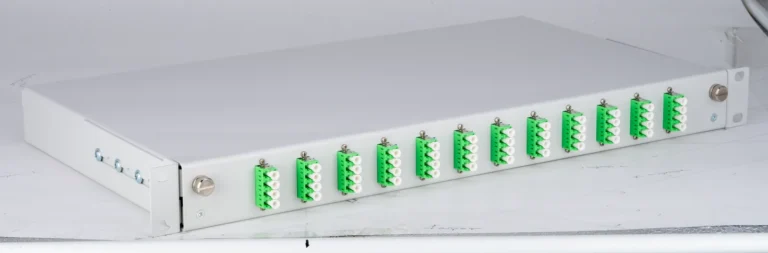
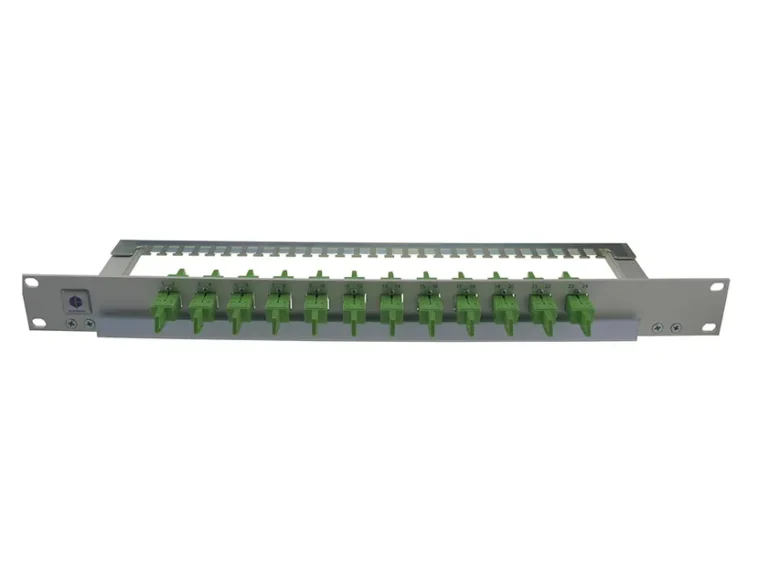
Adapter-based systems are the simplest design and use adapter plates for different connector types. These cost-effective and flexible top-hat rail box fiber optic systems offer limited splicing options, but are suitable for pre-assembled cables and simple transitions.
Features include 2-12 plug connections, various plug types (LC, SC, FC, ST), no integrated splice cassettes and suitability for pre-terminated cables. Adapter systems are suitable for simple point-to-point connections or as transitions between different cable types in customized fiber optic projects.
Splice cassette systems
Advanced systems contain integrated splice cassettes and enable professional fiber optic distributions with optimally protected splice connections. A professional fiber optic DIN rail box with splice cassettes offers maximum flexibility and reliability.
Advantages include secure storage of splice connections, a mix of spliced and plugged connections, space-saving fiber routing and professional cable reserves. These systems are preferred for permanent installations with high reliability requirements.
Hybrid systems combine various functions: Splice cassettes for trunk connections and adapter panels for terminal device connections. This flexibility of a modern fiber optic top-hat rail box enables adaptation to different cabling concepts and mixed operation with existing systems.
Planning tips and best practices
Successful fiber optic installations with industrial systems require careful planning and adherence to best practices. A systematic approach to DIN rail box fibre optic planning prevents future problems and optimizes performance.
Needs assessment and dimensioning should be planned generously, as subsequent expansions are more complex. The number of fiber optic connections required per fiber optic DIN rail box should take into account the current number of connections plus 50-100% reserve, different fiber types, redundant connections for critical systems and future technology upgrades.
Environmental analysis for industrial environments places different demands on enclosures and components. A systematic environmental analysis prevents subsequent problems with the DIN rail box fiber optic installation and ensures optimum performance.
Environmental factors to be evaluated
Factors to be evaluated include temperature range and cycling, humidity and condensation, chemical exposure, mechanical vibration, EMC environment and explosion protection requirements. This analysis determines the requirements for the DIN rail box fiber optic specification.
Cable management concept requires well thought-out planning for maintenance-friendly and reliable installations. Design principles include separate routing for different signal types, sufficient service loops, accessibility for subsequent maintenance, mechanical protection at bushings and systematic labeling.
Integration into control cabinet concepts must be harmonious without impairing other functions. Layout considerations for top-hat rail box fiber optic planning include placement for optimum accessibility, minimum distances to heat sources, cable routing without conflicts and compatibility with other top-hat rail components.
Maintenance and fault diagnosis
Industrial systems are largely maintenance-free, but require occasional inspections and professional fault diagnosis in the event of problems. Systematic maintenance of a fiber optic DIN rail box maximizes uptime and prevents unplanned downtime.
Preventive maintenance through regular inspections can detect potential problems at an early stage and prevent failures. Maintenance intervals include visual inspection every six months, cleaning of the connectors annually, attenuation measurements as required and documentation updates in the event of changes to the DIN rail box fiber optic configuration.
Inspection points during systematic inspections include mechanical fastening and housing integrity, cable routing and bending radii, connector cleanliness and labeling as well as documentation. These regular checks ensure optimum performance of every DIN rail box fiber optic installation.
Measurements and test methods
Professional fiber optic measuring devices enable systematic fault diagnosis and quality assessment in industrial installations. Important measurement methods for a fiber optic DIN rail box include optical power measurement (power meter), attenuation measurement over the distance, OTDR measurements for fault location and visual fault locator.
Typical problems and solutions for industrial systems: High attenuation requires cleaning of dirty connectors, checking and correcting the bend radius and checking the splice quality. Complete signal loss requires localization of fiber breaks by OTDR, testing of connectors and checking of incorrect fiber assignment.
Intermittent faults in a fiber optic DIN rail box require tightening of loose plug connections, analysis of temperature influences and reduction of vibration load. Systematic fault diagnosis shortens downtimes and optimizes system availability.
Future trends and technological developments
Fiber optic technology in industrial applications is constantly evolving and opening up new possibilities for modern automation. Innovative DIN rail box fiber optic systems integrate the latest technologies for improved performance and functionality.
Miniaturization and higher densities enable new connector technologies for more compact systems with higher port densities. SN and MDC connectors require only 60% of the space of conventional LC connectors and enable significantly more compact top-hat rail box fiber optic designs.
Technology trends include ultra-compact connector shapes, higher fiber densities in cables, integrated monitoring functions and intelligent connectors with sensors. These innovations are revolutionizing the possibilities of modern industrial networking.
Integration of sensor technology and smart fiber
Smart fiber concepts enable the integration of monitoring functions directly into fiber optic infrastructures. New possibilities for an intelligent fiber optic DIN rail box include automatic attenuation monitoring, temperature and strain measurement, vibration and intrusion detection as well as preventive maintenance algorithms.
Standardization is further developing international standards for industrial fibre optic applications and creating more interoperability. Important developments include IEC 61754 for new connector standards, IEEE 802.3 for Ethernet over fiber optics, ISA-95 for integration in automation concepts and Industry 4.0 standards for fiber optics as a backbone.
Industrial Internet of Things (IIoT) integration uses fiber optics as a backbone for comprehensive networking. A modern fiber optic DIN rail box supports IIoT protocols and enables seamless integration into digital factory concepts with real-time communication and edge computing.
Special applications and industry solutions
Different industries have specific requirements for fiber optic infrastructures. Industry-specific top-hat rail box fibre optic solutions take these special requirements into account and offer optimized performance for special applications.
Automotive industry uses fiber optics for production lines, quality control and robotics applications. Particular challenges include high cycle times, precision requirements and integration into existing production lines. Specialized DIN rail box fiber optic systems offer real-time performance for time-critical applications.
The food industry requires hygienic designs and cleaning resistance for production environments. Stainless steel housings and special seals enable reliable operation even with regular cleaning cycles. FDA-compliant materials ensure food safety in fiber optic solutions for system integrators in food production.
Pharmaceutical and chemical industry
The pharmaceutical and chemical industries place the highest demands on material resistance and cleanroom suitability. Special top-hat rail box fiber optic systems use chemical-resistant materials and comply with GMP guidelines for pharmaceutical production.
Explosive atmospheres require explosion-protection-certified systems for safe installation in hazardous areas. ATEX- and IECEx-certified top-hat rail box fiber optic solutions enable safe data transmission even in Zone 1 and Zone 2 areas without additional protective measures.
Offshore and marine applications place extreme demands on corrosion resistance and salt water resistance. Specially developed systems with stainless steel housings and special seals can withstand harsh maritime environments for decades.
Profitability analysis and ROI
The investment in professional fiber optic infrastructures is justified by long-term benefits and cost savings. A systematic ROI analysis shows the economic advantages of a DIN rail box fiber optic installation compared to traditional copper solutions.
Total Cost of Ownership (TCO) takes into account acquisition costs, installation costs, operating costs and maintenance over the entire service life. Fiber optic systems often show a positive ROI after just 3-5 years due to reduced maintenance costs, higher availability and lower susceptibility to faults.
Operating cost savings from a professional fiber optic DIN rail box include reduced EMC issues, fewer signal repeaters, longer maintenance intervals and higher system availability. These factors significantly reduce operational costs.
Productivity increases
Increased productivity through reliable communication improves system availability and reduces unplanned downtime. Interference-free data transmission via a fibre optic top-hat rail box optimizes production processes and minimizes quality problems caused by communication errors.
Future-proof investment ensures long-term usability without technological obsolescence. Fiber optic infrastructures support bandwidth upgrades without cabling changes and enable migration to new protocols over existing DIN rail box fiber optic installations.
Scalability of industrial fiber optic systems reduces expansion costs as requirements grow. Modular architectures enable needs-based expansion without the need to completely rebuild the infrastructure.
Integration with modern automation systems
Modern automation systems require high-performance communication backbones for real-time data transmission. A professional fiber optic DIN rail box forms the foundation for Industrial Ethernet, Profinet, EtherCAT and other industrial protocols.
Time-Sensitive Networking (TSN) uses fiber optics for deterministic communication in time-critical applications. TSN-capable DIN rail box fibre optic systems enable precise synchronization and guaranteed latency times for motion control and safety applications.
Edge computing integration brings computing power closer to production processes. Fiber optic infrastructures connect edge servers with central systems and enable hybrid architectures for optimal performance in fiber optic solutions for network operators.
Cyber security aspects
Cyber security benefits from the physical security of fiber optic transmission. Tap-proof communication via a fibre optic top-hat rail box prevents unauthorized data access and supports industrial security concepts.
Network segmentation through physical separation of different security zones uses fiber optics for secure zone separation. Separate top-hat rail box fiber optic systems for different security levels prevent lateral movement during cyber attacks.
Redundancy and backup systems use fiber optics for fail-safe communication. Redundant paths via various top-hat rail box fiber optic installations ensure communication even in the event of partial failures or attacks on the infrastructure.
Compliance and certifications
Industrial fiber optic installations must comply with various national and international standards. Compliance-compliant DIN rail box fiber optic systems simplify certification processes and ensure regulatory conformity.
International standards such as IEC 61140 for electrical safety, EN 60947 for switchgear, IEC 61784 for industrial communication networks and ISO/IEC 11801 for structured cabling define requirements for professional systems.
Industry-specific certifications include UL listing for North American markets, CE marking for European markets, CSA certification for Canadian applications and other regional requirements. A certified fiber optic DIN rail box meets these standards ex works.
Quality assurance and testing
Quality assurance during production ensures consistent performance and reliability. Comprehensive testing of every fiber optic DIN rail box includes optical performance, mechanical resilience, environmental testing and EMC compliance.
Field testing and validation in real industrial environments confirms practical suitability under extreme conditions. Long-term tests over several years validate service life specifications and maintenance intervals.
Continuous improvement based on feedback from field installations and evolving standards. Product Evolution of a successful fiber optic DIN rail box takes into account user experience and technological developments.
Outlook: The future of industrial fiber optic networking
The digital transformation of industry is driving the adoption of fiber optic technologies in all areas of automation. Innovative top-hat rail box fiber optic solutions are becoming the basis for Industry 4.0, artificial intelligence and autonomous production systems.
Convergence of IT and OT (Operational Technology) requires standardized communication infrastructures. Fibre optics as a common denominator connects traditional automation networks with modern IT systems via standardized top-hat rail box fibre optic interfaces.
Machine learning and AI applications require high bandwidths for data analysis and real-time decisions. Fiber optic infrastructures with powerful top-hat rail box fiber optic components enable AI integration directly into production processes.
Professional fiber optic top-hat rail box for maximum system performance
At Fiber Products, we develop industrial-grade fiber optic solutions for the highest quality requirements and extreme operating conditions. Our DIN rail boxes combine proven DIN rail technology with innovative fiber optic features for systematic industrial networking. From compact 2-port systems to high-capacity 24-port distributors, all modules are designed for professional automation environments.
Robust construction and reliable performance characterize every fibre optic top-hat rail box in our portfolio. Integration into all products in our modular system enables scalable solutions for growing requirements. Our systems support all common industry standards and automation protocols.
With a 5-year guarantee and European production in accordance with German quality standards, we offer optimum value for money for professional industrial networking. Discover our complete product range on Fiber Products or visit our online store for industrial fiber optic components.
Talk to us – together we will develop the optimum DIN rail box fiber optic solution for your automation project. Contact us for an individual consultation or find out more about other specialist topics relating to industrial fiber optic networking in our fiber optic knowledge blog.