Fibre rollout Saxony 2026: Leipzig, Dresden and regional FTTH network operators
The fibre rollout Saxony reaches a critical phase in 2026, with City Utilities Leipzig fibre projects and FTTH Saxony initiatives fundamentally modernising the Free State’s digital infrastructure. With a fibre deployment rate of 57 percent, Saxony is significantly above the national average and positions itself as a pioneer in expanding future-ready broadband networks. The Saxon metropolitan regions of Leipzig and Dresden are driving ambitious expansion projects, while regional network operators and city utilities are advancing coverage of rural areas through innovative deployment technologies and modular splice systems.
The market structure shows a diverse landscape of actors: Alongside Deutsche Telekom with over 123,000 FTTH connections in Leipzig alone, SachsenEnergie, OXG Glasfaser and other regional providers are competing intensely for the best network coverage. For technical decision-makers in city utilities, this means concretely: the choice of the right fibre optic infrastructure components determines project efficiency and cost-effectiveness.
Current market situation: fibre rollout Saxony in national comparison
The Free State of Saxony holds a top position in FTTH rollout. With a fibre optic connection rate of 32 percent of households, Saxony ranks 6th in the national state comparison. This positive development is based on coordinated interaction between market-driven expansion and targeted support from federal and state governments.
- Fibre deployment rate Saxony: 57 percent (national average: 52.8 percent)
- Actually connected households: 32 percent
- Annual growth rate: 6 percentage points compared to 2024
- Planned investments through 2028: Over 1 billion euros
Particularly noteworthy is the high expansion momentum in urban centres. Dresden has already achieved 100,000 completed fibre optic connections by Telekom, while Leipzig pursues comprehensive coverage through multiple parallel expansion projects by different network operators.
City Utilities Leipzig: fibre major projects and technical challenges
The City Utilities Leipzig fibre strategy comprises several coordinated expansion projects with different partners. The Lot 2 project with Vodafone develops the residential areas of Hohenheida and Gottscheina with 400 connections backed by €9.2 million in funding. In parallel, 150 schools across the city are being connected by PŸUR Business and Netz Leipzig GmbH.
| Network operator | Expansion target Leipzig | Technology | Status 2026 |
|---|---|---|---|
| Deutsche Telekom | 123,000 households | FTTH | In operation |
| OXG Glasfaser | 60,000 households | Open Access FTTH | Expanded |
| Vodafone | 400 connections | FTTH | Funded |
| PŸUR Business | 150 schools | FTTB/FTTH | Under expansion |
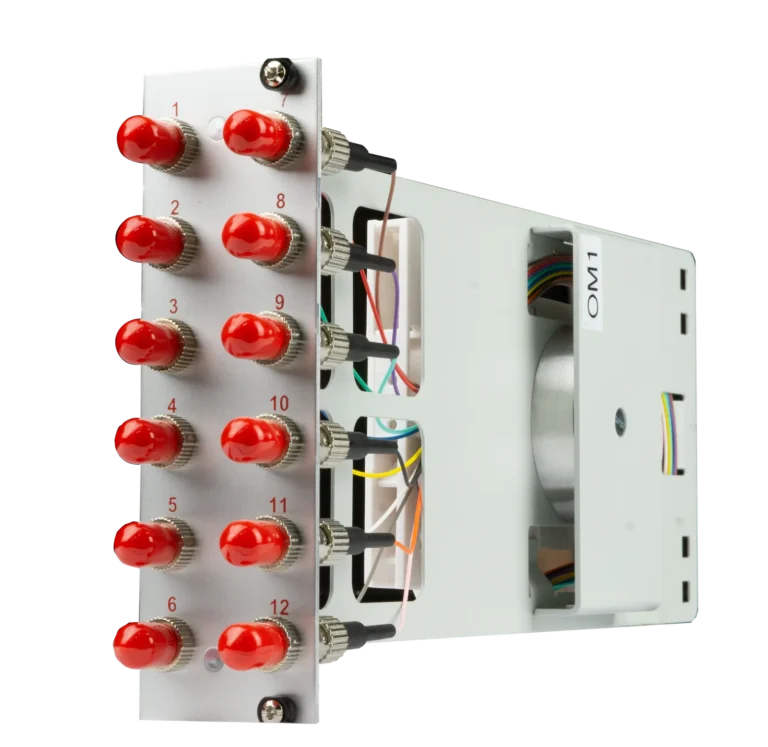
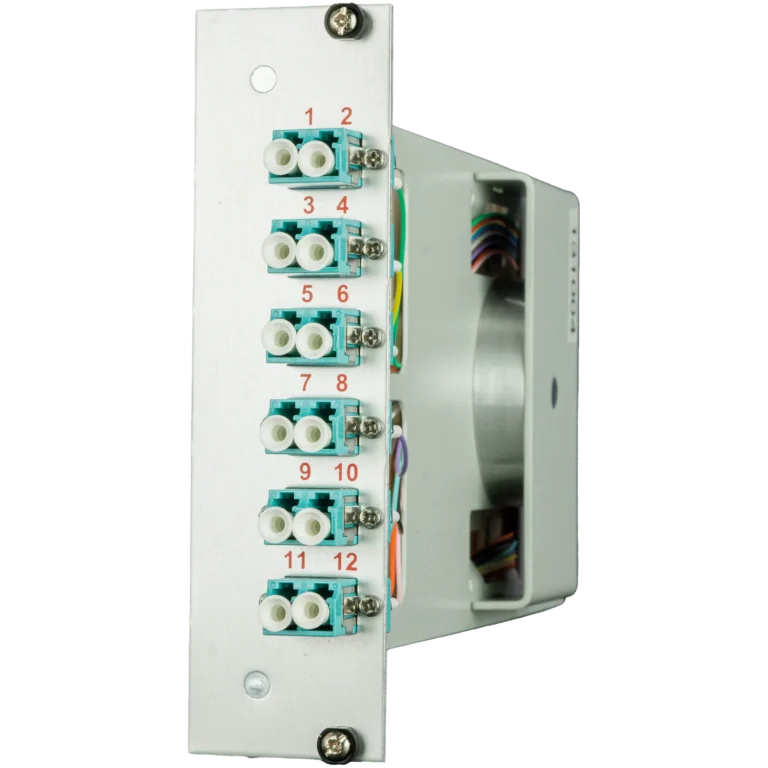
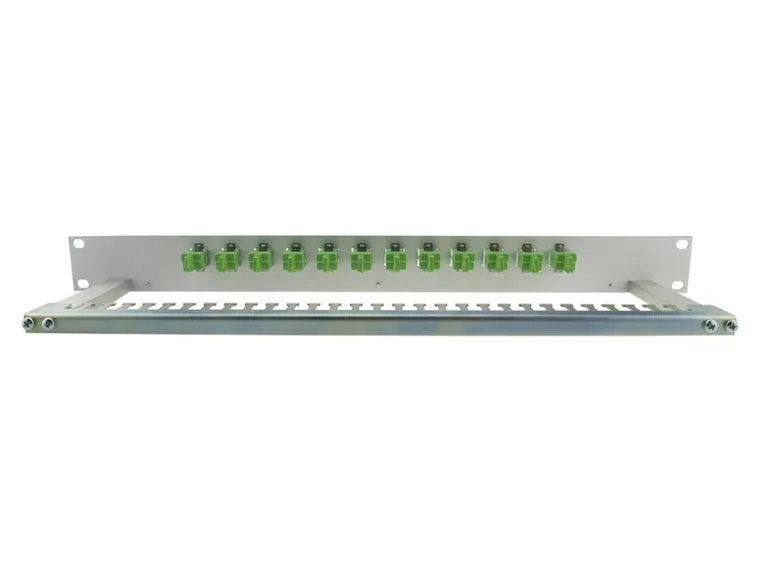
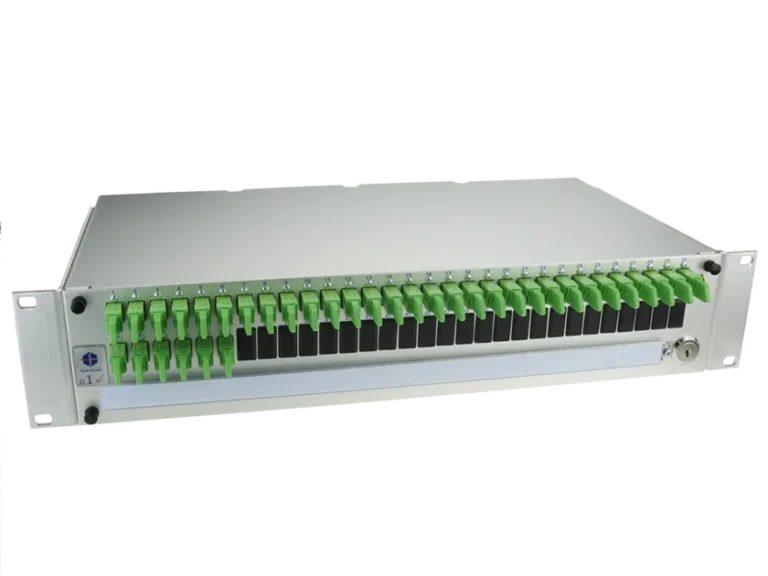
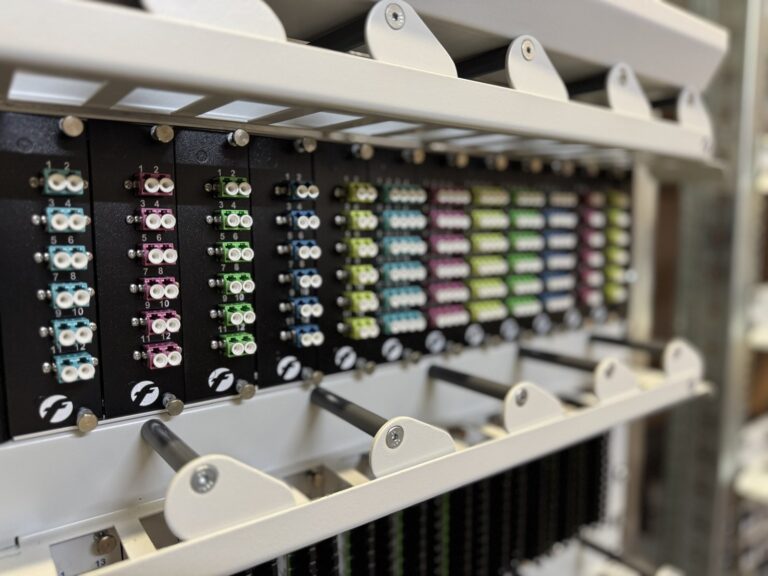
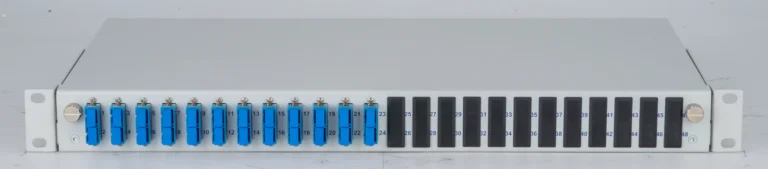
For technical implementation, city utilities rely on modular splice systems enabling flexible scaling. The challenge lies in efficiently managing up to 96 fibres in 1RU while ensuring accessibility for maintenance work.
Dresden: SachsenGigaBit and the fibre acceleration
SachsenEnergie is driving the so-called “fibre acceleration” under the SachsenGigaBit brand. The goal: 57,000 households receive free fibre optic connections. The City of Dresden actively coordinates between different network operators to avoid overbuild and leverage synergies.
- Telekom expansion target Dresden: 200,000 connections by 2030
- Already completed: 100,000 FTTH connections
- Priority areas: Löbtau, Cotta, Dresden Neustadt
- OXG expansion: 60,000 households in open-access model
Fiber Products quality promise: As an official Diamond partner and manufacturer, we produce modular splice systems in Europe. Benefit from Swiss precision and in-house manufacturing.
Innovative deployment technology: The Layjet method in Saxony
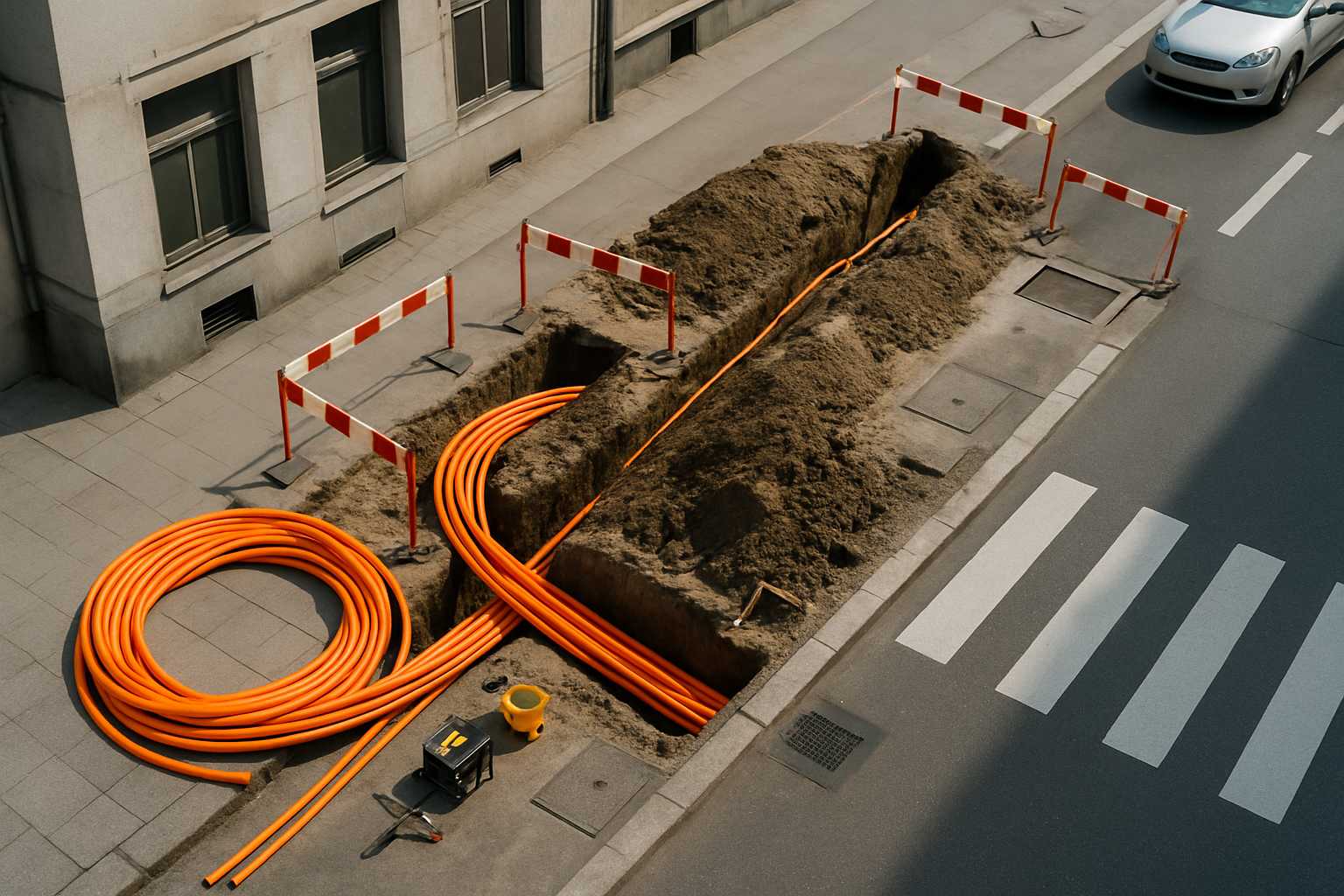
Since 2025, SachsenEnergie has deployed the Austrian Layjet method, which increases deployment speed by 20 times compared to conventional trenching. This technology is currently being tested in Rosenthal-Bielatal in the Saxon Switzerland/Eastern Ore Mountains district.
The technical advantages for FTTH Saxony expansion are substantial: minimal disruption to road infrastructure, reduced construction times and correspondingly lower total cost per connection. For subsequent fibre distribution, high-density splice modules compliant with IEC 61754-15 are deployed.
Technical standards and regulatory compliance in FTTH rollout
The VDE guideline 0800-730 from 2025 defines material requirements for sustainable fibre optic networks in buildings. These specifications are particularly relevant for city utilities building long-term maintainable infrastructure.
| Deployment standard | Speed | Application | Share in Saxony |
|---|---|---|---|
| FTTH | Up to 1,000 Mbit/s symmetric | New construction, renovation | 76% |
| FTTB | Up to 250 Mbit/s | Existing buildings, transition | 24% |
The EU Gigabit Infrastructure Regulation (Regulation 2024/1309) furthermore mandates that new buildings and comprehensively renovated structures be equipped with gigabit-capable connections. This requires city utilities to implement future-proof distribution systems.
Funding architecture: Gigabit funding 2.0 and Saxon programmes
The federal Gigabit funding 2.0 provides 21 billion euros for nationwide expansion. In Saxony, rural regions particularly benefit from this funding where market-driven expansion would not be economically viable.
- Funding ratio: 50-70 percent of expansion costs
- Funded projects nationwide: 3,850
- New connections through funding: 4.7 million
- Funded schools: 13,200
- Funded hospitals: 510
The pilot “gap-closure” programme additionally enables expansion in small remaining areas with streamlined approval procedures. For technical implementation, city utilities require flexible splice modules suitable for both central distribution points and decentralised splice boxes.
Regional expansion projects: Delitzsch and rural municipalities
Deutsche GigaNetz is realising an expansion project in Delitzsch covering 8,600 residential and commercial units across eight phases. This market-driven project demonstrates that secondary cities also attract private investor interest.
SachsenEnergie plans to connect 200,000 rural households across Saxony by 2028. The technical challenge here lies in efficient coverage of sparsely populated areas while maintaining economic viability.
Quality requirements for fibre optic infrastructure components
For sustainable fibre rollout Saxony, high-quality components are critical. Splice modules must meet the following criteria:
- Packing density: Minimum 48 fibres per 1RU, optimal 96 fibres
- Attenuation values: < 0.25 dB per connector
- Standards compliance: IEC 61754-15 for E2000 connectors
- Modularity: Tool-free exchange of connector modules
- Documentation: Integrated cable management with labelling system
The choice between pre-terminated and field-splice solutions depends on the specific project scope. While pre-terminated modules reduce installation time, splice solutions offer maximum flexibility in fibre distribution.
Future outlook: FTTH Saxony through 2030
Forecasts for further FTTH Saxony expansion are optimistic. By 2030, comprehensive fibre optic coverage of 95 percent of all households should be achieved. This requires estimated investments of 3 billion euros in Saxony alone.
Technological development is trending toward higher packing densities and automated documentation systems. Modern splice modules already integrate QR-code-based fibre identification and enable digital management of complex network structures.
FAQ: Common technical questions about fibre rollout in Saxony
Which splice modules are suitable for city utilities projects?
For municipal fibre projects, modular 1RU splice modules are common because they combine high packing density with maintenance access. The connectors and adapters fitted in them follow the IEC 61754 interface series — IEC 61754-15 covers the E-2000/LSH family. Fibre count and warranty terms depend on the configuration ordered.
How do FTTH and FTTB differ technically?
FTTH runs fibre all the way into the dwelling; FTTB terminates the fibre in the building and uses the existing copper for the last few metres. Standard single-mode fibre to ITU-T G.652.D is specified at max. 0.40 dB/km (max. 0.30 dB/km in the 1530-1565 nm band). With FTTB it is the copper section, not the fibre, that limits the achievable data rate.
What funding is available to Saxon city utilities?
Gigabit funding 2.0 covers 50-70 percent of expansion costs. Additional state programmes exist for structurally disadvantaged regions. The “gap-closure” pilot programme enables streamlined procedures for remaining areas under 100 connections.
How long does installing a 96-fibre splice module take?
With pre-terminated modules, a trained technician requires little time for complete installation including documentation. Field splicing increases time considerably but offers maximum flexibility in fibre allocation.
Which standards apply to public tenders?
IEC 61754-15 defines the E-2000/LSH connector interface. Regulation (EU) 2024/1309, the Gigabit Infrastructure Act, governs permit procedures, access to existing physical infrastructure and the coordination of civil works — not component specifications and not procurement law. What is binding is what each contracting authority writes into its own tender, so take the required standards from those documents.
How is network quality assured during fibre rollout in Saxony?
Link attenuation is measured with a light source and power meter; OTDR traces locate and characterise individual splice and connector events. DIAMOND E-2000 connectors are specified at typ. 0.1 dB and max. 0.3 dB insertion loss, with return loss of min. 70 dB for APC and min. 50 dB for PC versions.
Conclusion: fibre rollout Saxony as model region
The fibre rollout Saxony exemplifies how coordinated efforts by city utilities, private network operators and public funding drive successful digital transformation. With innovative deployment technologies and premium infrastructure components, the Free State positions itself as a pioneer in FTTH expansion across Germany.
For technical decision-makers in city utilities, this means: selecting future-proof, modular systems with high packing density and standards-compliant execution is critical for long-term success. As a manufacturer and Diamond partner, Fiber Products delivers the complete system solution – from splice box to E2000 connector in Swiss precision quality with 5 years warranty.
Interested in modular fibre optic solutions?
Fiber Products GmbH – official DIAMOND SA partner. Made in EU, 5 years warranty.