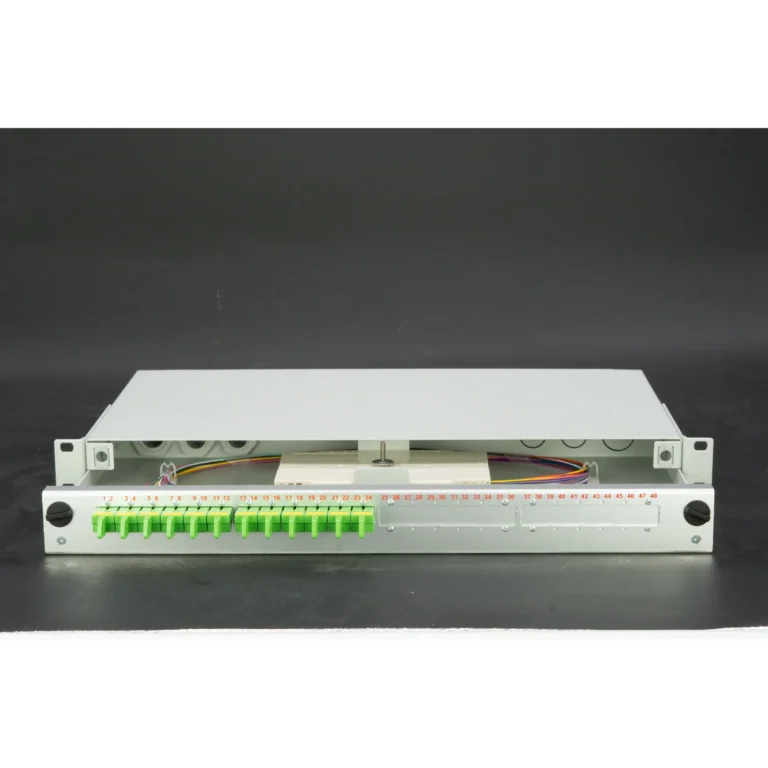
Fiber optic consulting expertise: Positioning system houses as solution providers for modular network architectures

From hardware sales to comprehensive fiber optic consulting
The fiber optic market has changed fundamentally: Customers no longer buy individual components, but expect comprehensive solution concepts for their network infrastructures. System houses that want to be successful in this environment must continuously expand their fiber optic consulting expertise and position themselves as competent solution architects. The key lies not only in product knowledge, but also in the ability to translate complex customer requirements into technically and economically optimal modular network architectures.
This transformation from pure hardware vendor to consulting partner opens up new business opportunities and higher margins. Customers are prepared to pay significantly more for qualified advice and holistic solution concepts than for pure product deliveries. At the same time, consulting expertise creates stronger customer loyalty and differentiation from the competition.
However, fiber optic consulting expertise requires more than just technical knowledge: system houses must understand their customers’ business processes, anticipate future developments and develop economic arguments. Modular network architectures offer ideal starting points here, as they combine both technical flexibility and economic advantages.
The evolution of customer expectations in the fiber optic segment
From component purchasing to solution partnership
Modern companies are no longer just looking for suppliers, but strategic partners for their digital transformation. Fiber optic consulting expertise is becoming a key differentiator in an increasingly commission-driven market. Customers expect system houses to understand their specific business requirements and develop technical solutions that create real added value.
This development is particularly evident in demanding segments such as fibre optic solutions for data centers or industrial applications, where standardized catalog solutions are not sufficient. Modular network architectures make it possible to develop customized solutions from proven building blocks.
Customers value partners who proactively identify optimization potential and develop future-proof investment strategies. This requires a deep understanding of both the technical possibilities and the economic framework conditions of the respective industry.
Complexity as an opportunity for consulting expertise
The increasing complexity of modern fibre optic infrastructures creates space for specialized fibre optic consulting expertise. From smart city applications to campus networks and industrial automation – every area of application has specific requirements in terms of performance, scalability and cost-effectiveness.
Modular network architectures reduce this complexity through standardized components that can be flexibly combined. System houses can concentrate on consulting expertise instead of getting lost in the technical details of individual components. This leads to more efficient planning processes and reduced project risks.
The trick is to develop the optimum configuration for each specific application from the wide range of modular options. This requires both technical understanding and a methodical approach to network planning and system integration.
Economic reasoning instead of technical features
Modern purchasing decisions are primarily based on economic criteria: Total cost of ownership, return on investment and strategic future security. Fiber optic consulting expertise must therefore go beyond pure technology and develop convincing business cases.
Modular network architectures offer convincing arguments here: step-by-step investments reduce initial costs, while expandability ensures long-term flexibility. The 5-year guarantee on modular fiber optic systems makes operating costs predictable and reduces investment risks.
Successful system houses develop standardized ROI calculations and TCO models that transparently compare different scenarios. This professionalizes the sales process and creates trust among commercial decision-makers.
Development of systematic advisory skills
Technical foundations for fiber optic expertise
Solid fiber optic consulting expertise begins with a deep technical understanding of all relevant components and systems. System house teams must not only know individual products, but also understand their interaction in complex modular network architectures. This includes knowledge of fiber optic physics, connector standards, splicing techniques and system integration.
The modular SlimConnect and VarioConnect systems facilitate the development of expertise through systematic architecture: once understood, principles can be transferred to different scaling levels. Teams can start with simple configurations and gradually expand their knowledge to more complex installations.
Regular training courses and certifications keep our technical knowledge up to date. Practical experience with installation and maintenance is particularly important, as this is the only way to provide realistic advice on expenditure and operating costs.
Develop industry-specific application expertise
Fiber optic consulting expertise requires a deep understanding of the specific requirements of different customer segments. Healthcare, educational institutions and industrial companies have completely different priorities when it comes to network planning and operation.
Successful system houses specialize in selected sectors and develop above-average expertise in these areas. Modular network architectures support this specialization through reusable solution modules: once developed, concepts can be transferred to similar customer environments.
Industry expertise is gained through systematic analysis of successful projects, regular exchanges with clients and continuous training on industry-specific developments. Reference projects and case studies document the knowledge gained and support future consulting processes.
Methodical approaches for network planning and system integration
Professional fiber optic consulting expertise is based on systematic planning methods. Structured requirements analysis, systematic solution development and transparent decision-making processes create trust with customers and reduce project risks.
Modular network architectures support methodical planning by clearly structuring complex systems into manageable sub-areas. Standardized modules enable reliable calculations of costs, installation times and performance characteristics.
Proven planning tools and checklists systematize the consulting process and ensure consistent quality, even with different consultants. This is particularly important for system houses with several locations or growing teams.
Customer acquisition through demonstrated expertise
Thought leadership through content and presence
Fiber optic consulting expertise must be visible in order to attract new customers. System houses should demonstrate their expertise through specialist articles, webinars and conference presentations. This positions them as competent partners for complex fiber optic projects.
Modular network architectures offer ideal topics for thought leadership: case studies on successful implementations, comparisons of different architectural approaches or future trends in fiber optic technology appeal to technical and commercial decision-makers alike.
Regular publications and presentations create trust in our fiber optic consulting expertise and differentiate us from the competition. Customers proactively search for system houses that are perceived as experts.
Reference projects as proof of competence
Nothing convinces potential customers more than successful reference projects with measurable results. Fiber optic consulting expertise becomes credible through documented successes, not through theoretical presentations.
Modular network architectures facilitate the development of transferable references: Successful concepts can be transferred to similar customer environments with adaptations. This reduces development times for new projects and increases the probability of success.
Structured documentation of project goals, solution approaches and achieved results creates a valuable knowledge base for future consulting processes. Customer testimonials and measurable improvements increase the power of persuasion.
Proactive market development and network building
Successful fiber optic consulting expertise is the result of systematic market cultivation and the continuous development of professional networks. System houses should regularly approach potential customers, even if no specific projects are currently pending.
Modular network architectures facilitate proactive consulting through concrete optimization proposals for existing infrastructures. System houses can identify potential for improvement and develop step-by-step modernization strategies.
Long-term customer relationships are created through continuous added value, not through sporadic sales activities. Regular technology updates, optimization suggestions and proactive support create trust and loyalty.
Successful consulting approaches for different customer segments
Enterprise customers and data centers
Fiber optic solutions for data centers require specialized fiber optic consulting expertise with a focus on performance, scalability and reliability. Enterprise customers often have detailed technical requirements and complex decision-making processes.
Modular network architectures offer convincing arguments here: gradual scaling reduces initial investments, while extendable modules enable maintenance work without system interruption. The service-friendly design reduces operational risks in critical 24/7 environments.
Enterprise consulting requires detailed technical documentation, proof of compliance and often proof-of-concept installations. System houses must be able to navigate complex decision-making processes with multiple stakeholders.
Medium-sized companies and growth scenarios
Medium-sized customers need fiber optic consulting expertise that combines economic efficiency with technical future-proofing. These companies often grow dynamically and need infrastructures that can grow with them.
Modular network architectures are ideal for medium-sized requirements: Cost-effective entry-level configurations can be expanded as required without devaluing previous investments. SlimConnect systems, for example, offer professional functionality at attractive prices.
SME consulting focuses on pragmatic solutions with a clear ROI. Complex technical details are less relevant than concrete business benefits and predictable costs.
Public clients and compliance requirements
Educational institutions, healthcare and other public sector clients have specific requirements for compliance, documentation and long-term support. Fiber optic consulting expertise must understand and address these regulatory frameworks.
Modular network architectures support compliance through standardized, certified components and systematic documentation. The 5-year guarantee on fiber optic components meets public requirements for long-term support.
Public tenders require detailed technical specifications and often references from similar projects. System houses must precisely fulfill formal requirements and offer transparent cost structures.
Industrial customers and automation environments
Industrial fiber optic solutions require fiber optic consulting expertise with an understanding of automation requirements, environmental conditions and integration interfaces. Industrial customers prioritize reliability and compatibility with existing systems.
Modular network architectures offer flexibility for various automation scenarios and enable the integration of different protocols and standards. DIN rail boxes integrate seamlessly into existing control cabinets.
Industrial consulting requires an understanding of production processes, safety requirements and maintenance cycles. Technical solutions must be robust, low-maintenance and compatible with existing systems.
Technical consulting for modular fiber optic architectures
Scaling strategies and growth planning
Fiber optic consulting expertise must anticipate future developments and develop scalable solution architectures. Customers invest in infrastructures with a 10-15 year lifespan, while requirements are constantly evolving.
Modular network architectures solve this conflict through flexible expandability: systems can start with current requirements and be expanded step by step. VarioConnect systems, for example, scale from a few connections to high-density configurations.
Successful scaling consulting develops multi-stage expansion plans with defined milestones and investment budgets. This enables plannable infrastructure evolution without disruptive new procurements.
Integration of various fiber optic standards
Modern network environments combine different fiber optic standards, connector types and transmission technologies. Fiber optic consulting expertise must master this diversity and develop optimal integration solutions.
Modular network architectures support multi-standard environments through flexible front modules and standardized interfaces. Different connector types can coexist in the same physical infrastructure.
Successful integration requires systematic planning of migration paths and compatibility strategies. Existing investments should be protected while new technologies are gradually introduced.
Performance optimization and troubleshooting
Fiber optic consulting expertise also includes performance analysis and systematic troubleshooting. Customers expect not only functioning systems, but also optimum performance over the entire operating time.
Modular network architectures facilitate performance optimization through granular analysis options: Problems can be narrowed down to individual modules and rectified in a targeted manner. The extendable modules enable detailed inspections without interrupting the system.
Systematic performance monitoring and preventive maintenance reduce failure risks and optimize system service life. System houses can develop these services as an additional business opportunity.
Economic argumentation and ROI calculation
Total cost of ownership models
Fiber optic consulting expertise must think beyond initial procurement costs and develop long-term total cost considerations. Total Cost of Ownership (TCO) models take into account procurement, installation, operation, maintenance and modernization over the entire system lifetime.
Modular network architectures offer convincing TCO arguments: service-friendly design reduces maintenance costs, modular expansion avoids expensive complete replacements, and the 5-year guarantee makes operating costs predictable.
Structured TCO calculations take various scenarios and growth rates into account. Sensitivity analyses show how changing assumptions affect profitability.
Return on investment through infrastructure modernization
Modern fiber optic infrastructures create measurable business benefits through higher performance, improved reliability and new application possibilities. Fiber optic consulting expertise must quantify these benefits and develop convincing ROI arguments.
Modular network architectures enable step-by-step modernization with measurable improvements in every phase. Customers can continuously track ROI and make data-based decisions on further investments.
ROI calculations take into account both direct cost savings and indirect benefits such as improved productivity, new business opportunities and reduced risks.
Financing models and investment strategies
Fiber optic consulting expertise also includes advice on financing options and investment strategies. Different customers have different budget cycles and financing preferences.
Modular network architectures support flexible financing models: from outright purchase and leasing to pay-as-you-grow models. Gradual expansion enables investments to be spread over several budget periods.
Successful consulting develops tailor-made financing concepts that fit the customer’s organization and budget planning. This facilitates investment decisions and accelerates project realization.
Systematic development of expertise in the system house team
Training programs and certifications
Fiber optic consulting expertise is developed through systematic training and continuous skills development. System houses should develop structured training programs that teach both technical and consulting methodological skills.
Modular network architectures facilitate the learning process through systematic product architecture: basic principles can be transferred to different configurations. Practical exercises with modular systems provide hands-on experience.
External training courses and certifications supplement internal training and provide recognized proof of qualifications. Regular updates keep knowledge up to date and take new technologies into account.
Mentoring and knowledge transfer
Experienced consultants should systematically pass on their knowledge to younger colleagues. Fiber optic consulting expertise is often developed through practical experience in real customer projects under experienced guidance.
Modular network architectures offer ideal learning environments: Complex systems can be developed step by step, starting with simple configurations. Errors have less serious consequences than with monolithic systems.
Structured mentoring programs ensure consistent quality standards and accelerate skills development. Documented best practices create organizational knowledge that goes beyond individual experiences.
Continuous further development and innovation
Fiber optic consulting expertise requires continuous further development and adaptation to new technologies and market requirements. System houses must pursue innovations and integrate them into their consulting approaches.
Modular network architectures support innovation through ease of experimentation: new technologies can be integrated into existing systems without requiring completely new developments.
Regular exchanges with technology partners, conference visits and specialist literature keep teams up to date. Internal innovation workshops promote creative solutions to customer challenges.
Conclusion: Consulting expertise as a sustainable competitive advantage
Fiber optic consulting expertise is becoming a key differentiator for successful system houses. In an increasingly commission-driven market, only genuine consulting services create sustainable competitive advantages and profitable customer relationships.
Modular network architectures provide the ideal basis for professional consulting services: They combine technical flexibility with economic efficiency and enable customized solutions from proven building blocks. The systematic architecture facilitates both competence development and customer communication.
Successful system houses continuously invest in building up expertise and develop systematic consulting methodologies. They position themselves as strategic partners to their customers and create added value through expertise-based solution concepts.
The future belongs to system houses that combine technical excellence with consulting expertise. Fiber optic consulting expertise is becoming the foundation for long-term business success in a dynamic and growing market.
At Fiber Products, we develop modular fiber optic systems for the highest quality requirements. Our modular systems combine proven technology with innovative features. With a 5-year guarantee and European production to German quality standards, we offer competitive prices and premium quality for professional fiber optic networks.
Discover our complete product range or visit our online store. Talk to us – together we will develop the optimum solution for your project. Contact us for an individual consultation or find out about other specialist topics in our fiber optic knowledge blog.