Municipal fibre optic infrastructure: Scalable splicing systems for growing cities and sustainable digitalization

The foundation of digital cities: municipal fiber optic infrastructure
Modern cities are faced with the challenge of building a future-proof municipal fiber optic infrastructure that both meets current requirements and is equipped for future developments. The scalable fiber optic architecture forms the technical backbone for all digital city services – from broadband supply for citizens and smart city applications to the networking of municipal facilities and businesses.
The complexity of municipal digitization projects requires well thought-out infrastructure strategies that combine technical excellence with economic rationality. Municipal fiber optic infrastructure must function reliably for decades, yet be flexible enough to adapt to changing requirements. This balance between long-term stability and adaptability is the key to successful municipal digitalization.
Scalable fiber optic architecture concepts enable cities and municipalities to start with manageable investments and gradually expand their networks according to demand and available budgets. Modular approaches reduce initial costs and at the same time create the basis for comprehensive digital transformation.
Challenges of municipal fiber optic projects
Budget restrictions and investment cycles
Municipal budgets are subject to special restrictions and planning cycles that must be taken into account when designing the municipal fiber optic infrastructure. Investments often have to be spread over several financial years, while technical coherence and future security must be guaranteed.
Scalable fiber optic architecture solutions support phased investment strategies through modular system concepts. SlimConnect 1U systems, for example, enable cost-effective entry-level configurations that can later be expanded into high-capacity VarioConnect installations.
The 5-year guarantee on modular fiber optic systems creates planning security for municipal decision-makers and reduces unforeseeable maintenance costs in the first few years of operation.
Complex stakeholder landscapes
Municipal fiber optic projects involve a wide variety of stakeholders: Municipal administration, public utilities, citizens, local companies and often also supra-regional partners. This diversity requires municipal fiber optic infrastructure concepts that reconcile different requirements and interests.
Scalable fiber optic architecture can integrate different usage scenarios in a uniform infrastructure: From citizen networks and smart city applications to industrial connections for local companies.
Modular system architectures facilitate the coordination of different project phases and responsibilities, as clear technical interfaces are defined and different teams can work in parallel.
Long-term security and technology evolution
Municipal fiber optic infrastructure is operated for 20-30 years, while communication technologies evolve every 3-5 years. This discrepancy between infrastructure service life and technology cycles requires particularly future-proof planning approaches.
Scalable fiber optic architecture with modular components enables technology updates without basic infrastructure renewal. New standards can be integrated by changing modules, while the physical fiber optic installation remains unchanged.
The pull-out modules in modern splice systems not only facilitate maintenance, but also step-by-step technology upgrades without disruptive work on the overall installation.
Strategic planning approaches for municipal networks
Hierarchical network architectures
Successful municipal fiber optic infrastructure is based on hierarchical architecture concepts that systematically link different network levels. From central backbone nodes to neighborhood distribution points and local access networks – each level has specific technical and economic requirements.
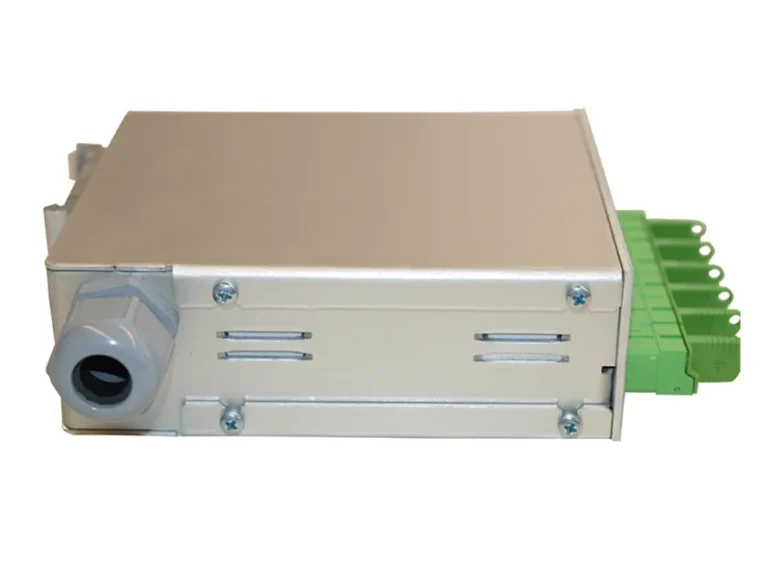
Scalable fiber optic architecture supports this hierarchy with tiered system concepts: High-capacity VarioConnect systems for central nodes, compact SlimConnect solutions for district distribution and specialized top-hat rail boxes for industrial connections.
This systematic structuring facilitates the planning, installation and long-term operation of complex municipal networks and creates clear responsibilities for different network levels.
Geographical prioritization and rollout strategies
Municipal digitalization usually takes place in geographical phases, starting with the most important areas and gradually expanding to all parts of the city. Municipal fiber optic infrastructure must support this phased development and ensure technical coherence.
Scalable fibre optic architecture enables systematic rollout strategies thanks to standardized components and uniform system architectures. Experience from early project phases can be transferred to later expansion stages.
Modular systems also reduce planning costs for new areas, as proven configurations can be adapted instead of developing completely new solutions.
Integration with existing urban infrastructure
Municipal fiber optic infrastructure must be integrated into established urban infrastructures: Power grids, sewage systems, traffic routes and existing telecommunications. This integration requires flexible, adaptable system concepts.
Scalable fiber optic architecture thanks to modular design enables installation in a wide variety of spatial conditions: from spacious technical centers to cramped infrastructure tunnels. Various designs can be optimally adapted to local conditions.
The service-friendly design with extendable modules facilitates maintenance work in urban infrastructures that are difficult to access and reduces disruption for citizens and municipal operations.
Technical components of municipal fiber optic networks
Central backbone nodes and PoPs
At the heart of every municipal fiber optic infrastructure are central nodes (points of presence) that connect different areas of the city with each other and with supra-regional networks. These locations require high-density, high-availability fiber optic systems with maximum scalability.
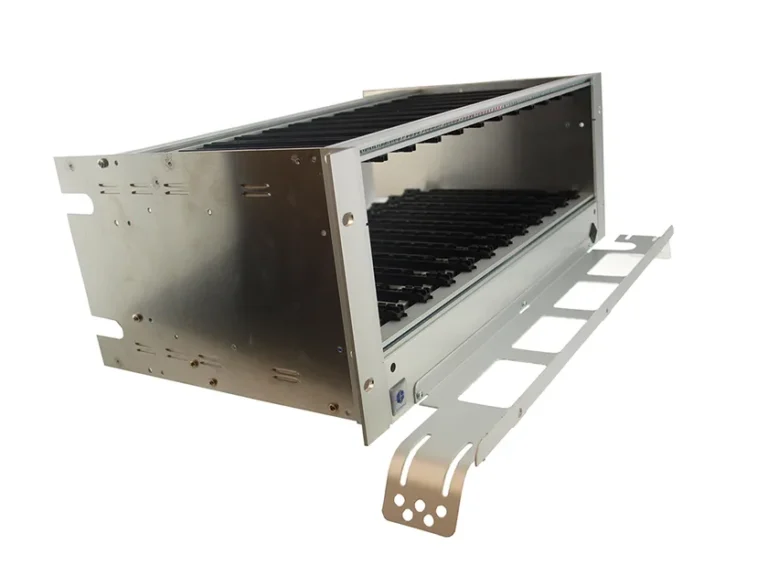
VarioConnect 4U systems provide the necessary capacity for central backbone nodes and enable systematic organization even with hundreds of fibre optic connections. The modular architecture facilitates gradual expansion in line with growing requirements.
Scalable fiber optic architecture in central nodes must also integrate different technologies: from traditional Ethernet connections to DWDM systems and modern 400G/800G backbones for future-proof capacities.
Neighborhood and district distribution points
Between central backbone infrastructure and local access networks, district distribution points are the most important elements of municipal fiber optic infrastructure. These locations aggregate local connections and create a link to the municipal backbone.
Scalable fiber optic architecture for district level requires balanced systems: Sufficient capacity for local aggregation, but compact design for limited technical spaces. SlimConnect 1U systems with up to 96 fibers are ideal for such applications.
Neighborhood distribution points must also integrate different connection types: Residential buildings, commercial enterprises, public facilities and smart city sensors have different connectivity requirements.
Local access networks and end customer connection
The last mile of the municipal fiber optic infrastructure connects citizens, companies and public institutions with the municipal network. This level requires cost-effective but reliable solutions for nationwide coverage.
Scalable fiber optic architecture at access level often uses smaller systems for in-building distribution or special applications. BasicConnect front modules enable cost-effective solutions for simple distribution tasks.
Access networks must be particularly easy to maintain, as they are often managed by local teams without specialist fiber optic knowledge. The service-friendly design of modular systems reduces complexity and the risk of errors.
Special connections for municipal facilities
Municipal fibre optic infrastructure must also meet the specialized requirements of municipal facilities: Educational institutions, healthcare, administrative buildings and technical operations often have higher performance and security requirements.
Scalable fiber optic architecture enables differentiated service levels in the same basic infrastructure: Critical facilities can receive redundant connections and higher bandwidths without having to set up separate networks.
Modular system architectures also support the integration of different security levels and compliance requirements that public institutions often have to fulfill.
Scaling strategies for growing requirements
Demographic growth and urban development
Growing cities must continuously adapt their municipal fiber optic infrastructure to new residential areas, commercial settlements and changing usage structures. Scalable fiber optic architecture must support both geographic expansion and capacity increases in existing areas.
Modular system concepts make this challenge easier thanks to standardized expansion options: New areas can be developed with proven module configurations, while existing installations can be expanded with additional modules.
The 5-year guarantee on fiber optic components supports long-term growth planning through predictable operating costs, even with gradual expansion.
Technological development and bandwidth growth
Municipal fiber optic infrastructure has to cope with continuously increasing bandwidth requirements: From megabit connections for basic services to gigabit services for companies and multi-gigabit connections for specialized applications.
Scalable fiber architecture supports bandwidth evolution with future-proof fiber types and modular active components. The physical infrastructure remains stable while electronics are upgraded to meet new standards.
It is particularly important to prepare for 5G backhaul, the Internet of Things and future applications that are not yet fully foreseeable. Modular architectures create the necessary flexibility for unforeseeable developments.
Service diversification and new business models
Municipal fiber optic infrastructure can support various digital services beyond pure connectivity: Smart City applications, local cloud services, IoT platforms and innovative citizen services. This diversification requires flexible, expandable network architectures.
Scalable fiber optic architecture enables municipalities and public utilities to gradually introduce new services and scale up if successful. Edge computing locations can be integrated into existing infrastructures.
Modular systems also support hybrid operator models in which different services from different providers are offered on the same physical infrastructure.
Economic aspects of municipal fiber optic investments
Total cost of ownership for municipal decision-makers
Municipal investment decisions must take long-term total costs into account, not just initial procurement prices. Municipal fibre optic infrastructure influences municipal budgets for decades through operation, maintenance and modernization cycles.
Scalable fiber optic architecture with service-friendly components reduces long-term operating costs through efficient maintenance processes and modular expandability without complete replacement. The extendable modules enable fast, cost-effective service work.
Structured TCO calculations take various growth scenarios into account and help municipal decision-makers to make well-founded investment decisions with a long-term perspective.
Funding opportunities and public financing
Municipal fiber optic infrastructure projects can often take advantage of various funding programs: EU digital programs, federal funding for broadband expansion, state funding programs and special smart city initiatives. Modular project structures facilitate funding-compliant implementation.
Scalable fiber optic architecture supports funding strategies through clear project phases and measurable milestones. Different funding pots can be used for different project areas without jeopardizing technical coherence.
The documentation of modular systems also facilitates proof for funding bodies and compliance with various funding guidelines.
Business cases and refinancing models
Municipal fiber optic infrastructure must not only function technically, but also be economically viable. Various refinancing models enable sustainable financing for municipal providers: from municipal utilities financed by fees to public-private partnerships.
Scalable fiber optic architecture supports various business models through flexible capacity allocation and modular service provision. Wholesale offers for private providers can be realized in parallel to own citizen services.
Modular system concepts also make it easier to calculate different refinancing scenarios, as clear cost allocations are possible for different service levels.
Integration into existing municipal IT landscapes
Connection of municipal administration and e-government
Municipal fiber optic infrastructure must reliably network municipal administrative locations and support modern e-government services. This requires both high performance and special security requirements for sensitive administrative data.
Scalable fiber optic architecture can implement different security zones in the same physical infrastructure: Public services, internal administrative communications and critical systems can coexist in modular systems through logical separation.
Connecting educational institutions to municipal networks requires special attention to the protection of minors and pedagogical requirements while at the same time ensuring technical integration.
Municipal utility integration and energy networks
Many municipal utilities operate both energy and telecommunications networks and can exploit synergies between the two areas. Municipal fiber optic infrastructure can support smart grid applications and be incorporated into integrated infrastructure concepts.
Scalable fiber optic architecture enables the integration of various municipal utility services into shared network infrastructures. Industrial fiber optic solutions can network energy distribution systems, for example.
The robust design of modular systems is also suitable for integration into power distribution infrastructures where increased environmental requirements may prevail.
Cooperation with local companies and institutions
Municipal fiber optic infrastructure should also involve local companies, research facilities and other institutions. These collaborations can create both technical and economic benefits for all parties involved.
Scalable fiber optic architecture supports different service levels and business models in the same infrastructure: basic services for citizens, premium services for companies and specialized connections for research institutions.
Modular system concepts also facilitate the integration of different technology standards and compliance requirements that different user groups may have.
Operation and maintenance of municipal fiber optic networks
Building local expertise and training
Municipal fiber optic infrastructure requires specialized knowledge for operation and maintenance, which is often not available in municipal teams. Systematic skills development and training programs are essential for successful long-term operation.
Scalable fiber optic architecture with service-friendly components reduces the need for specialist knowledge and also enables generalist IT teams to carry out basic maintenance work. The extendable modules simplify access and handling.
Structured training programs for municipal teams, supplemented by external specialist support for complex work, create sustainable operational capability.
Monitoring and preventive maintenance
Modern municipal fiber optic infrastructure can use intelligent monitoring systems to detect problems at an early stage and enable preventive maintenance. This reduces unplanned outages and optimizes maintenance cycles.
Scalable fiber optic architecture supports granular monitoring through modular system architecture: problems can be limited to individual areas without affecting the overall system.
IoT sensors and intelligent monitoring systems can be gradually integrated into modular infrastructures and create the basis for modern predictive maintenance strategies.
Emergency concepts and redundancy
Municipal fiber optic infrastructure is often critical for municipal services and citizen safety. Emergency concepts and redundancy strategies must be planned from the outset in order to minimize the risk of failure.
Scalable fiber optic architecture through modular systems supports flexible redundancy concepts: Critical connections can be duplicated, while non-critical services get by with a single connection.
The service-friendly design with pull-out modules also enables quick repairs in emergency situations without extensive system disassembly or special tools.
Future prospects for municipal digitalization
Smart city evolution and IoT integration
Municipal fiber optic infrastructure forms the foundation for comprehensive smart city development. From intelligent traffic control and environmental monitoring to digital citizen services – all applications require reliable, high-performance fiber optic connections.
Scalable fiber optic architecture must support massive IoT connectivity: Thousands of sensors, actuators and monitoring devices must be cost-effectively connected to the city’s backbone infrastructure.
Modular system concepts facilitate the integration of various IoT technologies and enable the gradual introduction of new smart city services without disruptive infrastructure changes.
5G and edge computing integration
The upcoming 5G generation requires dense networks of small cells with high-performance fiber optic backhaul connections. Municipal fiber optic infrastructure must anticipate these requirements and provide the corresponding capacities.
Scalable fiber optic architecture supports 5G integration through modular expandability and flexible capacity distribution. Edge computing locations can be integrated into existing neighborhood distribution points.
The low latencies required by 5G applications make local data processing necessary. Modular fiber optic systems can efficiently integrate such edge computing nodes into urban infrastructures.
Sustainability and green IT
Municipal fiber optic infrastructure must also meet sustainability requirements and contribute to the CO2 reduction of urban IT infrastructures. Energy-efficient components and modular architectures support green IT strategies.
Scalable fiber optic architecture reduces energy consumption through needs-based dimensioning and modular expansion instead of overdimensioning. Components can be activated according to actual usage.
The long service life of modular systems and the option of gradual modernization also reduce electronic waste and support circular economy principles.
Conclusion: Modular foundations for digital cities of the future
Municipal fiber optic infrastructure is the technical foundation for successful urban development in the digital age. Scalable fiber optic architecture through modular system concepts enables cities and municipalities to build future-proof infrastructures that can grow with growing requirements.
Investing in modular, service-friendly fiber optic systems pays off in the long term through reduced operating costs, increased flexibility and simplified technology integration. Municipalities that invest in well thought-out municipal fiber optic infrastructure today create the basis for decades of successful digital urban development.
Scalable fiber optic architecture also enables smaller municipalities to start with manageable budgets and gradually expand their digital infrastructure. This democratizes access to modern communication technologies and reduces the digital divide between urban and rural areas.
The future belongs to cities that lay the right infrastructural foundations for tomorrow today. Municipal fiber optic infrastructure with modular, future-proof system concepts forms the technical backbone for innovative, liveable and sustainable cities of the 21st century.
At Fiber Products, we develop modular fiber optic systems for the highest quality requirements. Our modular systems combine proven technology with innovative features. With a 5-year guarantee and European production to German quality standards, we offer competitive prices and premium quality for professional fiber optic networks.
Discover our complete product range or visit our online store. Talk to us – together we will develop the optimal solution for your municipal fiber optic project. Contact us for an individual consultation or find out about other specialist topics in our fiber optic knowledge blog.