Fibre Rollout Tender: Partner Companies and Bidding Consortia for FTTH Success
Fibre Rollout Tender: Winning Strategies for Partner Companies and Bidding Consortia in the FTTH Market
In a fibre rollout tender, bidding consortia and partner companies are decisive success factors for technical and economic project delivery. The complexity of modern FTTH tenders requires specialised expertise from civil works contractors, engineering firms and fibre optic system suppliers. With over 120,000 new fibre connections in January 2026 alone and a projected rollout of 2.5 million connections annually, the German market faces enormous challenges in awarding and executing municipal and regional fibre projects.
Structured Partnership Models for FTTH Tenders in the DACH Region
The German fibre market is undergoing a paradigm shift in tender strategies. Municipal utilities, local network operators and private telecommunications companies increasingly rely on cooperative procurement models. Bidding consortia enable mid-sized companies to successfully participate in major projects with up to 50,000 households.
- Joint and several liability for collective tender submission
- Bundled competencies: civil works, planning and system technology
- Risk distribution across multiple project partners
- Scalable capacities for accelerated rollout timelines
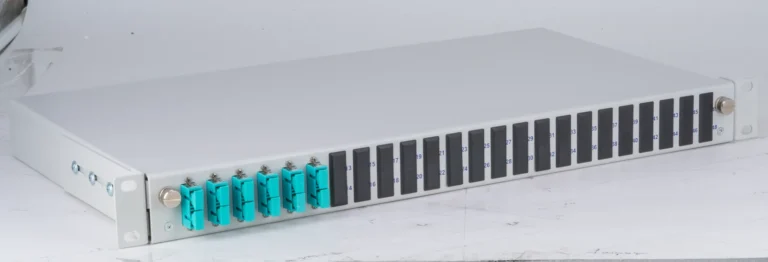
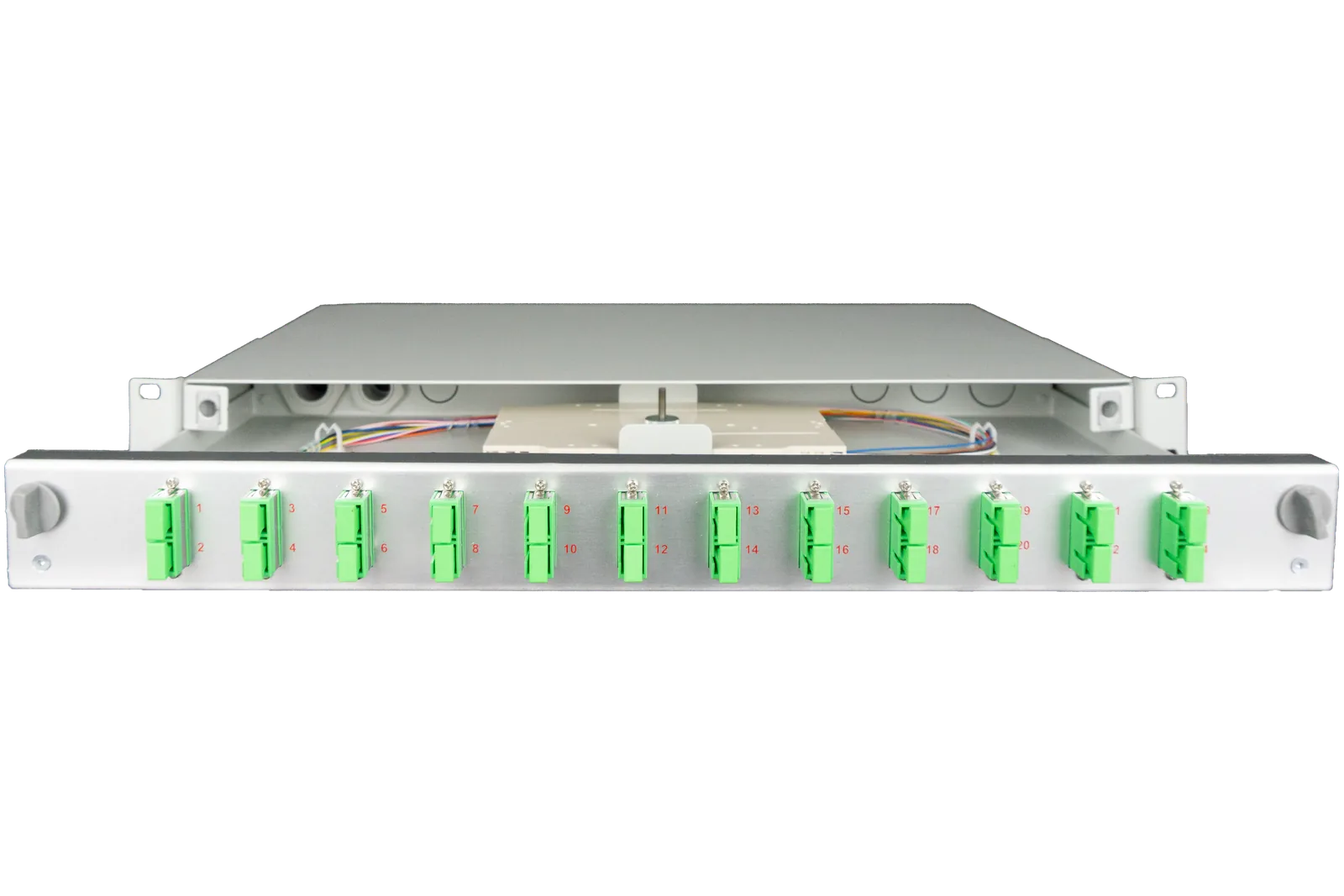
- Access to specialised fibre systems such as SlimConnect 1HE
The legal structure of the partnership must be defined during the tender phase. Clients increasingly demand evidence of successful reference projects and technical certifications to IEC 61754 for splice systems deployed.
Technical Requirements in Modern Fibre Tenders
Tender specifications define precise technical requirements for passive network infrastructure. The choice of correct splice systems and distribution components determines the network’s cost-effectiveness and future-proofing.
| System Component | Standard Requirement | High-Performance Requirement | Standards Compliance |
|---|---|---|---|
| Splice box | 48 fibres | 96 fibres per 1RU | IEC 61753-1 |
| Attenuation | < 0.35 dB | < 0.25 dB | IEC 61300-3-4 |
| Connector Types | LC, SC | LC, SC, E2000, MPO | IEC 61754-15 |
| Warranty Period | 2–3 years | 5 years | DIN EN 50173 |
Modern tenders require modular systems enabling future expansion without service interruption. Port density of up to 96 fibres per rack unit reduces space requirements in municipal technical rooms.
Bidding Consortia for FTTH: Legal Framework and Liability Issues
Establishing a bidding consortium for fibre rollout tenders is subject to specific legal requirements. Procurement law distinguishes between simple consortia and joint ventures with different liability models.
- Joint and several liability of all partners towards the client
- Authorised representative with full power of representation
- Proof of economic capability as a consortium
- Joint reference list and certifications
- Internal service allocation and warranty arrangements
In municipal tenders, clients increasingly demand evidence of German engineering or European manufacturing for critical infrastructure components, particularly splice modules and distribution systems.
Strategic Partner Selection for Successful FTTH Projects
The selection of suitable partner companies significantly determines project success. Civil works contractors seek specialised system suppliers with proven expertise in the fibre optic sector. Technical competency, supply reliability and service quality are decisive.
Fiber Products Quality Promise: As an official Diamond partner and manufacturer, we produce modular splice systems in Europe. Benefit from Swiss precision and in-house manufacturing.
Successful bidding consortia combine complementary strengths: whilst civil works contractors manage trenching and ducting, specialist planners develop network design. System suppliers provide technical equipment with VarioConnect 3HE systems accommodating up to 288 fibres.
Subsidy Compliance and Tender Award Criteria for Public Procurement
Public sector clients in fibre rollout must adhere to strict procurement rules. The EU Gigabit Strategy and national subsidy programmes define minimum technical standards for funded projects.
| Funding Criterion | Minimum Requirement | Evidence Required |
|---|---|---|
| Data Rate | 1 Gbit/s symmetrical | Technical specification |
| Fault Tolerance | 99.5% availability | Redundancy concept |
| Rollout Speed | 24-month project duration | Detailed construction schedule |
| Sustainability | Recyclable materials | Environmental certificates |
Evaluation follows the economically most advantageous tender principle considering quality criteria. Modular splice systems with 5 years manufacturer warranty score higher in life-cycle assessments.
Fibre Rollout Tender: Technical Documentation and Quality Assurance
Professional documentation is integral to every FTTH tender. Clients require detailed evidence of components deployed, measurements and acceptance protocols.
- Attenuation measurements per IEC 61280-4-1 for each fibre
- OTDR traces with route characterisation
- Photographic documentation of all splice points and distribution frames
- Digital network documentation in GIS format
- Declarations of conformity for splice boxes and modules
Quality assurance begins with material selection. High-quality E2000 connectors with attenuation values below 0.1 dB significantly reduce future maintenance effort.
Costing and Cost-Effectiveness in Bidding Consortia
Economic evaluation of fibre tenders requires precise cost calculation over the entire project period. Bidding consortia must define internal transfer prices and risk markups transparently.
Modern splice systems such as SlimConnect reduce installation time through pre-configured modules. In a project serving 10,000 households, this translates to savings of hundreds of thousands of euros in assembly costs.
- Material costs: 35–40% of total volume
- Civil works: 45–50% of project costs
- Installation and splicing: 10–12% of budget
- Documentation and acceptance: 3–5% of total costs
Regional Characteristics in the DACH Market for Partner Companies
The German-speaking region shows differing approaches to fibre tenders. While German municipalities increasingly favour bidding consortia, Austrian clients often prefer turnkey contractors.
In Switzerland, cantonal energy suppliers dominate the rollout with municipal utility networks. Technical standards align with Diamond quality benchmarks with highest precision requirements for connectors and splice modules.
| Country | Preferred Model | Technical Standard | Warranty Requirement |
|---|---|---|---|
| Germany | Bidding consortium | DIN/VDE | 3–5 years |
| Austria | Turnkey contractor | ÖNORM | 2–3 years |
| Switzerland | Municipal utility consortium | Diamond/SEV | 5 years |
Future Trends in Fibre Rollout Tenders and Partnerships
The FTTH market’s evolution shows clear patterns for future tender procedures. Open-access models and wholesale partnerships increasingly shape procurement strategies.
Technologically, high-density systems with MPO/MTP connectors gain prominence. Data centre standards with 96 fibres per 1RU become the new benchmark for municipal main distribution frames. Modular design enables phased expansion matching demand development.
- Integration of 5G backhaul in FTTH infrastructure
- Mandatory BIM planning from 2027 for public projects
- Sustainability certification to ISO 14001
- Automated network documentation with AI support
- Preventive maintenance concepts with 5 years system warranty
Practical Checklist for Bidding Consortia in Fibre
Systematic tender preparation determines success or failure. Partner companies must clarify the following points before tender submission:
- Consortium agreement with clear service allocation
- Technical certifications for all system components
- Evidence of at least three comparable reference projects
- Bank guarantee or insurance documentation
- Availability of Diamond E2000 connectors for industrial applications
- Storage capacity for VarioConnect modules in large projects
Early engagement of specialised system suppliers secures technical expertise and supply reliability. As a European manufacturer with own production, Fiber Products guarantees continuous availability of critical components.
FAQ: Common Questions on Fibre Rollout Tenders and FTTH Bidding Consortia
What liability risks exist in a bidding consortium for FTTH projects?
In bidding consortia, all partners bear joint and several liability towards the client. This means any partner can be held responsible for the complete service. Internally, the consortium agreement regulates liability distribution. Essential are adequate insurance and clear service boundaries between partners.
What is the optimal port density for municipal fibre projects?
Modern tenders demand at least 48 fibres per distribution point. Future-proof installations use 96 fibres per 1RU with modular systems. This allows later expansion without infrastructure modification and reduces space requirements.
Which technical standards are mandatory in German FTTH tenders?
Fundamental are DIN EN 50173 for structured cabling and IEC 61753 for fibre components. Clients additionally require IEC 61300 for optical measurement procedures. Splice modules must comply with IEC 61754-15 for connectors.
How do partner companies differ from subcontractors in tenders?
Partner companies in a bidding consortium are equal contract parties of the client with direct liability. Subcontractors have contractual relationships only with the main contractor. In public tenders, subcontractors delivering over 30 percent must be named explicitly.
What warranty periods are standard for fibre systems?
Standard practice is 2–3 years manufacturer warranty. Premium providers like Fiber Products offer 5 years system warranty on modular splice systems. This extended warranty significantly improves tender evaluation and reduces life-cycle costs.
How is quality assurance managed in bidding consortia?
Each partner is responsible for their trade’s quality. A joint quality officer coordinates interfaces and documentation. Measurements follow IEC 61280-4-1 with OTDR traces for each fibre. Acceptance occurs jointly with digital documentation of all components.
Conclusion: Success Factors for Partner Companies in Fibre Rollout
Fibre rollout tenders with FTTH bidding consortia and strategic partnerships form the foundation for successful infrastructure projects across the DACH region. The combination of technical expertise, legal safeguards and high-quality system components determines project success and cost-effectiveness.
Modular fibre systems with 5 years warranty and European manufacture meet the highest quality requirements of public sector clients. Partnership with specialised manufacturers ensures technical innovation and supply reliability throughout the project lifecycle.
For detailed technical consultation on your next FTTH project and custom system solutions, our expert team is at your disposal. Use our request function for tailored project advice focused on your specific tender requirements.