Fiber-to-the-Room (FTTR): In-Building Fibre Installation – Technical Planning & Implementation
Fiber-to-the-Room (FTTR): Extending Fibre Optics to Every Room – Technical Planning and In-Building Deployment
Fiber to the Room (FTTR) extends fibre optic coverage through high-quality in-building cabling to every individual room, establishing the foundation for uninterrupted gigabit connections without signal degradation. This future-proof technology combines the advantages of fibre optic infrastructure with flexible distribution concepts for multi-unit residential buildings and commercial properties. Whereas traditional FTTH installations terminate at the subscriber connection point, FTTR carries the optical fibre further into residential units and serves each room with dedicated access points.
The new EU Gigabit Infrastructure Regulation mandates fibre-capable building networks in new construction from February 2026 onwards – a development that makes FTTR the preferred solution for modern residential design. For property owners and planners, this signals a strategic shift in cabling architecture towards single-mode fibres and LC-APC connectors as the technical standard.
Technical Foundations of FTTR Architecture
FTTR architecture is built on continuous fibre optic cabling from the building distribution point (Gf-GV) via the subscriber connection point (Gf-TA) through to individual rooms. Unlike conventional copper cabling, FTTR employs passive optical splitters that distribute signals with minimal loss across up to 16 access points.
Technical implementation relies on three main components:
- Central fibre optic subscriber connection point with minimum two fibres per residential unit
- Passive splitters for signal distribution without active components
- Room-specific fibre optic connections with integrated converters
Modern FTTR systems achieve gross link rates of 2–3 Gbit/s with guaranteed gigabit throughput at every endpoint. Signal attenuation remains below 0.4 dB per kilometre even over distances exceeding 100 metres, ensuring consistent transmission quality.
Standards-Compliant Planning According to Current Specifications
FTTR installation planning follows IEC 61754-15 requirements for connectors and ITU-T G.652 for single-mode fibres. These standards define precise specifications for attenuation values, bend radii, and mechanical resilience of components.
| Component | Standard | Technical Requirement | FTTR Specification |
|---|---|---|---|
| Optical Fibre | ITU-T G.652.D | Attenuation at 1310 nm | < 0.35 dB/km |
| Connector | IEC 61754-15 | Insertion loss | < 0.25 dB |
| Splitter | IEC 61753-031 | Uniformity | < 1.5 dB |
| Bend Radius | ITU-T G.657.A2 | Minimum Radius | 7.5 mm |
For property owners and managers, standards compliance delivers long-term investment security. Modular splice systems enable flexible adaptation to different building structures while maintaining compliance with all technical requirements.
In-Building Cabling: Practical Implementation in Multi-Unit Residential Buildings
Implementing Fiber to the Room in existing residential properties requires a systematic approach. Installation begins with a central distribution point, typically located in the basement or technical room, from which in-building fibre optic cabling radiates outward.
In-building cabling deployment utilises multiple installation pathways:
- Existing ducts with minimum 20 mm inner diameter
- Surface-mounted cable trays for retrofit installation
- Flat, self-adhesive fibre optic cables with only 2 mm mounting height
- Existing cable shafts and vertical routes
Fiber Products Quality Commitment: As an official Diamond Partner and manufacturer, we fabricate modular splice systems in Europe. Benefit from Swiss precision and in-house manufacturing.
Latest-generation transparent FTTR cables can be discretely routed along baseboards and even threaded beneath doorways. With tensile strength of 100 N and a bend radius of 5 mm, they withstand even demanding installation conditions.
Splicing Technology and Connection Systems for FTTR
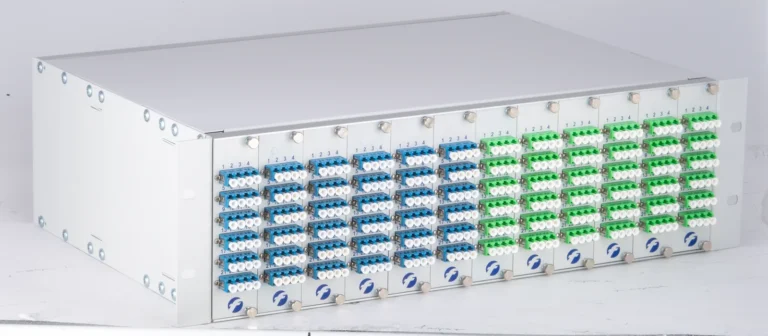
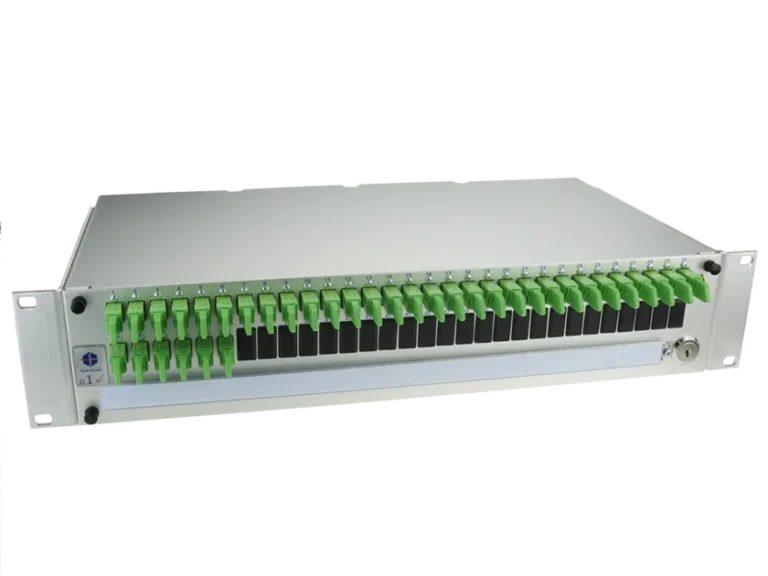
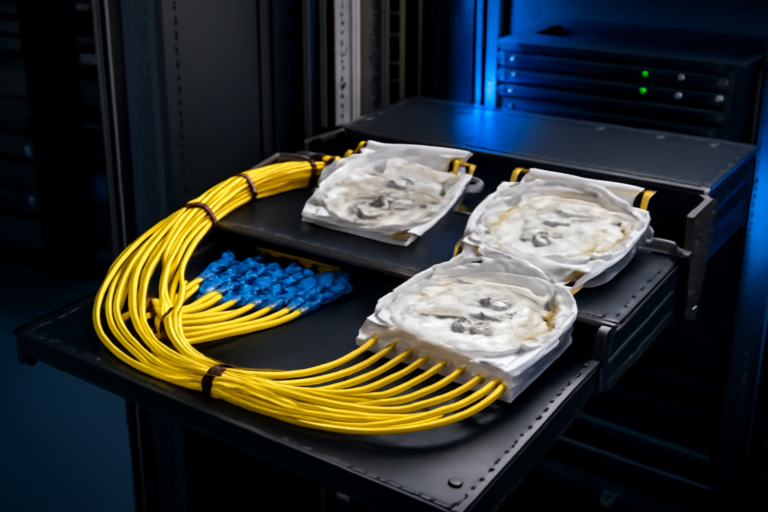
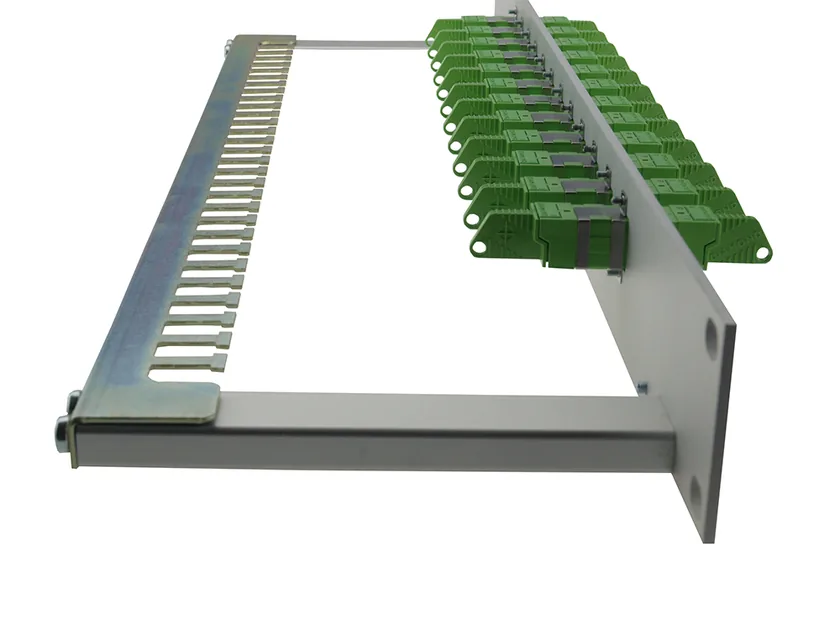
Proper fibre optic connection is accomplished through splicing or pre-terminated connectors. Modern splice boxes accommodate up to 96 fibres in 1 RU, enabling high-density installations even in confined technical spaces.
Connector type selection significantly affects system performance:
| Connector Type | Insertion Loss | Return Loss | FTTR Suitability |
|---|---|---|---|
| LC-APC | 0.15 dB | > 60 dB | Optimal |
| SC-APC | 0.20 dB | > 60 dB | Excellent |
| E2000-APC | 0.10 dB | > 65 dB | Premium |
LC-APC has become the standard for professional FTTR installations, offering optimal performance in a compact form factor. The green angled physical contact (APC) technology eliminates reflections and guarantees distortion-free transmission.
Integration with Existing Building Infrastructure
Integrating FTTR into established infrastructure requires careful interface planning. When upgrading from copper to fibre optics, transition points must support both technologies in parallel.
- Media converters for Ethernet devices without fibre optic ports
- Power-over-Ethernet injectors for powered end devices
- Hybrid distribution cabinets with both copper and fibre ports
- Redundant routing for continuous operation
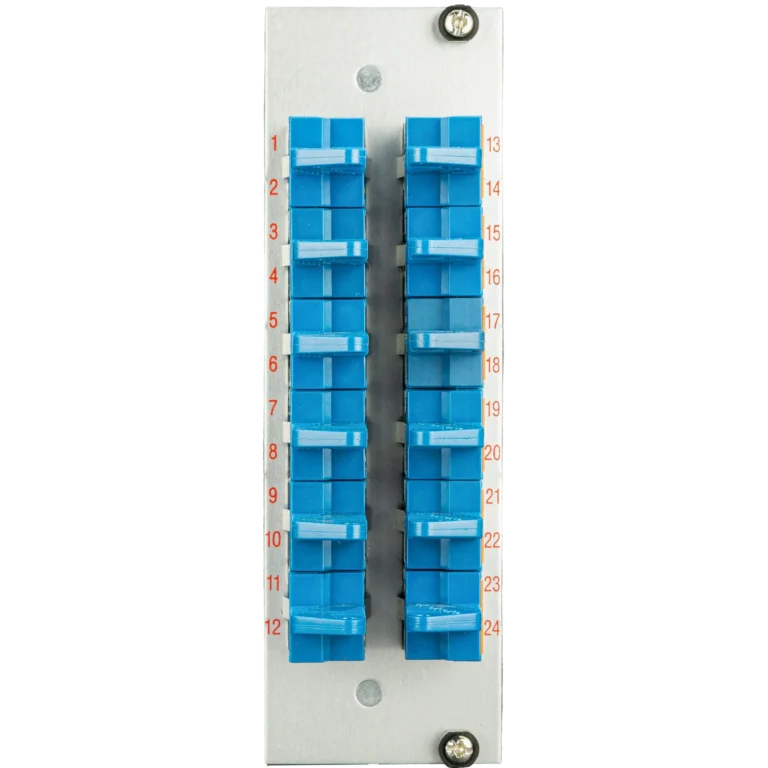
Modular SlimConnect systems enable gradual migration without complete cabling replacement. With plug-and-play cassettes, new fibres integrate within minutes while active services remain uninterrupted.
Benefits for Property Owners and Managers
Fiber to the Room demonstrably increases property value and leaseability. Research shows that units with continuous fibre optic coverage can command up to 8% higher rents. Investment in future-proof in-building cabling typically pays for itself within 5–7 years.
Concrete benefits for owners and property managers:
- Uninterrupted home office operation without bandwidth constraints
- Simultaneous use of multiple high-definition streaming services
- Future-proofing for emerging applications such as virtual reality
- Reduced maintenance costs through passive infrastructure
- Compliance with EU Gigabit Regulation from 2026
Retrofitting existing properties with FTTR technology positions them optimally for digital transformation. Particularly in urban markets, fibre optics is becoming a baseline requirement for quality-conscious tenants.
Cost Analysis and Economic Feasibility
Investment in FTTR infrastructure varies depending on building structure and installation approach. For a typical multi-unit building with 12 residential units, material costs average approximately €300–500 per unit for the fibre optic cabling alone.
Total costs comprise:
- Fibre optic cable: €0.50–1.50 per metre
- Connectors: €15–25 per connection
- Central splice box: €500–1,500
- Passive splitters: €50–150 per unit
- Installation labour: €80–120 per hour
Against these costs stand long-term savings through reduced maintenance and higher rental income. The lifespan exceeding 25 years for fibre optic installations doubles that of copper cabling.
Technical Challenges and Solutions
FTTR implementation presents specific technical challenges with proven solution strategies. Common issues involve attenuation budgets, space constraints, and compatibility with legacy systems.
Critical planning considerations:
- Maximum route length of 2 km with single-mode
- Splitter ratio optimally 1:8 through 1:16
- Plan reserve fibres of at least 20%
- Bend radius never below 15 mm during installation
Modern test instruments with OTDR technology enable precise attenuation measurements and fault location accurate to within centimetres. Documenting all connections in digital systems greatly simplifies future maintenance.
Future Outlook and Technology Evolution
FTTR evolution continues with emerging standards. Wi-Fi 7 integration delivers wireless transmission rates exceeding 30 Gbit/s, while 10G-PON increases backbone capacity tenfold.
Forthcoming developments include:
- Integration of Li-Fi technology for optical wireless transmission
- Self-healing networks with automatic failover
- AI-driven real-time bandwidth optimisation
- Quantum encryption over existing FTTR infrastructure
For property owners, this means FTTR systems installed today will support cutting-edge services decades from now. Investment in high-quality components with 5 years’ manufacturer warranty ensures long-term operational reliability.
Quality Assurance and Acceptance Testing
Proper FTTR installation handover follows defined test protocols per DIN EN 50346. Each route is individually measured and documented to secure subsequent performance guarantees.
Standard measurements during commissioning:
- Through-transmission attenuation at 1310 nm and 1550 nm
- Return loss across all connector pairs
- Polarisation mode dispersion on routes exceeding 500 m
- Visual end-face inspection at 400× magnification
Measurement results are recorded in test certificates serving as reference throughout the operating life. Using quality components typically yields values 20–30% below regulatory limits.
FAQ: Common Questions About Fiber-to-the-Room
Does FTTR require power in every room?
No. The optical fibre itself transmits data purely optically without electrical power. Only end devices such as routers or media converters require electricity. The passive infrastructure operates completely power-free.
How does FTTR differ from conventional FTTH?
While FTTH terminates the optical fibre at the residential unit, FTTR extends optical transmission to every individual room. This eliminates bottlenecks from copper cabling or Wi-Fi within the unit.
What bandwidths are realistic with FTTR?
Current FTTR systems deliver 1–10 Gbit/s symmetrical per connection. Theoretical limits exceed 100 Gbit/s with appropriate active equipment.
Can existing ducts be utilised?
Yes. Ducts with 16 mm or greater inner diameter suit fibre optic cables. Modern micro-cables require only 8–10 mm of space.
How long does installation take in a residential unit?
Pure cabling of a 100 m² unit with 4 rooms takes only a short time with surface routing. Including preparation and configuration, allow one working day.
Is FTTR future-proof for emerging applications?
Absolutely. Installed optical fibre seamlessly supports future transmission rates in the terabit range. Only end devices require upgrading; the cabling infrastructure remains.
Conclusion: FTTR as an Investment in Tomorrow
Fiber to the Room transforms in-building cabling and creates infrastructure for digital innovation in residential properties. The combination of continuous fibre optic coverage and modular distribution systems delivers bandwidth exceeding all current and foreseeable requirements.
For planners and property owners, FTTR offers measurable advantages: higher rental income, satisfied residents, and fulfilment of emerging regulations. With professional system solutions, such as those Fiber Products manufactures as a Diamond Partner with Swiss precision, the transition to gigabit-capable properties becomes both economically and technically optimal.
The time to upgrade is now. With the EU Gigabit Regulation from 2026 and rising bandwidth demands, FTTR shifts from competitive advantage to necessity. Quality components with extended warranty periods protect your investment for decades to come.
Request a Quote
Have questions about our fibre optic solutions? Our expert team is ready to advise you – free and without obligation.