Pigtails vs. Patch Cables: Choosing the Right Fibre Optic Connection
Pigtails vs. Patch Cables: Choosing the Right Fibre Optic Connection
The choice between pigtail and patch cable significantly influences quality and maintenance in modern fibre optic networks: pigtails with single-ended connector termination suit permanent splice connections, while dual-ended patch cables enable flexible plug-in connections.
Technical Fundamentals: Pigtails and Patch Cables Compared
The distinction between pigtails and patch cables rests on their mechanical termination and resulting connection technology. A fibre optic pigtail is factory-fitted with a high-quality connector to IEC 61754 and features a precisely prepared cleaved end on the opposite side for fusion splicing.
Patch cables, by contrast, are fully terminated connection cables with identical or different connector types at both ends. Connector termination follows standards IEC 61754-4 (SC), IEC 61754-20 (LC) or IEC 61754-15 (E2000).
| Feature | Pigtail (Splice Pigtail) | Patch Cable |
|---|---|---|
| Termination | Single-ended with connector | Dual-ended with connectors |
| Connection Method | Fusion splice or mechanical splice | Plug-in connection |
| Loss per Connection | < 0.1 dB (fusion splice) | < 0.3 dB (plug-in connection) |
| Return Loss | > 60 dB (spliced) | > 50 dB (APC connector) |
| Installation Time | longer per splice | < 30 seconds |
| Typical Lengths | 1–3 metres standard | 0.5–30 metres |
Pigtail Applications in Modern Fibre Optics
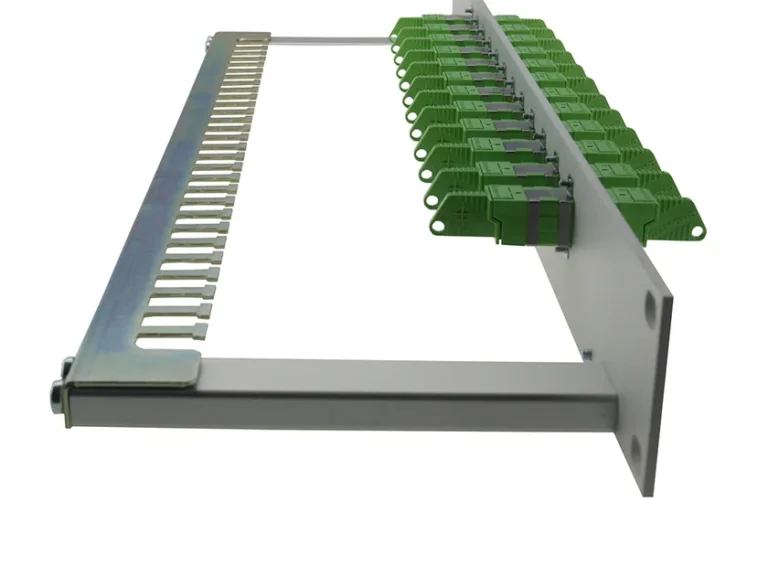
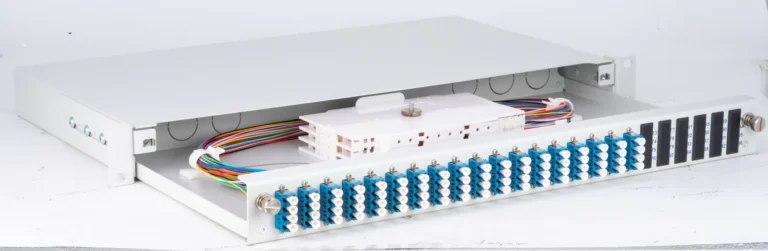
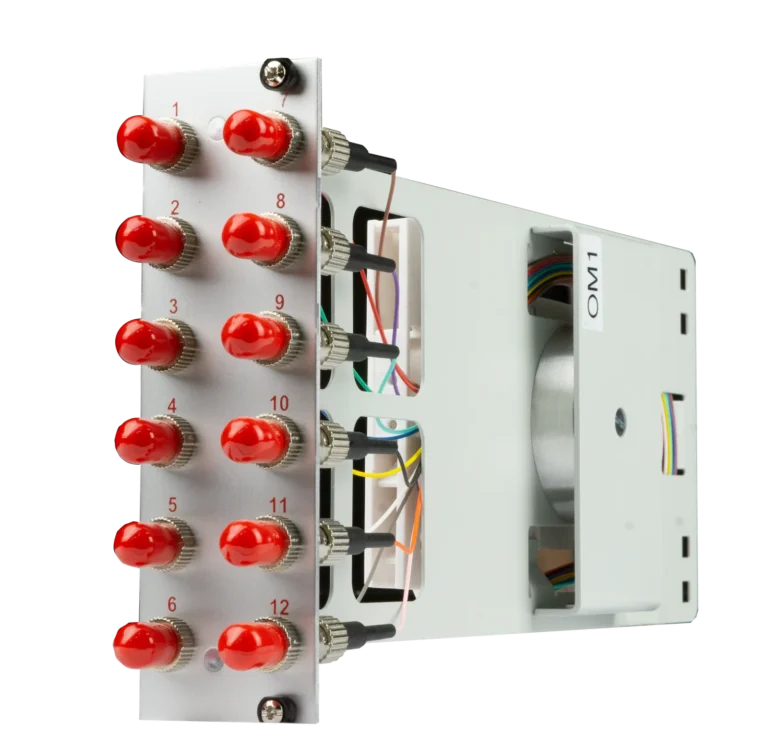
Pigtails form the interface between permanently routed fibre cables and modular distribution systems. In splice modules, they enable structured accommodation of up to 96 fibres in just 1U whilst maintaining bend radius compliance per DIN EN 60794.
Germany’s FTTH rollout increasingly relies on pre-terminated pigtails combined with modular splice systems. Utilities and network operators benefit from time savings compared to field termination.
- Distribution cabinets (POP) with 144 to 288 fibres
- House termination points (HTP) in FTTH networks
- Backbone connections in data centres
- Industrial DIN-rail enclosures per DIN EN 60715
- Mobile base stations with stringent environmental requirements
Splice Techniques for Pigtails: Fusion vs. Mechanical
Connecting a pigtail to installation fibre uses two established methods. Fusion splicing melts the fibres at approximately 2000°C and achieves loss values below 0.05 dB. Mechanical splices employ precision V-grooves and index-matched gel for loss below 0.2 dB.
Modern splice machines with active core alignment guarantee reproducible results. Automatic quality control measures splice loss immediately after fusion and documents every splice for acceptance records.
Patch Cables: Flexibility Through Plug-In Connections
Patch cables enable tool-free connection of optical components and are essential for dynamic network design. In data centre environments, they link switches, routers and transceivers at data rates up to 400 Gbit/s with single-mode variants.
Ferrule quality fundamentally determines optical performance. Zirconia ceramic ferrules guarantee concentricity < 1 μm and surface finishes in the nanometre range.
Fiber Products Quality Guarantee: As an official Diamond Partner and European manufacturer, we produce modular splice systems with Swiss precision and 5-year warranty on all systems.
Pigtails, Splice Pigtails, Patch Cables Comparison: Selection Criteria for Engineers
The decision between pigtail and patch cable depends on several technical and economic factors. Permanent installations with high fibre density favour pigtails, whilst temporary connections or frequent reconfigurations require patch cables.
| Criterion | Pigtail Recommended | Patch Cable Recommended |
|---|---|---|
| Connection Frequency | One-time, permanent | Regular reconnection |
| Space Constraints | Limited (high fibre density) | Adequate space |
| Loss Budget | Critical (< 0.1 dB) | Non-critical (< 0.5 dB) |
| Installation Location | Distribution cabinet, splice box | Patch panel, equipment port |
| Cost per Connection | Higher initial investment | Lower acquisition cost |
Connector Types and Fibre Classes: Selecting the Right Combination
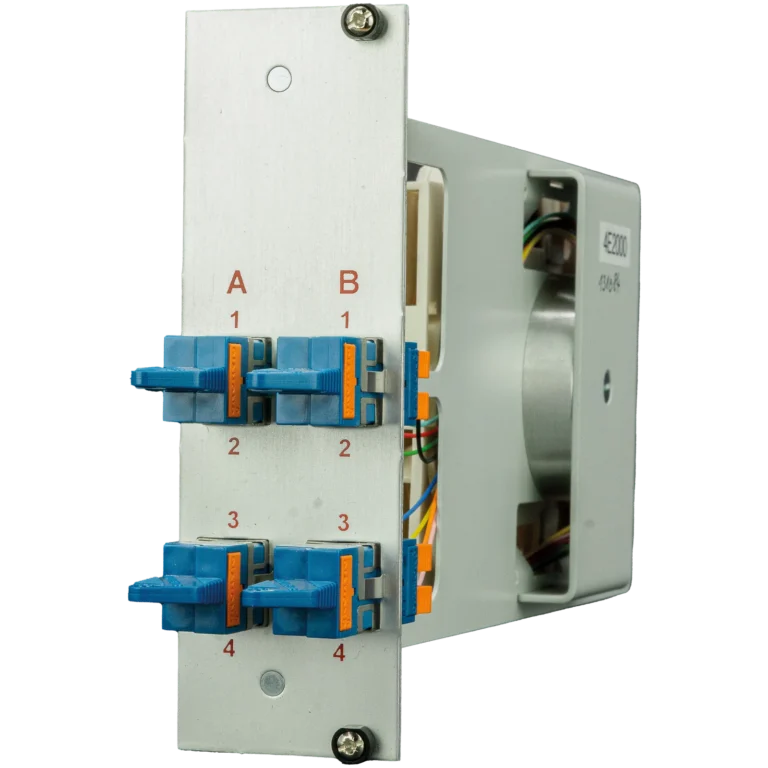
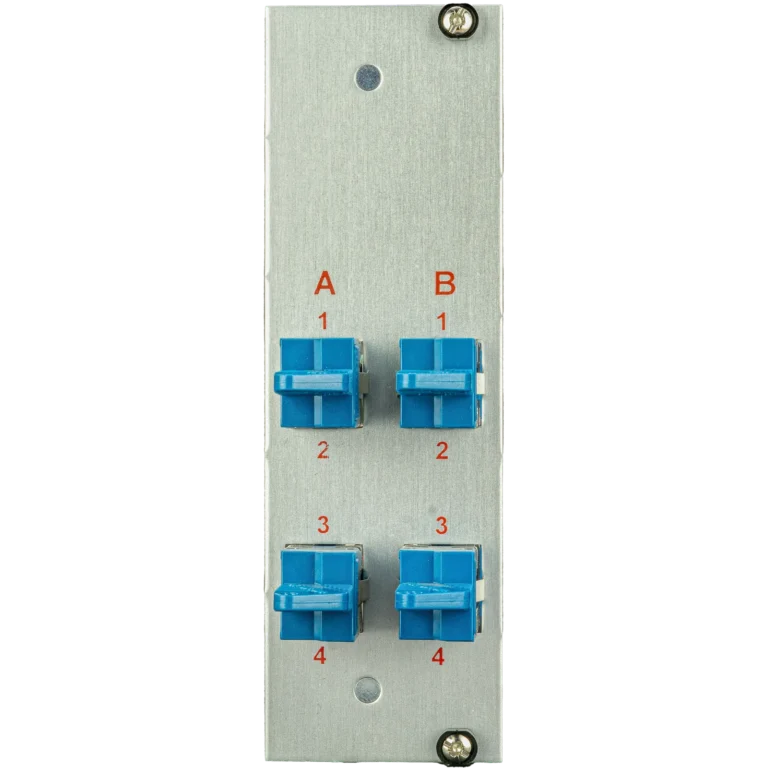
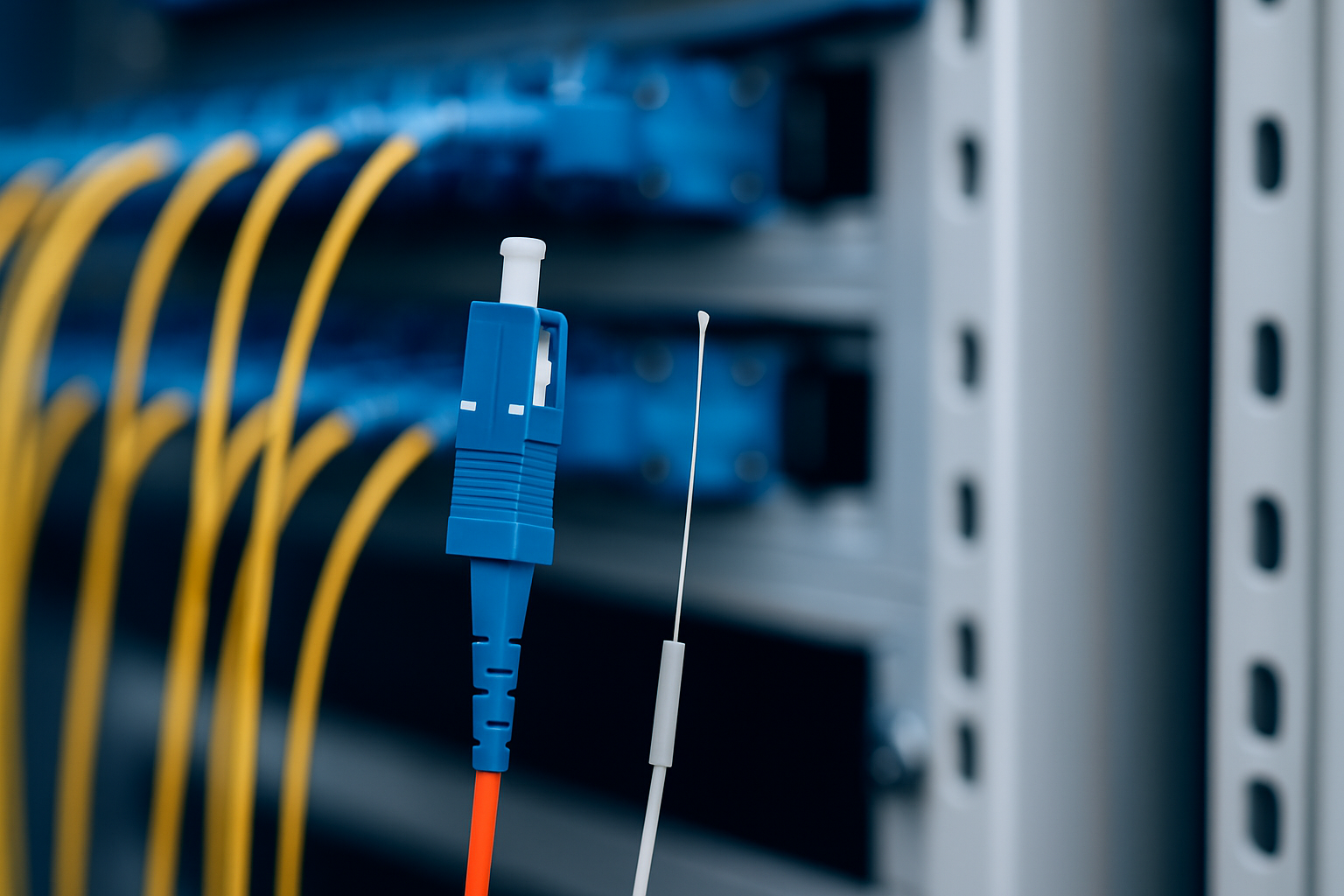
Both pigtails and patch cables are available with all standard connector types. The LC connector to IEC 61754-20 dominates modern data centres with its compact form factor. SC connectors remain standard in FTTH networks, whilst E2000 connectors with integrated safety shutter are preferred in industrial environments.
- LC Duplex: Standard for 10/40/100G Ethernet
- SC Simplex: FTTH standard, robust and cost-effective
- E2000 APC: Highest return loss > 65 dB
- MPO/MTP: Multi-channel connections up to 72 fibres
- FC: Test equipment and laboratory applications
Fibre Types for Different Transmission Distances
The choice between single-mode and multi-mode determines maximum transmission distance. OS2 single-mode fibres per ITU-T G.652.D transmit signals over 40 km without amplification. Multi-mode fibres category OM5 support wavelength division multiplexing for 100G over 150 metres.
Pigtails for outdoor applications use reinforced fibres with aramid yarn and UV-resistant jackets per IEC 60794-3. Temperature rating spans −40°C to +70°C for extreme conditions.
Cost-Benefit Analysis: Pigtails, Splice Pigtails, Patch Cables Comparison
Total installation cost encompasses material, labour and long-term maintenance. Pigtails require higher initial investment through splice equipment and trained personnel but amortise over installations of 48+ fibres through compact design.
Patch cables offer lower entry costs and enable quick provisioning. With frequent reconfigurations, they save labour time versus re-splicing.
- Pigtail material cost: €8–15 per fibre (excluding splice)
- Fusion splice labour: noticeable time per connection
- Patch cable cost: €15–40 (terminated)
- Distributor space: Pigtails require less room
- Service life: Both solutions exceed 25 years with proper installation
Quality Assurance and Test Equipment
Fibre installation acceptance requires standard-compliant measurements per DIN EN 61280-4-2. OTDR measurements document route loss, splice quality and connector losses across the entire transmission span.
Pigtail installations benefit from factory quality control. Every connector undergoes 3D interferometer measurement to verify fibre overhang, apex offset and bend radius. Supplied test records guarantee insertion loss < 0.2 dB and return loss > 50 dB.
Avoiding Common Installation Errors
Typical installation mistakes cause elevated losses and network outages. Common pigtail issues stem from contaminated splice preparations and incorrect cleave angles. Patch cables suffer from contaminated connector end-faces and mechanical damage from excessive bend radius.
Modular System Solutions for Professional Installations
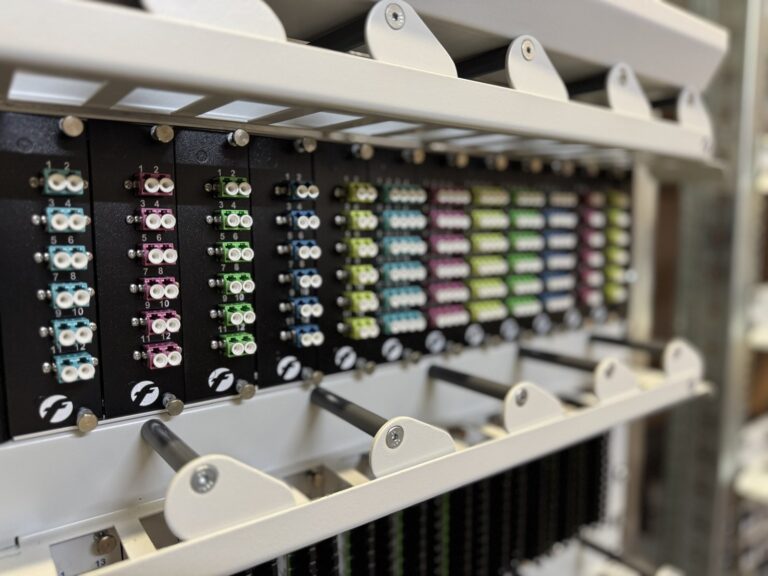
Modern fibre networks deploy modular systems that optimally combine pigtails and patch cables. The SlimConnect product line accommodates up to 96 fibres in just 1U – double conventional systems. Pre-terminated modules with integrated pigtails reduce installation time.
For larger installations, the VarioConnect system with 3U height accommodates up to 288 fibres. Modular design permits future expansion without service interruption. As the only complete provider in the DACH region, Fiber Products supplies all components from a single source – from splice box through pigtails to E2000 connectors.
- Integrated splice tray for 24 individual splices per module
- Colour coding per DIN VDE 0888 for unambiguous fibre identification
- Front label fields per EN 50173
- Push-pull locking for tool-free module mounting
- 5-year manufacturer warranty on all system components
Standards and Specifications in Pigtail, Splice Pigtail, Patch Cable Comparison
Standardisation ensures interoperability between manufacturers. The IEC 61300 series defines test procedures for optical connectors. National standards such as DIN EN 50173-1 specify requirements for structured cabling systems.
Pigtails also comply with IEC 60793 for optical fibres and IEC 60794 for fibre cables. Splice quality is rated per ITU-T L.12, whilst connectors must meet IEC 61753 requirements.
Practical Tips for Engineers and Planners
Optimal network planning accounts for future expansion and technology evolution. Reserve fibres of at least 30% enable growth without cable replacement. Documentation of every fibre per TIA-606-B simplifies future maintenance.
- Use cleaning pens before every plug-in connection
- Maintain bend radius above 30 mm for single-mode fibres
- Label pigtails consistently with self-laminating tags
- Store unconnected pigtails dust-free with end caps
- Test splice joints at 1310 nm and 1550 nm wavelengths
- Document OTDR measurements for 25-year system warranty
Future Directions in Fibre Optic Technology
Evolution to 800G and 1.6T Ethernet imposes new connector demands. Pigtails with ultra-low-loss fibres achieve loss below 0.15 dB/km. New connector designs reduce insertion loss to below 0.1 dB.
Germany’s FTTH rollout requires over 40 million fibre connections by 2030. Pre-terminated systems with factory-installed pigtails significantly accelerate deployment. Diamond technology with precision-engineered E2000 connectors sets benchmarks for quality and longevity.
FAQ: Common Questions on Pigtails, Splice Pigtails, Patch Cables Comparison
Can I repurpose a patch cable as two pigtails?
Technically possible through mid-cut, but uneconomical. Cut quality cannot match factory-prepared pigtail precision. Additionally, test records for quality assurance are missing. Invest instead in purpose-built pigtails with defined lengths and certified connectors.
What loss values are acceptable in modern installations?
Fusion splices should stay ≤ 0.1 dB (ITU-T L.400/L.12, active core alignment). Connector attenuation follows the IEC 61753 grades: Grade B ≤ 0.25 dB, Grade C ≤ 0.5 dB. There is no fixed dB budget per distance — it is set by the transceiver class: ITU-T G.957 short-haul interfaces (~15 km) allow 0–12 dB optical path attenuation. Calculate per ITU-T G.652 Appendix I: length × attenuation coefficient plus splices and connectors, plus margin.
How long do pigtail splice connections last?
With proper installation and environmental protection, over 25 years without degradation. Optical fibre does not age; only mechanical stress or moisture causes problems. Modern splice protection sleeves rated IP68 guarantee lasting protection.
Do I need different pigtails for single-mode and multi-mode?
Yes, fibre core diameters differ fundamentally: 9 μm for single-mode versus 50/62.5 μm for multi-mode. Connectors also differ in ferrule properties. Colour coding helps: yellow for single-mode, orange/aqua for multi-mode.
When does investing in a fusion splicer pay off?
Approximately 200 splice connections annually justify entry-level equipment purchase. For occasional work, engage certified installers or deploy pre-terminated systems with factory-mounted pigtails.
How do I identify high-quality pigtails?
Verify manufacturer certifications to ISO 9001, individual test records for each connector
Request a Quote
Have questions about our fibre optic solutions? Our expert team is happy to advise – free and without obligation.