Splice Box vs Splice Module: Which Is Right for Your Project?
The decision between splice box vs splice module, fibre optic comparison, modular solutions fundamentally determines the efficiency and future-readiness of your fibre optic installation. While traditional splice boxes are optimal for permanent point-to-point connections with up to 48 fibres, modern splice modules in 1U form factor support up to 96 fibres and enable flexible expansion. Your choice depends on project scale, maintenance requirements, and planned network architecture.
The fibre rollout in Europe continues to accelerate, with tens of millions of households now connected to high-speed networks. Installation contractors face the challenge of deploying efficient and scalable distribution solutions. This comparison reveals the technical differences, practical deployment scenarios, and economic aspects of both systems.
Technical Fundamentals: What Distinguishes Splice Box from Splice Module?
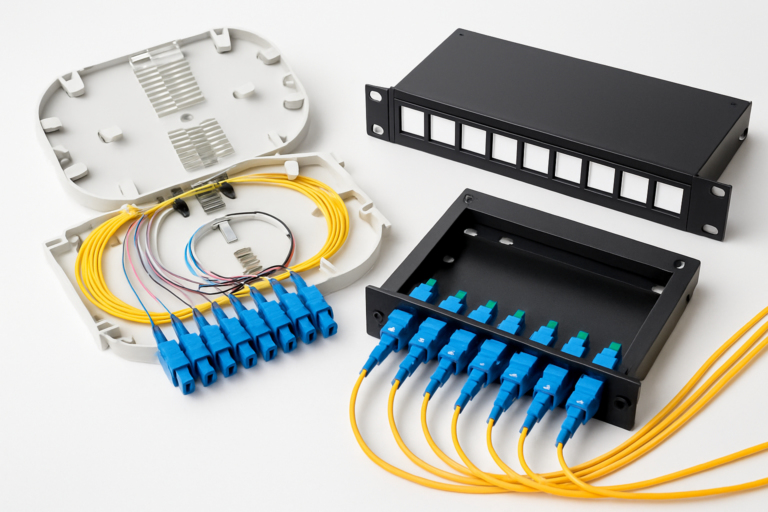
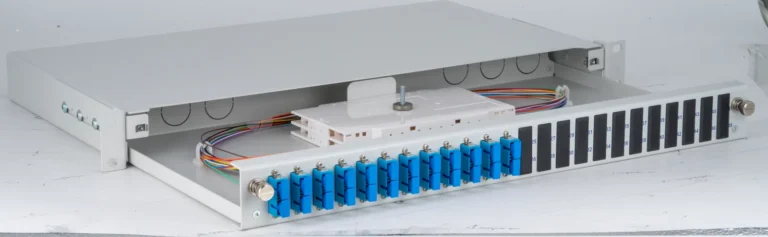
A splice box is an enclosed housing designed to protect fibre optic splice points in accordance with IEC 61756-1. It accommodates splice cassettes, cable entry points, and optionally couplings for patch cable connections. Installation options include wall mounting, in-ground placement, or as a 19-inch rack insert.
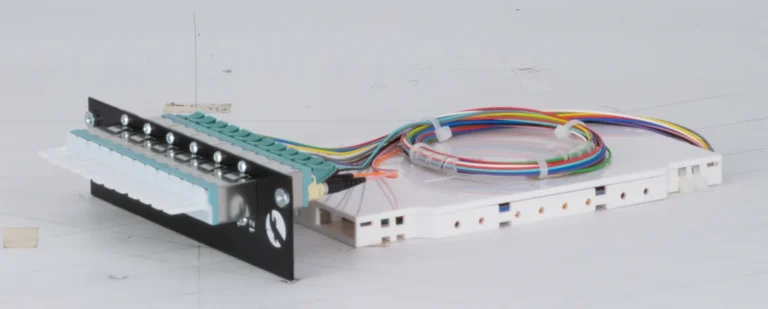
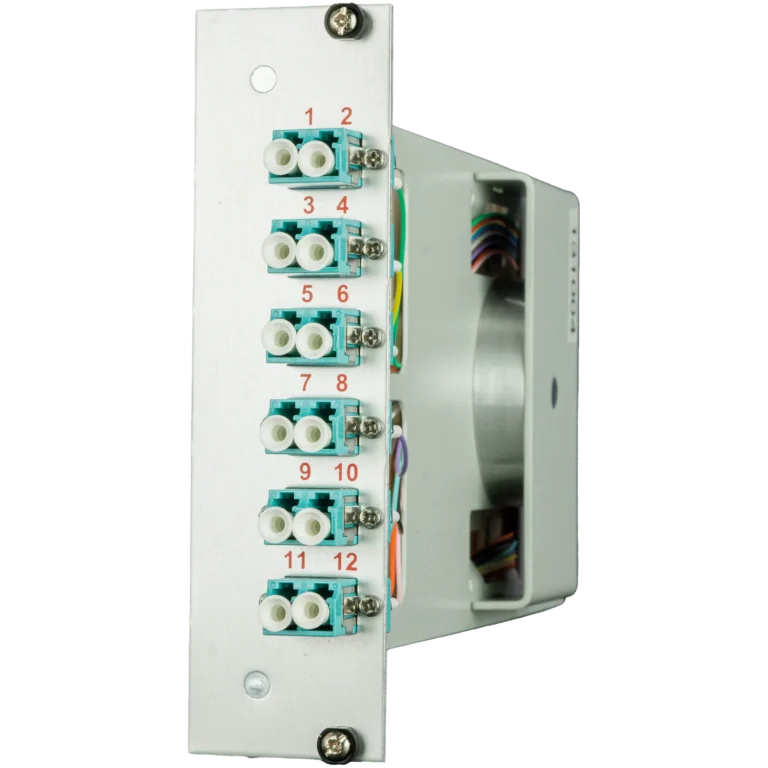
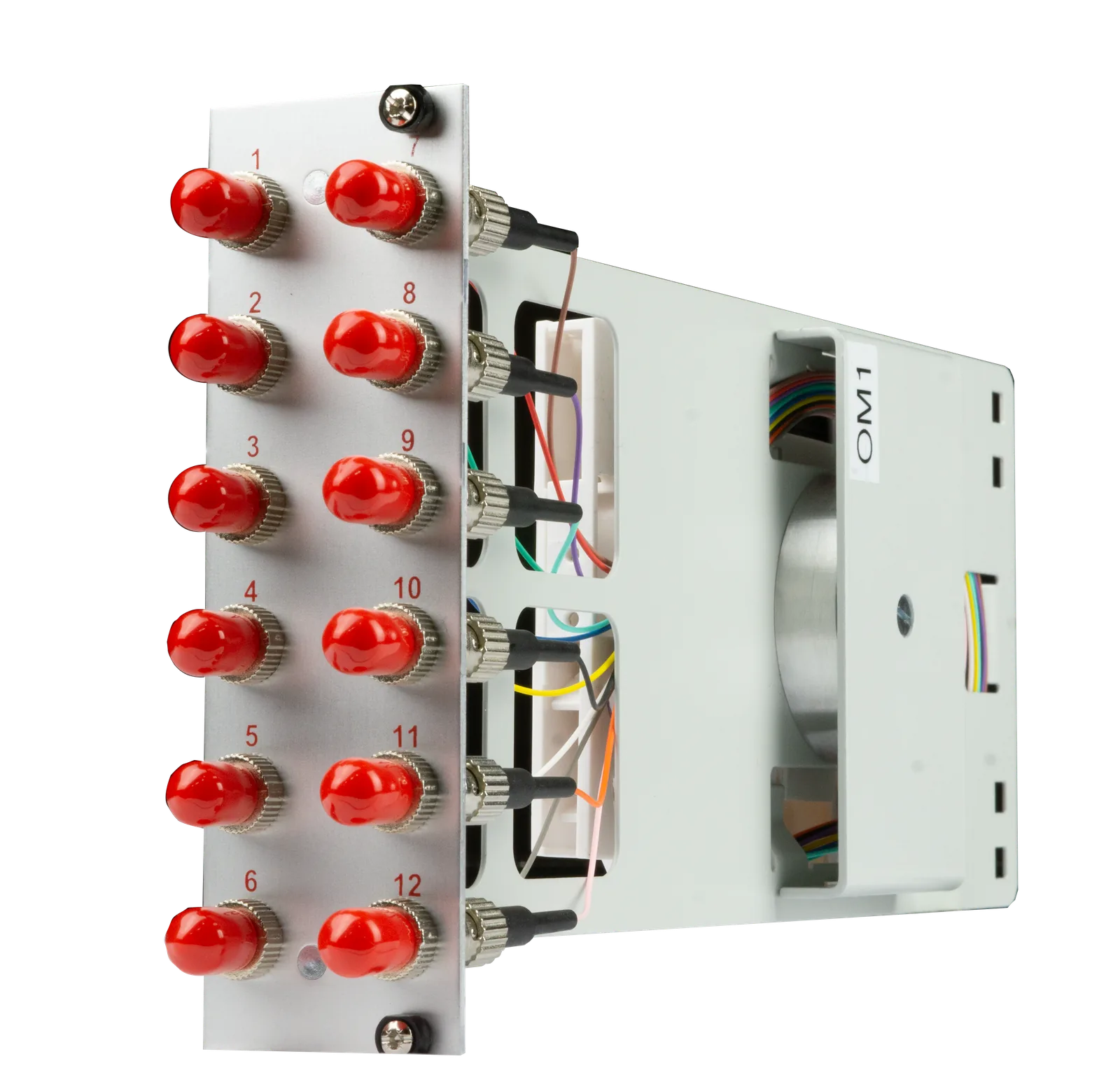
A splice module, by contrast, is a removable functional unit that integrates into a carrier frame. Modules conforming to IEC 61753-031-2 can be replaced without tools and offer standardised interfaces for various connector types.
- Splice box: Permanently installed, up to 48 fibres, IP65 protection available
- Splice module: Hot-swappable, up to 12 fibres per module, flexible configuration
- Carrier frame: Houses multiple modules, scalable from 1U to 4U
- Fibre density: Modules achieve up to 96 fibres in 1U
Deployment Scenarios: Where Each System Excels
The choice between splice box and modular system depends significantly on deployment location. In practice, clear preferences emerge based on use case and environmental conditions.
Splice Boxes for Rugged Outdoor Applications
Traditional splice boxes dominate outdoor installations and harsh environments. With IP65 protection rating, they withstand moisture, dust, and temperature fluctuations from -40°C to +70°C. Municipal utilities prefer them for vault and pole installations.
| Specification | Splice Box | Splice Module |
|---|---|---|
| Protection Rating | IP65–IP68 | IP20 (in cabinet) |
| Temperature Range | −40°C to +70°C | −5°C to +50°C |
| Installation Location | Vault, pole, wall | 19-inch rack |
| Service Access | On-site | In tech room |
Modules for High-Density Rack Installations
In tech rooms and data centres, modular splice module selection. The SlimConnect series achieves 96 fibres in 1U—double the fibre density of conventional solutions. For 1000 termination points, you save rack height compared to traditional 48-port systems.
- Space savings through higher fibre density per rack unit
- Tool-free module replacement in a very short time
- Unified spare parts inventory across all sites
- LC, SC, E2000 connector types
Splice Box vs Splice Module, Fibre Optic Comparison, Modular Solutions: The Cost Question
Purchase price often masks true total cost of ownership. A quality splice box costs between €150 and €500, while a modular system with carrier frame starts at €800–€2000. However, the economic analysis must account for additional factors.
Installation reveals immediate differences: a splice box requires considerably more labour including fibre termination. A pre-configured module is operational in a fraction of that time. Across 50 installation points, the time saving accumulates to over 25 labour hours.
Maintenance costs also favour modular systems. Replacing a faulty module takes very little time with no service interruption. A splice box demands re-splicing of all fibres—effort: considerably higher, plus downtime.
Fiber Products Quality Commitment: As an official Diamond partner and manufacturer, we produce modular splice systems in Europe. Benefit from Swiss precision and in-house manufacturing.
Standards and Certifications: Safety for Your Projects
Both system types comply with rigorous standards. DIN EN 50173-1 defines requirements for structured cabling systems. Additionally, IEC 61300 series covers optical connectors and IEC 61753 series specifies performance requirements.
Key Standards for Installers
| Standard | Scope | Requirement |
|---|---|---|
| IEC 61754-20 | LC Connector | Dimensional tolerances, mating cycles |
| IEC 61754-4 | SC Connector | Mechanical strength |
| IEC 61754-15 | E2000 Connector | Loss values, APC polish |
| EN 50173-1 | Structured Cabling | System requirements |
Verify CE marking and RoHS compliance when selecting components. Products with CPR classification under EN 50575 are mandatory for public buildings.
Practical Installation Aspects: Time Is Money
Installation duration directly determines project cost. Modern pre-configured splice modules significantly reduce labour time. A technician can deploy 8–10 modules per day including documentation.
- Pre-configured modules: fast installation
- Splice box with 24 fibres: quick complete setup
- Module replacement on fault: very quick without re-splicing
- Splice box repair: substantially longer with service interruption
The SlimConnect splice modules feature tool-free snap locks and colour-coded guides. This reduces assembly errors and accelerates installation.
Scalability and Future-Proofing: Investment Protection through Flexibility
Fibre deployment across Europe is expanding dynamically. Your chosen solution must grow with demand. Modular systems offer clear advantages through extensibility.
A typical expansion project starts at 20% capacity and grows to 80% over five years. With modular systems, you provision only needed ports initially and expand as required. This saves initial capital expenditure.
Migration Paths for Growing Networks
Upgrading from 10G to 40G or 100G often requires different connector types. With modular splice boxes, you simply swap front modules—the underlying infrastructure remains intact. This saves migration costs.
- Start with LC duplex for 1G/10G connections
- Add MPO modules for 40G/100G
- Integrate E2000 APC for WDM systems
- Preserve backbone cabling and documentation
Special Requirements: Industrial Environments and Custom Solutions
Industrial facilities demand specific features from fibre distribution units. Vibration, temperature swings, and electromagnetic fields require robust solutions. Here the splice box vs splice module, fibre optic comparison, modular solutions decision shows clear trends.
DIN rail-mount splice boxes conforming to DIN EN 60715 integrate seamlessly into control cabinets. With IP65 protection and expanded temperature range from −25°C to +70°C, they operate reliably in harsh settings.
| Environment | Recommended Solution | Protection Rating |
|---|---|---|
| Production Floor | DIN Rail Box | IP65 |
| Server Room | 19-inch Modules | IP20 |
| Outdoor Vault | Sealed Box | IP68 |
| Office Building | Wall-Mount Unit | IP40 |
Service and Support: Long-Term Operating Cost Control
Maintenance accessibility determines operating expenses. Modular systems excel through straightforward fault diagnosis and rapid component replacement. 5-year warranty on Fiber Products systems mitigates failure risk.
Traditional splice boxes require intervention at the splice layer for any change. This means: service interruption, documentation updates, and elevated error risk. Modules swap without affecting active connections.
- Modular approach: MTTR significantly lower
- Traditional splice box: MTTR significantly higher
- Spare parts availability modules: available on request
- Documentation overhead: lower with modules
Making the Right Choice for Your Project
The splice box vs splice module, fibre optic comparison, modular solutions decision hinges on several factors. For outdoor deployments with few fibres and infrequent changes, splice boxes remain the first choice. In dynamic environments with frequent expansion, modular systems dominate.
Installation contractors gain particularly from the time savings of modular solutions. The higher initial investment typically pays back through reduced installation labour by the third project. Standardisation across customer deployments also streamlines training and inventory management.
Frequently Asked Questions
When does switching to modular systems make sense?
From 10 deployment points onward, or for projects with planned expansions, modular systems justify the investment. Installation and maintenance time savings offset higher purchase cost within 12–18 months.
Which connector types should I prioritise?
LC and SC connectors dominate FTTH projects. LC offers higher packing density; SC/APC is the common drop and subscriber termination. E2000 APC suits demanding links because of its high return loss (DIAMOND: min. 70 dB); insertion loss is typ. 0.1 dB, max. 0.3 dB.
How important is component origin?
Origin matters for supply chain and traceability, but standards compliance comes from testing to IEC 61753-1, not from location. DIAMOND’s Swiss-made E2000 uses Active Core Alignment with core eccentricity below 0.125 µm; insertion loss is typ. 0.1 dB, max. 0.3 dB.
Can I combine different systems?
Yes, combination is possible and often optimal. Deploy splice boxes for outdoor distribution and modular systems in tech rooms. Ensure compatible connector types and unified documentation.
What are standard fibre counts?
Typical configurations are 12, 24, 48, and 96 fibres. FTTH usually requires 24–48 fibres; backbone links use 96–144 fibres. Modular design allows staged expansion.
How do I plan growth reserves correctly?
Allow 30% growth reserve for five years. With modular systems, provision only 70% initially and reserve empty modules. This optimises investment and future flexibility.
Conclusion: Your Optimal Fibre Optic Solution
The splice box vs splice module, fibre optic comparison, modular solutions analysis demonstrates: both systems have merit. Splice boxes excel in harsh conditions and static deployments. Modular systems dominate through flexibility, serviceability, and future-readiness in dynamic network environments.
For installation contractors, a hybrid approach is recommended: robust splice boxes for outdoor distribution, high-density modules for tech rooms. With the right system choice, you reduce installation labour and maintenance costs.
Invest in proven quality with 5-year warranty and benefit from the expertise of an established manufacturer. Investment in well-designed fibre distribution pays dividends through lower operating costs and satisfied end customers.
Find all modular fibre optic components directly in the Fiber Products Shop – with 5-year manufacturer warranty.
Request Expert Consultation
Our specialists will advise you on modular fibre optic solutions tailored to your specific deployment—rapidly, personally, and without obligation.