Public transport fiber optic networks: Mission-critical splicing systems for transportation companies
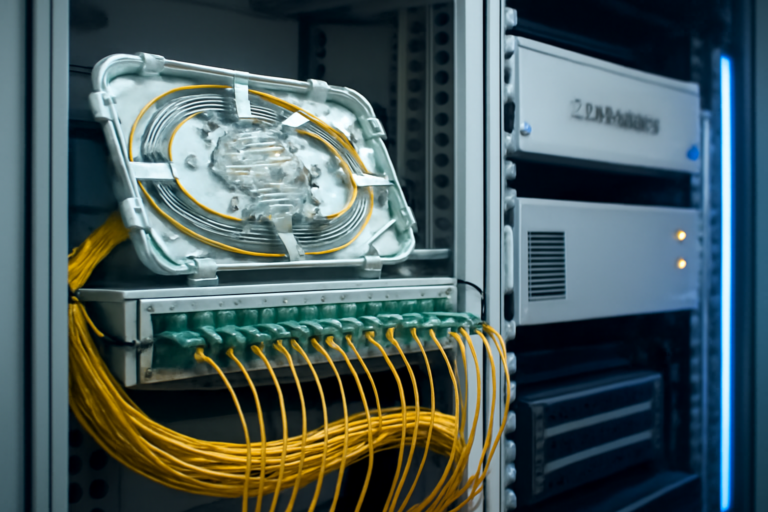
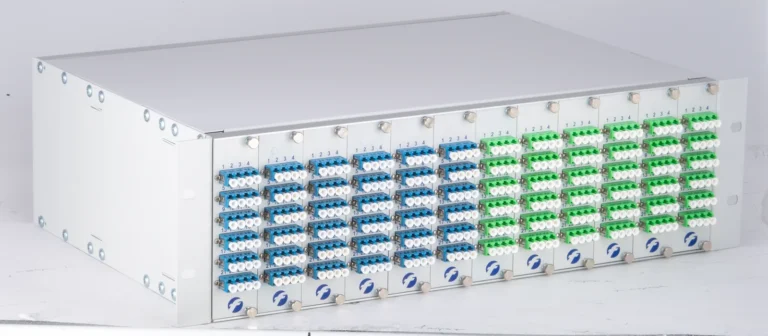
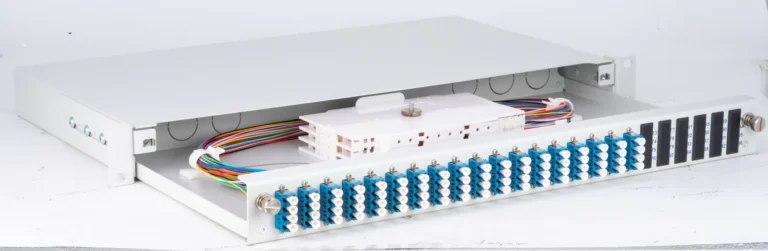
Public transport fiber optic networks form the invisible backbone of modern transport companies – from passenger information and video surveillance to automated train control. Millions of passengers every day rely on systems that require maximum availability and freedom from interference. Modern VarioConnect splice systems create the redundant, modular infrastructure that transportation companies need for critical applications. With up to 288 fibers in controlled technical rooms, they enable the networking of bus fleet management systems with optimum ease of maintenance.
The mission-critical infrastructure of local public transport
Transport companies operate in a world of absolute reliability. A failed passenger information system can affect thousands of passengers. Faulty communication links between the control center and vehicles jeopardize operational safety. Defective video surveillance compromises safety. Public transport fiber optic networks must therefore meet the highest availability requirements – typically 99.9% or better.
These requirements make transport companies fundamentally different from other sectors. While office buildings or industrial plants can use scheduled maintenance windows, subways and buses run 365 days a year. System failures are not only costly, but can also jeopardize public safety.
Complex system landscapes in critical environments
Modern transportation companies operate highly complex IT landscapes in demanding environments. Subway tunnels are subject to extreme temperature fluctuations. Streetcar technology rooms suffer from vibrations. S-Bahn interlockings have to cope with electromagnetic interference from overhead lines.
Public transport fiber optic networks connect critical system components:
- Automated train control systems for precise timing and safety
- Passenger information systems for real-time information and connections
- Video surveillance networks for security and vandalism prevention
- Communication systems between control center, vehicles and personnel
- Ticketing infrastructures for cashless payment systems
- Emergency communication for evacuation and rescue services
These systems work together in a time-critical manner. Passenger information must be transmitted in real time from the central traffic management system to hundreds of display boards. Video streams from thousands of cameras flow continuously to the security control center.
Redundancy as a survival strategy
For mission-critical public transport fiber optic networks, redundancy is not optional, but essential. Ring topologies with automatic switching ensure operational continuity even in the event of cable damage. Dual paths between critical nodes eliminate single points of failure.
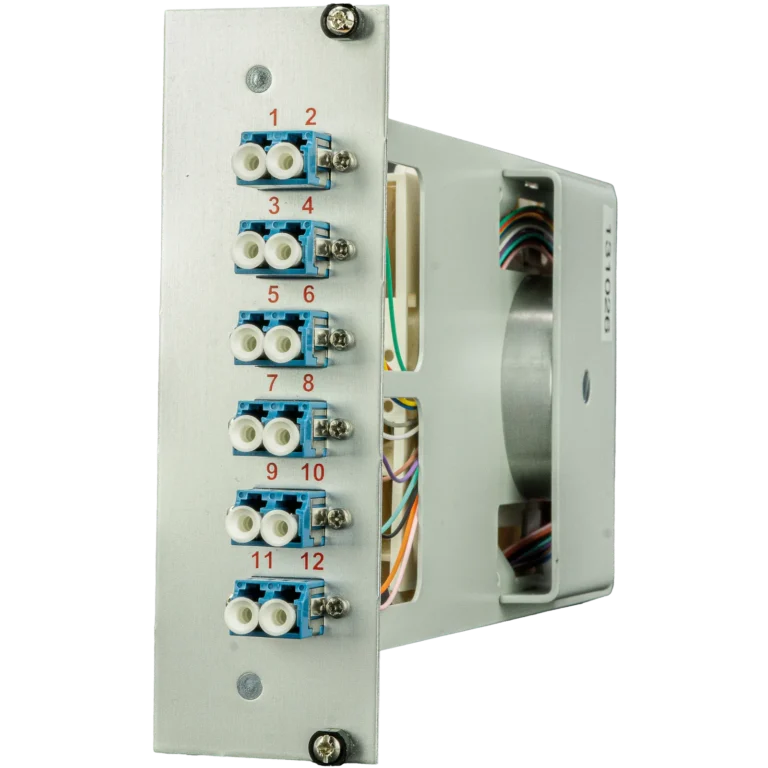
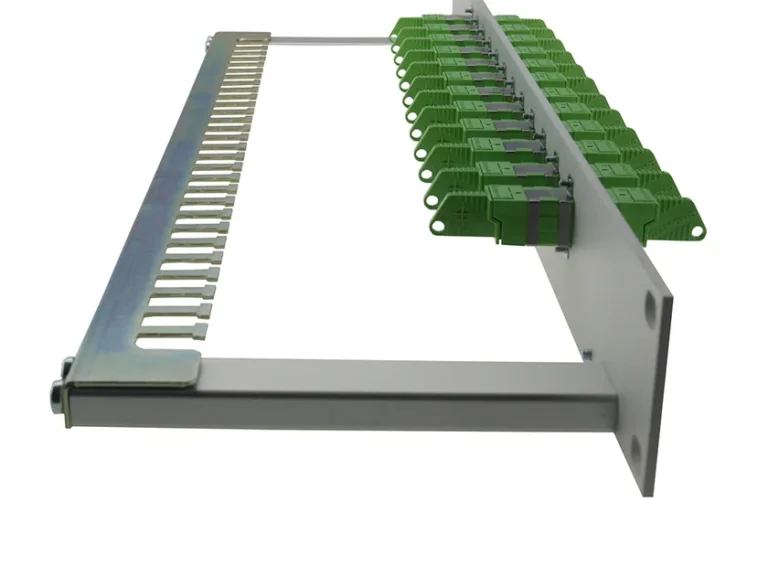
Modern VarioConnect splice systems optimally support these redundancy concepts. With their modular 3U architecture, they can combine different redundancy levels in one system:
- Primary connections via dedicated modules
- Backup paths via separate modules
- Emergency bypass via additional modules
This granularity makes it possible to carry out maintenance work on individual redundancy levels without jeopardizing overall availability.
Technical requirements of transport companies
The special operating conditions of public transport systems place specific requirements on public transport fiber optic networks. These differ considerably from standard office or industrial environments.
Electromagnetic compatibility in electrified systems
Electrified transportation systems generate considerable electromagnetic interference. 15kV overhead lines of suburban trains, 750V power rails of subway trains and frequency-controlled drives of streetcars create complex EMC environments.
Public transport fiber optic networks offer decisive advantages over copper-based systems:
- Complete galvanic isolation eliminates earth loops and interference coupling
- Immunity to electromagnetic fields ensures interference-free transmission
- Lightning protection through dielectric properties of the glass fiber
VarioConnect systems with their robust metal construction and optimum shielding offer additional protection against EMC influences in technical rooms close to electrical infrastructures.
Vibration resistance and mechanical load capacity
Transportation systems generate continuous vibrations. Passing trains transmit vibrations to neighboring equipment rooms. Streetcars cause vibrations in adjacent buildings. These mechanical stresses can lead to micromovements and ultimately failures over the years.
High-quality splicing systems for public transport fiber optic networks must therefore have special mechanical stability:
- Robust frame structures made of reinforced metal
- Vibration-damping mounting systems for decoupling
- Secure fiber guidance without mechanical stresses
- Long-term stable connection technology for decades of operation
The European production of Fiber Products systems according to German quality standards guarantees this mechanical durability with a 5-year guarantee even under the most demanding conditions.
Temperature management in underground systems
Subway systems create unique thermal challenges. Tunnels act as thermal stores with slow temperature cycles. Technical rooms can overheat due to waste heat from electrical systems. At the same time, conventional air conditioning options are often lacking.
Public transport fiber optic networks must function reliably over wide temperature ranges in these environments. VarioConnect splice systems are designed for the standard temperature range of 0°C to +60°C in controlled indoor environments – ideal for air-conditioned or well-ventilated technical rooms in public transport companies.
The compact design with up to 288 fibers in 3U reduces the development of waste heat compared to more extensive systems. At the same time, the modular structure enables targeted temperature monitoring and control of individual areas.
System architectures for complex transportation networks
Modern transportation companies operate multi-layered network architectures that have to support different applications and security levels. Public transport fiber optic networks form the physical foundation for logically separate but physically converged infrastructures.
Hierarchical network structures in public transport
Transportation companies typically use three-tier hierarchies:
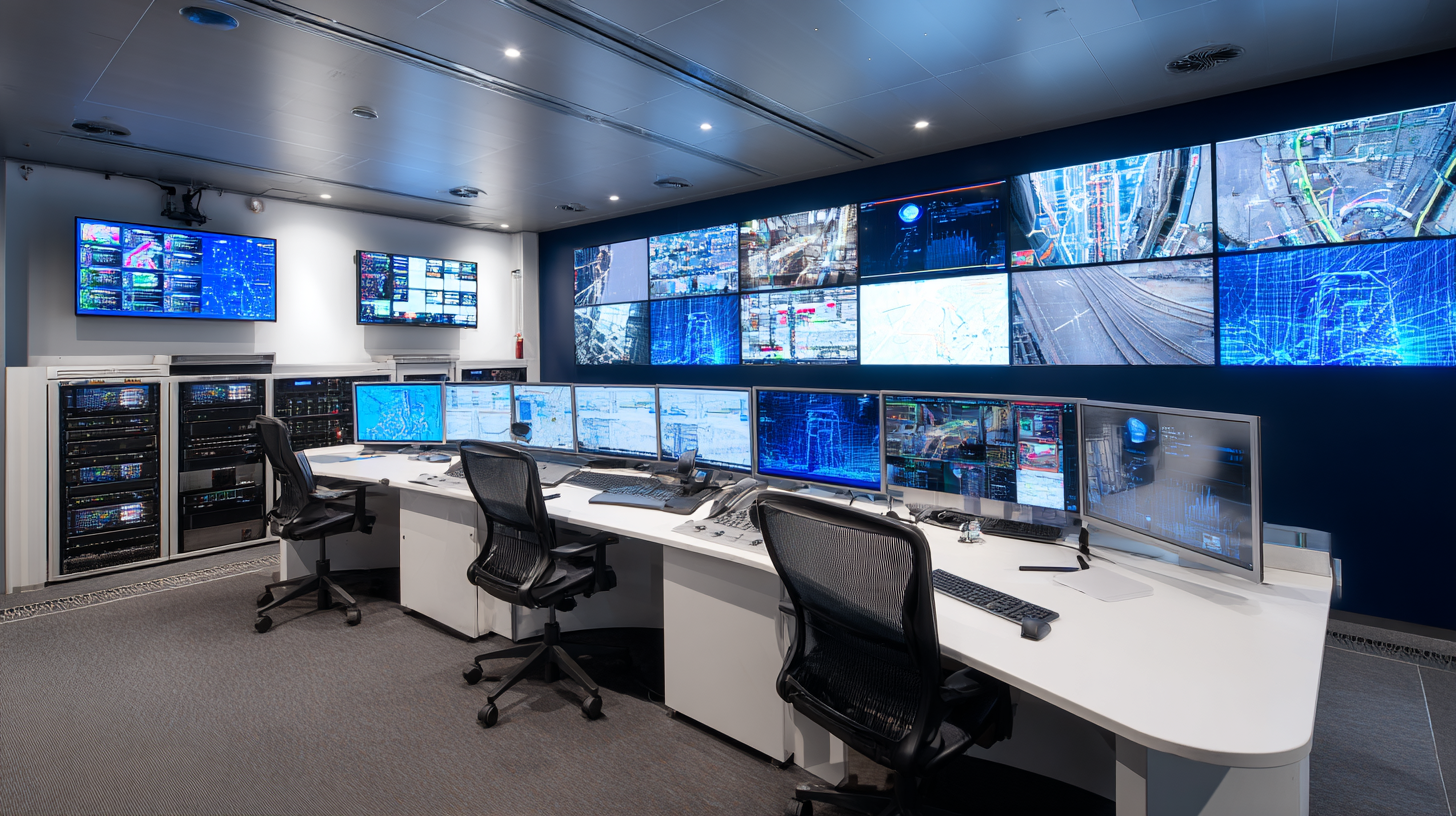
Core level: Central data centers and control centers form the backbone. This is where all critical systems come together – from traffic control and ticketing to video surveillance. VarioConnect 3U systems with up to 288 fibers provide the necessary connectivity for these highly complex environments.
Distribution level: Regional distribution points at important stations and depots aggregate the traffic from their areas. These locations require flexible, modular, expandable systems that can keep pace with network growth.
Access level: Local technology rooms at stations, stops and in vehicles provide the direct connection to end devices. Compact, maintenance-friendly solutions are required here.
Converged infrastructures for multiple services
A key trend in public transport fiber optic networks is the convergence of different applications on a shared physical infrastructure. Instead of separate networks for video surveillance, passenger information and operational communication, modern systems use logically separate VLANs over shared optical fibers.
This convergence brings considerable cost benefits:
- Reduced infrastructure costs through shared use
- Simplified maintenance thanks to standardized components
- Flexible bandwidth allocation between applications
- Scaling advantages for system expansions
Modular splicing systems optimally support this convergence. Different services can be managed via separate modules, but remain physically and organizationally separate for security and ease of maintenance.
Redundancy and resilience concepts
Public transport fiber optic networks implement multi-layered redundancy strategies:
Geographical redundancy: Critical connections run along physically separate routes. Subway networks use different tunnels. Above-ground systems use separate roadways or line rights-of-way.
Equipment redundancy: Active components are duplicated with automatic switching. Passive splice systems create the infrastructure for this redundancy through modular division of different paths.
Service redundancy: Critical applications use multiple transmission paths and protocols. Passenger information runs in parallel via LAN and mobile radio. Emergency communication uses various physical paths.
The modular architecture of VarioConnect systems supports these complex redundancy scenarios by clearly physically separating different paths while maintaining a centralized, maintenance-friendly organization.
Special applications in transportation systems
The variety of applications in public transport fiber optic networks requires specialized solutions for different technical challenges.
Automated train control systems (ATC/CBTC)
Computer Based Train Control (CBTC) systems are revolutionizing the efficiency and safety of public transport. These systems enable train headways of less than 90 seconds and precise speed control.
Public transport fiber optic networks are essential for CBTC implementations:
- Real-time communication between vehicle and control center
- Position transmission with centimeter accuracy
- Speed commands and safety signals
- Door control and platform integration
The latency requirements are extreme: safety-critical signals must be transmitted within milliseconds. High-quality splice connections with minimal losses guarantee this time-critical communication.
Passenger information systems in real time
Modern passengers expect real-time information about departure times, disruptions and alternatives. This information must be transmitted from central systems to hundreds or thousands of display boards, announcements and mobile apps.
The bandwidth requirements are considerable:
- Static information: Timetables, network maps, tariffs
- Dynamic updates: delays, cancellations, detour
- Multimedia content: Advertising, news, events
- Multilingual content for international passengers
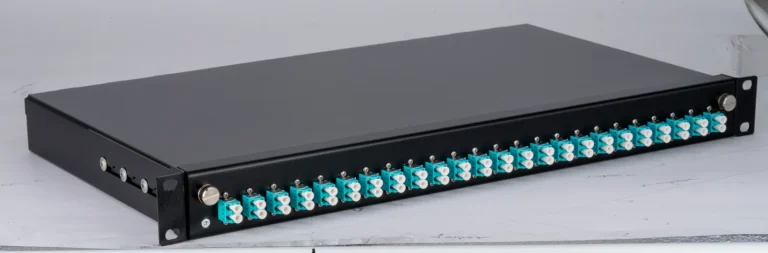
VarioConnect systems with their high port density enable the efficient distribution of these information streams via public transport fiber optic networks with clear structuring according to applications and priorities.
Video surveillance and security systems
Security in public transportation requires comprehensive video surveillance. Modern systems use high-resolution cameras with intelligent image analysis for hazard detection and vandalism prevention.
The technical requirements are demanding:
- 4K video streams from thousands of cameras
- Long-term archiving for forensic purposes
- Real-time analysis for automatic alarms
- Mobile access for security personnel
Public transport fiber optic networks have to cope with these enormous amounts of data. A single 4K camera generates up to 25 Mbit/s of continuous traffic. Hundreds of cameras per line generate gigabit data streams that need to be transmitted reliably and without interruption.
The modular structure of VarioConnect systems enables the logical separation of different security zones and camera areas while maintaining efficient physical organization.
Integration of ticketing and payment systems
Cashless payment systems are rapidly gaining importance in public transport. NFC-based cards, mobile payment and account-based systems require reliable data connections for authorization and billing.
Connecting public transport fiber optic networks:
- Validation devices at all entrances
- Vending machines for issuing and loading cards
- Mobile terminals for control personnel
- Central billing systems for clearing
The demands on availability are extreme: failures of ticketing systems can lead to considerable passenger complaints and loss of revenue. Redundant public transport fiber optic networks with automatic switching ensure continuous availability even in the event of local disruptions.
Maintenance and operation in 24/7 environments
The continuous operation of public transport systems places special demands on the maintenance and support of public transport fiber optic networks. Traditional maintenance windows practically do not exist – system maintenance must be carried out during ongoing operations.
Proactive maintenance strategies
Transportation companies are increasingly relying on proactive maintenance instead of reactive repairs. Predictive maintenance uses continuous monitoring of system parameters to predict failures before they occur.
This means for public transport fiber optic networks:
- Continuous attenuation measurements of all critical connections
- Automatic alarms when limit values are exceeded
- Trend analyses to identify creeping deterioration
- Preventive component changes before critical failures
Modular splicing systems support these strategies through easy accessibility for measurements and quick exchangeability of individual modules without disturbing neighboring systems.
Hot-swap concepts for uninterrupted maintenance
The modular architecture of VarioConnect systems enables hot-swap-like maintenance concepts. Individual modules can be replaced or serviced while neighboring modules continue to operate undisturbed.
This is particularly valuable for public transport fiber optic networks with their redundant structures:
- Primary path remains active while secondary path is being maintained
- Service-specific maintenance without affecting other applications
- Fast fault isolation thanks to modular structure
- Parallel maintenance work on different system parts
Spare parts management and availability
24/7 operation requires immediate availability of spare parts. Transport companies cannot afford to wait for deliveries if critical system components fail.
Public transport fibre optic networks benefit from standardized, modular components:
- Low variety of spare parts due to modular standardization
- Interchangeable modules instead of complete system changes
- Local storage of critical components
- Quick identification thanks to uniform labeling
Fiber Products’ European manufacturing with short delivery routes and 5-year warranty offers additional security for mission-critical applications.
Integration into existing transport infrastructures
Most public transport fiber optic networks have to be integrated into established, heterogeneous infrastructures. Public transport companies can rarely start from scratch, but must integrate new systems seamlessly into existing architectures.
Migration of legacy systems
Many public transport companies still operate copper-based or older fiber optic systems. The migration to modern public transport fiber optic networks must take place gradually without affecting ongoing operations.
Modular splicing systems provide optimum support for such migrations:
- Parallel operation of old and new systems in one rack
- Step-by-step migration of individual services according to priority
- Fallback options in the event of problems with new systems
- Flexible configuration for transition scenarios
Standardization of heterogeneous environments
Transport companies have often implemented different systems from different manufacturers over the years. Public transport fibre optic networks can serve as a standardizing layer that connects different system worlds.
The use of standardized VarioConnect splicing systems across all locations creates:
- Standardized maintenance processes independent of the active technology
- Standardized spare parts for all locations
- Simplified training for maintenance personnel
- Better cost planning thanks to standardized components
Scaling for future growth
Transport networks are growing continuously. New lines, additional stations and expanded services require flexibly expandable public transport fiber optic networks.
Modular systems offer ideal scaling options:
- Organic growth through additional modules
- Capacity expansion without system change
- Future-proof thanks to upgradeable architecture
- Investment protection through long service life
Compliance and security requirements
Public transport fiber optic networks are subject to strict regulatory and security requirements that go beyond normal IT networks.
Data protection and GDPR compliance
Transportation companies process extensive personal data:
- Passenger flows and movement profiles
- Video recordings for security purposes
- Ticketing data and payment information
- Personnel monitoring and access control
Public transport fiber optic networks must transmit and store this sensitive data securely. High-quality splicing systems with reliable connections prevent data corruption or loss that could lead to compliance issues.
Operational safety and emergency concepts
The safety of millions of passengers depends on the reliability of critical systems. Public transport fiber optic networks must also function in emergency situations:
- Fire protection: systems must continue to function in the event of smoke development
- Power failure: battery-powered systems require minimal energy consumption
- Evacuation: Emergency communication must be available at all times
- Rescue services: emergency services need reliable communication
The robust construction of European VarioConnect systems to German quality standards guarantees this critical reliability even under extreme conditions.
Cybersecurity for critical infrastructures
As critical infrastructures, public transport companies are particular targets for cyber attacks. Public transport fiber optic networks must support robust security architectures:
- Network segmentation to contain attacks
- Physical security of the transmission paths
- Monitoring and anomaly detection
- Fast incident response for security incidents
Modular systems support security-by-design through clear physical separation of different security zones and rapid isolation of compromised areas.
Cost optimization with the highest quality requirements
Transport companies have to operate public transport fiber optic networks according to strict quality criteria, but at the same time are under considerable cost pressure from politicians and passengers.
Total cost of ownership optimization
The true cost of public transport fiber optic networks is much more than the initial purchase:
CAPEX components:
- Hardware and components
- Installation and commissioning
- Project management and engineering
- Spare parts stock
OPEX components:
- Scheduled maintenance and inspections
- Unplanned repairs and breakdowns
- Energy costs for active components
- Personnel and training
High-quality VarioConnect splice systems with a 5-year warranty significantly reduce OPEX costs thanks to lower maintenance costs and greater reliability. The modular structure also enables targeted repairs instead of costly system replacements.
Competitive prices with premium quality
Fiber Products offers public transport fiber optic networks with an optimal price-performance ratio thanks to efficient European production in accordance with German quality standards. Competitive prices despite the highest quality enable transportation companies:
- Budget-compliant implementation without compromising on quality
- Long-term planning security thanks to stable price structures
- Reduced lifecycle costs due to longer service life
- Investment protection through upgradeable systems
Scaling advantages through standardization
The use of standardized modular splicing systems across all locations and applications creates considerable scaling advantages:
- Volume discounts for larger order volumes
- Reduced spare parts costs through standardization
- More efficient maintenance thanks to standardized processes
- Simplified staff training for all systems
Future outlook: 5G and edge computing
The next generation of public transport fibre optic networks will be revolutionized by 5G and edge computing. These technologies enable completely new applications for transportation companies.
5G backhaul for public transport
5G networks require fiber-based backhaul connections with extremely low latencies. Transport companies can use their public transport fiber optic networks as a basis for 5G infrastructures and thus tap into additional sources of revenue:
- Small cells along routes for seamless mobile coverage
- Campus networks for depots and workshops
- IoT connectivity for smart city applications
- Emergency services with guaranteed prioritization
VarioConnect systems with their high port density and modular flexibility are ideal for integrating 5G backhaul into existing public transport fiber optic networks.
Edge computing for real-time applications
Edge computing brings computing power closer to the data sources and enables completely new applications:
Predictive maintenance: AI algorithms analyze sensor data in real time and predict maintenance requirements before failures occur.
Autonomous vehicles: Self-driving buses and trains require edge computing for safety-critical decisions in milliseconds.
Crowd management: intelligent video analysis recognizes dangerous situations and automatically initiates countermeasures.
Dynamic Routing: Real-time optimization of timetables based on traffic conditions, disruptions and passenger volumes.
These applications require public transport fibre optic networks with extreme reliability and the lowest latencies – properties that high-quality splicing systems guarantee through loss-optimized connections.
Integration of smart city systems
Transport companies are increasingly becoming hubs of urban digitalization. Public transport fiber optic networks are connecting with smart city infrastructures for:
- Integrated traffic control with traffic lights, parking guidance systems and road traffic
- Environmental monitoring using sensors at bus stops and in vehicles
- Emergency response with coordinated rescue and security services
- Citizen services at stations as digital service points
Success factors for implementation
The successful implementation of public transport fiber optic networks requires a systematic approach and the right partners.
Phased implementation for minimal operational disruption
Public transport companies cannot renew their entire IT infrastructure at the same time. Successful public transport fiber optic networks are implemented in carefully planned phases:
Phase 1: Core Infrastructure
- Backbone connections between main locations
- Redundant paths for critical connections
- Integration with existing systems
Phase 2: Service integration
- Migration of the most important applications
- Parallel operation during transition period
- Gradual decommissioning of old systems
Phase 3: Expansion and optimization
- Expansion to all locations
- Integration of new services and applications
- Continuous optimization and monitoring
Modular VarioConnect systems optimally support this phased implementation thanks to their expandability without disrupting existing installations.
Choosing the right technology partner
The complexity of public transport fiber optic networks requires experienced partners with a deep understanding of the special requirements of public transport systems:
Technical expertise:
- Understanding of mission-critical requirements
- Experience with complex redundancy concepts
- Knowledge of regulatory requirements
- Competence in integration projects
Quality and reliability:
- Proven durability of the components
- Comprehensive warranty services
- Fast support response times
- Spare parts supply for decades
Economic stability:
- Long-term business relationship possible
- Competitive pricing
- Plannable cost development
- Flexible financing models
As a European manufacturer with German quality standards, Fiber Products offers all these features for successful public transport fiber optic networks.
Continuous further development and innovation
Public transport fiber optic networks are not static systems, but must grow continuously in line with technological developments and increasing requirements:
- Regular technology reviews to identify optimization potential
- Pilot projects for new applications and services
- Partnerships with technology providers and research institutions
- Training and further education programs for our own staff
The modular architecture of modern splicing systems enables this continuous evolution without disruptive system changes.
Conclusion: Mission-critical infrastructure for the mobility of the future
Public transport fiber optic networks are the invisible foundation of modern transport systems. They connect critical applications ranging from passenger information and safety systems to automated train control. The special requirements of public transport companies – maximum availability, 24/7 operation, complex redundancy and extreme reliability – call for specialized solutions.
VarioConnect splice systems from Fiber Products create the modular, easy-to-maintain infrastructure that meets these requirements. With up to 288 fibers in controlled technical rooms, a 5-year warranty and competitive prices, they offer optimal conditions for mission-critical public transport fiber optic networks.
The future of public transport will be shaped by digitalization, automation and intelligent networking. Transport companies that invest in high-quality, future-proof public transport fiber optic networks today are creating the basis for decades of reliable, efficient and innovative service for millions of passengers.
About Fiber Products
At Fiber Products, we develop modular fiber optic systems for the highest quality requirements. Our VarioConnect systems combine proven technology with innovative features for mission-critical applications.
With a 5-year guarantee and European production to German quality standards, we offer competitive prices and premium quality for professional public transport fiber optic networks.
Discover our complete product range or visit our online store. Talk to us – together we will develop the optimum solution for your project. Contact us for an individual consultation or find out about other specialist topics in our fiber optic knowledge blog.