Network convergence municipal utilities: intelligently connecting fiber optic and energy networks

Network convergence is revolutionizing the infrastructure planning of German municipal utilities. The intelligent linking of fiber optic, electricity and gas networks enables considerable cost savings and positions municipal utilities as modern digital infrastructure providers. While specialist telecommunications companies often implement isolated fibre optic solutions, network convergence enables municipal utilities to make optimum use of their existing expertise and infrastructure.
The expansion of fiber optics presents municipal utilities with a unique opportunity: as operators of existing electricity and gas networks, they already have valuable infrastructure, route knowledge and customer relationships. The intelligent linking of these sectors with the new fiber optic network can unleash considerable synergies – if the implementation is strategically planned. This article shows how municipal utilities can successfully master network convergence while saving costs, optimizing processes and strengthening their position as an integrated infrastructure service provider.
The strategic starting position: Why network convergence is crucial now
Municipal utilities are in a transformation phase. The energy transition, digitalization and the politically driven expansion of fibre optics require massive investments in infrastructure. At the same time, competitive pressure from supra-regional providers and specialized fibre optic network operators is increasing. In this situation, the intelligent use of existing resources through network convergence is becoming a decisive success factor.
The need to use synergies is underlined by current developments: As Stadtwerke Karlsruhe and Telekom announced in July 2025, they are specifically planning to “combine fiber optic expansion with other infrastructure expansions – such as for electricity or heat – in order to exploit synergies and coordinate construction work efficiently.” This network convergence strategy is being pursued by more and more municipal utilities.
The economic benefits are considerable: by sharing existing infrastructure, municipal utilities can significantly reduce civil engineering costs – which typically account for 70-80% of the total investment. Stadtwerke Münster, for example, was able to significantly reduce its expansion costs by systematically using network convergence synergies.
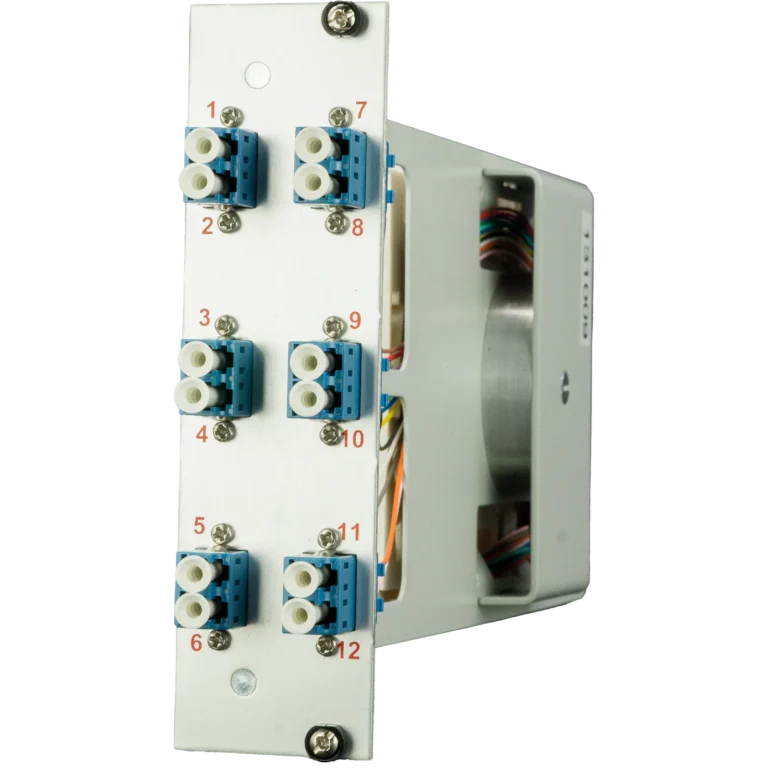
Modular fiber optic solutions for municipal utilities that can be flexibly integrated into existing infrastructures are essential for the successful implementation of network convergence.
Identifying and utilizing synergy potential
Shared use of train paths: the most obvious lever
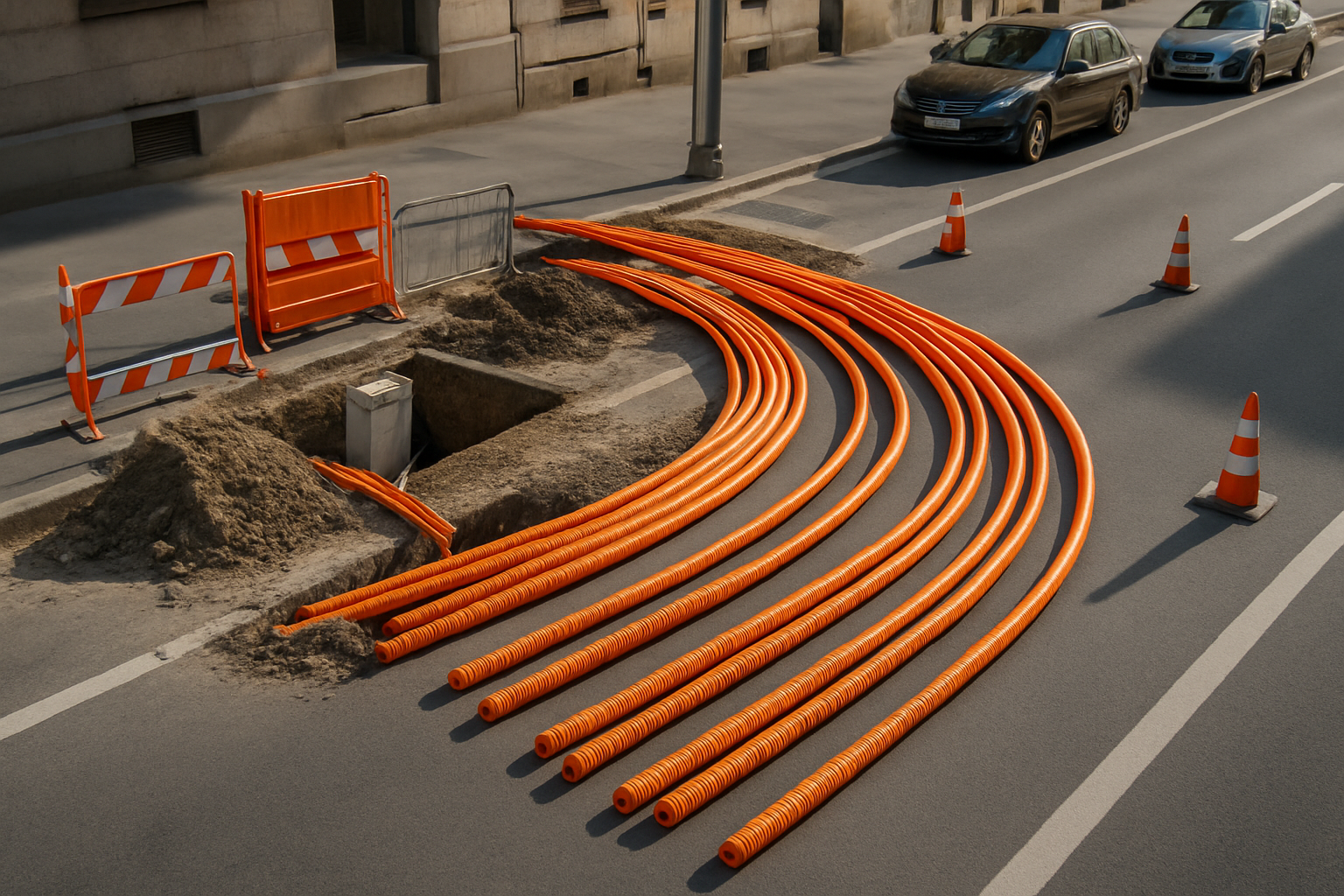
Sharing existing routes is the most direct way to save costs in grid convergence. Municipal utilities already have a dense network of cable routes for electricity and gas lines. Sharing this infrastructure for fiber optic cables significantly reduces the need for new excavation work.
In practice, this means network convergence:
Digitize inventory: All existing routes must be recorded in a geographic information system (GIS) and checked for potential for shared use
Identify empty conduit capacities: Many municipal utilities have already laid empty conduits with foresight during earlier civil engineering work
Optimize route spaces: Additional microduct assemblies can often also be accommodated in existing routes
Stadtwerke Schwedt reports on its network convergence practice: “As part of the order placement for the production of the fiber optic house connection, the expansion is carried out up to and including network level 3.” They consistently use existing infrastructures.
Coordinated construction measures: Dig once, benefit several times
The coordination of construction measures across all divisions is another important synergy lever of network convergence. Stadtwerke Tecklenburger Land began a large-scale coordinated expansion in April 2025, in which regional civil engineering companies are responsible for the expansion of the approximately 450-kilometre-long fiber optic network – coordinated with other infrastructure measures.
Success factors for grid convergence construction site coordination:
Long-term investment planning: All divisions must disclose their expansion plans for at least 5 years
Joint planning rounds: Regular coordination between the divisions is essential
Flexible project adjustment: Sometimes it is worth bringing projects forward or postponing them to take advantage of synergies
Laying in advance: Empty conduits for future fiber optic cables should always be laid at the same time as civil engineering work is carried out anyway
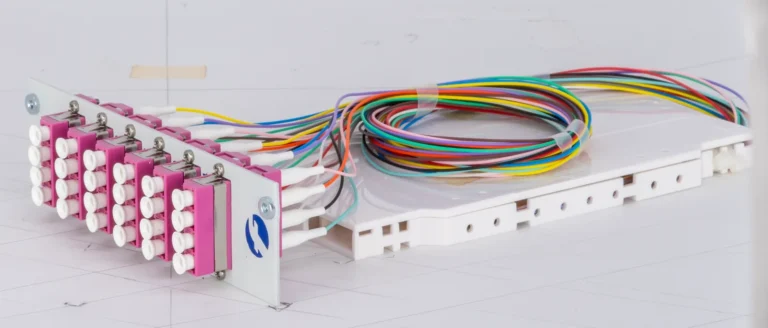
Modular splice modules that can be flexibly adapted to different installation situations are particularly suitable for such coordinated construction projects.
Personnel and know-how: building cross-divisional expertise
The employees of municipal utilities have decades of experience in network operation. Some of this expertise can be transferred to the fiber optic sector and supports network convergence:
Further training for fitters: Electrical and gas network fitters can also take on fiber optic work with appropriate training
Standardize network planning: The planning departments of the various divisions should work closely together
Integrate fault management: A common control center for all networks optimizes the use of resources
Specialized fiber optic solutions for installers can help to efficiently train existing teams in fiber optic technology.
Technical challenges of the multi-division infrastructure
Observe distance and safety regulations
The joint laying of different infrastructures as part of network convergence is subject to strict regulations. DIN 1998 defines minimum distances between different types of cables:
- Glass fiber to power cables (up to 1 kV): at least 10 cm
- Fiber optics to medium-voltage cables: at least 20 cm
- Glass fiber to gas pipes: at least 40 cm (depending on pressure)
These distances must be taken into account when planning network convergence. However, modern installation techniques such as microduct systems enable space-saving installation that complies with regulations even in confined spaces.
Ensure electromagnetic compatibility
Fiber optic cables are insensitive to electromagnetic interference – a major advantage when laid together with power lines in network convergence projects. Nevertheless, protective measures must be taken for active components:
Equipotential bonding: All metallic components must be earthed
Lightning protection: Especially for above-ground installation on electricity pylons
Shielding: Active components require sufficient protection against interference fields
High-quality fiber optic components ensure the necessary electromagnetic compatibility.
Smart grid integration as a future prospect
Grid convergence is not an end in itself, but the basis for the city of the future. Stadtwerke München is showing how integration works: FTTH not only enables high-speed Internet, but also creates “the prerequisite for digitalization and smart city applications in buildings”.
Intelligent power grids (smart grids)
Fiber optics as a communication backbone for smart metering systems
Real-time control of decentralized energy generation
Predictive maintenance through sensor data
Smart City Services
Intelligent street lighting with fiber optic connection
Traffic guidance systems and parking space management
Environmental sensors for air quality and noise
Smart City applications require special Smart City fiber optic solutions that offer high availability and scalability.
New business models
Infrastructure-as-a-Service for third parties
Platform for IoT applications
Edge computing services
Legal framework and approval procedures
Using the DigiNetzG as an opportunity
Since 2016, the Act to Facilitate the Expansion of Digital High-Speed Networks (DigiNetzG) has obliged building owners to coordinate civil engineering works. According to Section 77i (7) TKG, public developers are obliged to enable the co-laying of fiber optic infrastructure during construction work. This offers municipal utilities considerable advantages in terms of network convergence:
Co-laying obligation: Fiber optic cables must also be laid for publicly financed construction work
Duty to inform: Planned construction measures must be communicated at an early stage
Right of joint use: municipal utilities can demand the joint use of existing infrastructure
The Federal Ministry of Transport and Digital Infrastructure emphasizes: “The aim of the regulation on the co-laying obligation in Section 77i (7) TKG is to use large-scale construction work that is already taking place to install empty conduit and fibre optic networks or parts of such networks.”
Making the most of funding guidelines
The federal government’s new Gigabit Funding 2.0 focuses on continuity: “This year’s funding round will once again focus on the 2025 infrastructure funding call,” the Federal Ministry of Transport has announced. The pilot program for gap closure aims to make “optimal use of synergies between private and funded projects”.
Network convergence synergy effects can improve economic efficiency when applying for funding:
Prove economic viability: Cost savings through synergies increase the chance of funding
Combined funding: Some programs explicitly promote integrated infrastructure projects
Documentation: synergy utilization must be documented in a comprehensible manner
Practical examples of successful network convergence
Stadtwerke Karlsruhe: Current cooperation shows the way
In July 2025, Stadtwerke Karlsruhe announced its network convergence cooperation strategy: they want to make targeted use of synergies in network expansion and achieve efficient network utilization. “Expansion measures for the electricity and heating network are to be combined with the fiber optic expansion wherever possible,” the press release states.
Stadtwerke Nürtingen: Successful partnership
Stadtwerke Nürtingen is relying on the “bundling of synergies” through network convergence to expand the modern and ultra-fast fiber optic network for its city. The expansion in Zizishausen started in July 2024 and is expected to be completed in March 2025 – an example of efficient project management through the use of synergies.
Stadtwerke Sindelfingen: Long-term vision
With the aim of supplying all 24,000 households with fibre optics by 2030, Stadtwerke Sindelfingen is focusing on the systematic use of network convergence synergies: “There is no better way to bundle synergies,” comments Lord Mayor Dr. Bernd Vöhringer. The city is increasing its “economic strength and quality of life” and driving innovation through this cooperation.
Scalable ODF systems such as VarioConnect, which can grow with the growing requirements, are particularly suitable for such large-scale projects.
Best practices for implementation
Phase 1: Inventory analysis and determination of potential (3-6 months)
Infrastructure audit: complete recording of all routes and empty conduits
Process analysis: Identification of network convergence optimization potentials
Profitability calculation: quantification of potential savings
Roadmap creation: prioritization of measures
Phase 2: Pilot projects and quick wins (6-12 months)
Select pilot area: Manageable area with high grid convergence synergy potential
Putting together teams: Cross-divisional project groups
Testing processes: Trying out new processes in practice
Document learnings: Systematic evaluation
Phase 3: Comprehensive rollout (12-36 months)
Scaling: Rolling out proven grid convergence concepts to the entire grid area
Adapt the organization: Create permanent structures
Continuous Improvement: Ongoing optimization
Monitoring success: defining and monitoring KPIs
Tailor-made fiber optic projects are often the best solution for gradual implementation.
Recommendations for municipal utilities
Start now: network convergence is a marathon, not a sprint. The earlier you start, the greater the benefits.
Top management commitment: Without clear support from the management, the transformation will fail.
Invest in skills: Employee qualification is the key to success.
Enter into partnerships: Cooperation with other municipal utilities or technology partners accelerates the process.
Stay flexible: There is no such thing as the perfect solution – an iterative approach leads to the goal.
Municipal utilities can also find support from specialized system integrators who have experience with complex grid convergence projects.
Conclusion: Network convergence as a competitive advantage
The intelligent linking of electricity, gas and fibre optic infrastructure through network convergence is more than just an optimization measure for municipal utilities – it is a strategic imperative. The current examples from Karlsruhe, Nürtingen and Sindelfingen show this: Those who consistently exploit network convergence synergies not only save costs, but also position themselves as modern infrastructure service providers for the digital future. The technical and organizational challenges can be solved if they are tackled systematically.
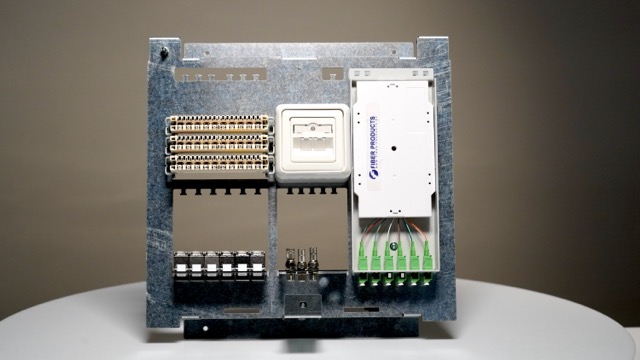
Flexible, modular systems are essential for the practical implementation of network convergence. The SlimConnect and VarioConnect systems from Fiber Products have been specially developed to meet the requirements of municipal network operators. With their modular design, they enable easy integration into existing infrastructures and grow flexibly with the requirements. The robust design with a 5-year guarantee ensures long-term investment security – an important factor in cross-sector infrastructure planning.
At Fiber Products, we develop network convergence solutions that meet the highest quality standards. Our modular systems combine proven technology with innovative features for the infrastructure of the future. With a 5-year guarantee and European production in accordance with German quality standards, we offer optimum value for money for professional fiber optic networks.
Discover our complete product range or visit our online store. Talk to us – together we will develop the optimal network convergence solution for your project. Contact us for an individual consultation or find out about other specialist topics in our fiber optic knowledge blog.
Request a Consultation
Our experts will advise you on modular fiber optic solutions for your specific application — fast, personal and non-binding.