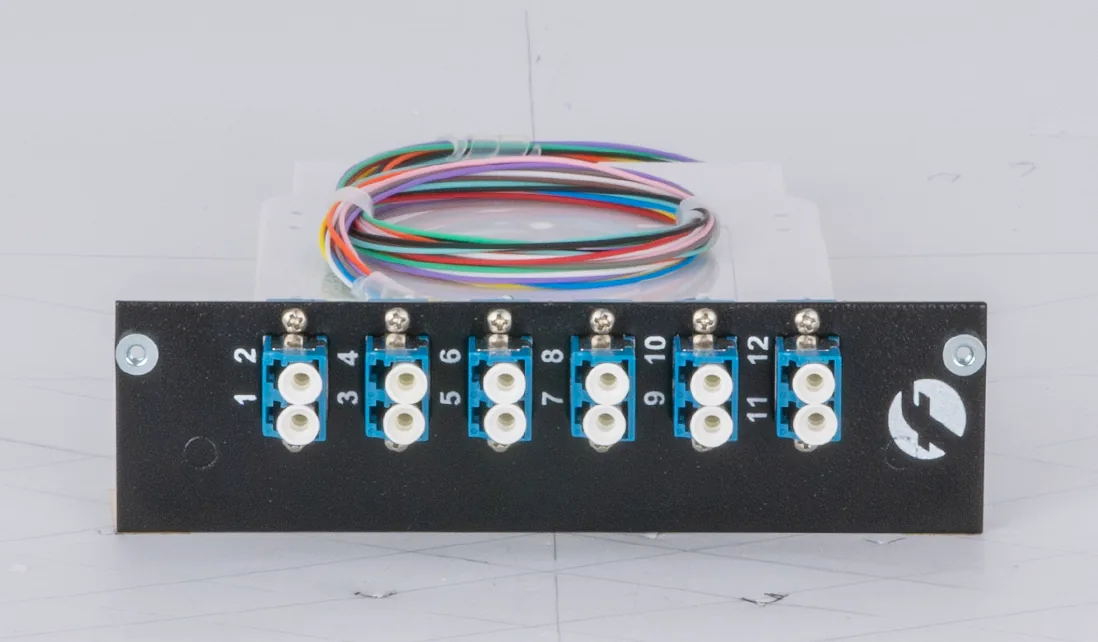
Data center front modules: Modular fiber optic solutions for modern data centers

Modern data centers are facing an ever-increasing challenge: with rising bandwidth requirements and increasingly dense server configurations, maximum connection densities must be achieved in minimum space. Front module data center installations have established themselves as a key technology for these requirements. They make it possible to create flexible, maintenance-friendly and scalable cabling architectures that can keep pace with the rapid developments in the data center industry.
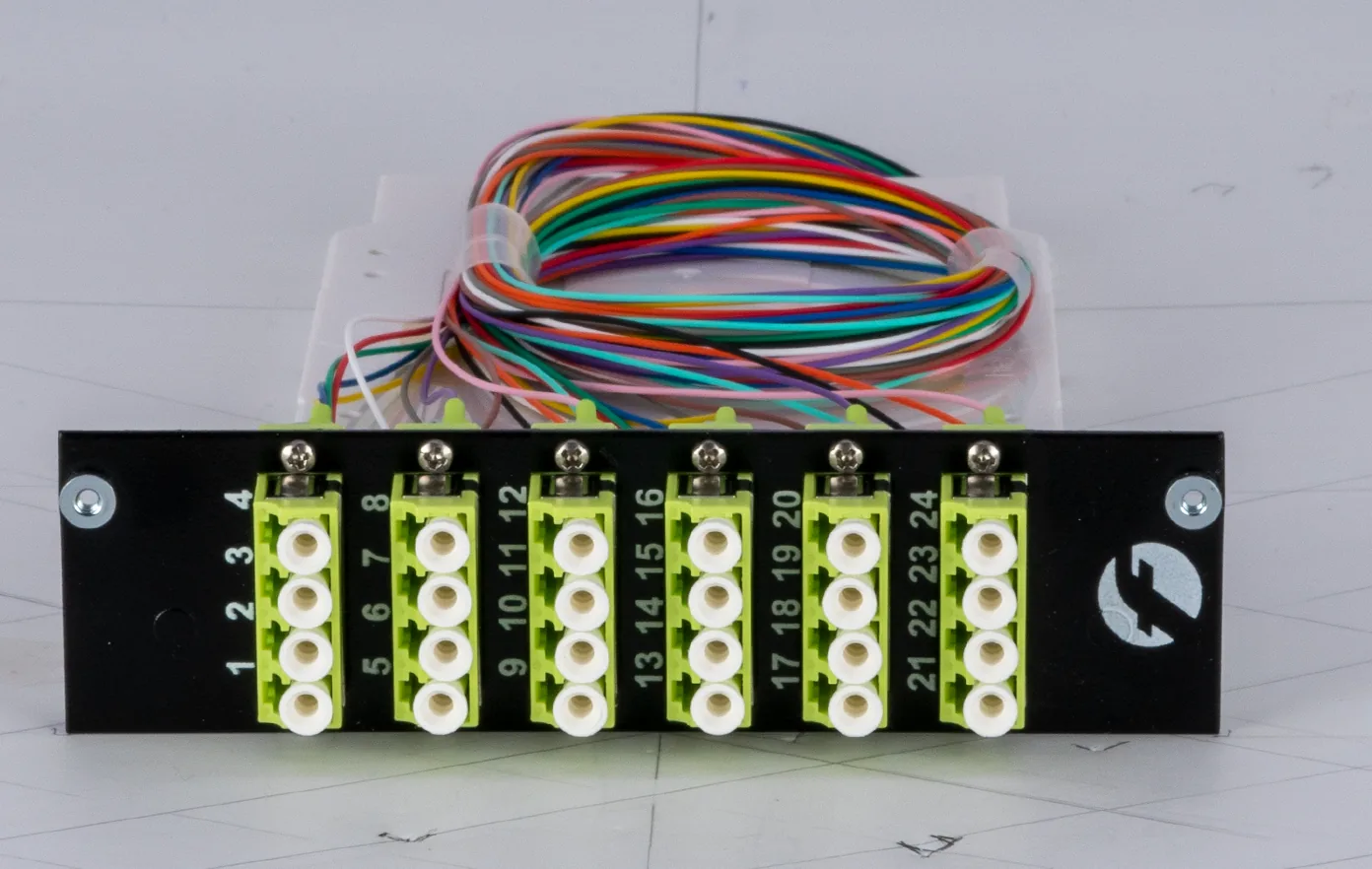
Front modules data center systems are revolutionizing the traditional concept of rigid patch panels. Instead of unchangeable installations, they offer modular, interchangeable solutions that can adapt to changing requirements. If 10G Ethernet dominates today, but 25G or 100G will become standard tomorrow, front module data center configurations can be easily replaced without touching the underlying infrastructure.
Basics of front module systems in the data center
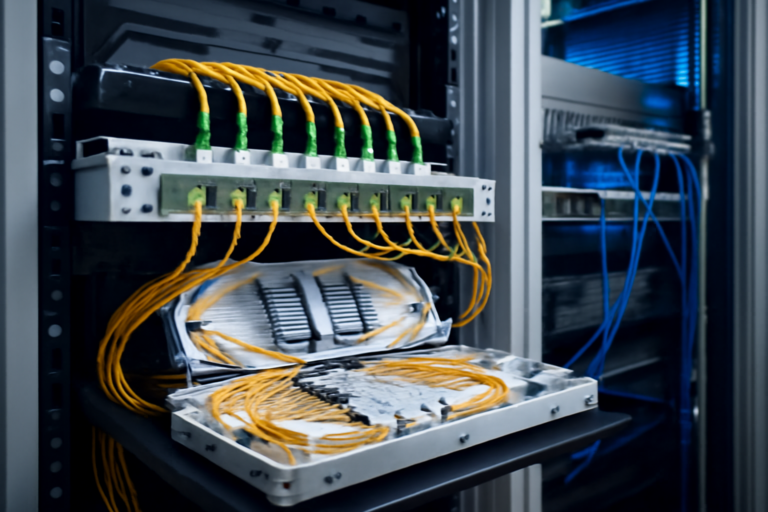
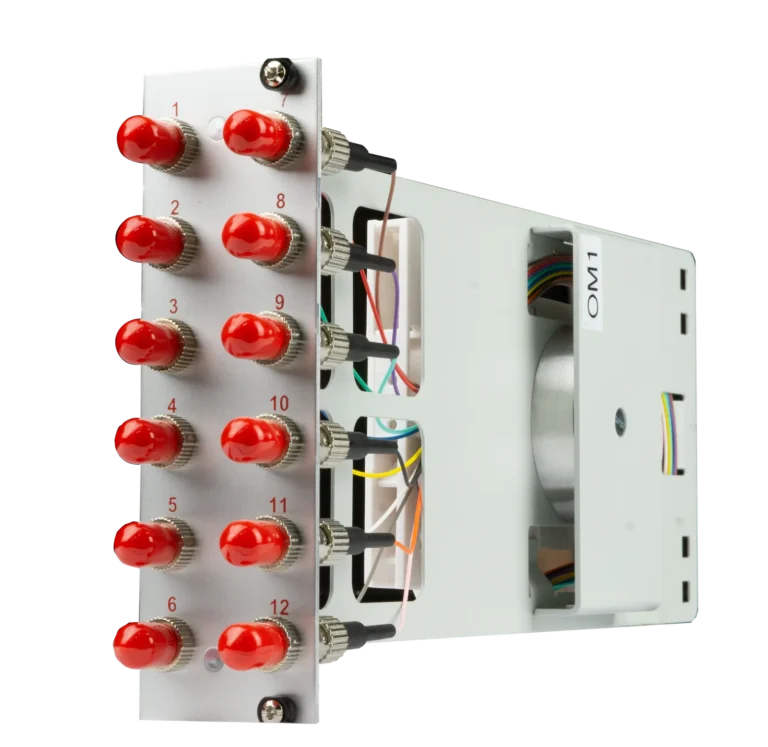
Front modules Data center architectures are based on interchangeable components that are inserted into standardized frame systems and form the actual interface to the end devices. They separate the mechanical infrastructure from the functional interface design.
Architectural principle and system structure
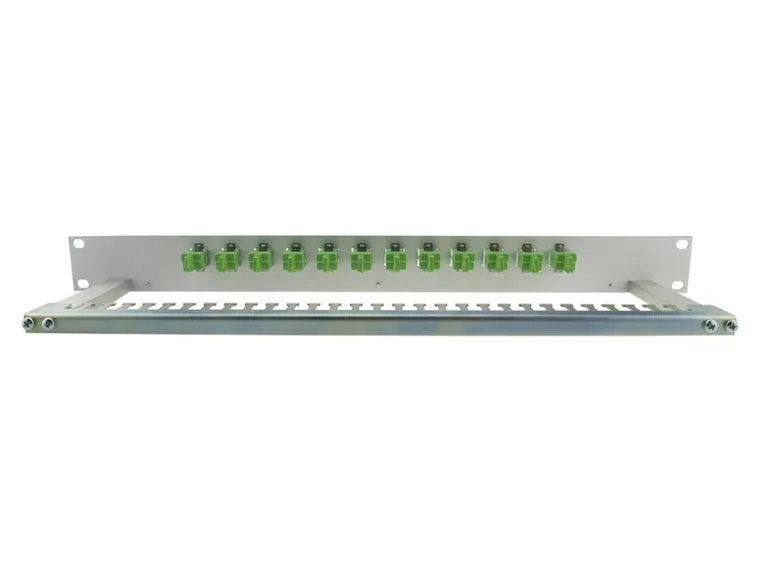
The basic data center front module principle is based on standardized mounting frames that can accommodate various modules. The frame provides mechanical fastening, cable routing and often also electrical connections, while the modules take on the specific interface functions.
Standardized 19″ rack integration:
- Modular height units (1U to 4U)
- Standardized mounting and connection interfaces
- Hot-swap capability for uninterrupted replacement
- Integration in fiber optic solutions for data centers
The front-end module data center implementation enables a clear separation between permanent backbone cabling and flexible access interfaces. The trunk cabling to the frame remains unchanged, while front-end modules can be configured as required.
Technology variants for data center applications
Various front modules Data center technologies address different requirements in data center environments.
LC-based high-density modules
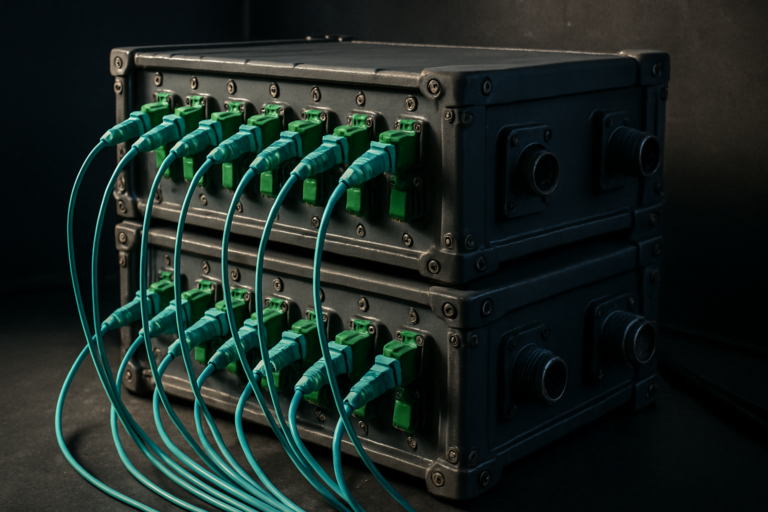
LC front modulesdata center systems have established themselves as workhorses for standard data center applications. They offer proven technology with high port densities:
Standard LC modules:
- 24-48 LC duplex ports per 1U
- Push-pull mechanism for easy handling
- Proven optical performance
- Compatibility with modular 1U systems
Areas of application:
- 10G/25G Ethernet server connectivity
- Storage Area Networks (SAN)
- Backup and disaster recovery systems
- Integration in system houses
MPO/MTP systems for backbone applications
MPO-based front module data center solutions enable the highest fiber densities and are optimized for trunk applications in large data centers.
12-fiber MPO modules:
- Standard for 40G/100G Ethernet applications
- Established pinning standards (Type A/B/C)
- Automated Infrastructure Management (AIM) compatible
- Integration in 3U/4U ODF systems
Breakout modules:
- MPO trunk for LC access splitting
- Flexible number of ports (12×1, 6×2, 4×3)
- Automatic polarity control
- Hot-swap without trunk interference
Data center-specific requirements
Front modules Data center environments have special requirements that go beyond normal office or industrial applications.
Thermal challenges
Densely packed racks with high port densities generate considerable heat loads. Front modules Data center systems must be designed to optimize airflow:
- Perforated front panels for optimum air flow
- Materials with good thermal conductivity
- Minimized interference with rack airflow
- Compatibility with hot/cold aisle concepts
Scalability and modularity
Front modules Data center installations must support horizontal and vertical scaling:
Horizontal scaling:
- Standardized inter-rack connections
- Scalable documentation and management systems
- Flexible topology support (spine-leaf, fat-tree)
Vertical scaling:
- Hot-add capability for new modules without service interruption
- Flexible port numbers thanks to interchangeable modules
- Upgrade paths for higher bandwidths
Fiber Products front module solutions
As a specialist in modular fiber optic systems, Fiber Products offers optimized solutions specifically for front module data center applications that combine European quality standards with innovative technology.
VarioConnect front modules – maximum flexibility
The VarioConnect system from Fiber Products offers the flexibility that modern front module data center installations require:
- Interchangeable adapter modules for different plug types
- LC, MPO, SC, FC can be combined in standardized frames
- Hot-swappable modules without cabling interference
- Color-coded systems for quick identification
3U/4U systems for high densities:
- Up to 288 LC duplex ports in 4U
- Integrated MPO trunk connection
- Modular splice cassettes for backbone connections
- Optimized cable routing for front modules Data center requirements
SlimConnect RZ-Edition – Compact performance
For space-critical front module data center applications, the SlimConnect RZ-Edition offers maximum density in minimum space:
Ultra-compact design:
- 48 LC duplex ports in 1U
- Only 220mm installation depth for space-saving installation
- Front-access design for optimum ease of maintenance
- Available in the Fiber Products Shop
Data center features:
- Integrated cable management guides
- Hot-swap adapter for uninterrupted maintenance
- Intelligent label systems for automatic documentation
- Bend-insensitive fiber-optimized geometry
Special solutions for hyperscale environments
Fiber Products develops tailor-made solutions for large cloud providers and front-module data center hyperscale environments:
Automated Infrastructure Management (AIM):
- RFID/NFC integration for automatic recognition
- Software integration for real-time documentation
- Automatic connection validation
- Predictive maintenance through sensor integration
Installation and deployment
The installation of front module data center systems requires a systematic approach and specialized procedures.
Pre-Installation Planning
Infrastructure Assessment:
- Analysis of existing rack and cooling infrastructure
- Power and space budget calculation
- Airflow modeling and thermal management
- Growth planning for future expansions
Cable Plant Design:
- Trunk cabling between distribution and access areas
- Horizontal and vertical cabling strategies
- Redundancy and protection concepts
- Migration paths from legacy systems
Quality assurance and testing
Optical Performance Validation:
- Insertion loss measurements of all connections
- Return loss analysis for reflection optimization
- OTDR testing for complete route characterization
- Multi-wavelength testing for WDM compatibility
Management and monitoring
Modern front modules for data center systems integrate extensive management and monitoring functions for optimum operation.
Automated Infrastructure Management (AIM)
Real-Time Connection Tracking:
- Automatic detection of connection changes
- Live updates of the network topology
- Conflict detection for faulty connections
- Integration with fiber optic solutions for system integrators
Performance monitoring
Optical Power Monitoring:
- Continuous monitoring of optical power levels
- Trend analysis for predictive maintenance
- Threshold-based alarming systems
- Integration with SNMP-based management platforms
Future trends and technology evolution
Frontmodule data center technology is constantly evolving, driven by new requirements and technological breakthroughs.
Next-generation interfaces
400G/800G Ethernet-Ready:
- New front modules data center solutions for 400G-SR8 and 800G-SR8
- 32-fiber MPO systems for the highest bandwidths
- Breakout modules for flexible 400G deployment
- Migration strategies from 100G to 400G+
Sustainability and Green IT
Energy-Efficient Design:
- Low-power active monitoring systems
- Optimized Cooling Integration
- Renewable materials for environmental friendliness
- Lifecycle-optimized component designs
Circular Economy Concepts:
- Modular design for maximum recycling
- Upgrade kits for existing systems
- Take-back programs for end-of-life modules
- Local manufacturing for a reduced carbon footprint
Conclusion: Front modules as data center enablers
Front modules Data center systems have evolved from optional add-ons to indispensable components of modern infrastructures. They enable the flexibility, scalability and performance that cloud computing, edge computing and AI applications require.
The most important success factors for front module implementations:
- Modular architecture for maximum flexibility and future-proofing
- High-density design for optimum space utilization
- Hot-swap capability for uninterrupted maintenance and upgrades
- Automated management for efficient operations at Scale
- Quality components for 24/7 data center reliability
Application recommendations by data center type:
- Hyperscale Cloud: Ultra-HD MPO systems with AIM integration
- Enterprise DC: Flexible LC/MPO hybrid modules for mixed workloads
- Colocation: Standardized modules for multi-tenant environments
- Edge computing: compact modules for space-limited locations
Professional front module solutions for modern data centers
Successful front modules Data center cabling requires sophisticated systems that combine the highest port densities with optimum ease of maintenance. Modular architectures enable flexible adaptation to changing technology requirements.
At Fiber Products, we develop front module data center solutions specifically for the requirements of modern data centers. Our VarioConnect and SlimConnect systems combine maximum port density with European precision manufacturing. From standard LC modules to complex MPO breakout systems – all components are designed for 24/7 data center operation and support current and future interface standards.
With a 5-year warranty and local manufacturing, we offer the reliability and availability that critical front modules data center infrastructures require. Contact us – together we will develop the optimal front module solution for your data center. You can find more information in our fiber optic knowledge.