7TE Module Maintenance: Systematic lifecycle management for fiber optic infrastructures
Preventive maintenance transforms fiber optic operations from reactive crisis management to proactive, plan-based maintenance. Modular systems not only make this transformation possible, but also economically attractive for professional network operators. While traditional fiber optic systems can often only react to total failures, granular modular architectures enable systematic lifecycle management with measurable performance indicators and predictable maintenance cycles.
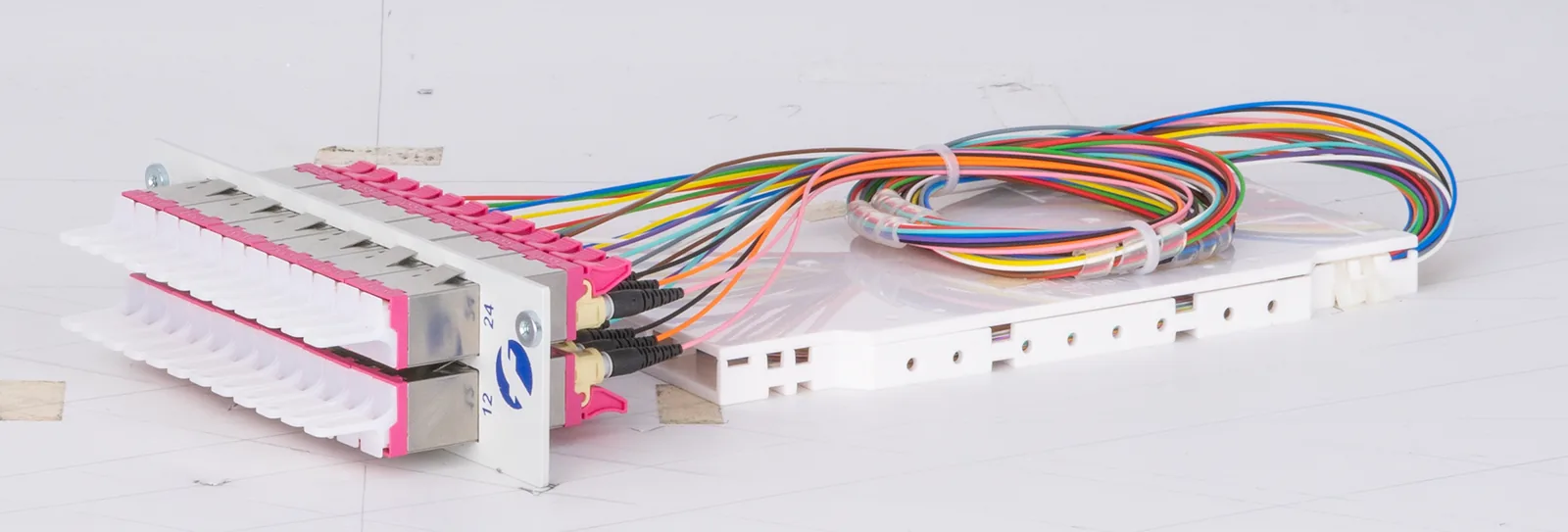
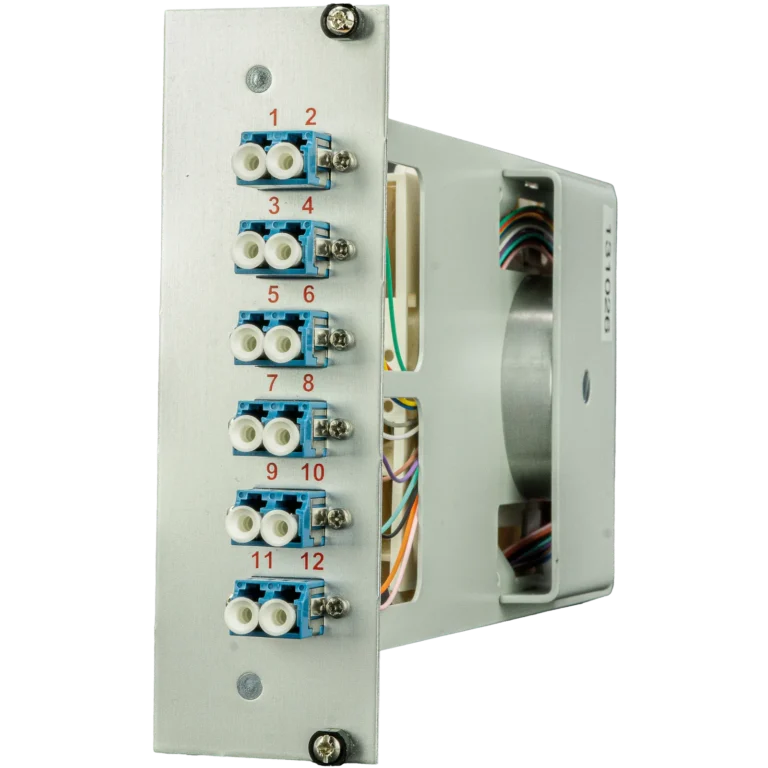
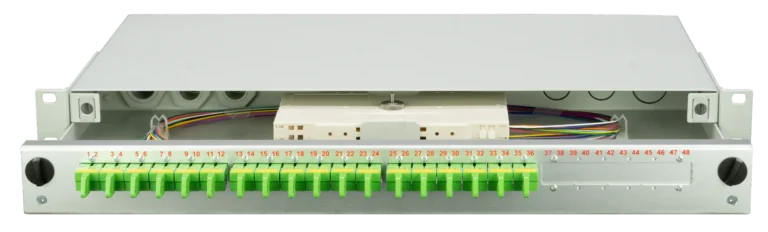
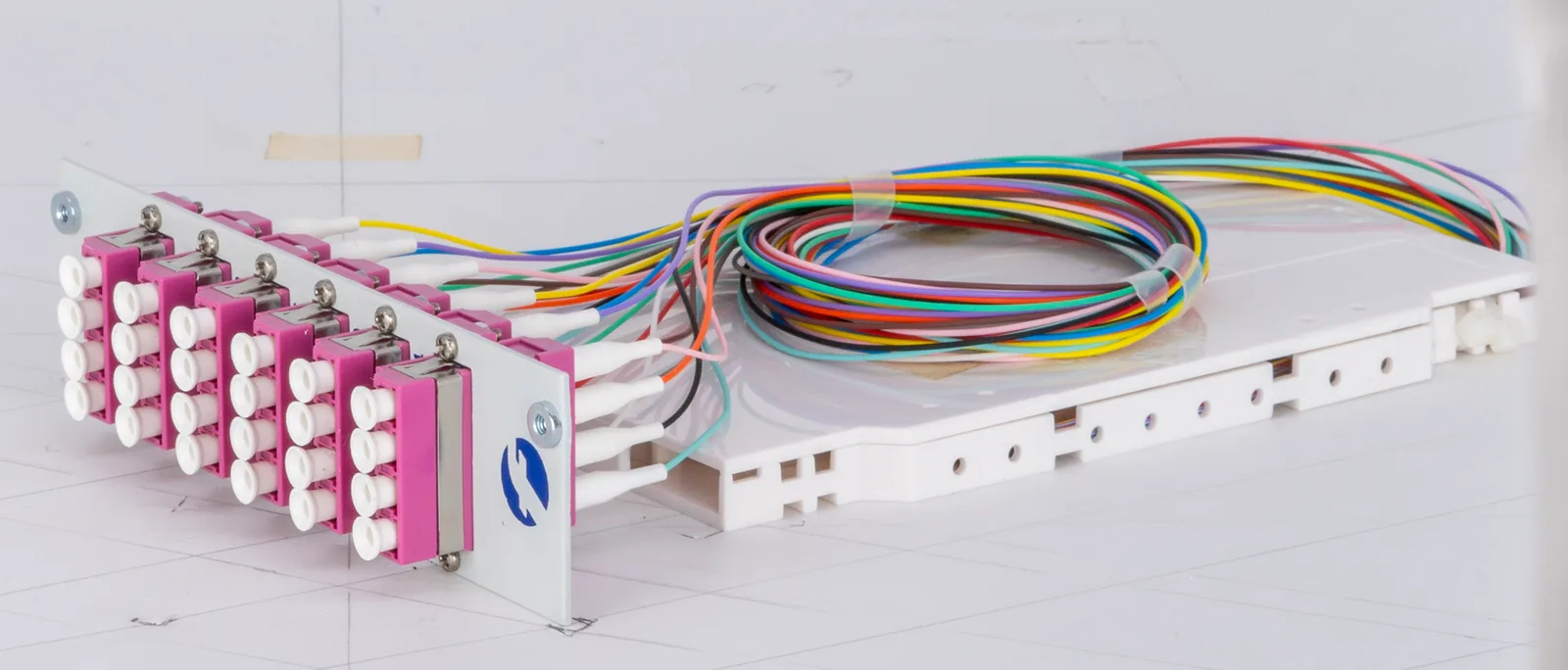
The revolution lies in the data availability of 7TE Module Maintenance. Each module with its 24 connections can be individually monitored, analyzed and maintained, allowing statistical life cycle models to be developed with high precision. This granularity enables predictive maintenance strategies that prevent failures before they occur – a paradigm shift from “fix when broken” to “maintain before degradation”.
For operators of critical infrastructures, professional maintenance means predictable costs instead of unpredictable emergency interventions, predictable service windows instead of unplanned outages and proactive asset optimization instead of reactive replacement. Modern IoT integration and AI-supported analysis transform maintenance data into strategic business intelligence for fiber optic solutions for data centers.
Statistics show: Organizations with systematic preventive maintenance reduce unplanned outages by 70-80% while at the same time lowering maintenance costs by 30-40% over the entire asset lifecycle. This increase in efficiency makes the difference between profitable and unprofitable fiber optic operations.
Fundamentals of systematic fiber optic lifecycle management
Modular architectures create granular visibility into fiber asset performance for the first time through individual monitoring of each module. Each module is viewed as a separate asset with an individual lifecycle curve. This granularity enables statistical modeling of degradation patterns and accurate prediction of maintenance needs for fiber optic solutions for system integrators.
Historical data from thousands of modules creates a robust baseline for precise lifecycle planning. Standardized modules enable economies of scale in lifecycle management through comparable degradation data across different systems and sites. This standardization enables cross-site learning and continuously improves lifecycle models.
Asset hierarchy and structuring
Asset hierarchy of System → Module → Fiber creates structured maintenance planning with differentiated strategies. Different hierarchy levels have different lifecycle characteristics and require customized maintenance strategies. System-level maintenance focuses on infrastructure and environment, module-level on component performance.
Performance baseline establishment documents initial performance during installation as a reference for degradation monitoring. This baseline enables objective evaluation of performance changes over the entire life cycle. Without an established baseline, precise predictive maintenance is practically impossible.
Integration with Enterprise Asset Management (EAM) systems integrates fiber assets into enterprise-wide asset management structures. This integration enables correlation with other infrastructure assets and optimizes overall maintenance strategies for fiber optic solutions for industry. Total cost of ownership becomes transparent and plannable.
Systematic documentation of all maintenance activities creates a knowledge base for continuous improvement. Lessons learned from past maintenance cycles optimize future strategies. This documentation also supports compliance requirements and quality assurance.
Maintenance cycles and strategic planning approaches
Condition-Based Maintenance (CBM) uses continuous performance monitoring for optimized maintenance planning. Maintenance is planned based on the actual asset condition instead of rigid schedules. OTDR measurements, power monitoring and performance trends determine actual maintenance requirements and efficiently optimize the use of resources.
Time-Based Maintenance (TBM) for predictable lifecycle events uses predictable lifecycle phases of standardized modules. Standardized modules have documented lifecycle expectations of typically 5-7 years. This predictability enables predictable replacement cycles and precise budget allocation for fiber optic solutions for municipal utilities.
Risk-Based Maintenance (RBM) prioritizes critical assets by assessing the business impact of various modules. Mission-critical modules receive more intensive monitoring and preventive maintenance cycles. Resource allocation is risk-optimized and focused on the highest priorities for optimal system availability.
Predictive maintenance through advanced analytics
Predictive maintenance (PdM) through advanced analytics analyzes performance trends with machine learning algorithms for precise failure predictions. These predictions enable proactive intervention before performance degradation and critical failures. Accuracy continuously improves through additional data and feedback loops.
Integrated Maintenance Scheduling coordinates different asset types for optimal efficiency. Fiber maintenance is coordinated with other infrastructure maintenance for common maintenance windows. This coordination reduces service disruption and optimizes resource utilization in fiber optic solutions for transport operators.
Statistical Process Control (SPC) identifies performance trends before critical limit values are reached. Continuous attenuation, reflection and power measurements reveal gradual deterioration at early stages. Early Warning Systems enable planned intervention instead of reactive emergency measures.
Performance trending and data analysis for 7TE module maintenance
Performance trending identifies gradual degradation by continuously monitoring all relevant parameters. Continuous attenuation, reflection and power measurements systematically document gradual degradation. Statistical Process Control identifies trends before critical limit values are reached and enables timely intervention.
Machine Learning Models for Failure Prediction use historical failure data to develop accurate prediction models. Feature Engineering combines performance metrics, environmental data and usage patterns for optimal prediction accuracy. Model Accuracy continuously improves through feedback loops and additional training data.
Environmental Correlation Analysis correlates environmental factors such as temperature, humidity and vibration with asset performance degradation. This correlation enables environmental risk assessment and adaptive maintenance strategies for different installation environments. Climate-controlled environments show different degradation patterns than industrial settings.
Usage pattern analysis and load-based degradation
Usage Pattern Analysis for Load-Based Degradation analyzes traffic patterns and utilization levels to assess their impact on asset degradation. High-utilization assets require more intensive maintenance than low-traffic connections for optimal performance. This differentiation significantly optimizes resource allocation and maintenance budgets.
Anomaly Detection for Early Problem Identification uses AI-based systems to identify unusual performance patterns. These anomalies can indicate incipient problems before they become critical. Automated alerts enable proactive response and prevent system failures.
Load Balancing Considerations take into account uneven utilization of different modules and their impact on maintenance requirements. Highly Utilized Modules degrade faster and require adapted maintenance cycles. Traffic Distribution Optimization can implement wear leveling between modules.
Asset tracking and systematic documentation
Digital Twin concepts for fiber optic assets create virtual representations of physical assets for simulation and analysis. Digital Twins include complete lifecycle history, current performance data and predictive models. This visibility supports informed decision making and strategic planning.
RFID and barcode tracking for modular components gives each module unique identification for precise lifecycle tracking. Automated Data Capture significantly reduces manual documentation effort. Mobile scanning enables real-time updates during on-site maintenance activities.
Configuration Management Database (CMDB) integration documents asset configuration systematically and maintains changes continuously. Changes are tracked and impact analysis enables precise assessment of change impact. This integration supports change management and impact assessment for customized fiber optic projects.
Maintenance History Documentation
Maintenance History Documentation systematically records all maintenance activities with timestamps, technician information and work performed details. This history is valuable for Root Cause Analysis and Lifecycle Optimization. Documentation Quality directly influences Analysis Accuracy and enables continuous improvement.
Performance Data Warehousing stores long-term performance data in data warehouses for advanced analytics and trend analysis. Historical trends can be analyzed over years for long-term optimization. Big data analytics identifies patterns that are overlooked in short-term analysis.
Compliance Documentation for Regulatory Requirements documents maintenance activities in accordance with industry-specific regulations. Audit trails are essential for regulatory reporting and proof of compliance. Standardized documentation formats ensure consistency across organizations.
Spare parts management and inventory optimization
Standardized Module Inventory reduces complexity through universal modules for different applications. This standardization in 7TE module maintenance reduces SKU count by 60-80% compared to custom components. Simplified Procurement and Reduced Carrying Costs significantly optimize Working Capital.
Predictive Inventory Planning uses Failure Forecasts for optimized Demand Forecasting based on Predicted Asset Failures and Maintenance Schedules. Just-in-time delivery reduces inventory costs with maintained service levels. Automated Reordering prevents stockouts and emergency procurement.
Multi-Location Inventory Optimization deploys spare parts optimized across multiple locations. Emergency Parts Sharing between sites reduces individual site inventory requirements. Centralized Planning with Local Execution optimizes both cost and service for fiber optic components.
Vendor-managed inventory strategies
Vendor-Managed Inventory (VMI) for critical components enables supplier management of inventory levels for critical spare parts. Performance-Based Contracts incentivize Suppliers for High Service Levels. This partnership reduces internal inventory management effort and improves service levels.
End-of-Life Parts Management phases obsolete parts systematically out with adequate replacement planning. Last-Time-Buy decisions are data-driven based on forecast models. Transition planning minimizes service impact during technology refresh for DIN rail boxes and other components.
Strategic Sourcing for Long-Term Partnerships develops preferred supplier relationships for critical components. Volume commitments enable better pricing and priority treatment. Supplier diversity reduces supply chain risk and improves resilience.
Monitoring and performance monitoring
Continuous performance monitoring by Automated Systems monitors 24/7 key performance indicators for all assets. Automated alerting in case of performance degradation enables proactive response before critical situations. Real-time dashboards provide current health overview for management and operations teams.
Key Performance Indicators (KPIs) for fibre optic assets use standardized metrics such as insertion loss, return loss, power levels and error rates for continuous tracking. These KPIs enable objective performance assessment and comparison between assets. Trend Analysis shows performance development over time.
Threshold Management with Graduated Alert Levels defines performance thresholds for Warning, Critical and Emergency Levels. Graduated response procedures are defined for each alert level. This structure prevents both false alarms and missed critical issues in fiber optic solutions for network operators.
Historical Baseline Comparison
Historical Baseline Comparison compares Current Performance continuously with Historical Baselines for trend identification. Trend Analysis systematically identifies gradual degradation. Statistical Analysis determines whether deviations are within Normal Variation or indicative of developing problems.
Integration with Network Management Systems (NMS) integrates fiber performance data into broader network management context. End-to-end performance correlation identifies fiber impact on overall network performance. Holistic View enables better prioritization and resource allocation.
Environmental Monitoring correlates environmental conditions with asset performance for Environmental Impact Assessment. Temperature, humidity, vibration data are correlated with performance degradation. This correlation optimizes environmental controls and maintenance scheduling.
Cost-effectiveness and ROI of preventive maintenance
Total Cost of Ownership models reduction through preventive 7TE module maintenance reduces lifecycle costs through Avoided Emergency Repairs, Extended Asset Life and Improved Performance. TCO models precisely quantify the benefits and ROI of preventive maintenance investments. Typical ROI: 3:1 to 5:1 over Asset Lifetime.
Planned vs Unplanned Maintenance Cost Ratios show: Planned Maintenance typically costs 1/3 to 1/5 of Emergency Repairs. Labor Efficiency is higher with Planned Work due to better preparation. Parts Availability is better and cheaper with Planned Procurement due to bulk discounts.
Asset Life Extension through Optimal Maintenance can extend Asset Life by 30-50% through systematic maintenance. This extension amortizes Initial Investment better and defers Replacement Capital Expenditure. Extended Life reduces Annualized Asset Costs significantly and improves ROI.
Service Level Agreement Compliance
Service Level Agreement (SLA) Compliance Improvement improves through Reduced Unplanned Outages in fiber optic solutions for telecom providers. Better SLA Performance enables Premium Service Pricing and Customer Differentiation. Customer Satisfaction improvements lead to Higher Retention and Additional Business.
Insurance and risk management benefits arise from systematic preventive maintenance to reduce insurance premiums and risk exposure. Documented Maintenance Programs are rated favorably by insurers. Risk mitigation has direct financial value and reduces liability exposure.
Budget predictability through predictable maintenance cycles enables accurate financial planning and budget allocation. Unexpected repair costs are minimized through proactive maintenance. Capex and Opex Planning becomes more precise and reliable.
Digitalization and IoT integration for modern maintenance
Smart Sensors for Automated Data Collection use IoT sensors for continuous monitoring of environmental conditions, vibrations and other critical factors. These sensors reduce manual data collection effort and significantly improve data quality. Wireless Sensors enable monitoring in Previously Inaccessible Locations.
Edge computing for real-time analysis enables local processing of sensor data for real-time decision making without cloud latency. Edge analytics can trigger immediate responses in critical conditions. Local processing also reduces bandwidth requirements for data transmission.
Cloud platforms for advanced analytics can process massive datasets from multiple sites for sophisticated analysis. Machine learning services in the cloud enable sophisticated predictive models. Scalable computing resources handle variable analytical workloads efficiently.
Digital dashboards and management visibility
Digital dashboards for management visibility provide executive dashboards with a high-level view of asset health and maintenance performance. Mobile dashboards enable real-time access for field personnel. Customizable views accommodate different user needs and roles for optimal usability.
API integration for third-party systems enables integration with external systems such as ERP, CMMS or business intelligence platforms. This integration avoids data silos and enables holistic business analysis. Standard APIs reduce integration complexity and deployment time.
Automated Reporting automatically generates regular reports for management and stakeholders. Performance Metrics, Cost Analysis and Trend Reports are systematically generated. Customizable report templates accommodate different stakeholder needs and requirements.
Compliance and international quality standards
ISO 55000 Asset Management Standards Compliance implements International Standards for Asset Management with Systematic Approach. These standards ensure best practices and enable benchmarking against industry leaders. Certification demonstrates Commitment to Professional Asset Management.
Regulatory compliance for critical infrastructures takes into account telecommunications and utility regulations with Specific Maintenance Standards. Documented Preventive Maintenance Programs demonstrably support regulatory compliance. Audit Trails are essential for Regulatory Reporting and Compliance Verification.
Quality Management Integration systematically integrates fiber optic maintenance into Broader Quality Management Systems. ISO 9001 Principles are applied to Maintenance Processes for continuous improvement. Continuous Improvement Culture ensures Ongoing Optimization of all processes.
Documentation standards and traceability
Documentation Standards for Traceability enable Comprehensive Documentation with Complete Traceability of Asset History. This documentation verifiably supports warranty claims, insurance issues and regulatory audits. Standardized Formats ensure Consistency across Organization and Sites.
Performance benchmarking against industry standards systematically benchmarks asset performance against industry standards and best practices. External Benchmarking identifies Improvement Opportunities and Competitive Positioning. Competitive Analysis highlights Advantages or Areas for Improvement.
Change Management Integration ensures that maintenance activities are coordinated with broader change management processes. Impact Assessment for Maintenance Activities prevents conflicts with Business Operations. Coordinated Planning optimizes business continuity.
Training and skills development
Preventive Maintenance Training Programs provide Specialized Training for Preventive vs Reactive Maintenance Approaches. Hands-On Training with Actual Equipment significantly improves Practical Skills. Certification Programs validate Competency and support Career Development for Technicians.
Data Analysis Training for Technicians trains field personnel in Basic Data Analysis and Trend Recognition. These skills enable better field decisions and improved data quality. Statistical Training helps Technicians understand Performance Variations and Normal Operating Ranges.
Technology Training for New Tools offers continuous training on New Monitoring Tools, Analytics Software and Predictive Technologies. Technology Evolution requires Ongoing Skill Development for optimal performance. Vendor Training ensures Optimal Tool Utilization and Feature Adoption.
Cross-training and knowledge management
Cross-training for Flexibility trains personnel on multiple systems and technologies for improved resource utilization. This Flexibility provides Backup Coverage and reduces Dependency on Individual Experts. Broader Skills increase Employee Value and Job Satisfaction.
Knowledge Management for Best Practices captured Lessons Learned and Best Practices systematically for Organization-Wide Sharing. Knowledge Databases ensure Organizational Learning persists beyond Individual Employee Tenure. Community of Practice forums encourage knowledge sharing and collaboration.
Succession Planning for Critical Skills identifies key personnel and develops succession plans for critical maintenance skills. Knowledge Transfer Programs ensure business continuity. Documentation of Tacit Knowledge makes Critical Skills organizational instead of individual.
Future trends and innovation in fiber optic maintenance
Artificial Intelligence for Autonomous Maintenance develops AI systems for Eventually Autonomous Maintenance Decisions. Self-Healing Networks can automatically reroute traffic or adjust parameters in smart city fiber optic installations. Human Oversight remains necessary but AI handles routine decisions.
Blockchain for Asset Provenance and History creates immutable records of asset history and maintenance activities. Blockchain ensures data integrity and prevents tampering with critical maintenance records. Supply chain traceability improves asset authenticity verification.
Augmented Reality for Maintenance Guidance uses AR Applications for Real-Time Maintenance Instructions overlay onto Physical Equipment. Remote Expert Support through AR enables Local Technicians to receive Guidance without Travel. Training Applications use AR for Immersive Learning Experiences.
5G and edge computing integration
5G/Edge Computing for Ultra-Low Latency Monitoring enables 5G Networks Real-Time Monitoring with Minimal Latency for Critical Applications. Edge Computing brings Analysis closer to Assets for Faster Response Times. Industrial IoT Applications benefit from Reliable, Low-Latency Communications.
Digital Twins Evolution to Comprehensive Simulation develops Advanced Digital Twins for Complex Scenarios simulation and Maintenance Strategy optimization. Virtual Testing reduces need for Physical Experiments. Predictive Scenarios help optimize Resource Allocation and Strategic Planning.
Autonomous Systems Integration integrates Autonomous Maintenance Systems into Broader Infrastructure Automation. Coordinated Autonomous Operations between Different Infrastructure Systems optimize Overall Efficiency. Human-Machine Collaboration optimizes Both Efficiency and Safety.
Implementation recommendations and best practices
Successful implementation requires systematic development of data collection, analytics capabilities and organizational change management for sustainable results. Modular systems simplify this process through standardization and improved visibility into all asset performance aspects. Early adopters develop competitive advantages through better asset utilization and lower operating costs.
Phased Implementation Approach implements Preventive Maintenance step by step for Reduced Risk and Better Change Management. Start with Critical Assets and expand gradually. Lessons learned from early phases continuously optimize subsequent rollouts.
Stakeholder engagement for all affected parties ensures buy-in and support for Preventive Maintenance Initiatives. Training and communication are essential for success. Change management addresses resistance and cultural barriers systematically.
ROI measurement and continuous improvement
ROI measurement and tracking quantifies benefits of preventive maintenance investments for business case validation. Before/After Comparisons demonstrate Value Creation. Regular Reviews optimize Maintenance Strategies based on Actual Results and Learnings.
The future belongs to fully digitalized, AI-supported asset management systems with autonomous maintenance capabilities for maximum efficiency. Modular architectures with their inherent data visibility and standardization create the optimal basis for this evolution. Today’s preventive maintenance investments also support future technology generations.
Professional 7TE module maintenance for maximum system availability
At Fiber Products, we develop modular systems for the highest quality requirements and optimum ease of maintenance. Our splice boxes combine proven technology with innovative features for systematic lifecycle management. From compact modular 1U systems to high capacity 3U/4U ODF systems VarioConnect, all modules are designed for preventive maintenance and easy serviceability.
With a 5-year guarantee and European production in accordance with German quality standards, we offer optimum value for money for professional fiber optic networks. Discover our complete product range on Fiber Products or visit our online store.
Talk to us – together we will develop the optimum solution for your project. Contact us for an individual consultation or find out more about other specialist topics in our fiber optic knowledge blog.