Take-up rate crisis: Why only 18% of Germans use fiber optics – Strategies for municipal utilities for fiber optic adoption

The German fiber optic industry is facing a paradox: while billions are being invested in network expansion and availability is continuously increasing, shockingly few citizens are using the available fiber optic infrastructure. With a take-up rate of just 18%, Germany lags far behind the EU average of 50%. For public utilities and municipal network operators, this discrepancy is becoming an existential problem: without sufficient customer acquisition, even technically perfect fiber optic projects fail due to economic viability.
The figures are sobering: although 32% of German households already have access to fiber optic connections, only 18% actually opt for a corresponding contract. This gap between availability and usage is continuously widening and threatens the refinancing of investments worth billions. Municipal network operators in particular, who often operate with limited marketing budgets and regional reach, face the challenge of convincing their citizens of the benefits of fiber optic technology.
The dimensions of the fiber optic adoption crisis
The current market situation reveals a structural problem in the German fiber optic industry. While physical expansion is progressing at an impressive pace, market penetration is lagging dramatically behind. This development is not only problematic for network operators, but also jeopardizes Germany’s entire digitalization strategy.
Current figures in a European comparison
Germany lags far behind other European countries in terms of fiber optic usage. In Sweden, 70% of households use available fiber optic connections, in the Netherlands it is 65%. Even countries such as Portugal (55%) and Spain (52%) have significantly higher adoption rates than Germany.
The Deloitte study “Broadband Consumer Survey 2025” confirms this worrying trend: despite increasing internet usage among 40% of respondents, only a few switched to faster stationary internet connections. Especially in the younger target group (18-24 years), usage increased by 67%, but the proportion of new fiber optic customers remained minimal.
The BearingPoint analysis from the fourth quarter of 2024 also shows that of the 32% of households with available fiber optics, only 18% actively use this technology. This gap between availability and usage continues to widen and is calling network operators’ business models into question.
Economic impact for municipal utilities
Low fiber optic adoption rates have dramatic economic consequences for municipal network operators. Fiber optic projects are typically designed for payback periods of 15-20 years, for which a minimum penetration rate of 30-40% is considered a critical threshold.
Fiber optic solutions for municipal utilities often calculate their projects conservatively with adoption rates of 25-30% over five years. However, reality shows that many projects are still well below 20% after two to three years. This leads to considerable liquidity problems and jeopardizes the refinancing of subsidies.
This development is particularly problematic for smaller municipal providers who are entering the fiber optic business for the first time. While established telecommunications providers can compensate for losses through other business areas, fiber optic solutions for network operators are often existentially dependent on the success of their fiber optic projects.
Cause analysis: Why Germans are skeptical about fiber optics
The low fiber optic adoption, i.e. take-up rate, in Germany has a variety of causes, ranging from technical misunderstandings and price concerns to a lack of information. A deeper understanding of these factors is crucial for the development of successful counter-strategies.
Satisfaction with existing connections
The main reason for the reluctance to purchase fiber optic connections is consumers’ general satisfaction with their existing Internet connections. The Deloitte study shows that 79% of respondents are satisfied or very satisfied with their current broadband provider – an increase from 76% in the previous year.
Paradoxically, this satisfaction also exists for connections with significantly less than 100 Mbit/s. Many households see no immediate need for gigabit speeds, as their current applications – streaming, email, social media – also work with slower connections.
The problem is exacerbated by the improved quality of DSL and cable connections. Vectoring technology enables VDSL speeds of up to 250 Mbit/s, which appears to be completely sufficient for most households. Cable network operators are already offering gigabit speeds via existing coaxial infrastructures.
Price perception and cost sensitivity of fiber optic adoption
Price perception plays a decisive role in the decision against fiber optics. Although the price difference between DSL and fiber optic tariffs is often only a few euros, many consumers perceive fiber optics as “too expensive”.
The BearingPoint study identifies costs as the second most common reason for not switching to fiber optics. On average, fiber optic tariffs are perceived as eleven percent more expensive than comparable DSL tariffs. This perception often does not correspond to reality – with established providers, 150 Mbit/s via fiber optic costs only a few euros more than 50 Mbit/s via VDSL.
In addition, one-off connection costs or technician appointments deter many potential customers. While established providers retain their existing customers with low-cost renewal offers, new fiber optic customers often have to pay higher activation fees.
Lack of information about the benefits of fiber optics – falling take-up rate
A key factor in the low level of adoption is insufficient customer education. Many consumers do not understand the specific advantages that fiber optics offers over existing technologies. The focus on pure speed values often misses the actual customer needs.
Fiber optics is mainly associated with “high speed”, but other important properties such as stability, low latency or upload speeds are less well known. Especially for home office workstations or families with several parallel video conferences, these factors are more important than pure download rates.
The technical advantages of fiber optics – future-proof, less susceptible to interference, symmetrical bandwidths – are rarely communicated in a comprehensible way. Instead, marketing focuses on abstract speed values that do not appear relevant to the everyday lives of most users. This is probably why the take-up rate for fiber optic is stagnant.
International best practices: Learning from successful markets
A look at European countries with high adoption rates shows which strategies work and which approaches German municipal utilities can adopt. Successful fiber optic markets have common characteristics that can be transferred to Germany.
Sweden: Focus on long-term value and stability – High take-up rate
Sweden achieves adoption rates (take-up rate) of over 70% thanks to a communication strategy that prioritizes stability and future-proofing. Swedish providers do not primarily argue with speed, but with the reliability and low maintenance of fiber optic infrastructures.
The emphasis on property value and business settlement is particularly successful: fiber optic connections demonstrably increase the value of residential properties. This argument also convinces homeowners who do not see an immediate need for higher bandwidths themselves.
Swedish fiber optic solutions for system integrators also focus on local community aspects. Fiber is presented as a municipal investment in the future, not as a commercial product. This emotional connection creates greater acceptance and willingness to support.
Netherlands: Open access and provider choice for fiber optic adoption
The Netherlands achieves high usage rates through consistent open access fiber optics. Consumers can choose between different service providers, while the infrastructure is provided by a few specialized network operators.
This separation of infrastructure and services creates intense price competition for services, while at the same time enabling efficient network investments. Customers benefit from low prices and can easily switch between providers.
Dutch municipalities are actively investing in fiber optic infrastructures and marketing them as a public service similar to water or electricity. This positioning creates trust and reduces skepticism towards new technologies.
Portugal: Aggressive pricing and bundled offers
Portugal systematically combines fiber optic connections with other services to create attractive overall packages. Instead of selling internet contracts in isolation, complete solutions with television, mobile communications and smart home services are offered.
This bundling strategy makes fiber optic connections cheaper than the sum of the individual services and creates greater customer loyalty. At the same time, switching barriers are reduced as customers do not have to cancel multiple contracts.
Portuguese providers also rely on time-limited introductory offers with significant discounts for the first 12-24 months. This strategy lowers the barriers to switching and enables customers to test fiber optics at low risk.
Strategic approaches for German municipal utilities
German fiber optic solutions for municipal utilities can significantly increase their adoption rates through adapted strategies. Successful approaches combine local advantages with professional marketing and focus on the specific needs of regional customers.
Building local trust and a sense of community
Municipal utilities have the decisive advantage of local roots compared to supra-regional providers. This advantage of trust must be used strategically and translated into concrete competitive advantages.
Successful municipal network operators position fiber optics as a joint municipal project. Citizens’ meetings, information stands at local markets and personal consultation appointments create direct contact and provide individual information. This personal approach is much more effective than anonymous advertising campaigns.
Partnerships with local clubs, schools and businesses strengthen the community effect. If the local sports club or elementary school publicly promotes the fiber optic project, this creates social pressure and group dynamics in favor of the new technology.
Transparent communication about project progress and investments creates additional trust. Regular updates on construction progress, milestones reached and economic successes show citizens that their tax money is being invested wisely.
Target group-specific communication strategies increase the take-up rate
Different customer groups have different needs and decision criteria. Successful fiber-optic solutions for educational institutions develop differentiated approach concepts instead of a uniform marketing strategy for all.
Families with children can be convinced of the educational benefits: homeschooling, online tutoring and digital learning platforms work much better with fiber optics. The emphasis on upload speeds for video conferencing or cloud backups addresses specific everyday problems.
Home office users and the self-employed need professional arguments: freedom from interference, guaranteed bandwidths and low latency are crucial for video conferencing or cloud applications. The argument of tax benefits for workplace costs also works here.
Older target groups (50+) respond better to security and stability arguments than to pure speed promises. Fiber optics as a “future-proof investment” or “low-maintenance solution” are more likely to convince this group than gigabit promises.
Optimize pricing and offer structure
Pricing is a key factor in determining fiber optic adoption and increasing the take-up rate. Municipal utilities should critically rethink their tariff structures and adapt them to local conditions. This is the only way to ensure successful fiber optic adoption.
Introductory prices at DSL level significantly reduce barriers to switching. If fiber optic tariffs are not more expensive than existing connections in the first 12-24 months, the financial risk for customers is reduced. The additional costs are amortized through longer-term customer loyalty.
Free connection provision during the expansion phase eliminates an important barrier to switching. Instead of charging dearly for subsequent connections, municipal utilities should offer initial connections free of charge during the construction phase.
Flexible notice periods give customers security when switching. Short contract terms or special termination rights reduce the perceived risks and facilitate test decisions.
Communication strategies: The right messages at the right time
Successful fiber optic marketing requires well thought-out communication concepts that intelligently combine various touchpoints and media. Fiber optic solutions for system houses must make optimal use of their limited marketing budgets.
Phase-appropriate communication
The communication strategy must be adapted to the various project phases. Before construction begins, the focus is on information, during the construction phase it is about managing expectations, and after completion it is about concrete sales arguments.
During the planning phase, municipal operators should educate people about the fundamental advantages of fibre optics and mobilize support for the project. Public meetings, information brochures and local media work create awareness and reduce skepticism.
During the construction phase, transparent communication about progress and possible disruptions is crucial. Regular updates via newsletter, website or local press keep the project in the public eye and build anticipation for completion.
After completion, the focus must be on concrete sales arguments and offers. Test opportunities, introductory prices and personal advice convert the interest generated into actual contracts.
Local media work and multipliers increase the take-up rate
Municipal utilities should make systematic use of local media structures. Local daily newspapers, advertising papers and regional radio stations often have greater credibility with the older target group than national media or online advertising.
Editorial reporting is significantly more valuable than paid advertisements. Success stories, construction progress or interviews with satisfied first-time customers create authentic content with a high level of credibility.
Local opinion leaders and multipliers significantly increase the reach. Winning over mayors, club chairmen, tradespeople or well-known personalities as fiber optic ambassadors creates trust and social proof, which contributes enormously to increasing the take-up rate
Smart City fiber optic communication should be authentic and personal. Instead of professional corporate posts, pictures of the construction site, technician interviews or explanatory videos often work better.
Content marketing and educational work to increase the take-up rate
Many potential customers have fundamental gaps in their knowledge about fiber optic technology. Well thought-out educational work can break down these barriers and arouse buying interest.
Explanatory videos on technical basics, installation or benefits are well suited for online channels and can also be used for face-to-face events. It is important to use understandable language without technical jargon.
Practical examples and application scenarios make abstract advantages tangible. Instead of talking about “gigabit speeds”, concrete situations should be described: “While your child is learning online, you can stream in HD quality at the same time.”
Comparison tables between DSL, cable and fiber optics help in the decision-making process. Not only speeds, but also stability, latency and future-proofing should be compared.
Technical quality as a sales argument
The technical superiority of fiber optics must be communicated clearly and proven by measurable quality features. Municipal utilities can set themselves apart from the competition through demonstrably higher quality.
Communicating measurable quality benefits
Instead of abstract promises of speed, fiber optic solutions for data centers should focus on concrete, measurable quality benefits. Ping times, jitter and availability rates may be technical parameters, but they can be translated into understandable customer benefits.
Low latency is becoming increasingly important for gaming, video conferencing and cloud applications. A ping of 5-10 ms compared to 25-50 ms with DSL is a measurable advantage that can also be understood by non-experts.
Symmetrical bandwidths are a unique fiber optic feature that DSL and cable cannot offer. This is a decisive selling point, especially for home office workstations with upload-intensive applications.
Future-proofing through practically unlimited expandability is the fundamental difference between fiber optics and other technologies. While DSL and cable reach their physical limits, fiber optics can theoretically achieve any speed.
Use quality seals and certifications to increase take-up rates
Independent proof of quality creates trust and differentiates reputable providers from pure price competitors. Municipal utilities should actively use available certifications and tests for their marketing.
Broadband tests by Stiftung Warentest, Connect or Computer Bild have a high level of credibility among consumers. Positive test results should be placed prominently in communications.
Technical certifications of the infrastructure used signal professional standards. Especially for municipal utilities offering telecommunications services for the first time, such certificates can convey competence.
Customer satisfaction rankings or local awards reinforce the positioning as a trustworthy local partner. Even small awards from the Chamber of Industry and Commerce or local media can be used effectively in communication.
Successful sales channels and customer acquisition
The right mix of different sales channels determines the efficiency of customer acquisition. Fiber optic solutions for installers must focus their limited resources on the most promising channels.
Direct sales and personal advice
Personal contact is often the most effective sales channel, especially for products that require explanation, such as fiber optic connections. Municipal utilities should systematically expand direct customer contact.
Door-to-door visits in the expanded areas enable individual advice and can directly dispel reservations. The professional appearance and sound technical knowledge of the sales staff are important here.
Consultation appointments in the customer centers create an atmosphere of trust without any sales pressure. Customers can ask questions and discuss various options at their leisure.
Temporary advice stands in shopping centers, at markets or at local events increase visibility and enable low-threshold initial contacts.
Using digital channels effectively to increase take-up rates and drive fiber adoption
Online channels are also becoming increasingly important for local providers, but should always be combined with personal contact options.
A clear, informative website is the basis for all other marketing activities. Availability checks, tariff comparisons and simple ordering options should function without media disruptions.
Local search engine optimization helps you to be found for relevant search queries. “Fiber optics [city name]” or “Internet [city name]” are important keywords for local providers.
Social media presence should be authentic and service-oriented. Instead of advertising messages, construction updates, technician stories or answers to customer questions often work better.
Partnerships and collaborations for a higher take-up rate
Strategic partnerships can significantly increase reach without incurring correspondingly higher marketing costs.
Cooperation with local real estate agents, property managers or developers creates access to relevant target groups. Both partners benefit from positioning fiber optic connections as a selling point for properties.
Partnerships with local IT service providers, electricians or installers can create cross-selling opportunities. These partners know customers with high technology needs and can make qualified recommendations.
Corporate customer programs for local companies create higher-value customer relationships and can be used as references for private customers.
Long-term customer loyalty and upselling
Customer acquisition is only the first step. Long-term customer loyalty and a continuous increase in sales determine the profitability of fiber optic projects.
Service quality as a differentiating feature
Excellent customer service is the most important competitive advantage for smaller providers compared to large corporations. Fiber optic solutions for clinics can score points with personal service that supra-regional providers cannot offer.
Local hotlines with competent contacts create trust. If customers don’t end up on call center waiting loops when they have a problem, but can speak directly to local technicians, this is a strong differentiator.
Fast fault clearance by local technicians reduces downtimes and increases customer satisfaction. While large providers often have to wait for days, municipal utilities can often respond on the same day.
Proactive communication during planned maintenance work or malfunctions demonstrates professionalism and prevents dissatisfaction caused by unexpected downtime.
Additional services and smart city applications
Fiber optic infrastructures enable various additional services that can increase both customer loyalty and sales.
Smart home services such as networked heating control, security systems or energy management can be implemented via fiber optic connections. Fiber optic solutions for industry can contribute their expertise in energy topics here.
Cloud services for local companies or private users create recurring revenue and higher customer loyalty. Local cloud offerings can also offer advantages in terms of data protection.
IoT services for tradespeople or municipal applications open up new business areas beyond pure connectivity.
Community building and local networking
Local fiber optic communities can create strong customer loyalty and at the same time help to acquire new customers.
Customer meetings, technology training or gaming events for fiber optic customers create a sense of community and positive word of mouth.
Local partnerships with associations, schools or social institutions position municipal operators as socially responsible companies.
Reference customer programs motivate satisfied customers to actively recommend the company to others and can significantly reduce acquisition costs.
Performance measurement and continuous optimization
Systematic measurement of success is crucial for the continuous improvement of fiber optic adoption. Municipal utilities should define clear KPIs and evaluate them regularly.
Relevant key figures for municipal utilities for fiber optic adoption
Adoption rates by time period show the development of customer acquisition and enable forecasts for further development. Monthly or quarterly evaluations help to identify trends at an early stage and take timely countermeasures.
Conversion rates of different marketing channels show which activities are most effective. If door-to-door visits achieve a conversion rate of 15 percent, while online advertising only generates 2 percent, budgets should be reallocated accordingly.
Customer acquisition costs (CAC) per channel enable sound budget planning. Municipal utilities should know exactly what it costs to acquire a new customer via various sales channels.
Churn rates and reasons for termination provide information about weak points in the service or offer. Low churn rates are often more important than high new customer acquisition, as existing customers are significantly more profitable.
A/B testing for communication measures
Systematic testing of different approaches helps to identify the most effective communication strategies.
Different advertising headlines can be tested in parallel: “Gigabit Internet for [city name]” versus “Stable Internet for home offices” have different effects on different target groups.
Landing pages with different focal points (price, speed, stability) can reveal the preferences of the local target group.
Email campaigns with different subject lines or content enable continuous optimization of direct communication.
Using customer feedback systematically
Regular customer surveys provide valuable insights for improving the range and service.
Surveys of non-customers in developed areas show which obstacles still exist and where communication strategies should be adapted.
Exit interviews with terminating customers reveal weaknesses and can contribute to product improvement.
Net Promoter Score (NPS) measures the willingness to recommend a company to others and is a good indicator of long-term customer satisfaction.
Conclusion: Fiber optic adoption as the key to fiber optic success
The take-up rate crisis is the central problem of the German fiber optic industry and threatens the profitability of investments worth billions. Successful customer acquisition is vital for fiber optic solutions for transport companies and municipal network operators – without sufficient penetration rates, even technically perfect projects will fail to refinance.
The reasons for the low level of fiber optic usage are complex: satisfaction with existing connections, price sensitivity and a lack of information about the benefits of fiber optics are inhibiting the switch. German consumers often see no immediate need for gigabit speeds and underestimate other benefits such as stability or upload speeds.
However, successful international markets show that high take-up rates are possible. Sweden, the Netherlands and Portugal achieve rates of 50-70% through focused communication strategies that emphasize stability and future security rather than just promising speed.
Municipal utilities have unique advantages when it comes to customer acquisition:
- Local trust and a sense of community as a basis
- Personal advice and direct customer contact
- Flexibility in pricing and offer structure
- Authentic communication via local channels
- Fast, competent service from local technicians
The most important success factors for a higher take-up rate:
- Target group-specific communication instead of one-size-fits-all messages
- Communicating measurable quality benefits clearly
- Building local trust through personal contact
- Lower price barriers through introductory offers
- Systematic performance measurement and continuous optimization
The challenge is solvable, but requires a strategic approach and professional implementation. Municipal utilities that invest now in well thought-out communication and sales strategies can strengthen their market position in the long term and ensure the profitability of their fiber optic projects.
Quality as a long-term success factor for a higher take-up rate
When setting up fiber optic infrastructures, component quality is a decisive factor in long-term customer satisfaction and operating costs. Fault-prone technology leads to dissatisfied customers and high maintenance costs – both of which significantly harm fiber optic adoption (take-up rate).
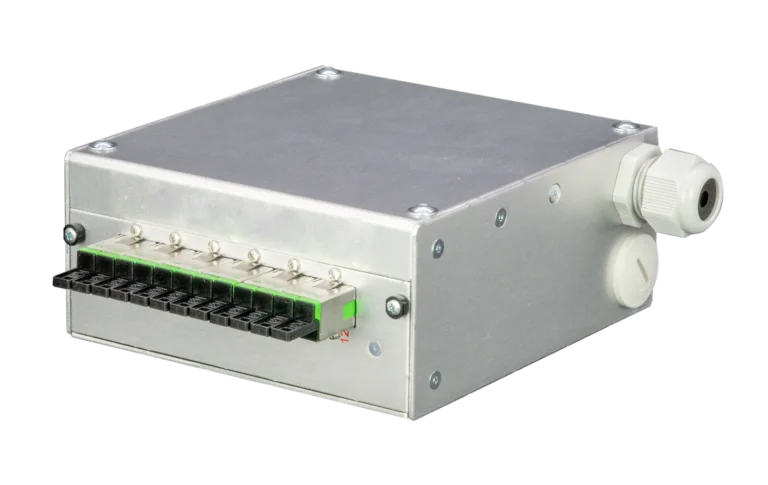
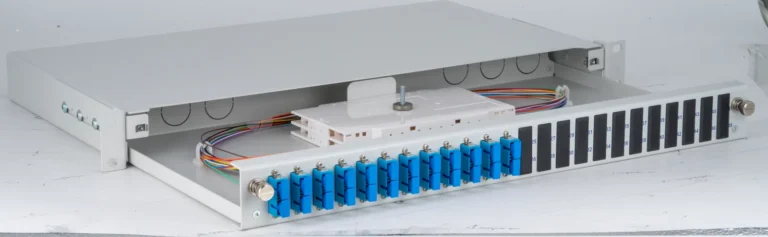
At Fiber Products, we develop modular fiber optic solutions specifically for the challenges of municipal network operators. Our splice boxes are designed for use in municipal utility networks and offer the reliability that is crucial for high customer satisfaction.
With a 5-year guarantee and European production to German quality standards, we offer optimum value for money for professional FTTH infrastructures. Discover our complete product range on Fiber Products or visit our online store for all products.
Talk to us – together we will develop the optimal solution for your fiber optic project. Contact us for an individual consultation or find out about other specialist topics on professional project management in our fiber optic knowledge blog.
Request a Consultation
Our experts will advise you on modular fiber optic solutions for your specific application — fast, personal and non-binding.