Verkehrsbetriebe-IT: Fiber optic distribution for integrated control systems
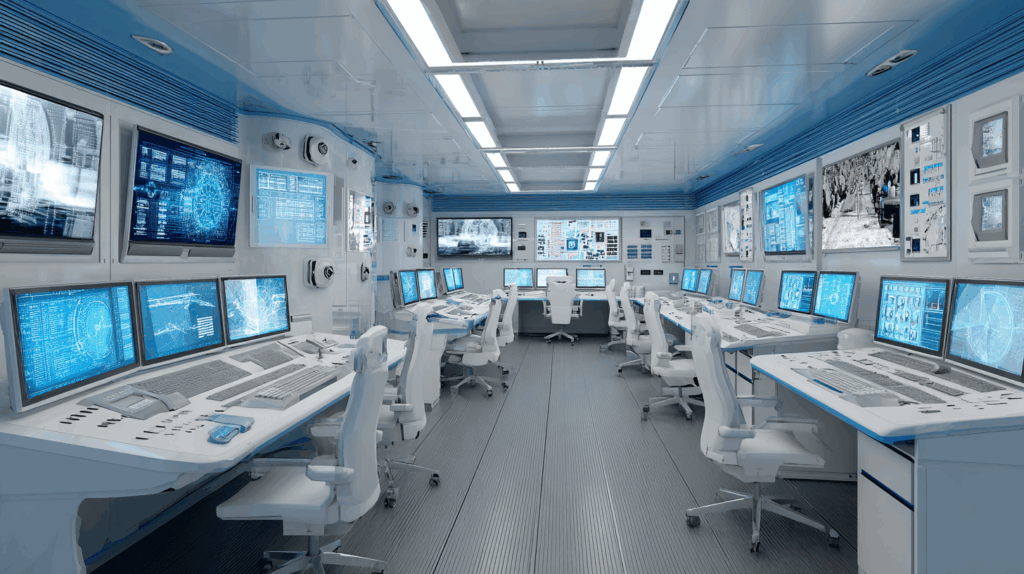
The digitalization of local public transport poses complex challenges for public transport IT. Modern control systems have to coordinate different means of transport, process real-time data and provide passengers with comprehensive information. High-performance fiber optic infrastructures form the technical backbone for all aspects of public transport IT – from central scheduling to vehicle-based data collection.
Integrated control systems require seamless communication between different locations and systems. Transport companies need network architectures that guarantee maximum availability and are also flexible for future requirements.
The convergence of different technologies – from traditional voice communication to big data analytics – makes modern transport IT a highly complex ecosystem that requires sophisticated fiber optic distribution.
Basics of modern transportation IT
Today, transportation IT encompasses far more than traditional operations management. Modern systems integrate vehicle management, passenger information, ticketing, video surveillance and maintenance planning into standardized platforms.
Central control systems and scheduling
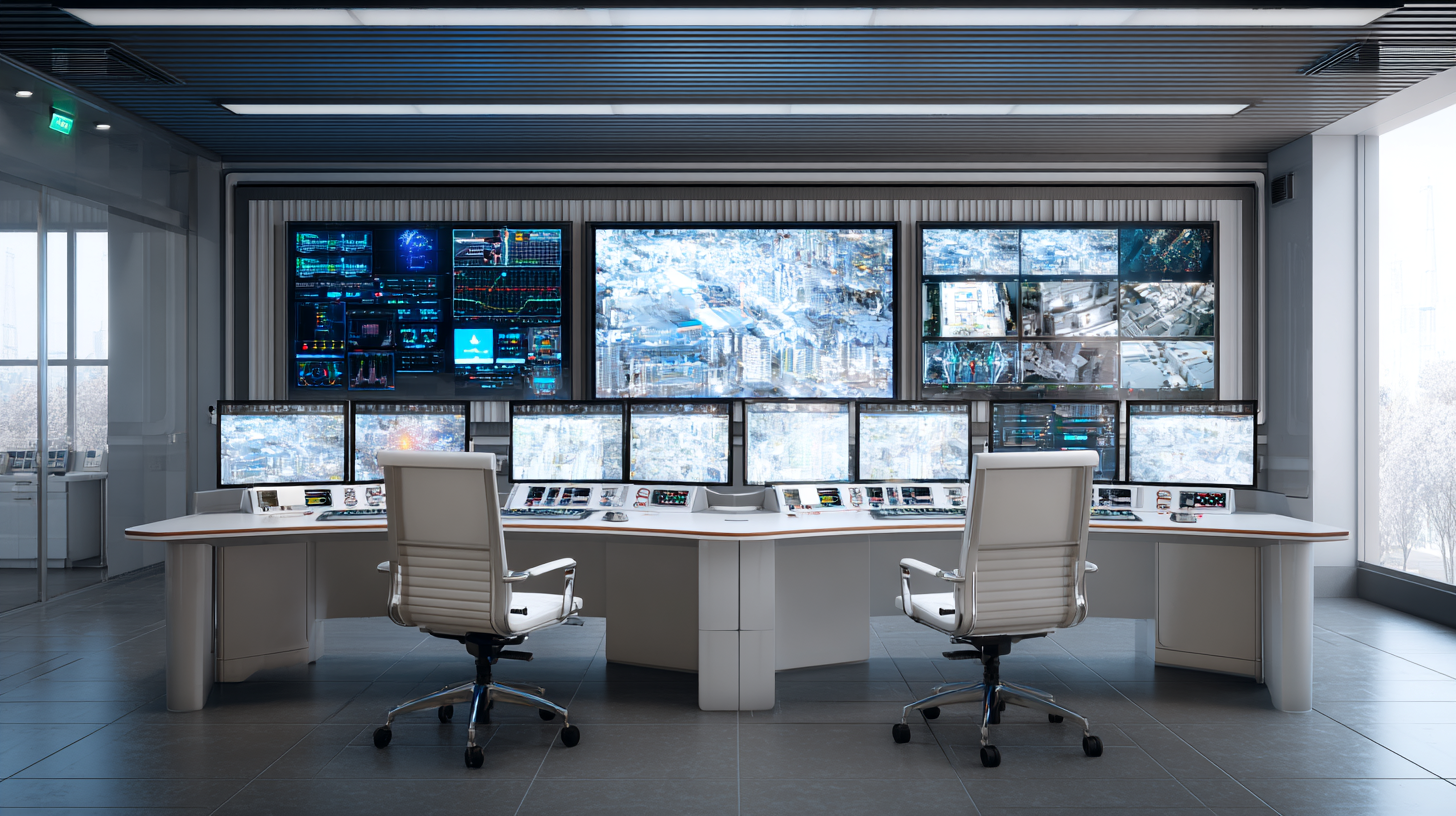
The central control center is the heart of every transport company’s IT. This is where all operational information comes together: Vehicle positions, delays, disruptions and passenger numbers. Dispatchers use this data to make decisions that influence the entire operational process.
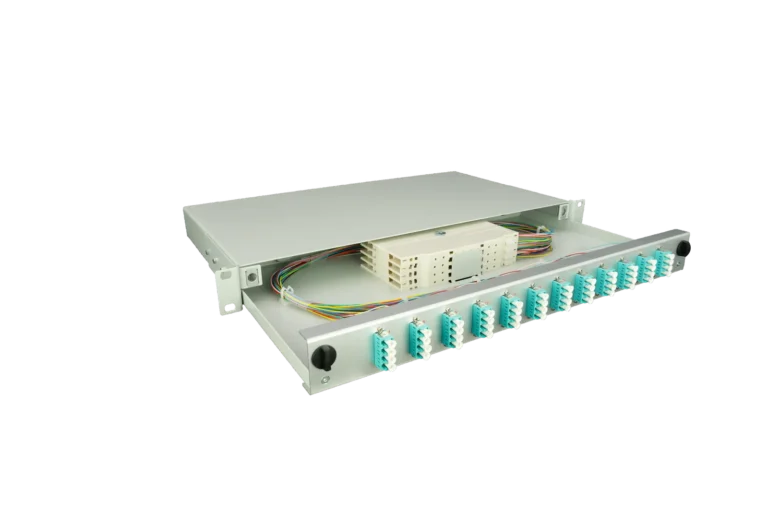
Modern control systems require fiber optic connections with the lowest possible latency. Every second of delay in data transmission can affect connectivity and passenger comfort. The SlimConnect 1U system with its high fiber density enables redundant connections between the control center and all operational locations.
The integration of different means of transport requires standardized interfaces. Transport company IT must be able to process data from buses, streetcars, subway trains and possibly also ferries or cable cars.
Real-time tracking and vehicle location
GPS-based vehicle tracking is now standard in transportation IT. The position data is not only used for scheduling, but also for passenger information, connection management and operational analyses.
Data is transmitted from the vehicle to the control center via mobile networks. There, the information must be processed in real time and forwarded to various systems. System integrators can use modular fiber optic solutions to implement flexible architectures that function stably even with increasing data volumes.
The VarioConnect modular system offers the necessary scalability for growing vehicle fleets. Additional processing capacities can be integrated by adding appropriate modules.
Passenger information systems
Modern passengers expect comprehensive real-time information. Transport company IT must distribute departure times, delays, disruptions and alternative routes to various channels: Stop displays, mobile apps, websites and vehicle displays.
This information distribution requires high-performance fiber optic connections between central systems and all output points. The RailConnect top-hat rail box system is particularly suitable for bus stop displays, as it can be integrated into standard control cabinets.
Technical requirements for fiber optic infrastructures
Public transport IT places special demands on fiber optic networks. The mission-critical nature of public transport requires maximum reliability and availability.
High availability and reliability
Transport IT failures can affect the entire transport service. Passengers are left without information, connections are missed and operations are disrupted. Fiber optic infrastructures must therefore be designed with redundancy.
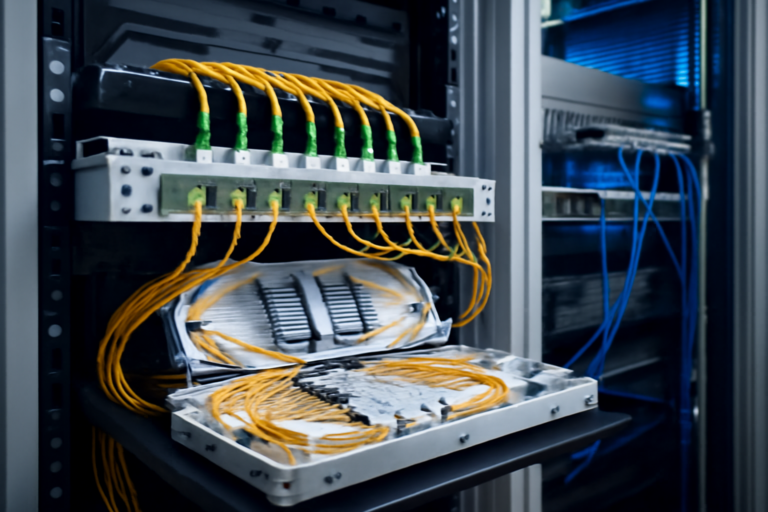
The 5-year guarantee on high-quality European production provides transport companies with the necessary planning security. Modular splice systems enable various redundancy concepts – from simple backup cabling to completely separate network paths.
The VarioConnect 3U and 4U system can implement ring topologies that maintain communication even in the event of cable breaks. Various geographical paths can also be used for critical connections.
Low latency for real-time applications
Transportation IT includes many time-critical applications. Emergency communication, automatic passenger counting and connection forecasts require minimal transmission times.
Fibre offers inherently low latency, but the network architecture must be optimized accordingly. Direct point-to-point connections reduce delays compared to complex switching hierarchies.
High bandwidth for multimedia content
Modern transportation IT not only transmits control data, but also multimedia content. Video surveillance, digital advertising and passenger information with graphics and videos require corresponding bandwidths.
The high capacity of optical fiber enables simultaneous transmission of different data streams. A single fiber pair can transmit hundreds of HD video streams without interfering with other applications.
System integration and interfaces
Transportation IT must integrate and coordinate various subsystems. Fiber optic infrastructures form the physical basis for logical system connections.
Integration of different transportation systems
Large transportation companies often operate different means of transport with different technical systems. Buses use different control technology than streetcars or subway trains. The transport company’s IT must bring these systems together and provide standardized information.
Standardized fibre optic infrastructures make this integration much easier. All subsystems can be connected via standardized interfaces, regardless of their specific technology.
BasicConnect front modules enable the integration of different connection technologies in standardized 19″ systems. Different traffic systems can thus use standardized fibre optic connections.
Connection to urban infrastructure
Transportation IT is often part of larger urban IT landscapes. Smart city concepts network traffic systems with traffic light control, parking guidance systems and other urban services.
This integration requires secure data connections between transport operations and municipal data centers. Fiber optic connections offer the necessary security and bandwidth for extensive data exchange.
Interfaces to third-party providers
Modern transportation IT works together with various external systems. Weather forecasts, traffic information and tourist data are obtained from third-party providers and integrated into in-house systems.
These external connections must be secure and reliable. Fiber optic-based Internet connections offer the necessary quality for business-critical data connections.
Special transportation IT applications
Different aspects of transport company IT have specific requirements for fiber optic infrastructures. Modular systems can be flexibly adapted to these different needs.
Video surveillance and security systems
Security is a key issue in public transport. Video surveillance in vehicles, stops and depots generates large amounts of data that need to be transmitted via fiber optics.
Transportation IT must manage and store this video data and forward it to security forces or authorities if necessary. Modern systems use AI-based analysis to automatically detect suspicious situations.
The high bandwidth of fiber optics enables the simultaneous transmission of hundreds of video streams. Even high-resolution 4K cameras can be integrated without any problems.
Ticketing and fare management
Electronic ticketing systems are now standard in public transport. Public transport IT must collect and process transaction data from all vehicles and compare it with backend systems.
These data streams must be transmitted securely and reliably, as they have a direct impact on sales. Fiber optic connections offer the necessary security and availability for financially relevant data.
Maintenance and asset management
Modern transportation IT also includes comprehensive asset management. Vehicle statuses, maintenance intervals and spare parts stocks are managed and optimized centrally.
Predictive maintenance systems use sensor data from vehicles for predictive maintenance planning. This data must be continuously transmitted and analyzed.
The EasyConnect splice modules enable service-friendly installation of maintenance monitoring. New sensors can be integrated without tools, which simplifies modernization.
Edge computing and local data processing
Transportation IT is increasingly using edge computing concepts for local data processing. Critical applications are processed decentrally to reduce latency and increase reliability.
Local passenger information
Stop displays can continue to display basic information in the event of network failures if they have local intelligence. Edge computing systems at stops process local sensor data and vehicle radio.
These decentralized systems require a reliable fibre optic connection for data synchronization and updates. At the same time, they must be able to function autonomously in the event of network failures.
Decentralized video analysis
AI-based video analysis can be carried out locally at stops or in vehicles. Only relevant events are then transmitted to central systems via fiber optics.
This architecture reduces bandwidth requirements and enables faster reactions to security events. However, the local systems require a high-performance fiber optic connection for software updates and event messages.
Local operation control
In the event of power failures, local control systems can maintain emergency operation. Depots and workshops have autonomous control systems that function independently of the control center.
Synchronization after the connection is restored then requires extensive data exchange via fibre optics. Modular systems can provide additional capacity if required.
Cybersecurity and data protection
Transportation IT processes sensitive data and is critical infrastructure. Cybersecurity is therefore a top priority in the design of fiber optic infrastructures.
Network segmentation
Different areas of transportation IT have different security requirements. Passenger information is less critical than vehicle control or ticketing systems.
Fiber optic infrastructures can support physical segmentation. Critical systems receive dedicated fibers that are separated from other applications.
Encryption and authentication
All data transmissions in transportation IT must be encrypted. Optical fiber offers inherent security, as eavesdropping is practically impossible without physical access.
Additional encryption at protocol level also protects compromised fiber optic connections. The high bandwidth of fiber optics enables strong encryption without compromising performance.
Compliance and regulation
Transport companies have to meet various compliance requirements. Data protection, IT security and industry-specific regulations influence the design of the IT infrastructure.
Documented fiber optic installations with clear traceability support proof of compliance. The 5-year warranty also reduces the risk of unplanned changes to critical infrastructure.
Integration with public networks
Transportation IT must communicate with various public networks. Internet, mobile radio and public authority radio require corresponding interfaces.
Internet connection and cloud services
Modern transportation IT uses cloud services for various applications. Weather forecasts, map services and backup systems are often sourced externally.
High-performance internet connections via fiber optics enable reliable cloud integration. Redundant provider connections guarantee reliability even in the event of provider problems.
Mobile radio integration
5G networks enable new applications in transportation IT. Vehicle-to-infrastructure communication and IoT sensors use mobile networks for data transmission.
The integration of 5G base stations into fiber optic infrastructures creates hybrid network architectures. Modular systems can flexibly integrate 5G equipment.
Government radio and emergency communication
Transport companies must be able to communicate with the police, fire department and rescue services. This communication often uses special public authority radio networks.
Gateways between public authority radio and transport company IT require a reliable fiber optic connection. Communication problems must not occur in emergencies.
Maintenance and lifecycle management
Transportation IT infrastructures must function reliably for decades. Maintenance concepts and lifecycle management are therefore particularly important.
Preventive maintenance
Regular maintenance prevents unplanned outages. Fiber optic networks require less maintenance than electronic systems, but regular checks are still important.
Attenuation measurements and performance monitoring identify creeping deterioration. The modular architecture enables the targeted replacement of problematic components.
Technology upgrades
Transportation IT must keep pace with technological developments. New transmission standards and higher data rates require corresponding infrastructure upgrades.
Modular fibre optic systems enable step-by-step modernization without the need for a completely new installation. Individual modules can be replaced with more powerful versions if required.
Documentation and asset management
Comprehensive documentation is essential for maintenance and troubleshooting. Each fiber optic connection must be clearly identifiable and its function documented.
Modern asset management systems can digitally map fiber optic infrastructures and automatically plan maintenance cycles. This integration makes lifecycle management considerably easier.
Future outlook for transportation IT
The digitalization of public transport will continue to accelerate. Transport company IT must be prepared for future technologies.
Artificial intelligence and big data
AI systems are increasingly being used for operational optimization, maintenance planning and passenger service. These systems require large amounts of data and corresponding transmission capacities.
Fiber optic infrastructures must already be dimensioned today for these future requirements. The high scalability of modular systems supports growing data requirements.
Autonomous vehicles
Autonomous buses and streetcars will also find their way into public transport. These systems generate enormous amounts of data and require ultra-fast communication with central control systems.
The necessary transmission capacities exceed today’s requirements by orders of magnitude. Only fiber optics can meet these future needs.
Multimodal integration
Transportation IT will increasingly integrate different modes of transport. Buses, trains, bike sharing and e-scooters will be managed in standardized platforms.
This integration requires flexible, scalable infrastructures. Modular fiber optic systems can flexibly network different transport systems and expand them as required.
Conclusion: Fiber optics as an enabler of future-proof transport company IT
Modern transport company IT is no longer conceivable without high-performance fiber optic infrastructures. From central scheduling to local passenger information – all areas require reliable, high-performance data connections.
Modular splice systems offer the necessary flexibility for the various requirements of transport company IT. They enable redundant designs for mission-critical applications, support various integration levels and reduce operating costs thanks to their service-friendly design.
Transport companies that invest in future-proof fiber optic infrastructures today are creating the technical basis for innovative transport systems in the coming decades.
At Fiber Products, we develop modular fiber optic systems for the highest quality requirements. Our modular systems combine proven technology with innovative features.
With a 5-year guarantee and European production according to German quality standards, we offer competitive conditions with professional quality for successful fiber optic networks.
Discover our complete product range or visit our online store. Talk to us – together we will develop the optimum solution for your project. Contact us for an individual consultation or find out about other specialist topics in our fiber optic knowledge blog.