Fusion Splicing vs. Mechanical Splicing: When to Use Each Method
Fusion Splicing vs. Mechanical Splicing: A Technical Comparison for Installers
Fusion splicing, mechanical splicing, and splicing method comparison are central to every fibre optic project — fusion dominates with 0.03–0.1 dB attenuation on permanent installations, while mechanical splicing excels for temporary connections without specialised equipment. Deutsche Telekom deployed over 120,000 new fibre optic connections in January 2026 alone, with fusion splicing becoming the standard for large-scale projects due to superior long-term stability and lower total cost of ownership (€0.50–1.50 per splice). For installation firms across the DACH region, choosing the right method determines the difference between economic success and costly rework.
Technical Fundamentals: Fusion Splicing vs. Mechanical Splicing in Detail
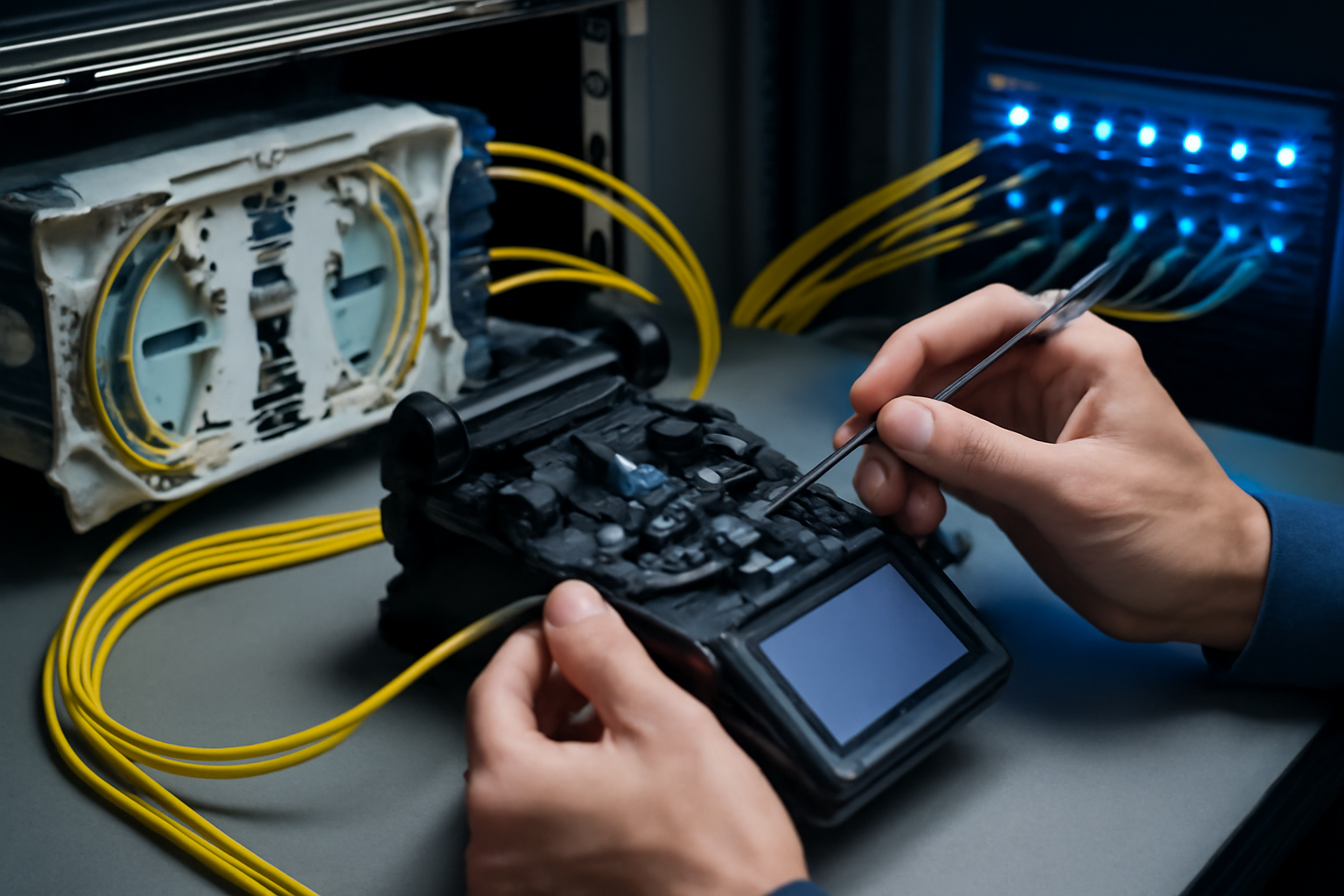
In fusion splicing, fibre cores are melted together via an electric arc at 2000°C to form a homogeneous joint. The result is near-lossless transmission with typical attenuation values of 0.03 dB for singlemode and 0.05 dB for multimode fibres. Tensile strength reaches 200 N after correct execution.
Mechanical splicing, by contrast, uses precision sleeves with index-matching fluid to align fibre cores. Typical attenuation ranges from 0.1–0.75 dB, depending on fibre end face quality and splice mechanism grade.
- Fusion: permanent molecular bond, IEC 61073-1 compliant
- Mechanical: reversible joint via mechanical locking
- Fusion lifespan: 25+ years without degradation
- Mechanical lifespan: 5–10 years depending on environment
- Fusion temperature rating: −40°C to +85°C
Cost Analysis for Installation Firms: ROI and Project Scale
The splicing method comparison reveals clear cost differences depending on project scope. For fewer than 50 splice points, mechanical splicing is economical due to low tooling investment of €300–500. Above 100 splices, the economics favour fusion.
| Method | Initial Cost | Cost per Splice | Break-Even |
|---|---|---|---|
| Fusion (purchase) | €3,000–15,000 | €0.50–1.50 | ~200 splices |
| Fusion (rental) | €150–300/day | €0.50–1.50 | ~50 splices/day |
| Mechanical | €300–500 | €10–30 | Immediately productive |
Modern rental models for fusion splicers are transforming the market for smaller installation firms. Daily rentals from €150 make mid-sized projects economically viable with fusion technology.
Applications and Use Cases in FTTH Deployment
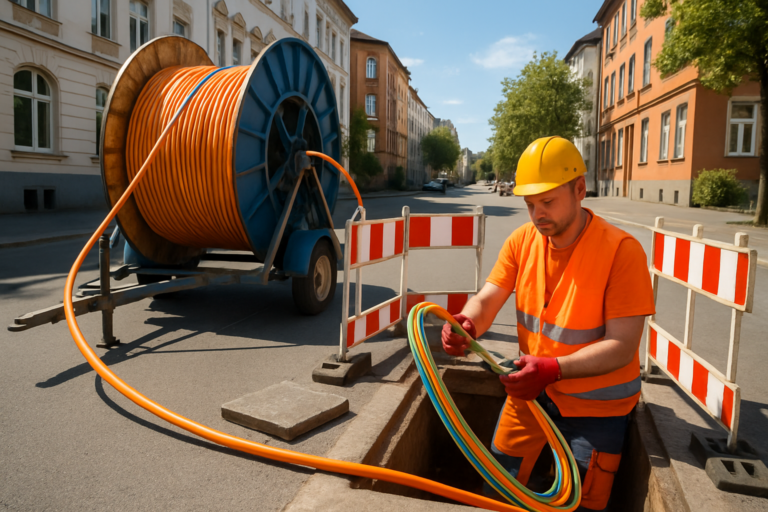
In the German FTTH market, which exceeds 43% fibre coverage, fusion splicing dominates backbone connections and permanent installations. Deutsche Telekom plans an additional 2.5 million connections in 2026, with modular splice modules reaching up to 96 fibres per 1U becoming the standard.
- Fusion optimal for: distribution cabinets, main distribution frames, data centres
- Mechanical suitable for: temporary installations, emergency repairs, hard-to-access locations
- Municipal utility projects: 95% fusion for permanent infrastructure
- Industrial installations: E2000 connectors with fusion pigtails for IP65 environments
Fiber Products Quality Promise: As an official Diamond Partner and manufacturer, we produce modular splicing systems in Europe. Benefit from Swiss precision engineering and in-house manufacturing.
Time Factor and Installation Speed
Modern fusion splicing requires 6–8 minutes for a complete splice cycle including preparation. Mass-fusion splicers process up to 12 fibres simultaneously, reducing time per fibre to under one minute.
Mechanical splicing appears faster at 2–3 minutes per joint, but demands more precise fibre end face preparation. Poor execution raises defect rates to 15–20%, necessitating rework.
Quality Assurance and Measurements to DIN/IEC Standards
IEC 61300-3-4 defines maximum attenuation limits for splice joints. Fusion splicing undercuts this standard by factor 3–5, while mechanical splices often operate near the upper limit.
| Parameter | Fusion Splicing | Mechanical Splicing | IEC Limit |
|---|---|---|---|
| Attenuation SM | 0.03 dB | 0.1–0.3 dB | 0.15 dB |
| Attenuation MM | 0.05 dB | 0.2–0.5 dB | 0.30 dB |
| Reflection | < −60 dB | −40 to −50 dB | −35 dB |
| Tensile Strength | 200 N | 50–100 N | 100 N |
OTDR measurements show virtually no events at fusion splices, whereas mechanical splices appear as distinct peaks. For acceptance testing per ISO/IEC 14763-3, fusion offers clear advantages.
Integration into Modular Splicing Systems
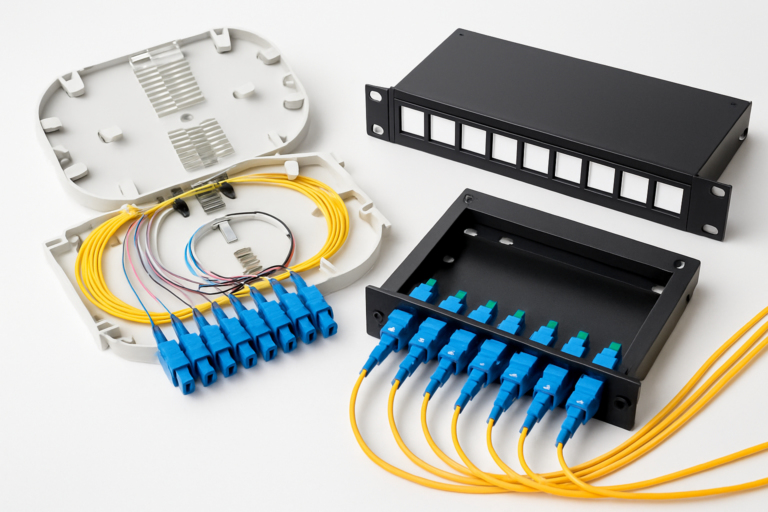
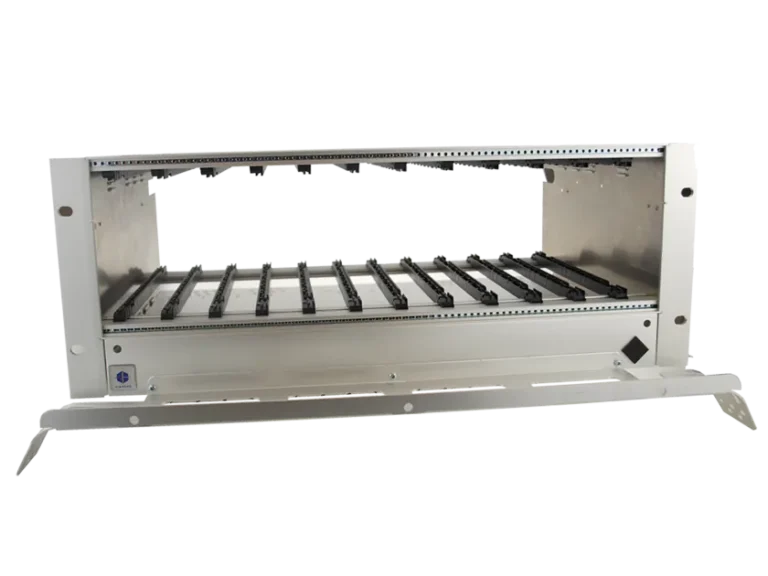
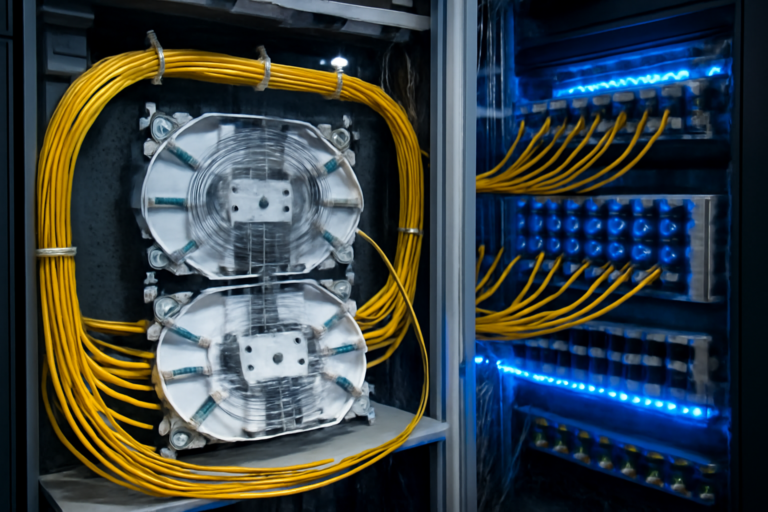
Modern splice boxes in 1U form factor optimise both splicing methods through pre-configured modules. The SlimConnect series achieves 96 fibres in a single rack unit — double the packing density of standard solutions.
- Splice cassettes with 24 fusion splices per module
- Mechanical splice holders for 12 joints per cassette
- Colour coding per DIN VDE 0888
- Hot-swappable modules without service interruption
- Integrated cable management for bend radius >30 mm
Environmental Conditions and Long-Term Stability
Fusion splicing demonstrates superior resilience in demanding environments. Testing per IEC 61300-2-22 (thermal cycling) and IEC 61300-2-48 (humid heat) confirms minimal attenuation shifts of <0.01 dB over 1000 cycles.
Mechanical splices degrade under moisture and temperature fluctuations. Index-matching fluid can lose optical properties after 5–7 years, causing increased attenuation. In outdoor installations or vibration-heavy industrial environments, fusion is non-negotiable.
Standards and Certifications for the German Market
The splicing method comparison must account for German and European standards. VDE 0888-220 specifies requirements for fibre optic installations in Germany, whilst EN 50173-1 governs structured cabling.
- TKG-compliant: both methods meet minimum requirements
- Bundesnetzagentur (Federal Network Agency): fusion preferred for subsidised projects
- FTTH Council Europe: recommends fusion for access networks
- Diamond certification: highest quality grade for E2000 connections
Practical Decision Guide for Installation Projects
The choice between fusion and mechanical splicing depends on concrete project parameters. For permanent FTTH installations with more than 50 splice points, fusion becomes cost-effective from the first project.
Mechanical splicing remains relevant for emergency repairs, temporary connections, and situations without power supply. Higher material costs of €10–30 per splice only break even on very small volumes.
- <20 splices: mechanical more economical
- 20–50 splices: depends on reusability
- >50 splices: fusion with rental equipment optimal
- >200 splices: equipment purchase pays off
- Continuous operation: fusion only
Frequently Asked Questions on Splicing Method Comparison
When does purchasing a fusion splicer make sense?
From 200–250 splice points annually, an entry-level unit costing €3,000–5,000 pays for itself within 12 months. Rental models suit 50–200 splices per year.
Can mechanical splices be later replaced with fusion joints?
Yes, mechanical splices can be non-destructively released and replaced with fusion. Fibre loss is approximately 10–15 cm per replacement.
What attenuation values are acceptable for FTTH networks?
The Bundesnetzagentur permits maximum 0.15 dB per splice. Fusion significantly undercuts this at 0.03–0.05 dB; mechanical ranges from 0.1–0.3 dB, near the limit.
How many splices can a technician complete per day?
With fusion: 60–80 single splices or 200–300 fibres using ribbon cable splicers. Mechanical: 40–60 splices under optimal conditions.
Are mechanical splices suitable for data centres?
No. Data centres require <0.1 dB attenuation and maximum reliability. Fusion pigtails.
What role do splice modules play in method selection?
Modern splice modules like SlimConnect support both methods via tailored cassettes. The 5-year warranty applies regardless of splicing method chosen.
Conclusion: The Right Choice for Your Fibre Optic Project
The splicing method comparison shows clear application boundaries: fusion splicing dominates permanent installations through superior technical performance and lower total cost of ownership. With 0.03–0.1 dB attenuation and 25+ year lifespan, it meets the highest quality standards for FTTH deployment.
Mechanical splicing retains its place for temporary connections and emergency situations. Initial costs of just €300–500 enable rapid deployment without specialist equipment. For professional installation firms in Germany’s growing fibre optic market, however, fusion technology is essential — whether through purchase or flexible rental options.
Request a Quote
Have questions about our fibre optic solutions? Our expert team is happy to advise you — free and without obligation.