Fibre Optic Networks in Hospitals: Medical Network Infrastructure Requirements
Fibre Optic Networks in Hospitals: Technical Requirements for Secure Clinical Infrastructure
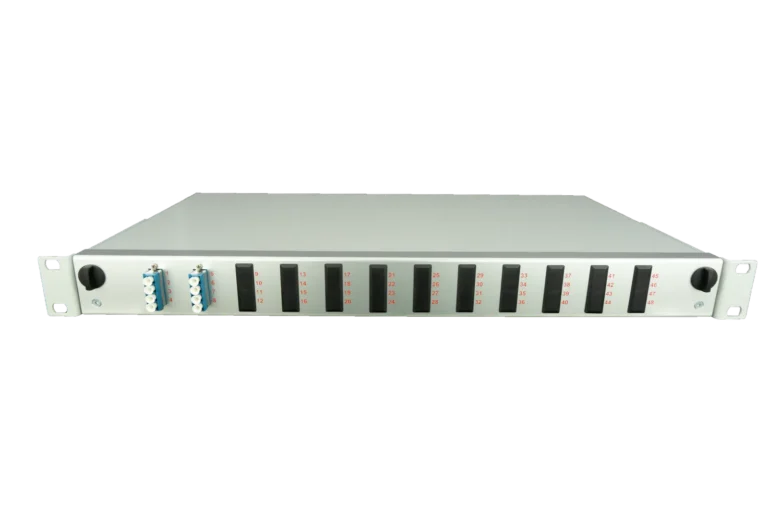
Implementing hospital fibre optic networks and medical infrastructure requires specialised splice modules with at least 48 fibres per rack unit, certified to IEC 61754-15 for medical devices. Modern hospitals require redundant fibre optic infrastructure connecting both administrative IT networks and critical medical systems—imaging devices, electronic patient records, and telemedicine applications—without interruption.
The new VDE guideline 0800-730 (February 2026) significantly simplifies fibre optic cable installation in sensitive areas such as operating theatres and intensive care units. Hospitals must modernise their network infrastructure by end of 2025 to avoid threatened DRG digitalisation penalties from 2026 onwards.
Normative Foundations for Fibre Optics in Medical Facilities
Installation of hospital fibre optic networks is subject to strict regulatory requirements. DIN VDE 0834-1 defines minimum standards for emergency call systems in hospitals, whilst DIN EN 50173-1 governs structured cabling.
Compliance with the Medical Device Regulation (MDR) is particularly critical, imposing stricter requirements on networked medical devices since 2021. Fibre optic systems must guarantee attenuation of < 0.25 dB for singlemode connections.
- Fire safety class B2ca per DIN EN 13501-6 for all cable routes
- Electromagnetic compatibility of the active network equipment
- Redundant cable routing for critical areas
- Documentation requirements per DIN VDE 0100-710 for medical areas
Technical Specifications for Hospital Splice Modules
Modular splice systems for hospital use must combine maximum fibre density with easy maintenance. Modern 1RU systems now achieve up to 96 fibres—twice as many as conventional solutions.
| System Type | Fibre Density | Height | Application |
|---|---|---|---|
| Standard Splice Box | 24–48 fibres | 1–2 RU | Floor-level distribution |
| High-Density Modules | Up to 96 fibres | 1 RU | Central distribution room |
| 19-Inch System | Up to 288 fibres | 3–4 RU | Clinical server room |
Selecting the correct connector type is critical for reliability. While LC duplex connectors suffice for administrative networks, medical imaging applications benefit from E2000 connectors with integrated dust caps.
Network Architecture for Medical Applications
Hospital network infrastructure follows a hierarchical design with physically isolated networks for different security levels. The medical network must remain completely separate from both the administrative network and guest network.
- Primary level: Redundant fibre backbone with 40 GbE between buildings
- Secondary level: Floor distribution with 10 GbE to ward stations
- Tertiary level: End-device connectivity via 1 GbE copper or fibre
- Critical systems: Dedicated fibre connections for imaging and operating theatres
For networking MRI scanners and CT scanners, dedicated singlemode OS2 fibres with a minimum bandwidth of 10 GbE are required.
Fiber Products Quality Promise: As an official Diamond partner and manufacturer, we produce modular splice systems in Europe. Benefit from Swiss precision and in-house manufacturing.
Requirements for Fibre Optics in Critical Hospital Areas
Intensive care units and operating theatres impose special demands on fibre optic infrastructure. DIN VDE 0100-710 mandates increased availability and redundant design for these areas.
In operating theatres, fibre systems must be vibration-resistant, as mobile equipment and vibration can degrade signal quality. E2000 connectors with bayonet coupling deliver optimal stability with < 0.1 dB insertion loss.
| Area | Minimum Fibres | Redundancy | Connector Type |
|---|---|---|---|
| Operating Theatre | 12 fibres | Dual | E2000 APC |
| Intensive Care Unit | 8 fibres | Dual | LC Duplex |
| Radiology | 24 fibres | Triple | MPO/MTP |
| Laboratory | 6 fibres | Single | SC Duplex |
Integration of Telemedicine and Digital Health Services
Growing telemedicine adoption demands high-performance fibre connections with guaranteed bandwidth. 4K video consultations require stable 25 Mbit/s symmetrical per connection.
For transmitting high-resolution medical images—such as from digital pathology systems with 40,000 × 40,000 pixels—fibre connections with 10 GbE are essential. Latency must not exceed 5 ms.
- Real-time transmission of operating theatre video in 8K resolution
- Remote specialist consultation via secure fibre links
- Cloud-based image archiving with 100 GbE connectivity
- Remote maintenance of medical devices via dedicated fibres
Security Concepts and Data Protection in Hospital Fibre Networks
GDPR-compliant fibre optic security Physical separation of network tiers through dedicated fibres is fundamental. The KRITIS Regulation classifies hospitals with more than 30,000 inpatient cases as critical infrastructure.
Fibre optic cables offer eavesdropping-resistant transmission compared to copper. Nonetheless, all splice points and distribution equipment must be housed in lockable 19-inch cabinets per DIN EN 60529 IP20.
- Hardware-level encryption with AES-256
- Access control to all distribution cabinets
- Documentation of all fibre routes per ISO 27001
- Regular OTDR measurements for tamper detection
Maintenance and Operation of Fibre Infrastructure
Continuous availability of medical networks requires preventive maintenance strategies. Modern splice modules with front-panel operation allow maintenance work without interrupting critical connections.
DIN VDE 0834-2 mandates monthly functional testing of emergency call systems. For fibre routes, six-monthly attenuation measurement with an OTDR instrument is recommended for early detection of signal degradation.
Modular systems like SlimConnect allow cartridge replacement in a very short time without affecting neighbouring connections. Colour coding per DIN EN 50174-1 greatly simplifies troubleshooting.
Cost Efficiency Through Modular Fibre Systems
Investment in high-quality hospital fibre optic infrastructure pays for itself through reduced operating costs and higher availability. Modular splice systems reduce installation time compared to conventional solutions.
| Cost Factor | Conventional | Modular | Savings |
|---|---|---|---|
| Installation Time | High | Low | Reduced |
| Maintenance Effort | 4 h/quarter | 2 h/quarter | Reduced |
| Downtime | 12 h/year | 2 h/year | Reduced |
| Space Requirements | 4 RU | 1 RU | Reduced |
Higher fibre density in modern systems significantly reduces space requirements in technical rooms. A 1RU system with 96 fibres replaces four conventional splice boxes, saving valuable floor space.
Future-Proofing Fibre Cabling
Digital transformation in healthcare requires scalable network infrastructure. AI-driven diagnostics, networked medical devices, and electronic patient records continuously drive bandwidth demand.
Hospital fibre installations should therefore be planned with adequate capacity reserves. Experts recommend 40% fibre overprovisioning and pre-equipping backbone areas for 400 GbE support.
- Readiness for Wi-Fi 7 with fibre to access points
- Integration of 5G small cells for mobile medical devices
- Connection of IoT sensors for building automation
- Support for 8K video streaming for training applications
Practical Implementation: From Planning to Installation
Successful fibre infrastructure implementation begins with detailed needs assessment. A certified network planner per DIN 18015-1 should capture the specific requirements of each department.
Planning must consider redundancy concepts, expansion capabilities, and integration with existing systems. Installation should ideally proceed in phases to minimise disruption to hospital operations.
As a manufacturer of modular splice systems, Fiber Products supports hospitals with pre-configured systems that install quickly and without operational impact. Our 5-year warranty on all splice systems provides additional investment security.
FAQ: Frequently Asked Questions on Fibre in Hospitals
What bandwidth does a modern hospital need?
A 500-bed hospital typically requires a 10 GbE backbone between buildings and 1 GbE to end devices. Imaging procedures require dedicated 10–40 GbE connections.
How many fibres should be planned per patient room?
A minimum of 4 fibres per patient room is recommended: 2 for the clinical network, 2 as reserve for future applications such as telemedicine or entertainment systems.
Which connector types suit medical devices?
For medical devices, E-2000 connectors with integrated shutters or LC duplex connectors are suitable. DIAMOND specifies typically 0.1 dB and maximum 0.3 dB insertion loss; APC polish additionally raises return loss to at least 70 dB.
Must existing copper networks be completely replaced?
No, a hybrid approach is possible. Critical connections and new installations use fibre, whilst non-critical areas can retain copper for now. Copper phase-out is planned for 2035.
How often must fibre routes be maintained?
No standard prescribes a fixed interval. Attenuation is measured at acceptance and after any change; re-measurement cycles follow the operator’s own maintenance concept. Splice modules with front-panel access keep servicing effort and downtime low.
What funding is available for hospital fibre installation?
The Hospital Future Act (KHZG) funds digital infrastructure with up to €4.3 billion. Fibre installation qualifies as an eligible digitalisation project.
Conclusion: Fibre Optics as Foundation for Modern Hospital Infrastructure
Implementing fibre optic networks in hospitals is no longer optional—it is essential for future-ready healthcare provision. With the right modular splice systems, standards-compliant installation, and well-designed redundancy, hospitals establish the foundation for telemedicine, AI-assisted diagnostics, and networked medical technology.
Investment in high-quality fibre infrastructure with up to 96 fibres in 1RU pays dividends through reduced downtime, simplified maintenance, and long-term scalability. As a European manufacturer and Diamond partner, Fiber Products delivers complete solutions for medical network infrastructure—from modular splice boxes to medical-certified E2000 connectors.
Order directly from our shop: fiber-products.de
Request a Quote Today
Free consultation – personalised quote within 24 hours