German Armed Forces 2025 Special Fund: Infrastructure Modernisation with Fibre Optic
Federal Armed Forces Special Fund Fibre Optic, Barracks Fibre Modernisation: Strategic Infrastructure Transformation 2025
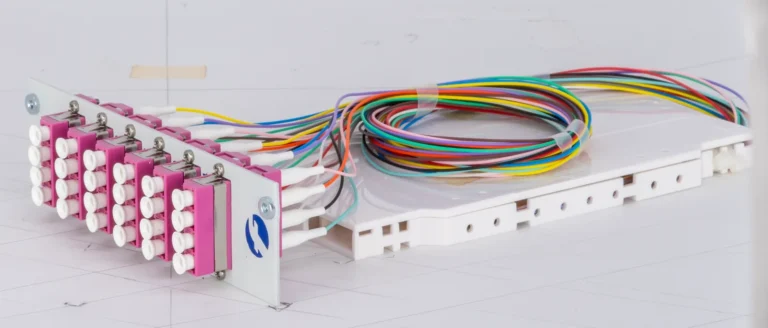
The Federal Armed Forces Special Fund fibre optic programme and barracks fibre modernisation form a central pillar of digital transformation in German defence infrastructure, with an investment volume of several billion euros for modern optical fibre systems. The €100 billion special fund for the Federal Armed Forces provides for comprehensive modernisation measures, with fibre optic connection of barracks, training areas and administrative buildings representing a critical component. Technical implementation is via high-density splice modules with up to 96 fibres per 1U, ensuring future-proof network architecture.
Technical Requirements for Federal Armed Forces Fibre Modernisation
Barracks fibre modernisation requires specialist technical solutions complying with military security standards. Modern barracks need bandwidth of at least 10 Gbit/s for administrative systems, surveillance infrastructure and communications networks. Connections between facilities are via redundant fibre optic routes using Singlemode OS2 fibres for distances exceeding 2 kilometres.
- Fully redundant network architecture with physically separated cable routes
- Encryption-capable transmission routes with AES-256 support
- Modularly expandable splice modules for phased rollout
- Weather-resistant external distribution frames to IP65 standard
- Documentation in accordance with BSI baseline protection and military requirements
Implementation Strategy for Federal Armed Forces Special Fund Fibre Optic
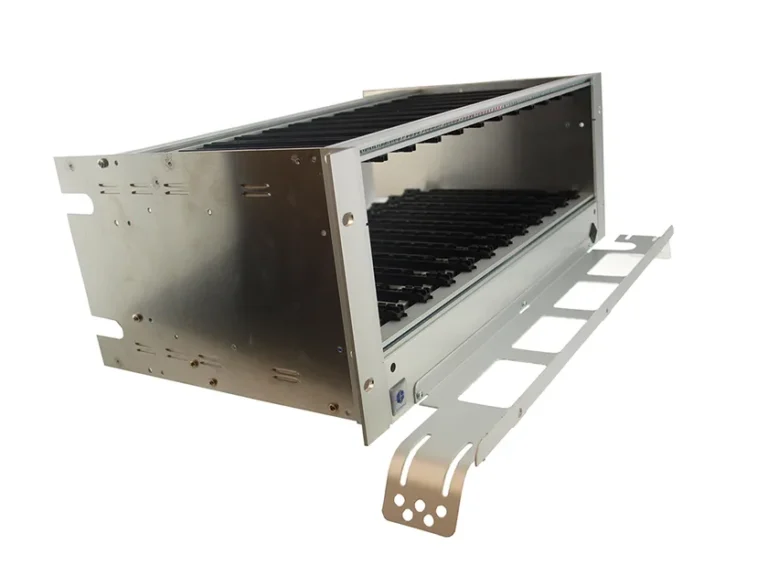
Strategic planning of fibre modernisation follows a multi-year phased schedule. Priority is given to command support brigades, logistics centres and training facilities. Technical realisation is based on proven 19-inch distribution systems with modular splice cassettes.
| Deployment Phase | Timeline | Focus Area | Fibre Capacity |
|---|---|---|---|
| Phase 1 | 2025–2026 | Command headquarters | 48–96 fibres |
| Phase 2 | 2026–2027 | Main barracks sites | 96–144 fibres |
| Phase 3 | 2027–2028 | Training areas/depots | 24–48 fibres |
Standards Compliance and Security Requirements
Barracks fibre modernisation is subject to stringent standards requirements. All components must comply with IEC 61754-15 for E2000 connectors, which offer special security through their protective shutter. Additionally, requirements of DIN EN 50173-1 for structured cabling systems apply.
Security-critical areas require specialist sealing systems to IEC 61754-20 for LC connectors with enhanced mechanical durability. Attenuation values must be below 0.25 dB at connectors and below 0.05 dB at splice joints.
Modular Splice Systems for Military Infrastructure
The technical foundation of the Federal Armed Forces Special Fund fibre optic programme comprises high-density splice systems with modular design. These enable flexible adaptation to growing requirements without complete infrastructure replacement.
- Splice cassettes with 24 fibres per module for structured management
- Front panels with various connector types: LC, SC, E2000, MPO
- Colour coding to DIN VDE 0888 for unambiguous identification
- Bend-radius management with minimum 30 mm radius
- Withdrawable cassettes for maintenance-friendly access
Fiber Products Quality Promise: As an official Diamond Partner and manufacturer, we produce modular splice systems in Europe. Benefit from Swiss precision and 5 years warranty on our systems.
Integration into Existing Federal Armed Forces IT Infrastructure
Barracks fibre modernisation must integrate seamlessly into existing systems. This requires transition solutions between copper and fibre networks, plus media converters for legacy systems. Connection is via standardised 1U distribution units in existing server racks.
Critical systems receive redundant connections via separate splice modules. Documentation is digital using QR code identification on each fibre for rapid fault diagnosis. Government solutions must meet special requirements for availability and security.
Economic Aspects of Federal Armed Forces Special Fund Fibre Optic
Investment in modern fibre optic infrastructure pays for itself through reduced operating costs and improved system availability. Modular systems reduce lifecycle costs through simple expandability without recabling.
| Cost Factor | Copper Network | Fibre Network | Savings |
|---|---|---|---|
| Energy consumption/year | Higher | Lower | Reduced |
| Maintenance effort | High | Minimal | Reduced |
| Bandwidth | 1 Gbit/s | 100 Gbit/s | 100x |
| Lifespan | 15 years | 30+ years | 2x |
Technical Challenges in Barracks Fibre Modernisation
Implementation at military facilities poses special requirements for planners and installers. Listed buildings require minimally invasive installation techniques using micro-duct methods. In bunkers and hardened facilities, specialist fire stops to DIN 4102-12 must be installed.
- Electromagnetic compatibility in radar-adjacent areas
- Vibration-resistant mounting near firing ranges
- Temperature resistance from −40 °C to +70 °C for outdoor areas
- Rodent and vandalism protection through armoured cabling
- Lightning protection concepts to VDE 0185-305
Quality Assurance and Acceptance Testing
Each installed fibre optic route undergoes comprehensive measurement procedures to IEC 61280-4. OTDR measurements document attenuation, reflection and route length for each individual fibre. Acceptance criteria are based on military additional requirements beyond civilian standards.
Test records are digitally archived and integrated into the Federal Armed Forces’ own documentation software. Regular control measurements ensure long-term stability of transmission quality. Made in EU quality guarantees highest manufacturing standards.
Future Perspectives for Federal Armed Forces Special Fund Fibre Optic
Current modernisation creates the foundation for future technologies such as quantum communication and AI-driven systems. Installed Singlemode fibres support wavelength division multiplexing for capacity increases without recabling.
- Preparation for 400G Ethernet standards
- Integration of Software Defined Networking (SDN)
- Support for edge computing in barracks
- Connection of mobile units via 5G base stations
- Convergence of IT and OT networks
Practical Implementation: From Planning to Installation
Realisation of barracks fibre modernisation occurs in structured project phases. Following inventory assessment, route planning occurs with consideration of military security zones. Installation of modular splice systems enables phased commissioning without operational interruptions.
Fiber Products supports as system supplier with pre-configured solutions that reduce installation times. The modular SlimConnect and VarioConnect systems offer 96 fibres per 1U with maximum packing density and full backward compatibility.
FAQ on Federal Armed Forces Special Fund Fibre Optic
Which connector types are suitable for military applications?
For Federal Armed Forces applications, E2000 connectors with automatic protective shutter against contamination are recommended. In less critical areas, LC connectors with high packing density are used. MPO connectors enable parallel transmission over 12 or 24 fibres.
How is redundancy achieved in critical systems?
Critical connections are routed via two physically separate routes using different splice modules. Automatic switchover occurs in less than 50 milliseconds using optical switches to ITU-T G.8031 standard.
What fibre counts are appropriate for barracks backbones?
Main distribution frames should be equipped with at least 48 fibres; larger sites require 96 to 144 fibres. The modular design allows post-installation expansion without replacement of the basic infrastructure.
How are existing copper networks integrated?
Media converters convert electrical to optical signals. Devices support speeds of 10/100/1000 Mbit/s and are installed in 19-inch modules or as DIN-rail-mounted units.
What maintenance intervals apply to fibre optic systems?
Fibre optic systems require minimal maintenance. Annual visual inspection and cleaning of connectors is sufficient. Measurements are performed only in case of faults or after five years of operation.
How is Federal Armed Forces personnel trained?
Technical staff receive foundational training in fibre optics including splicing, measurement and fault diagnosis. Certification follows ZDH guidelines with military-specific additions.
Conclusion: Strategic Significance of Fibre Modernisation
The Federal Armed Forces Special Fund fibre optic programme and barracks fibre modernisation create the digital foundation for modern defence capability. With investment in future-proof fibre optic infrastructure, the Federal Armed Forces positions itself for coming technological challenges. Implementation using modular systems manufactured in Europe guarantees supply security and highest quality standards.
For technical realisation, Fiber Products as a German manufacturer and official Diamond Partner offers the complete system range from splice box to E2000 connector. With 5 years warranty on all systems and manufacture in Europe, we meet the highest requirements for quality and supply security for critical infrastructure.
Interested in modular fibre optic solutions?
Fiber Products GmbH – official DIAMOND SA Partner. Made in EU, 5 years warranty.
Order directly in our shop: fiber-products.de