Fiber optic system integration: integration of different product lines for complex network architectures
Modern fiber optic system integration requires the intelligent combination of Fiber optic product matrix 2025 to create holistic network solutions. While individual components have their specific strengths, the real added value comes from the well thought-out integration of all elements – from the compact RailConnect top-hat rail box to the high-performance SlimConnect system. System integrators benefit from standardized interfaces and modular concepts that enable complex infrastructures without compatibility problems.
Successful fiber optic system integration means more than just connecting different components. It is about creating scalable, easy-to-maintain and future-proof network architectures that can grow with the growing demands of modern organizations. Our complete portfolio on fiber-products.de/en has been specially developed for such integrated approaches.
Basic principles of fiber optic system integration
Professional fiber optic system integration follows proven design principles that combine technical excellence with economic efficiency. These principles determine the selection and combination of the various product lines.
Hierarchical network architectures
Modern fiber optic system integration uses hierarchical structures with core, distribution and access layers. Each layer has specific requirements that are optimally fulfilled through targeted product selection.
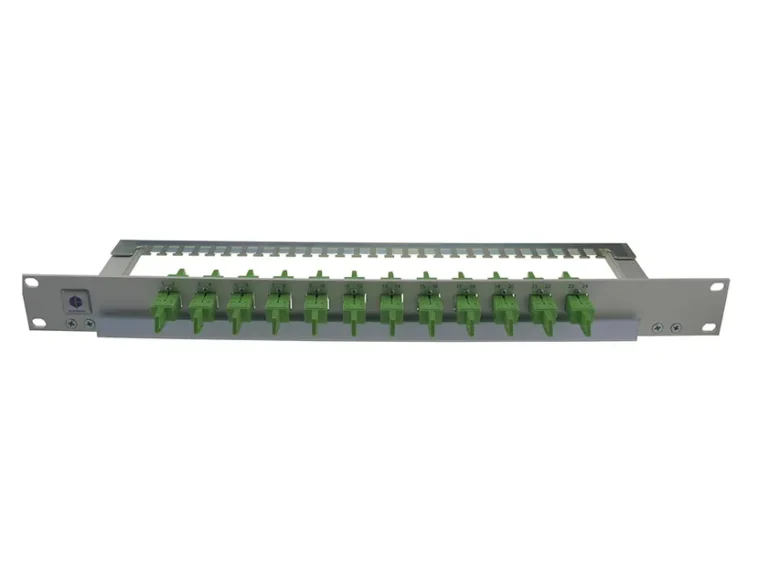
The core layer requires maximum performance and reliability. This is where the SlimConnect 1U system with its maximum fiber density of 96 fibers per height unit comes into play. The permanently mounted design guarantees absolute operational reliability in critical backbone areas.
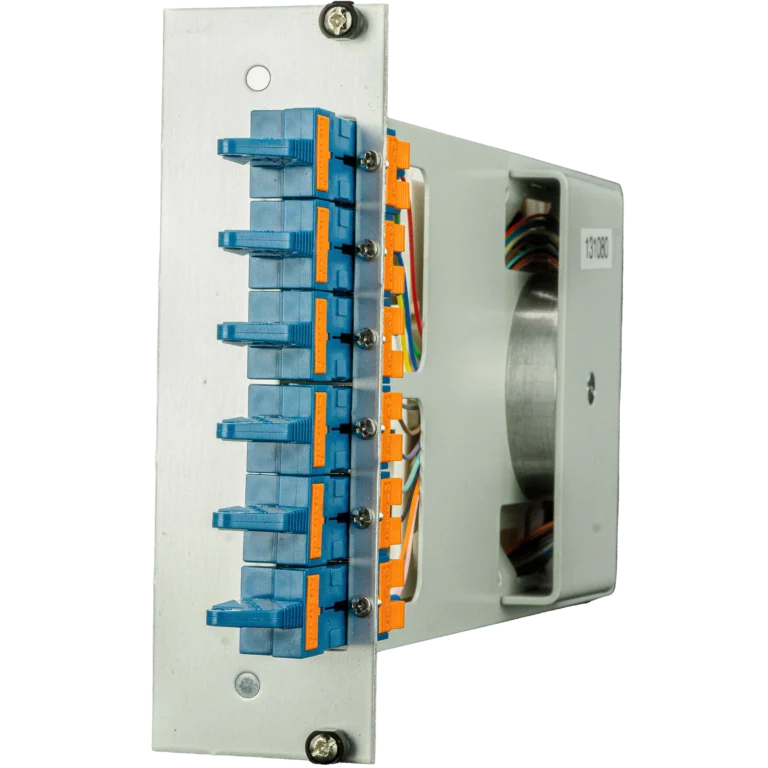
Distribution layers require flexibility for different application scenarios. The VarioConnect modular system offers optimum adaptability here. The 3U and 4U subracks can combine different module types and enable customized distribution concepts.
Access layers benefit from service-friendly solutions. BasicConnect front modules and EasyConnect splice modules enable tool-free maintenance and quick reconfigurations directly at the workstation.
Standardized interfaces and compatibility
Fiber optic system integration requires consistent compatibility between all components. All our product lines use standardized 19″ rack mounting and uniform fibre routing concepts.
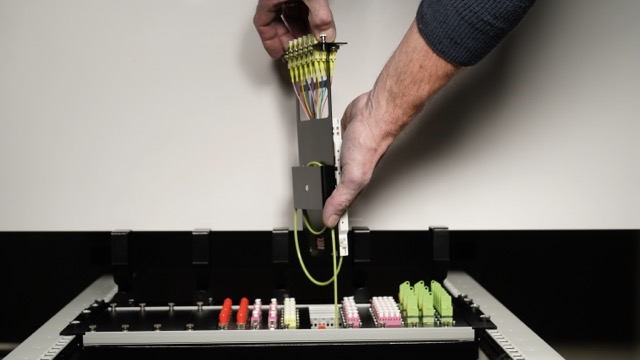
The 7TE architecture forms the common foundation for modular systems. VarioConnect, BasicConnect and EasyConnect use this standard width and enable flexible combinations without mechanical adjustments.
The RailConnect top-hat rail boxes also follow the 7TE standard and can be migrated to 19″ systems if required. This upgrade capability protects investments and enables organic growth.
Scalability and future-proofing
Professional fiber optic system integration plans for future requirements. Systems must be able to be expanded without affecting existing installations.
Modular architectures enable step-by-step expansion. A project can start with RailConnect boxes, grow via VarioConnect 1U modules and finally use SlimConnect systems for maximum density.
The Fiber routing modular systems ensures consistent compatibility. Migration projects become simple module replacements without the need for complete rewiring.
Product line integration in practice
Different application scenarios require specific combinations of the available product lines. Fiber optic system integration means the Fiber optic component selection to the respective application.
Data centers and IT infrastructures
Data centers place the highest demands on fiber optic system integration. Different areas require different solutions that need to work together seamlessly.
Core switching uses SlimConnect systems for maximum fiber density. Hundreds of server racks need to be efficiently connected to central switches without wasting valuable rack space.
Top-of-rack switches benefit from VarioConnect modules that can be flexibly adapted to different server configurations. Hot-swap capabilities enable maintenance without downtime.
Patch areas use EasyConnect modules for frequent reconfigurations. Tool-free operation reduces service times and minimizes sources of error during time-critical changes.
Management networks can be implemented cost-effectively via RailConnect boxes. These separate infrastructures require less bandwidth but are highly reliable.
Campus networks and educational institutions
Educational facilities require fiber optic system integration across extensive campus areas with different building types and usage scenarios.
Central data centers use SlimConnect for backbone connections between main buildings. The high fiber density enables redundant cabling for fail-safe campus networks.
Faculty buildings receive VarioConnect systems for flexible floor distribution. Different departments have different IT requirements, which are optimally met by modular configuration.
Student residences benefit from BasicConnect solutions for standardized room connections. Standardized front panels simplify installation and maintenance with hundreds of identical connections.
Outdoor buildings and temporary facilities use RailConnect for cost-effective connections. Mobile research containers or construction site offices can be connected quickly and flexibly.
Industrial automation
Industrial companies need robust fiber optic system integration that can cope with harsh production environments and at the same time support modern Industry 4.0 concepts.
Production control systems require VarioConnect systems for central data collection. Thousands of sensors and actuators must communicate reliably with higher-level control systems.
Machine connections use RailConnect boxes in standard control cabinets. Integration into existing electrical installations considerably simplifies retrofit projects.
Quality assurance and measurement technology benefit from EasyConnect modules for fast reconfiguration. Production changeovers often require changes to data acquisition without long downtimes.
Mobile systems and robots can be flexibly connected via BasicConnect systems. Standardized connectors enable quick changeovers when changing products.
Maintenance and service of integrated systems
Fiber optic system integration requires well thought-out maintenance concepts that cover all product lines and enable uniform service processes.
Standardized documentation and asset management
Integrated systems require comprehensive documentation of all components and connections. Each system is clearly identified and recorded in central databases.
Uniform labeling systems make it easier to assign different product lines. SlimConnect, VarioConnect and RailConnect systems use compatible labeling standards.
Asset management software can manage all product lines simultaneously. Maintenance cycles, warranty periods and spare parts requirements are planned and monitored centrally.
Service-friendly design
EasyConnect technology revolutionizes the maintenance of integrated fibre optic system integration. Tool-free connections reduce service times by up to 70% compared to conventional solutions.
Color-coded connectors prevent confusion between different product lines. Intuitive operation also enables service by less specialized personnel.
Hot-swap capabilities on VarioConnect systems allow modules to be replaced during operation. Critical production systems can be maintained without interruption.
Predictive maintenance and monitoring
Modern fiber optic system integration supports preventive maintenance concepts. Continuous monitoring identifies potential problems before they lead to failures.
OTDR-based monitoring systems can monitor all product lines simultaneously. Automated testing reduces manual effort and ensures consistent quality assurance.
Performance data is collected and analyzed centrally. Machine learning algorithms can recognize failure patterns and recommend proactive maintenance.
Cost optimization through intelligent integration
Fiber optic system integration enables significant cost savings through optimal component selection and efficient use of resources.
Right-sizing and needs-based dimensioning
Different application areas require different performance levels. Fiber optic system integration enables precise adaptation to actual requirements.
Highly frequented backbone connections receive SlimConnect systems with maximum capacity. Less critical areas use cost-optimized RailConnect solutions.
Flexible VarioConnect modules can be upgraded as requirements increase. Over-provisioning is avoided, while growth potential is retained.
Lifecycle cost optimization
The 5-year warranty on all product lines reduces long-term operating costs. Predictable maintenance costs facilitate budget planning and avoid unexpected expenses.
Modular systems enable selective modernization. Individual components can be renewed without having to replace entire systems.
Standardized spare parts reduce warehousing costs. A standardized spare parts portfolio covers all product lines and minimizes capital costs.
Scaling effects and volume discounts
Fiber optic system integration enables coordinated procurement across all product lines. Larger order quantities lead to better conditions.
Standardized installation procedures reduce installation costs. Technicians only need to learn one system and can install all product lines efficiently.
Standardized training and certifications reduce training costs. Service personnel can support all product lines, which increases resource efficiency.
Future trends and technology integration
Fiber optic system integration must be prepared for future technologies. New standards and applications require flexible, expandable architectures.
5G and edge computing integration
5G networks require edge computing systems at decentralized locations. Fiber optic system integration must connect thousands of small data centers cost-effectively.
RailConnect systems are ideal for 5G base stations and edge servers. Compact installation in mobile radio cabinets without complex 19″ infrastructure.
VarioConnect modules can flexibly network central 5G core systems. Network slicing requires dynamic reconfiguration of the fiber optic connections.
Internet of Things and sensor integration
IoT applications generate massive amounts of data from millions of networked devices. Fiber optic system integration must collect and process this flood of data efficiently.
BasicConnect systems can connect IoT gateways in a standardized way. Standardized connections simplify the installation and maintenance of large sensor networks.
EasyConnect modules enable quick reconfiguration for changing IoT topologies. New sensors can be integrated without special tools.
Artificial intelligence and machine learning
AI systems require enormous data transfer capacities between training clusters and inference systems. Fiber optic system integration must be able to handle multi-gigabit data streams.
SlimConnect systems provide the necessary bandwidth for AI data centers. Parallel computing requires hundreds of simultaneous high-speed connections.
Adaptive networks can be implemented using VarioConnect systems. AI-controlled traffic distribution requires dynamic switching of fiber optic connections.
Project management and implementation
Successful fiber optic system integration requires structured project management and coordinated implementation of all product lines.
Phased introduction
Large integration projects should be implemented step by step. Pilot areas allow experience to be gathered and optimized before full expansion.
Start with critical areas with SlimConnect systems for immediate improvement. Less critical areas can be retrofitted later with cost-optimized solutions.
Lessons learned from early phases are incorporated into later implementations. Iterative improvement optimizes both technical and economic aspects.
Change management and training
Fiber optic system integration changes existing work processes. Employees need to be prepared for new systems and processes.
Standardized training programs for all product lines reduce training costs. Standardized operation facilitates the transition between different areas.
Best practices and troubleshooting guides are continuously updated. Experience from various installations improves the overall quality.
Quality assurance and acceptance tests
Integrated systems require comprehensive testing of all components and interfaces. End-to-end tests validate the performance of the overall architecture.
Automated test systems can test all product lines simultaneously. OTDR measurements and performance tests are standardized and documented.
Acceptance reports record all relevant parameters and create transparency for clients. Compliance with industry standards is verified.
Integration with third-party systems
Fiber optic system integration must also take external systems and suppliers into account. Standardized interfaces facilitate multi-vendor environments.
Vendor-neutral interfaces
All product lines use standardized fibre optic connectors and are compatible with systems from other manufacturers. Vendor lock-in is avoided.
Standard patch cables can be used anywhere. Special adapters or proprietary connections are not required.
Upgrade paths to other manufacturers remain open. Investment protection and freedom of choice are guaranteed in the long term.
Integration into existing infrastructures
Retrofit projects require integration into established IT landscapes. Various product lines can gradually replace legacy systems.
RailConnect systems enable integration into existing electrical distribution boards without structural changes. Minimal conversion work reduces project costs.
VarioConnect modules can replace old patch panels and continue to use existing cabling. Migration becomes modular replacement.
Conclusion: Integrated excellence through a systematic approach
Fiber optic system integration is more than the sum of individual components. The intelligent combination of different product lines results in holistic solutions that optimally meet the specific requirements of modern network architectures.
The uniform 7TE architecture and standardized interfaces enable seamless integration from the smallest RailConnect system to high-performance SlimConnect installations. System integrators benefit from end-to-end compatibility and standardized service concepts.
Future-proof fiber optic system integration creates the technical basis for digital transformation and enables flexible adaptation to changing requirements.
At Fiber Products, we develop modular fiber optic systems for the highest quality requirements. Our modular systems combine proven technology with innovative features.
With a 5-year guarantee and European production to German quality standards, we offer competitive conditions with professional quality for successful fiber optic networks.
Discover our complete product range or visit our online store. Talk to us – together we will develop the optimum solution for your project. Contact us for an individual consultation or find out about other specialist topics in our fiber optic knowledge blog.
Request a Consultation
Our experts will advise you on modular fiber optic solutions for your specific application — fast, personal and non-binding.