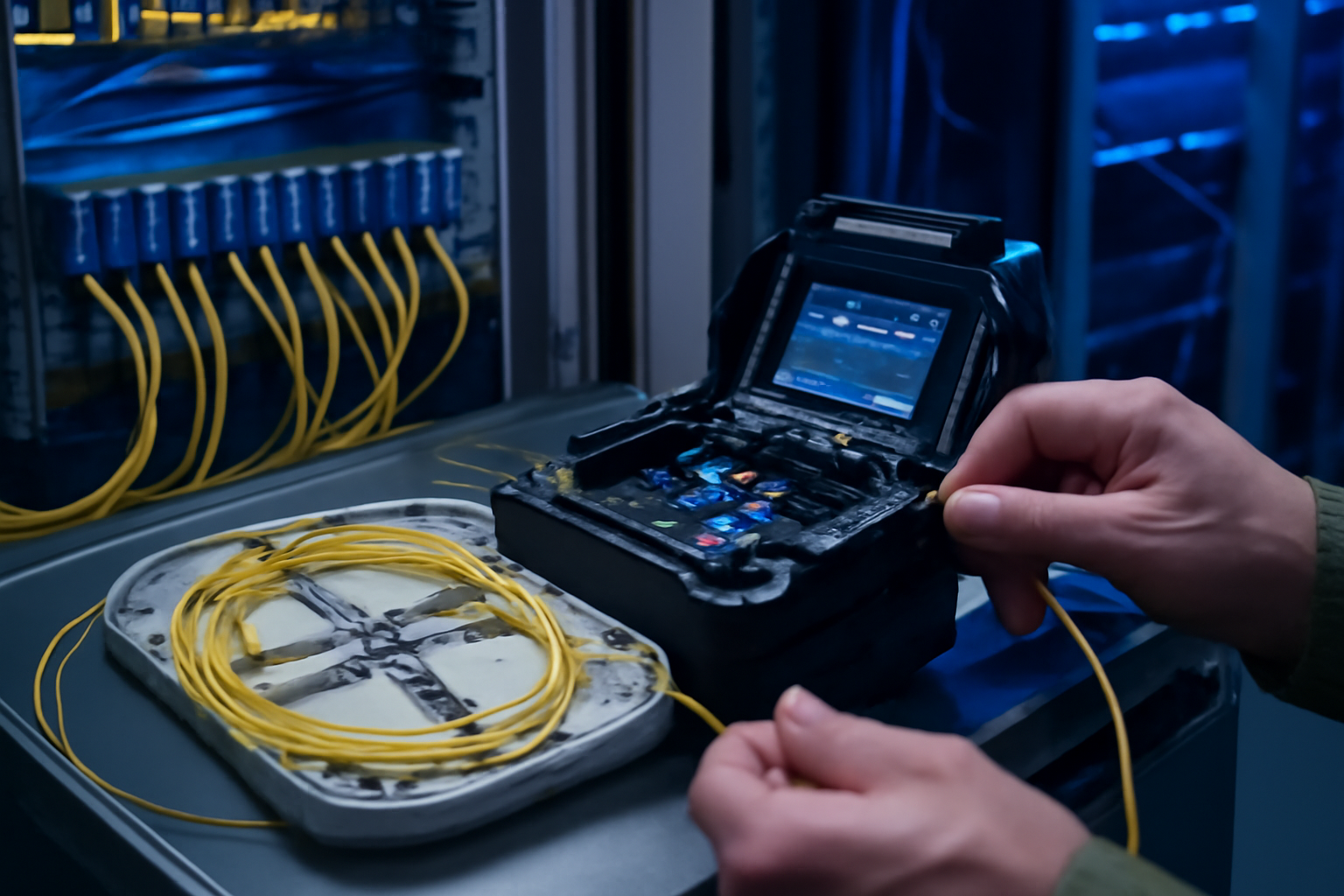
Military Communication Networks – Splice Techniques Under Extreme Conditions
Military Communication Networks – Splice Techniques Under Extreme Conditions
Military fibre optic networks, military-grade splice techniques and optical fibre defence systems require specialised technical solutions capable of withstanding extreme mechanical loads, temperature fluctuations from -40°C to +85°C, and electromagnetic interference. The German Armed Forces are modernising their 12,000 km optical fibre network with a capacity of 280 terabits/s, deploying robust splice modules with high fibre density and military certifications.
In the defence sector, technical requirements differ fundamentally from civilian applications. Whilst standard splice boxes operate in climate-controlled data centres, military systems must perform reliably in mobile command posts, armoured vehicles and temporary field installations.
Technical Challenges of Military Fibre Optic Networks
The unique operational conditions of military communication networks place the highest demands on splice technology. Vibrations from vehicle movement reach acceleration values up to 10g per MIL-STD-810. Temperature shocks during transport from climate-controlled environments to arctic or desert conditions place extreme stress on materials.
- Mechanical loads from impact and vibration in accordance with MIL-STD-810G
- Electromagnetic compatibility per MIL-STD-461
- Protection ratings up to IP65 against dust and water spray
- Temperature resilience from -40°C to +85°C
- Chemical resistance to fuels and de-icing agents
Splice connections themselves must guarantee attenuation values below 0.1 dB even after thousands of load cycles. Modern military fibre optic networks therefore employ specialised splice protection systems with additional mechanical stabilisation.
Modular Splice Systems for Mobile Operations
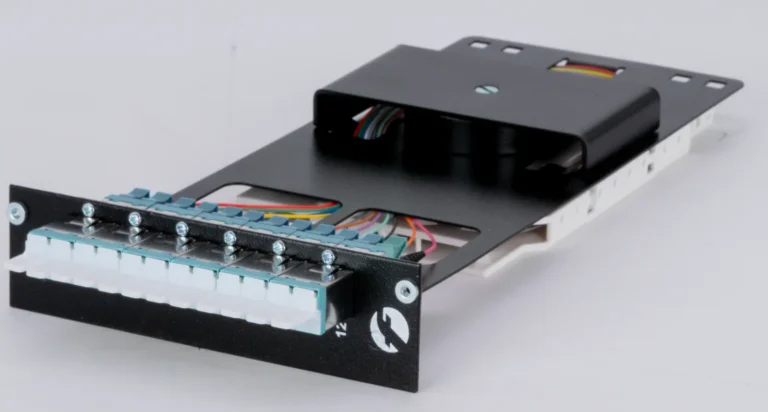
Unlike fixed civilian installations, military fibre optic systems must be deployed and dismantled within minutes. Modular splice cassettes with quick-disconnect couplings enable tool-free replacement of damaged components in the field.
| System Type | Setup Time | Fibre Density | Weight |
|---|---|---|---|
| Standard Splice Box | 45–60 min | 48 fibres/RU | 8–12 kg |
| Modular System | 15–20 min | 96 fibres/RU | 4–6 kg |
| Field Splice Kit | 5–10 min | 24 fibres | 2–3 kg |
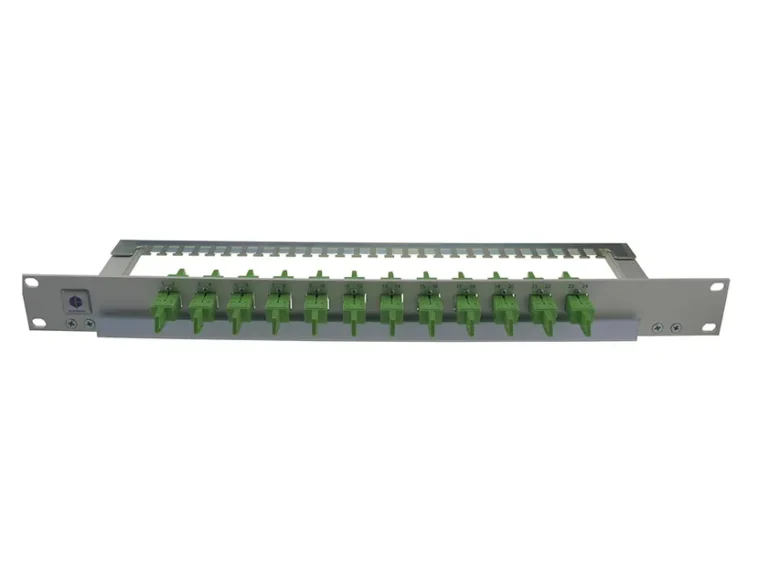
Fibre density plays a critical role in mobile units. Modern systems achieve up to 96 fibres per rack unit, doubling transport capacity whilst reducing weight.
Specialised Connector Types for Military Applications
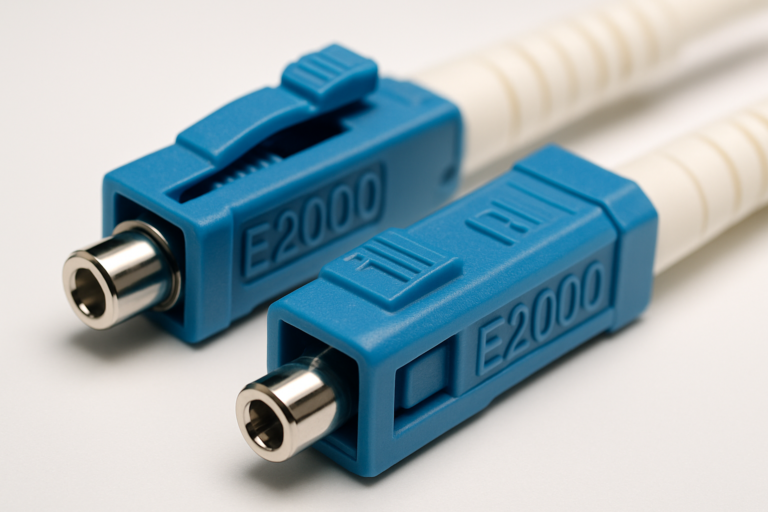
Whilst civilian networks predominantly use LC and SC connectors, military splice technology employs particularly robust connection systems. The E2000 connector with integrated protective shutter prevents contamination in dusty environments.
- E2000 Connector: Automatic protective cap, vibration-resistant to 20g
- Enhanced Ferrules: Military variants with reinforced ceramic
- Tactical Couplers: Bayonet coupling for rapid assembly
- Hermetic Feedthroughs: Gas-tight connections for armoured vehicles
Fiber Products Quality Promise: As an official Diamond partner and manufacturer, we produce modular splice systems in Europe. Benefit from Swiss precision and in-house manufacturing.
Redundancy and Fault Tolerance in Optical Fibre Defence
Military communication networks require multiple redundancy at all levels. The German Armed Forces fibre network uses ring topologies with automatic failover upon cable break in less than 50 milliseconds.
Splice modules themselves are engineered with redundancy. Critical connections route through two physically separate splice cassettes housed in different enclosures. This spatial separation protects against localised damage from gunfire or explosions.
Standards Compliance and Certifications
Procurement of military fibre optic networks is subject to stringent regulatory requirements. All components must undergo comprehensive testing procedures and provide documented evidence of durability.
| Standard | Test Area | Requirement |
|---|---|---|
| MIL-STD-810G | Environmental Conditions | Temperature, vibration, shock |
| IEC 61754-15 | E2000 Connector | Mechanical Precision |
| STANAG 4370 | Electromagnetics | EMC Immunity |
| VG 95218 | German Armed Forces Standard | Material Requirements |
The Diamond partnership ensures the highest manufacturing standards in accordance with Swiss quality norms. All splice modules undergo 100% final inspection with documented attenuation measurement.
Maintenance and Support Under Field Conditions
Unlike civilian installations, maintenance of military fibre optic systems often occurs under challenging conditions. Mobile workshop vehicles carry complete splicing equipment, enabling repairs to be performed directly in the operational area.
- Portable fusion splice machines with battery life exceeding 200 splices
- Robust connector cleaning kits for field use
- Mobile test equipment with military-grade ruggedisation
- Pre-configured repair cassettes for emergency repairs
- Heat-shrink tubing with enhanced mechanical strength
The modular design enables complete splice cassette replacement without complex re-splicing. Failed modules are swapped in the field and later repaired in the workshop.
Integration into Armoured Vehicles and Mobile Command Posts
Military splice technology must integrate seamlessly across diverse platforms. Modern combat vehicles feature integrated fibre optic networks with data rates up to 100 Gbit/s for sensor data and tactical communications.
Confined vehicle interiors demand extremely compact splice solutions. Flat splice cassettes with a profile under 15 millimetres enable integration into double bottoms and side walls. Specialised damping elements reduce vibration transmission to sensitive optical fibres.
Future Trends in Military Fibre Optic Networks
The ongoing digitalisation of armed forces is driving demand for high-performance fibre optic infrastructure. Future developments include photonic sensor networks for perimeter security and structural monitoring of critical infrastructure.
- Integration of AI-driven network monitoring for early fault detection
- Hybrid copper-fibre modules for power and data
- Quantum cryptography over dedicated dark fibre
- Increased fibre density to up to 144 fibres per rack unit
- Self-healing networks with automatic path optimisation
Fiber Products’ government solutions address these future requirements today through modular, scalable systems with 5 years’ warranty.
Procurement and Tendering for Military Fibre Optic Systems
Military fibre optic network procurement follows specialised tender procedures. Beyond technical specifications, factors such as supply security and domestic production play critical roles.
As a European manufacturer with production in Europe, Fiber Products meets the stringent requirements for defence projects. The modular splice systems SlimConnect and VarioConnect were specifically developed for the demanding requirements of military applications.
Practical Implementation: Field Deployment of Tactical Fibre Cables
Tactical fibre cable deployment differs fundamentally from permanent installations. Mobile units utilise pre-terminated cable spools with robust connectors every 500 metres.
| Cable Type | Outer Diameter | Tensile Strength | Bend Radius |
|---|---|---|---|
| Standard Field Cable | 8–12 mm | 2000 N | 15 × D |
| Armoured Cable | 14–18 mm | 4000 N | 20 × D |
| Lightweight Cable | 6–8 mm | 1000 N | 10 × D |
Splicing work occurs in mobile workshop tents or directly within vehicles. Modern splice machines with automatic fibre alignment reduce splice time to under 6 seconds per fibre.
FAQ: Military Fibre Optic Networks and Splice Technology
What special requirements does the German Armed Forces place on optical fibre defence systems?
The German Armed Forces mandate systems compliant with VG standards with proven resilience to vibration, temperature extremes and electromagnetic interference. All components must guarantee a service life of at least 20 years with minimal maintenance.
How does military splice technology differ from civilian practice?
Military splice technology employs reinforced splice protection elements, greater reserve lengths and redundant guide systems. Attenuation values must remain below 0.15 dB even after 5,000 thermal cycles.
What fibre density is optimal for mobile command posts?
Mobile units benefit from high-density systems with 96 fibres per rack unit. This reduces weight and space requirements whilst increasing transmission capacity.
Are E2000 connectors suitable for military applications?
E2000 connectors with automatic protective caps are excellent for military environments. Diamond-grade quality guarantees attenuation values below 0.25 dB even under extreme conditions.
How are field repairs conducted when cables are damaged?
Mobile repair teams carry pre-configured splice cassettes and portable splice machines. A standard repair involving 12 fibres, including preparation, is completed quickly.
What warranty terms are typical for military projects?
Military projects require extended warranties of at least 5 years. Fiber Products uniquely offers standard 5 years’ warranty across all modular splice systems.
Requirements for military fibre optic networks will continue to intensify due to ongoing digitalisation and networked weapon systems. Modular splice systems with high fibre density and robust construction form the backbone of modern defence communications. As a specialist in demanding fibre optic solutions, Fiber Products supports government and defence projects with customised systems manufactured in Europe.
Request a Quote
Do you have questions about our fibre optic solutions? Our expert team is happy to advise you – free and without obligation.