Fibre Rollout Hannover 2026: enercity and Municipal Utilities FTTH
The fibre rollout Hannover reaches new dimensions in 2026: enercity Fibre and other providers already serve over 4,800 households in Hannover-Mittelfeld with FTTH Hannover connections, while technical infrastructure is optimised through modular splice solutions delivering up to 96 fibres in 1 rack unit. Lower Saxony’s deployment rate stands at 67.2 percent, with municipal utilities FTTH deployment like enercity partnering with regional operators such as htp to systematically accelerate network densification. To realise this technically, network operators increasingly rely on scalable splice modules and splice boxes that enable flexible adaptation to growing bandwidth demands.
Current Market Situation: enercity and 1&1 Intensify FTTH Expansion in Hannover
The momentum in fibre rollout Hannover is particularly evident in competition between established municipal utilities and new market entrants. enercity Fibre offers plans from €14.95 monthly with speeds up to 1,000 Mbit/s, whilst existing customers receive a permanent discount of €5.
- Full coverage of connection fees of €3,000 during the deployment phase
- Partnership with htp for technical implementation and network operations
- Phased deployment across Norddrebber, Hope, Hodenhagen, Sehnde and Höver
- €50 online bonus for digital ordering
In parallel, 1&1 positions itself as an alternative provider with its own infrastructure. The company covers connection costs of €800 and launches entry-level plans from €9.99 monthly. This competitive dynamic significantly accelerates FTTH Hannover expansion and delivers better terms for end users.
Technical Infrastructure: Modular Splice Systems as the Backbone of Fibre Networks
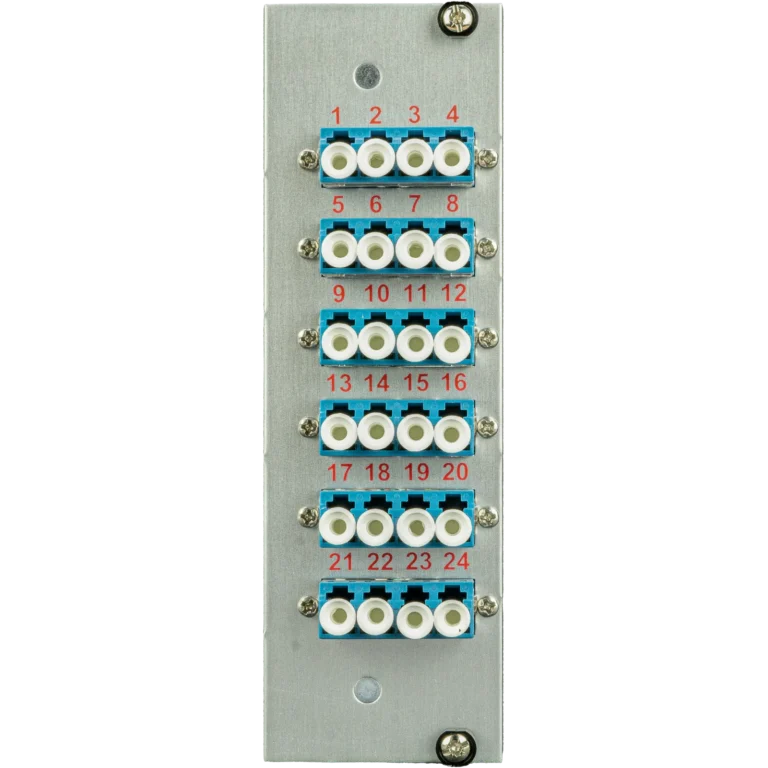
The technical implementation of fibre rollout Hannover is built on state-of-the-art splice systems that enable efficient fibre distribution at network distribution points. Modern 1 rack unit splice boxes accommodate up to 96 fibres in a single rack unit – double the packing density of conventional systems.
| System Type | Rack Units | Fibre Capacity | Modular Design |
|---|---|---|---|
| SlimConnect | 1RU | up to 96 fibres | Yes, 7-slot modules |
| VarioConnect | 3RU | up to 288 fibres | Yes, hot-swap |
| Standard Box | 1RU | 48 fibres | No, fixed |
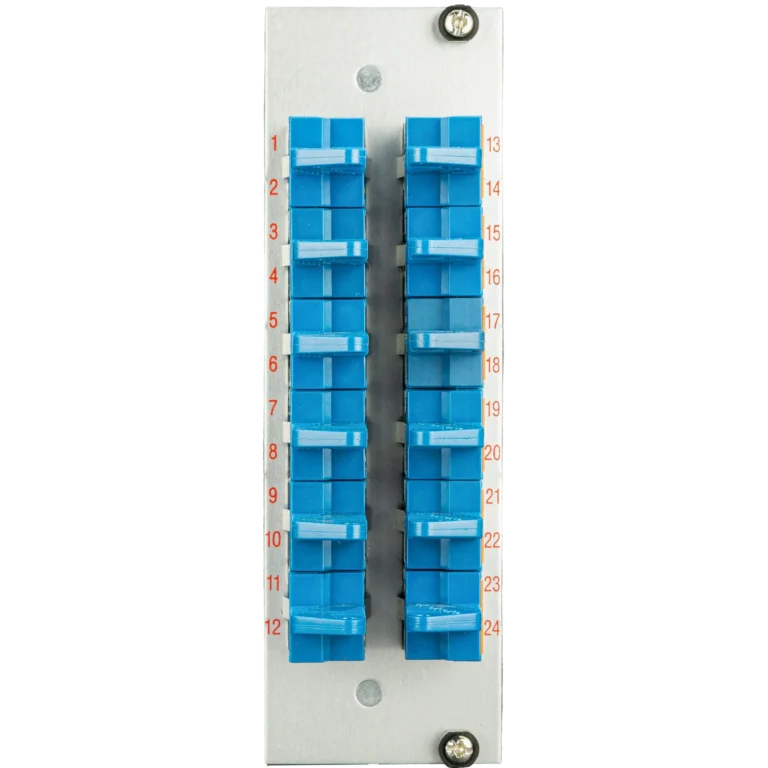
The modular design allows network operators like enercity Fibre to expand their infrastructure incrementally. Each module can be independently equipped with different connector types (LC, SC, E2000), ensuring maximum flexibility in network planning.
Regulatory Framework: Gigabit Infrastructure Directive Accelerates Deployment
Since November 2025, the European Gigabit Infrastructure Directive (GID) has been in force, mandating from February 2026 that all new buildings install fibre-ready infrastructure. This regulation supports fibre rollout Hannover with clear technical specifications:
- Requirement for fibre optic cabling in all new buildings and extensive renovations
- Standardised interfaces per IEC 61754-15 for E2000 connectors
- Minimum requirement of 2 fibres per housing unit
- Preparation for future bandwidth expansions
Fiber Products Quality Promise: As official Diamond Partner and manufacturer, we produce modular splice systems in Europe. Benefit from Swiss precision and in-house manufacturing.
Splice Technology for Municipal Utilities: Requirements for Modern FTTH Networks
Municipal utilities like enercity face the challenge of efficiently utilising existing infrastructure for FTTH Hannover. The choice of splice technology determines ease of maintenance and future-proofing of the network. Modern splice modules employing fusion splicing achieve attenuation values of < 0.1 dB per splice.
A practical example: for a typical FTTH deployment area serving 500 households, a municipal utility requires at least 12 splice boxes at distribution points. With modular systems, provisioning can proceed incrementally – starting with 24-fibre modules in the first phase, expandable to 96 fibres as demand grows.
| Deployment Phase | Households | Fibres Required | Recommended System |
|---|---|---|---|
| Phase 1 | 100–200 | 24–48 | SlimConnect 1RU |
| Phase 2 | 200–500 | 48–96 | SlimConnect 1RU expanded |
| Phase 3 | 500+ | 96–288 | VarioConnect 3RU |
Practical Implementation: From Planning to Installation
The fibre rollout Hannover follows a structured process in which correct splice technology is critical for project timelines and costs. enercity Fibre relies on proven procedures:
- Pre-terminated splice cassettes with 12 or 24 fibres
- Use of colour-coded pigtails per DIN VDE 0888-100
- Installation of 19-inch distribution frames in technical rooms
- Documentation via digital fibre atlas for future maintenance
- Acceptance testing with OTDR measurements (< 0.25 dB total attenuation)
The modular design reduces installation times compared to conventional splice boxes. A technician can install and document a pre-terminated 24-fibre module in a short time.
Quality Assurance: Standards and Norms for FTTH Networks
Sustainable FTTH Hannover expansion requires stringent quality standards. The German Federal Network Agency mandates compliance with DIN 18220 for alternative installation methods and IEC 61300-3-35 for optical connectors.
Municipal utilities benefit from standardised systems that meet these norms. Key requirements include:
- Return loss > 55 dB for APC connectors
- Insertion loss < 0.3 dB for LC/SC connections
- Climate resilience per IEC 61753-1 Category C
- Mechanical durability with 500 mating cycles without degradation
Economic Aspects: Investment Security Through Modular Systems
The economic viability of fibre rollout Hannover depends significantly on the chosen infrastructure. Modular splice boxes offer decisive advantages over monolithic systems:
A cost analysis demonstrates this: for a deployment area serving 1,000 households with a projected take-rate of 30 percent in year one, modular systems can reduce initial investment substantially. Phased expansion occurs on demand, minimising capital lock-up.
| Cost Factor | Conventional System | Modular System | Savings |
|---|---|---|---|
| Initial investment | €100,000 | €55,000 | 45% |
| Year 2 expansion | €80,000 | €25,000 | 69% |
| Annual maintenance | €5,000 | €2,000 | 60% |
Future Outlook: FTTH Rollout Through 2030
The fibre rollout Hannover is part of the national strategy to deliver universal fibre connectivity by 2030. With a current nationwide FTTH share of 52.8 percent, Germany ranks mid-table in Europe, whilst Lower Saxony at 67.2 percent is well above average.
- Planned investment of €1.2 billion from Gigabit Subsidy 2.0
- Copper-to-fibre migration with 80 percent FTTH threshold for network shutdown
- Simplified approval procedures via paramount public interest clause
- Mandatory open-access models for subsidised networks
For enercity Fibre and other municipal utilities, this means ongoing investment in scalable infrastructure. Selecting high-quality, modular splice systems with 5 years’ warranty ensures long-term network profitability.
FAQ: Technical Questions on Fibre Rollout in Hannover
Which splice technology is suitable for FTTH deployment in Hannover?
For FTTH Hannover expansion, modular splice systems with fusion splicing are recommended. These achieve attenuation values below 0.1 dB and offer maximum flexibility for network expansion through their modular architecture.
How many fibres does a typical apartment block require?
An apartment building with 12 units requires at minimum 24 fibres (2 per unit) plus spares. Modular splice boxes with 48 fibres on 1 rack unit provide adequate capacity for future expansion.
Which connector types does enercity use for FTTH connections?
enercity Fibre primarily uses LC connectors for end-user connections and SC-APC for backbone links. Attenuation values are < 0.3 dB for LC and < 0.25 dB for SC connections.
How long does installing a splice box take?
Installing a pre-terminated modular splice box with 24 fibres takes only a short time including documentation. Conventional systems require considerably longer.
Which standards apply to FTTH installations in Germany?
Key standards include DIN 18220 for installation methods, IEC 61754-15 for E2000 connectors, and DIN VDE 0888-100 for colour coding. The Gigabit Infrastructure Directive also prescribes minimum standards for new buildings.
How is the quality of fibre splices verified?
Quality verification uses OTDR measurement (Optical Time Domain Reflectometry). Acceptable values are < 0.1 dB for splice attenuation and < 0.25 dB total attenuation per connection.
Conclusion: Modular Splice Technology as Success Factor for FTTH Hannover
The fibre rollout Hannover exemplifies how modern splice technology accelerates FTTH deployment and optimises economics. enercity Fibre and other network operators benefit from modular systems enabling demand-driven scaling whilst providing investment certainty. With deployment rates exceeding 67 percent in Lower Saxony and continuous investment in network infrastructure, FTTH Hannover is on track for comprehensive fibre coverage by 2030.
Interested in Modular Fibre Solutions?
Fiber Products GmbH – official DIAMOND SA Partner. Made in EU, 5 years’ warranty.