Medical IT infrastructures: Redundant fiber optic distribution for patient safety
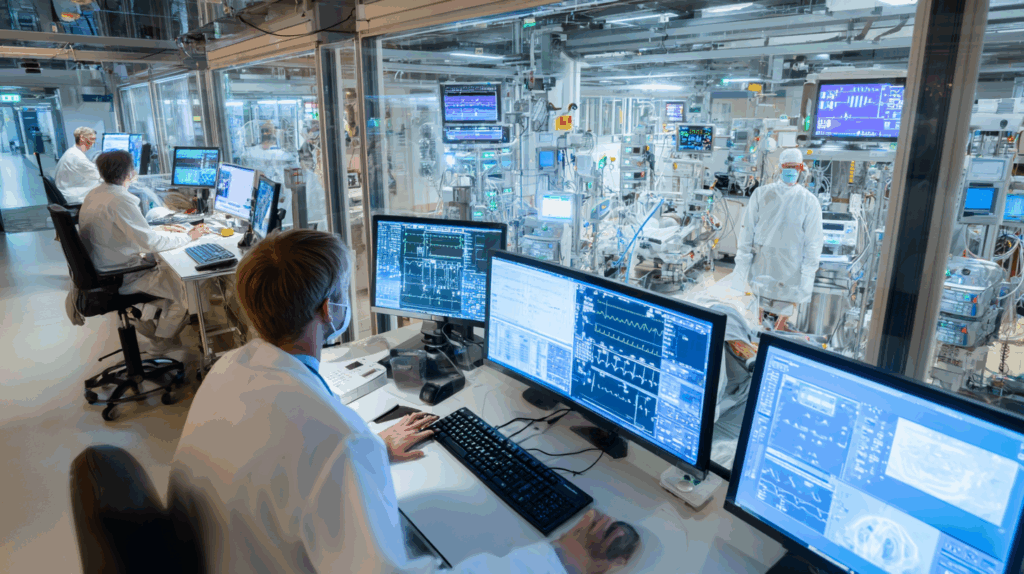
Medical IT infrastructures have evolved from supporting systems to life-saving technologies. In modern hospitals, patient safety depends directly on the availability and reliability of the network infrastructure. Redundant fiber optic distribution forms the backbone for fail-safe medical systems that ensure patient care even in the event of critical infrastructure problems. Modular splicing systems enable scalable redundancy concepts that optimally support the various criticality levels of medical applications.
The increasing digitalization of medicine makes highly available medical IT infrastructures a basic requirement for modern patient care. Life-sustaining systems, real-time monitoring and time-critical treatment decisions cannot afford network outages. At the same time, data volumes are increasing exponentially, which requires high-performance and fail-safe fiber optic networks.
Criticality levels in medical environments
Medical IT infrastructures must support different levels of criticality, which differ fundamentally in their availability requirements. This categorization determines the required redundancy level of the fibre optic infrastructure.
Life-support systems (criticality 1)
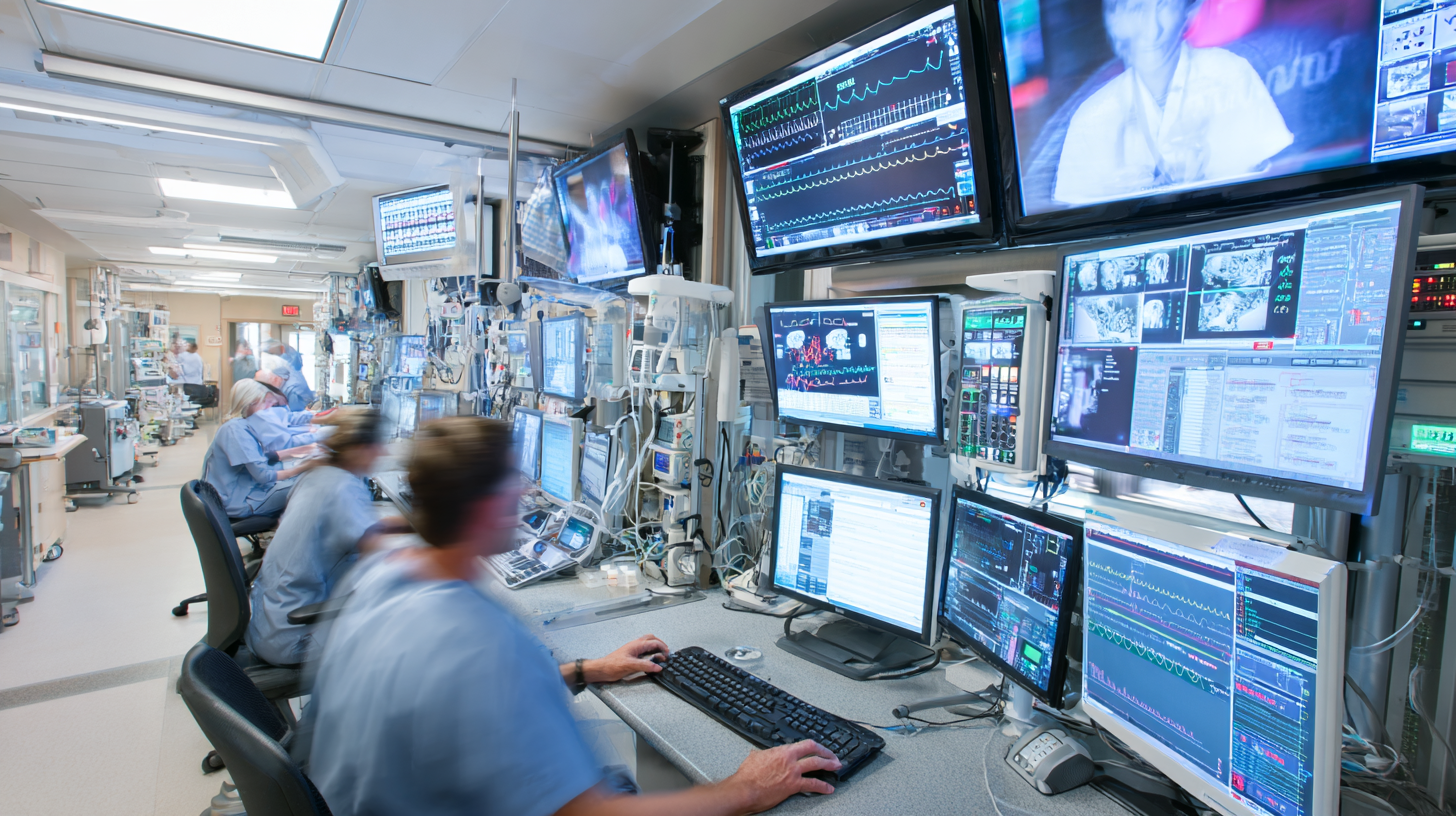
Intensive care units, operating theaters and emergency rooms are home to life-sustaining systems that require absolute availability. Ventilators, heart-lung machines and patient monitors must not experience any connection interruptions, not even for fractions of a second.
The VarioConnect modular system enables fully redundant cabling with automatic failover. Primary and backup paths use separate cable routes and different distribution points to eliminate single points of failure.
Ring topologies are typically implemented for these most critical areas, which maintain communication even in the event of multiple failures. The VarioConnect 3U and 4U system can implement such complex redundancy architectures and intercept various failure scenarios.
Diagnostic systems (criticality 2)
Although imaging procedures, laboratory systems and electronic patient records are not directly life-saving, they are critical for diagnosis and treatment planning. Failures can cause delays in treatment and indirectly jeopardize patient safety.
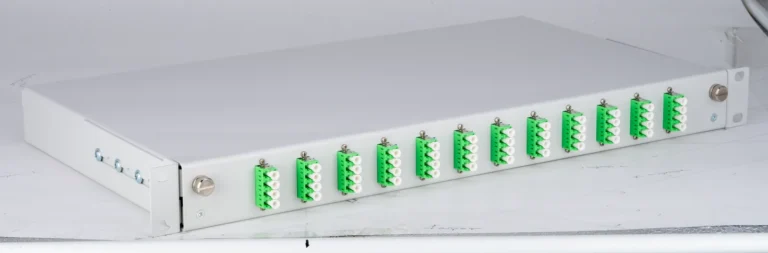
These systems require at least N+1 redundancy, with a backup path for each primary path. With up to 96 fibers per height unit, the SlimConnect 1U system offers sufficient capacity for such redundant architectures.
The permanently mounted design of the SlimConnect system ensures maximum operational safety. Unintentional connection changes, which could have catastrophic consequences in critical medical environments, are thus prevented.
Management systems (criticality 3)
Hospital information systems, billing software and administrative applications have lower availability requirements. Nevertheless, longer outages can have a significant impact on hospital operations and cause economic damage.
Simple redundancy or even single-path connections with fast repair capability are often sufficient for these systems. RailConnect top-hat rail boxes can connect administrative areas cost-effectively and can be expanded as required.
Redundancy architectures for medical IT infrastructures
Planning redundant fiber optic distribution requires systematic analysis of failure risks and appropriate protective measures. Different levels of redundancy offer different degrees of protection against different threat scenarios.
Device-level redundancy
Individual medical devices can have multiple fiber optic connections that use different network paths. Modern patient monitors and ventilators often support load balancing via multiple network interfaces.
BasicConnect front modules allow flexible connection configurations for such multi-path connections. Different connector types can be combined in the same front panel to provide primary and backup connections.
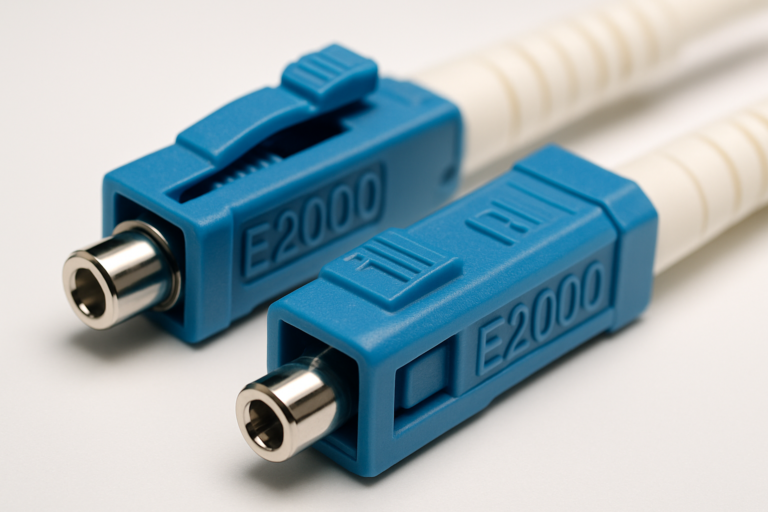
The modular design allows for customer-specific configurations. Depending on the device requirements, LC duplex, E2000 or even MPO connections can be integrated to ensure optimum connectivity.
Floor and area redundancy
Entire hospital floors or medical areas require redundant connections to the central IT infrastructure. Both primary and backup connections must offer sufficient capacity for all connected systems.
The VarioConnect system can combine different levels of redundancy in the same installation. Critical areas receive full redundancy, while less critical areas get by with simpler backup solutions.
Separate cable routes are essential. Primary and backup connections should use different stairwells, plant rooms and building sections in order to avoid correlated failures.
Campus-wide redundancy
Large hospitals and university clinics often comprise several buildings that are connected via campus-wide fiber optic networks. These inter-building connections are particularly failure-critical as they network entire building complexes.
Ring topologies at campus level make it possible to maintain communication even in the event of complete building failures. The VarioConnect 3U and 4U system can implement such large-scale architectures and supply different buildings with different levels of redundancy.
Implementation with Fiber Products systems
The specific requirements of medical redundancy demand well thought-out system configuration and optimum component selection. Each Fiber Products system offers specific advantages for different redundancy scenarios.
SlimConnect for critical central distribution
Central technical rooms in hospitals have to manage hundreds of redundant connections. The SlimConnect 1U system with up to 96 fibers per height unit enables compact installation of even complex redundancy architectures.
For a typical 8-room OR area, approximately 200-300 fibers are required when full redundancy is implemented. Three SlimConnect 1U units can meet these requirements in just 3 height units, providing both primary and backup connections.
The permanently mounted design prevents unintentional modifications that could have catastrophic consequences in critical medical environments. All connections are permanent and can only be modified with the appropriate tools.
VarioConnect for flexible redundancy levels
Different hospital areas require different levels of redundancy. The VarioConnect modular system enables customized configurations for each area.
Intensive care units receive VarioConnect 3U systems with complete ring redundancy and geographically separated backup paths. Normal wards use VarioConnect 1U modules with simple N+1 redundancy. Administration areas manage with standard Gigabit connections and local backup solutions.
The modular architecture enables step-by-step upgrades. Areas can be given higher levels of redundancy if requirements change without having to re-plan the entire infrastructure.
BasicConnect for device-based redundancy
Modern medical devices often support multiple network interfaces for load balancing and redundancy. BasicConnect front modules can optimally support such multi-path connections.
A typical patient monitor in the intensive care unit receives two separate fiber optic connections via different network paths. BasicConnect modules can combine different connector types in the same front panel for flexible device connectivity.
The tool-free configuration of the BasicConnect modules facilitates maintenance and reconfiguration. In critical medical environments, where time often means life, technicians can react quickly and make connections without special tools.
EasyConnect for service-friendly maintenance
Maintenance work in hospitals must be carried out particularly quickly and reliably. The EasyConnect splice modules enable tool-free maintenance and significantly reduce repair times.
With redundant systems, one path can often be switched off for maintenance while operations are maintained via backup connections. EasyConnect modules enable fast reconfiguration, minimizing the time systems are only connected to one path.
The click-and-play functionality also reduces sources of error. In stressful emergency situations, even less experienced technicians can reliably establish or repair connections.
Monitoring and error detection
Redundant medical IT infrastructures require continuous monitoring to detect failures before they affect patient care. Proactive monitoring can prevent many problems.
Optical monitoring systems
OTDR-based monitoring systems can continuously monitor fiber optic connections and detect attenuation changes or breaks in real time. Such systems are particularly important for critical medical applications.
The integration of monitoring fibers into the main cabling enables continuous monitoring without interfering with data traffic. The VarioConnect system can seamlessly integrate such monitoring infrastructures.
Automatic alerting in the event of problems enables proactive maintenance. IT staff can respond before backup systems need to be activated or patient care is compromised.
Performance monitoring and quality of service
Not only failures, but also performance degradation can affect critical medical applications. Continuous monitoring of latency, jitter and bandwidth is therefore essential.
Real-time monitoring can detect creeping deterioration that could lead to problems. Timely maintenance then prevents critical failures and ensures optimum performance.
Integration into hospital alarm systems
Network monitoring should be integrated into existing hospital alarm systems. IT problems must be treated in the same way as medical emergencies, as they can have a direct impact on patient care.
Escalation procedures ensure that critical network problems receive the right attention immediately. 24/7 on-call services must be organized and equipped accordingly.
Disaster recovery and business continuity
Medical IT infrastructures must remain functional even in the event of major disasters. Comprehensive disaster recovery plans require appropriate infrastructure preparation.
Geographically separated backup systems
Critical medical data and applications should be mirrored in geographically separate data centers. The fiber optic infrastructure must be able to connect such backup locations.
WAN connections to external data centers continuously transport critical data and enable failover in the event of local problems. These connections must meet the same security and availability standards as internal systems.
Mobile and temporary infrastructures
Temporary medical facilities may be required in the event of major disasters. The fiber optic infrastructure should enable flexible expansion and fast connection of temporary locations.
Modular systems can be configured and installed quickly. Prefabricated configurations for emergency situations can dramatically reduce set-up times.
Backup power and uninterruptible supply
Redundant fiber optic infrastructures are only as good as their power supply. Uninterruptible power supplies (UPS) and backup generators must supply all critical network components.
The modular architecture enables granular power management concepts. Critical modules receive priority power supply, while less critical systems can be switched off in the event of a power shortage.
Maintenance of redundant systems
Redundant medical IT infrastructures require specialized maintenance concepts that ensure availability even during maintenance work.
Planned Maintenance Windows
Planned maintenance work should be carried out in such a way that at least one redundancy path always remains available. Rolling maintenance concepts enable system maintenance without interrupting operations.
The EasyConnect modules enable fast reconfiguration during maintenance windows. Technicians can reroute connections, perform maintenance and return systems to normal operation without affecting critical applications.
Hot-swap capabilities
Modular systems enable hot-swap of components with corresponding redundancy. Defective modules can be replaced while operation is maintained via alternative paths.
The 5-year guarantee on high-quality European production reduces the likelihood of unplanned downtime. Nevertheless, critical spare parts should be kept in stock to enable quick repairs.
Documentation and change management
Changes to redundant systems require particularly careful documentation. Every modification can have an impact on the redundancy level and reliability.
Standardized change management processes ensure that redundancy is maintained even after changes. All modifications must be tested and validated accordingly.
Integration with medical standards
industry-specific standards for medical IT. These standards also influence the design of redundant fiber optic infrastructures.
HL7 and medical data standards
Health Level 7 (HL7) defines standards for the exchange of medical data. The network infrastructure must offer appropriate performance and reliability for HL7 communication.
Real-time data exchange between different medical systems requires low latency and high reliability. Redundant fiber optic connections guarantee these requirements even in the event of infrastructure problems.
DICOM for medical imaging
Digital Imaging and Communications in Medicine (DICOM) is the standard for medical imaging. DICOM systems generate large amounts of data and require corresponding bandwidths.
High-resolution medical images can be several gigabytes in size. Redundant high-speed connections ensure that image transmission is not impaired even if individual paths fail.
IHE Integration Profiles
Integrating the Healthcare Enterprise (IHE) defines integration profiles for various medical applications. These profiles have specific requirements for network performance and reliability.
The infrastructure must be able to support various IHE profiles simultaneously. Redundant architectures ensure that critical integration points remain functional even in the event of partial failures.
Future-proofing redundant medical infrastructures
Medical IT infrastructures must be prepared for future technologies. Redundancy concepts should also take future requirements into account.
Telemedicine and remote treatment
Telemedicine is becoming increasingly important and places new demands on redundancy. Remote consultations and monitoring must not be interrupted.
Redundant internet connections are essential for telemedicine. Different providers should be connected via separate infrastructures to ensure maximum availability.
AI and machine learning
Artificial intelligence in medicine requires extensive data processing and corresponding network capacities. AI-based diagnostics can be time-critical and require highly available infrastructures.
Edge computing concepts can reduce latency and increase reliability. Local AI processing is less dependent on WAN connections and can also function in the event of network problems.
Internet of Medical Things (IoMT)
The networking of medical devices will continue to increase. Hundreds or thousands of IoMT devices per hospital require reliable network connections.
Redundant infrastructures must be prepared for this scaling. The modular architecture enables flexible expansion for growing numbers of networked devices.
Conclusion: Redundancy as the cornerstone of medical IT security
Medical IT infrastructures have long since outgrown the status of supporting technology. Today, they are an integral part of patient care and can make the difference between life and death. Redundant fiber optic distribution is therefore not an option, but an ethical obligation.
Modular splicing systems offer the necessary flexibility for customized redundancy concepts. They enable different availability classes for different criticality levels and can grow in line with the growing requirements of digitalization.
Investing in redundant fiber optic infrastructures pays off not only through improved patient safety, but also through reduced downtime costs and better compliance with regulatory requirements.
At Fiber Products, we develop modular fiber optic systems for the highest quality requirements. Our modular systems combine proven technology with innovative features.
With a 5-year guarantee and European production according to German quality standards, we offer competitive conditions with professional quality for successful fiber optic networks.
Discover our complete product range or visit our online store. Talk to us – together we will develop the optimum solution for your project. Contact us for an individual consultation or find out about other specialist topics in our fiber optic knowledge blog. You can also visit our Shop.