AI fibre optic expansion: T-Cars and 3D scanning revolutionize network planning

AI fiber optic expansion in Germany is on the verge of a revolution: artificial intelligence is transforming complex planning processes into efficient, data-driven workflows. With its T-Cars, Deutsche Telekom has launched the world’s first AI-supported approach to fiber optic expansion planning – and shows how up to 30 percent of civil engineering costs can be saved. This innovation is not only relevant for large corporations: Municipal utilities and regional network operators can use similar technologies to plan their projects more economically and precisely.
With a share of 60-70 percent of the total costs of a fiber optic project, civil engineering is the decisive cost factor in AI fiber optic expansion. Traditional planning methods are often based on rough estimates and lead to costly rework. AI-supported methods, on the other hand, analyze millions of data points in real time and enable precise predictions about ground conditions, optimal routing and required construction methods. The result: fewer surprises on the construction site, shorter construction times and significantly lower costs.
The technology is only at the beginning of its development, but the initial results in AI fiber optic expansion are impressive. Automated surface recognition identifies different soil types and obstacles with an accuracy of over 95 percent. 3D mapping creates centimeter-accurate digital twins of the planned routes. Machine learning optimizes construction methods and machine deployment in real time. This combination makes fiber optic expansion easier to plan, cheaper and faster.
The T-Car revolution: How Telekom is reinventing the planning process
In 2025, Deutsche Telekom introduced a revolutionary concept for AI fiber optic expansion that fundamentally changes fiber optic expansion planning. Specially equipped vehicles – the so-called T-Cars – drive through planned expansion areas and record high-precision 2D and 3D data of the streets and surroundings.
Technical equipment of the T-Cars
The T-Cars are equipped with an impressive range of sensors that bring professional surveying technology to mobile platforms. Eye-safe laser scanners create high-precision 3D point clouds of the surroundings with millions of measuring points per second. This technology, originally from the automotive industry, achieves accuracies in the centimeter range in AI fiber optic expansion.
Several cameras in each direction of the vehicle record high-resolution images of the surfaces. These images are not only used for visual documentation, but are also analyzed by AI algorithms to automatically detect different types of surfaces, obstacles and structural features.
GNSS antennas for GPS and GLONASS ensure the exact geographical allocation of all measurement data. Thanks to differential GPS, the systems achieve positioning accuracies of just a few centimetres – a prerequisite for the subsequent precise construction of the KI fiber optic expansion.
All sensor data is integrated in real time during the measurement run. Specialized software links laser scanner data, camera images and GPS positions to create a consistent 3D model of the entire route.
AI-based surface analysis
The decisive breakthrough in AI fiber optic expansion lies in the automated analysis of the collected data using artificial intelligence. Modern computer vision algorithms can distinguish between different surface types with an accuracy of over 95%.
Asphalt, cobblestones, concrete, gravel or green areas are automatically classified and taken into account accordingly in the planning software. This information is crucial for selecting the optimum construction method: while asphalt can be easily milled, cobblestones require more complex work.
The AI also recognizes obstacles such as trees, streetlights, traffic signs or manhole covers. These objects must be taken into account during route planning and can lead to bypasses or special construction methods. Automatic detection prevents costly re-planning during the construction phase of the KI fiber optic expansion.
The AI’s ability to take less obvious factors into account is particularly valuable. Rain drains, sidewalk edges or driveways are recognized and taken into account in the planning before they become problems on the construction site.
Automated route optimization
Based on the AI-analyzed data, the planning software automatically optimizes the ideal route for the AI fibre optic expansion. Multiple factors are taken into account simultaneously: Construction costs, construction time, disruption to residents and technical feasibility.
Machine learning algorithms have learned from thousands of completed projects which routes are the most efficient in practice. This experience is incorporated into the optimization of new AI fibre optic expansion projects and leads to continuously better planning results.
The software can simulate various construction methods and predict their costs, time required and probability of success. Traditional civil engineering with excavators is weighed up against trenching, cable ploughing or flush drilling – always with the aim of finding the most cost-effective solution.
Even complex geometric problems can be solved thanks to the precise 3D capture. Intersections, bridges or narrow road layouts are precisely mapped and optimized in the digital planning before the first sod is turned.
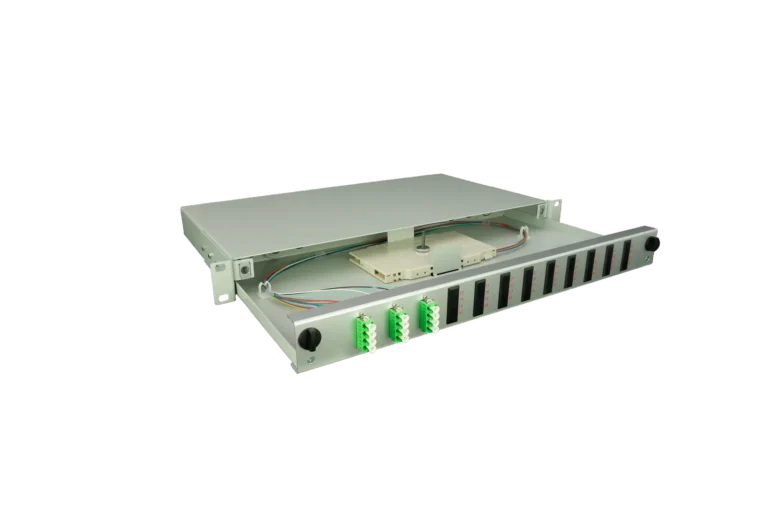
High-quality splice modules and modular systems that meet the exact planning specifications are essential for the technical implementation of such precisely planned projects.
Cost savings through intelligent planning
The AI fiber optic expansion leads to measurable cost savings in various areas. These savings add up to considerable amounts over an entire project and can make the difference between profit and loss.
Reduced planning costs and times
Traditional expansion planning requires time-consuming manual inspections, surveys and planning iterations. A team of engineers and technicians must personally inspect each road, document obstacles and plan construction procedures. This process can take several weeks for larger projects.
T-Car technology drastically reduces this planning time for AI fiber optic expansion. A single measurement drive in moving traffic records all relevant data in just a few hours. The subsequent AI analysis is fully automated and delivers initial planning results within days.
Cost savings result not only from shorter planning times, but also from higher planning quality. AI-optimized routes take more factors into account than manually planned routes and lead to fewer costly changes during the construction phase.
Planning accuracy increases considerably: while traditional planning often includes 10-15 percent safety margins, AI fiber optic expansion projects can get by with 3-5 percent buffers. This precision directly saves construction costs.
Optimized construction methods and use of machinery
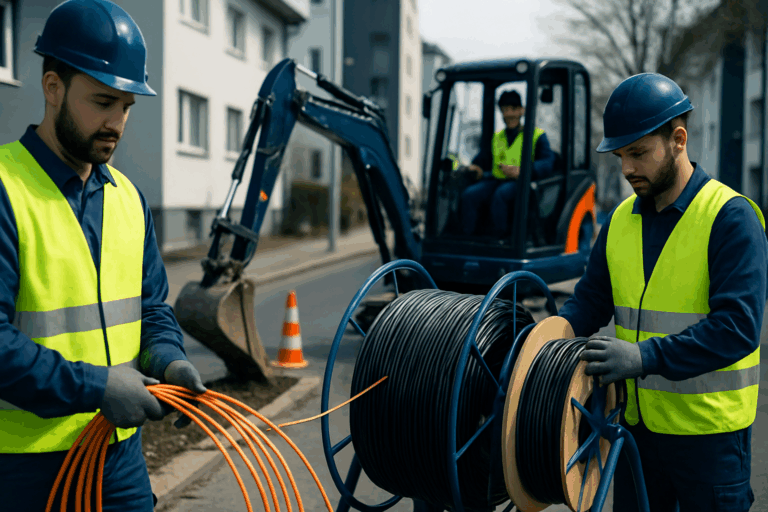
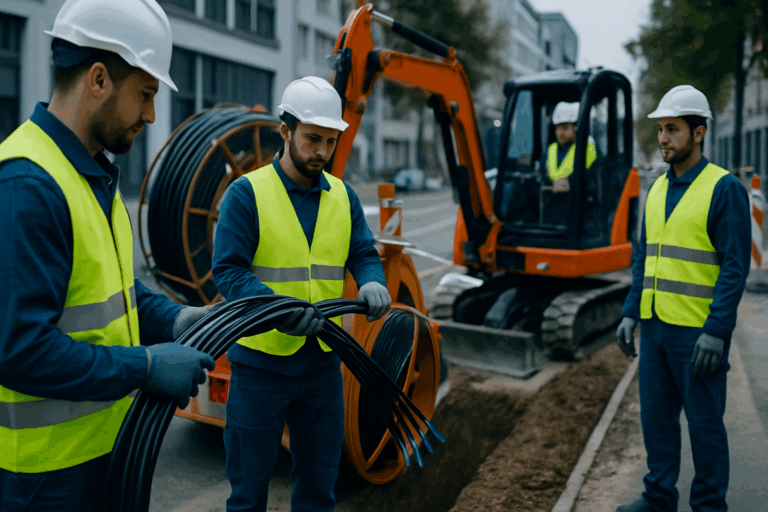
The AI analysis makes it possible to select the optimum construction method for each route section in the AI fiber optic expansion. Instead of working with excavators across the board, more efficient methods can be used in a targeted manner.
Microtrenching is ideal for asphalt roads with low traffic volumes. This method is significantly cheaper than traditional civil engineering and causes minimal disruption. The AI can automatically identify where microtrenching is possible.
Flush drilling methods are ideal for difficult areas such as intersections or listed streets. The AI recognizes such areas and automatically suggests suitable special methods.
Cable plow methods work optimally on green areas or unpaved paths. Automatic surface detection allows these cost-effective methods to be used to the maximum.
Optimized machine selection also reduces transport costs and downtimes. If the right equipment is on site right from the start, there are no expensive reorders or machine changes during KI fiber optic expansion.
Avoidance of rework and surprises
The biggest cost factor in fiber optic projects is unforeseen problems during the construction phase. Forgotten obstacles, incorrect assumptions about ground conditions or unplanned bypasses can significantly increase project costs.
AI fibre optic expansion-based planning minimizes these risks through comprehensive advance analysis. Obstacles are already identified and taken into account in the planning phase. Construction methods are selected based on real conditions, not estimates.
The 3D survey also uncovers hidden problems: Narrow sections, unusual sidewalk widths or complicated intersection geometries are precisely measured and taken into account in the planning.
The ability to predict conflicts with existing infrastructure is particularly valuable. The AI can deduce underground lines from the surface data and suggest appropriate precautionary measures.
Practical application for municipal utilities and regional providers
Telekom’s T-Car technology shows the potential of AI fiber optic expansion, but smaller network operators can also benefit from similar approaches. Various technology providers are developing scalable solutions for different project sizes and budgets.
Available technology solutions
Mobile mapping systems for AI fiber optic expansion are now available in various expansion stages and price ranges. While professional survey vehicles cost several hundred thousand euros, there are also compact solutions for smaller providers.
Drone-based surveying is particularly suitable for smaller areas or areas that are difficult to access. Modern surveying drones with LiDAR sensors cost a fraction of specialized vehicles and can be used flexibly.
Smartphone-based mapping apps use the sensors integrated in modern devices for basic surveying tasks. Although these solutions do not achieve the precision of professional systems, they can be quite sufficient for preliminary planning in AI fiber optic expansion.
Cloud-based AI services also enable smaller providers to benefit from powerful analysis algorithms. Instead of setting up their own AI infrastructure, collected data can be transferred to specialized service providers and analysed there.
System integrators in particular can benefit from standardized AI solutions and integrate them into their project management.
Cooperation models and service providers
Regional network operators do not necessarily have to purchase their own technology for AI fiber optic expansion. Various cooperation models enable access to AI-supported planning without high initial investments.
Surveying service providers are increasingly switching to AI-supported processes. Municipal utilities can commission these services and benefit from professional technology without having to make their own investments.
Inter-municipal associations can jointly invest in technology and use it for several AI fiber optic expansion projects. The costs per project fall considerably if the technology is used to capacity.
Manufacturer cooperations make it possible to use the latest planning technology as a service. Instead of buying technology, only the actual use is charged.
ROI analysis for smaller projects
AI-supported planning can also pay off for smaller AI fiber optic expansion projects. The cost savings from optimized routing and reduced rework often quickly amortize the additional costs for more modern planning methods.
For projects with 500 house connections or more, specialized surveying methods usually pay off in the first project. The savings in civil engineering costs significantly exceed the additional costs for AI fiber optic expansion-supported planning.
Smaller projects benefit in particular from reduced planning times. If the results are available in just a few days instead of weeks of manual planning, projects can be started more quickly and funding can be accessed earlier.
The greater planning security also reduces financial risks. Cost estimates are more precise and unforeseen rework is less frequent – important factors for the profitability of smaller providers in AI fiber optic expansion.
Technical basics: sensor technology and data processing
Understanding the technical basics helps to correctly assess the possibilities and limits of AI fiber optic expansion. The technologies used originate from different areas and are specially adapted for fiber optic applications.
LiDAR technology and 3D point clouds
Light Detection and Ranging (LiDAR) is the core component of modern mobile mapping systems for AI fiber optic expansion. Laser scanners emit fast light pulses and measure the transit time until they are reflected by objects. These measurements are used to create high-precision 3D point clouds of the surroundings.
Modern LiDAR systems capture up to one million points per second with accuracies in the centimeter range. This data density enables extremely detailed 3D models that accurately depict even small obstacles or unevenness.
Different LiDAR technologies are suitable for different AI fiber optic expansion applications: Mechanical scanners offer the highest precision, but are more expensive and require more maintenance. Solid-state LiDAR is cheaper and more robust, but achieves shorter ranges.
Processing LiDAR point clouds requires specialized software and considerable computing capacity. Cloud computing makes this processing accessible to smaller providers who are unable to operate their own high-end hardware.
Computer vision and object recognition
Parallel to LiDAR acquisition, computer vision algorithms analyze the camera images and extract relevant information for AI fiber optic expansion planning. This combination of 3D geometry and visual information provides a complete picture of the local conditions.
Convolutional neural networks (CNNs) have been specially trained to recognize road surfaces and objects. These AI models can automatically classify different types of asphalt, pavement types or surface damage.
Semantic segmentation divides images into different categories with pixel precision: road, sidewalk, vegetation, buildings or infrastructure objects. This detailed classification is the basis for automated route planning in AI fiber optic expansion.
Object detection algorithms identify specific objects such as lanterns, traffic signs or trees and determine their exact position. This information is crucial for planning bypasses or special construction methods.
Future prospects: AI as a game changer in fiber optic expansion
The current developments in AI fibre optic expansion are just the beginning of a comprehensive digitalization of fibre optic construction. Further technological advances will increase efficiency and precision even further.
Predictive analytics and machine learning
The next stage of development will be predictive analytics for AI fiber optic expansion planning. AI systems will not only analyze the current status, but also make forecasts about future developments.
Forecasts about population development, construction activities or infrastructure changes can be included in fiber optic planning. This creates future-proof networks that also take long-term trends into account.
Machine learning algorithms will continuously learn from completed projects and improve their forecasting accuracy. The more AI fibre optic expansion projects are implemented, the more precise the planning algorithms become.
Reinforcement learning could even enable self-learning planning systems that automatically adapt and optimize their strategies based on performance measurements.
Integration with IoT and smart city concepts
AI fiber optic expansion is increasingly interlinked with other smart city technologies. Sensor networks, IoT devices and urban data platforms provide additional information for expansion planning.
Traffic data can help to optimize construction times and procedures. If it is known when and where there is the least traffic, disruptions can be minimized.
Environmental data such as soil moisture, temperature or precipitation influence the optimum construction times. AI systems can take these factors into account and adapt construction plans accordingly.
Smart City fibre optic applications show consumption patterns and can help prioritize expansion areas. Areas with high data consumption or many smart home devices particularly benefit from fiber optic connections.
Automated construction methods and robotics
In the long term, AI will merge fiber optic expansion-supported planning with automated construction processes. Autonomous construction machines will be able to implement the optimized plans directly, without human interpretation.
Robotic laying systems for fiber optic cables already exist as prototypes and are being continuously developed. These systems can work more precisely and cost-effectively than manual cable construction.
Drone-assisted aerial installation could become a fast and cost-effective alternative to civil engineering in suitable areas. AI systems can automatically identify where aerial installation is possible and economically viable.
The combination of AI fibre roll-out planning and automated execution could revolutionize fibre roll-out and reduce costs by a further 40-50 percent.
Challenges and limitations
Despite the impressive possibilities, there are also limits and challenges in AI fiber optic expansion. A realistic understanding of these limitations is important for successful projects.
Data quality and timeliness
AI systems are only as good as the data they work with. Incomplete or outdated information can lead to suboptimal planning results for AI fiber optic expansion.
Rapidly changing urban environments pose particular challenges. Construction sites, new traffic routes or changes in surface coverings can quickly render the planning basis obsolete.
The integration of different data sources is technically complex and prone to errors. Incompatible data formats, different coordinate systems or time offsets can distort the analysis results.
Data protection and legal aspects must be taken into account when collecting and processing geodata. Not all information collected may be stored or passed on.
Cost-benefit ratio for smaller projects
The purchase or commissioning of AI fiber optic expansion planning technology incurs considerable costs that are not worthwhile for all project sizes.
Very small projects with fewer than 100 house connections can often be planned more cheaply using traditional methods. The overhead for high-tech planning exceeds the potential savings here.
The complexity of the technology requires specialized experts who are not available in all regions. Training costs and external service providers can increase project costs.
Vendor lock-in effects arise when providers rely on proprietary technologies. Dependence on individual technology providers can become problematic in the long term.
Recommendations for network operators
Network operators who want to benefit from AI fiber optic expansion should proceed strategically and introduce the technology step by step.
Pilot projects and gradual introduction
The entry into AI fibre optic expansion should begin with smaller pilot projects in order to gain experience and optimize processes.
Suitable test areas are manageable new development areas or industrial sites with relatively simple planning requirements. Here, the advantages of the technology can be demonstrated without taking high risks.
Comparative planning using traditional and AI-supported methods shows the specific differences in costs, time and quality. This data is important for investment decisions.
Successive expansion to more complex projects enables continuous learning and process optimization. As experience grows, even more demanding AI fiber optic expansion planning tasks can be mastered.
Partnership strategies
Cooperation with technology providers, service providers or other network operators can facilitate the entry into AI fiber optic expansion and reduce risks.
Joint ventures with surveying service providers provide access to professional technology without the need for high investments. The costs are shared and the expertise is built up jointly.
Manufacturer partnerships can provide preferential access to new technologies or more favorable conditions. Early adopters often benefit from special support services.
Inter-municipal cooperation spreads investment costs across several providers and increases the utilization of expensive technology. Joint procurement also lowers the unit costs for AI fiber optic expansion.
Tailor-made fibre optic projects that are specially adapted to AI-optimized planning results are available for technical implementation.
Qualification and change management
The successful use of AI fiber optic expansion technology requires appropriately qualified employees and adapted work processes.
Training programs for planners and project managers provide the necessary understanding of AI-supported processes. External further training or manufacturer training is usually required.
New work processes need to be developed and implemented. AI fiber optic expansion-supported planning requires different workflows than traditional methods.
Change management accompanies the transformation from traditional to data-driven planning processes. Resistance to new technologies must be overcome professionally.
Conclusion: AI as an efficiency turbo for fiber optic expansion
The AI fiber optic expansion marks a turning point in the fiber optic industry. The technology enables more precise, faster and more cost-effective planning of fiber optic projects. With cost savings of up to 30 percent on civil engineering costs, AI fiber optic expansion is becoming a decisive competitive factor.
With its T-Cars, Deutsche Telekom shows what is already possible today. Fully automated data collection, AI-based analysis and optimized route planning reduce planning times from weeks to days. At the same time, planning quality increases significantly, resulting in less rework and lower overall costs.
The most important success factors for AI fiber optic expansion:
- Right choice of technology based on project size and budget
- Gradual introduction with pilot projects and experience building
- Strategic partnerships for technology access and expertise
- Qualified employees with appropriate training
- Customized processes for data-driven planning workflows
Smaller network operators can also benefit from the technology. Cloud-based services, cooperation models and specialized service providers also make AI fibre optic expansion accessible to municipal utilities and regional providers. The investment usually pays off from medium project sizes due to the savings in civil engineering costs.
The future will be even more exciting: predictive analytics, IoT integration and automated construction processes will further increase efficiency. Network operators who invest in AI fiber optic expansion technology now are building competitive advantages that will be decisive in the long term.
The revolution in fiber optic expansion has begun. Intelligent planning using artificial intelligence makes projects easier to plan, cheaper and more successful. Those who ignore the technology risk falling behind the competition.
Quality as the basis for AI-optimized networks
AI fibre optic expansion-supported planning leads to more precise routes and optimized construction methods – but the best planning is useless without high-quality components. Precisely planned fiber optic networks require splicing technology and passive components that meet high quality standards.
At Fiber Products, we understand that AI fiber expansion-optimized projects are especially dependent on reliability and precision. Our modular fiber optic solutions are designed to take full advantage of intelligent planning. With a 5-year warranty and European manufacturing to German quality standards, we offer optimum value for money for professional fiber optic networks.
Discover our complete product range or visit our online store. Talk to us – together we will develop the optimal solution for your AI fiber optic expansion project. Contact us for an individual consultation or find out more about other specialist topics in our fiber optic knowledge blog.
Request a Consultation
Our experts will advise you on modular fiber optic solutions for your specific application — fast, personal and non-binding.