FTTH Deployment for Municipal Utilities: The Role of Modular Splice Boxes
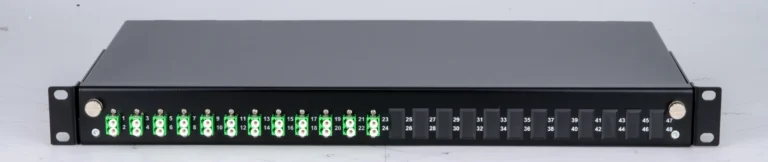
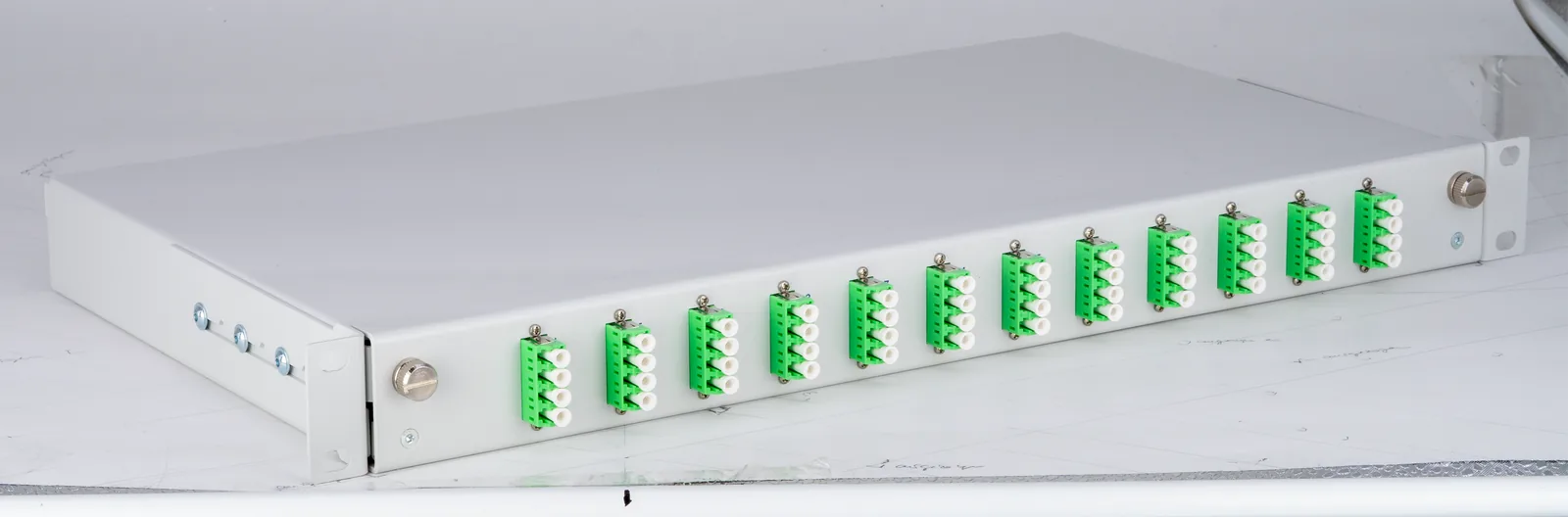
Successful FTTH deployment for municipal utilities requires modular splice boxes as central distribution points in fibre rollout, which through their flexible architecture enable faster installation times and increased port density compared to conventional systems. As a critical infrastructure component, modern splice boxes connect the backbone network to in-building cabling and form the technical backbone of every municipal FTTH installation.
Municipal utilities across Europe face the challenge of expanding their traditional role as energy providers to include digital infrastructure services. With over 22.5 million potential FTTH connections in Germany and a fibre deployment rate of 52.8% (as of June 2025), demand for efficient distribution systems is growing exponentially.
Modular Splice Boxes as Enablers for Municipal Fibre Deployment
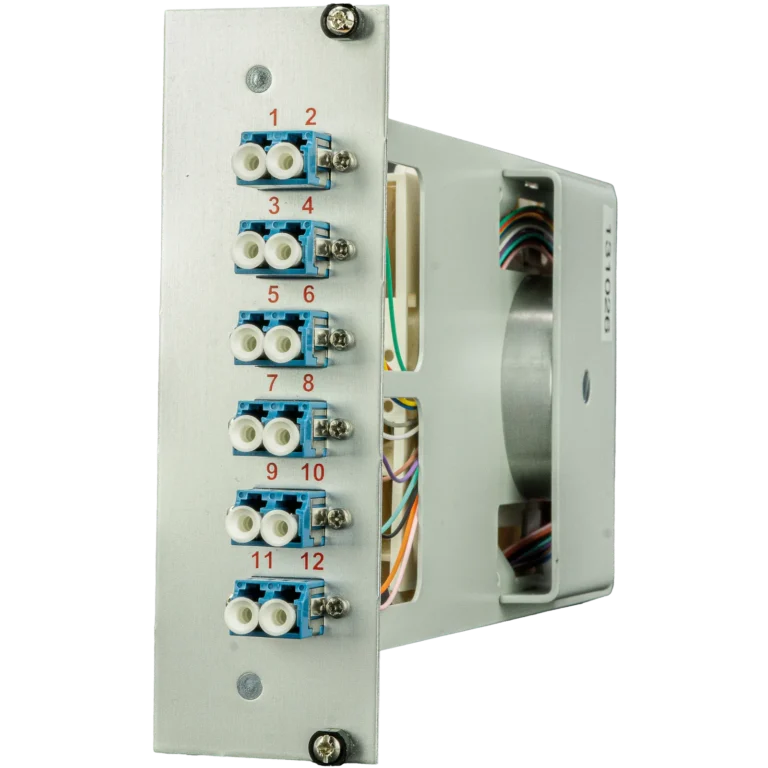
Modular splice boxes revolutionise how municipal utilities build and expand their FTTH networks. Unlike rigid systems, modular solutions enable staged expansion in line with actual demand.
- Connector flexibility: LC, SC, E2000, ST or FC connectors freely combinable
- Scalable capacity: From 12 up to 96 fibres in just 1U
- Hot-swap capability: Modules replaceable during operation
- Pre-terminated modules: Factory-tested modules with < 0.25 dB insertion loss
- Future-proof: Simple adaptation to new standards without complete replacement
These technical features translate directly into economic benefits for municipal network operators. Total Cost of Ownership (TCO) is reduced by lower installation times and simplified maintenance over a 10-year period.
Technical Requirements for FTTH Municipal Utilities in Detail
Fibre deployment for municipal utilities is subject to specific technical and regulatory requirements. The EU Gigabit Infrastructure Directive, effective from November 2025, explicitly mandates fibre-ready infrastructure for new buildings.
| Network Level | Component | Typical Fibre Count | Connector Type |
|---|---|---|---|
| Backbone (NE1) | Main distribution frame | 144–288 fibres | MPO/MTP |
| Aggregation (NE2) | Cabinet splice module | 48–96 fibres | LC-APC |
| Distribution (NE3) | Street cabinet | 24–48 fibres | SC-APC |
| Drop (NE4) | Premises connection | 2–12 fibres | E2000-APC |
Modular splice boxes must cover all four network levels. The benefits of modularity are particularly evident at network level 4, the direct premises connection, where different building types and usage scenarios require different connector configurations.
Planning and Sizing Modular Splice Systems
Correct sizing of modular splice boxes begins with precise needs analysis. Municipal utilities must consider both current and future requirements.
Step 1: Inventory of service areas. Document all potential connections in the deployment area, subdivided by residential units, commercial properties and public facilities. Average take-rate for municipal networks is 35–45% in the first three years.
Step 2: Define network architecture. Decision between Point-to-Point (P2P) or Point-to-Multipoint (PON) topology. Modular splice boxes support both architectures through flexible splitter integration.
Step 3: Select connector types. For FTTH applications, the E2000-APC connector has become the standard. The automatic shutter prevents contamination and provides Laser Safety Class 1. Return loss of ≥ 60 dB ensures interference-free transmission.
Fiber Products Quality Promise: As an official Diamond Partner and manufacturer, we produce modular splice systems in Europe. Benefit from Swiss precision and in-house manufacturing.
Installation and Assembly: Best Practices for Municipal Utilities
Installation of modular splice boxes follows a standardised process that minimises error sources and ensures installation quality. IEC 61300-3-35 defines test procedures for optical connections.
- Preparation: Use cleanroom environment or mobile splice containers
- Fibre preparation: Coating removal to exactly 125 μm diameter
- Splicing: Fusion splicing with < 0.05 dB insertion loss per splice
- Protection: Splice protection with 40 mm or 60 mm heat shrink tubing
- Documentation: OTDR measurement of all routes per IEC 61280-4-2
Modern modular systems such as the SlimConnect Series offer pre-terminated modules that eliminate on-site splicing. This reduces installation time per connection considerably.
Maintenance and Operation: Lifecycle Management for Municipal Networks
The economic success of an FTTH network depends significantly on efficient operating processes. Modular splice boxes simplify lifecycle management through their maintenance-friendly architecture.
Mean Time To Repair (MTTR) is noticeably reduced with modular systems, as faulty modules can be replaced without affecting adjacent connections. Conventional systems often require multi-hour maintenance windows.
| Maintenance Aspect | Modular Splice Box | Conventional Splice Box |
|---|---|---|
| Module replacement | very short | considerably longer |
| Capacity expansion | During operation | Service outage required |
| Connector type change | Module swap possible | Complete replacement required |
| Fault diagnosis | Module-level isolation | Entire system affected |
Scaling and Expansion: Future-Proof Network Planning
FTTH deployment for municipal utilities is a continuous process. Modular splice boxes enable demand-driven scaling without overprovisioning. The pay-as-you-grow strategy optimises capital deployment.
A typical deployment scenario begins with a 24-fibre base configuration per street section. As demand increases, expansion occurs through additional modules up to 96 fibres in the same 1U chassis. This density saves valuable space in distribution cabinets and reduces infrastructure costs.
- Phase 1: Base deployment with 30% capacity reserve
- Phase 2: Densification when >70% utilisation is reached
- Phase 3: Parallel deployment or migration to higher fibre counts
- Phase 4: Integration of new services (5G backhaul, IoT networks)
Cost–Benefit Analysis for Municipal Fibre Projects
Investment in modular splice boxes typically pays for itself for municipal utilities within 3–4 years. The calculation is based on reduced installation and maintenance costs plus improved network utilisation.
CAPEX optimisation is achieved through staged investments matching actual demand. Instead of full equipment from the start, utilities invest only in currently required capacity. OPEX reduction results from simplified maintenance processes and the ability to use standard personnel rather than specialists.
A worked example: For a service area with 1,000 households and an assumed take-rate of 40%, modular splice boxes save approximately €45,000 in initial capital investment and €12,000 annually in operating costs compared to conventional systems.
Standards Compliance and Certification in FTTH
Modular splice boxes for FTTH fibre deployment must meet extensive standards. Key standards for municipal utilities include:
- IEC 61754-15: Interface specifications for E2000 connectors
- IEC 61300-2-14: Test methods for insertion loss and return loss
- EN 50173-1: Generic cabling systems
- ISO/IEC 11801: International cabling standards
- DIN EN 61753-1: Performance standard for optical fibre connection elements
Compliance with these standards is not only a technical necessity but also a prerequisite for funding and public procurement. Modern manufacturers such as Fiber Products provide comprehensive conformity certificates and test reports with every system.
Integration into Existing Infrastructures
Municipal utilities often operate heterogeneous infrastructure from different technology generations. Modular splice boxes must bridge this diversity.
Backward compatibility with existing copper and coaxial networks enables smooth migration paths. Hybrid modules combine fibre and copper connections in a single system. This allows gradual migration from FTTC (Fibre to the Curb) through FTTB (Fibre to the Building) to full FTTH.
The advantage of modular systems is particularly evident in existing buildings: different residential units can be served by different technologies while the central infrastructure remains uniform. IEC 61756-1 defines requirements for such mixed environments.
FAQ: Frequently Asked Questions about Modular Splice Boxes in FTTH Deployment
What port density do modular splice boxes achieve compared to conventional systems?
Modular splice boxes achieve up to 96 fibres per 1U (one rack unit = 44.45 mm), while conventional systems typically accommodate only 48 fibres in the same height. This represents double the port density in the same footprint.
How do APC and PC connectors differ in FTTH applications?
APC connectors (Angled Physical Contact) have an 8° angled polish and provide return loss of ≥ 60 dB. PC connectors (Physical Contact) have a flat polish with ≥ 45 dB return loss. For FTTH applications with single-mode fibre, APC connectors are the standard, identified by green colour coding.
What advantages does pre-termination offer in modular systems?
Pre-terminated modules are manufactured and tested under cleanroom conditions. Insertion loss values remain consistently below 0.25 dB. Installation time is reduced as on-site splicing is not required. Each module is supplied with an OTDR test report per IEC 61280-4-2.
How is capacity expansion performed during operation?
Modular systems enable hot-swapping of modules. New modules are inserted into free slots while existing connections remain active. Expansion from 24 to 48 fibres takes very little time, with no service interruption.
What environmental conditions must modular splice boxes meet?
For outdoor installations, protection rating IP65 (dust-tight and water jet protected) and temperature range –40°C to +70°C are required. Mechanical robustness must meet IK08 (5 joule impact energy). Indoor installations require minimum IP20 and flame class V0 per UL94.
How is long-term stability of modular splice connections assured?
Splice connections are protected by 40 mm or 60 mm heat shrink tubing. Tensile strength is minimum 5 newtons. Thermal cycling tests per IEC 61300-2-22 (500 cycles between –40°C and +70°C) show insertion loss changes of maximum 0.1 dB.
Summary and Outlook
FTTH deployment for municipal utilities is optimised technically and economically by modular splice boxes. The flexible architecture enables demand-driven scaling at reduced total cost of ownership. With the EU Gigabit Infrastructure Directive effective November 2025, requirements for efficient fibre infrastructure continue to increase.
Municipal utilities that invest in modular systems now position themselves optimally for the digital transformation of their service areas. The combination of technical flexibility, economic efficiency and future-proof scalability makes modular splice boxes a strategic component in municipal fibre deployment.
For tailored advice on your FTTH project, the fibre optics experts at Fiber Products are available to assist. As a manufacturer and Diamond Partner, we provide the complete system solution from a single source — from planning through installation to long-term support of your fibre infrastructure.
Find all modular fibre optic components directly in the Fiber Products Shop – with 5 years manufacturer warranty.
Request Expert Advice
Our experts will advise you on modular fibre solutions for your specific application — fast, personal and without obligation.